

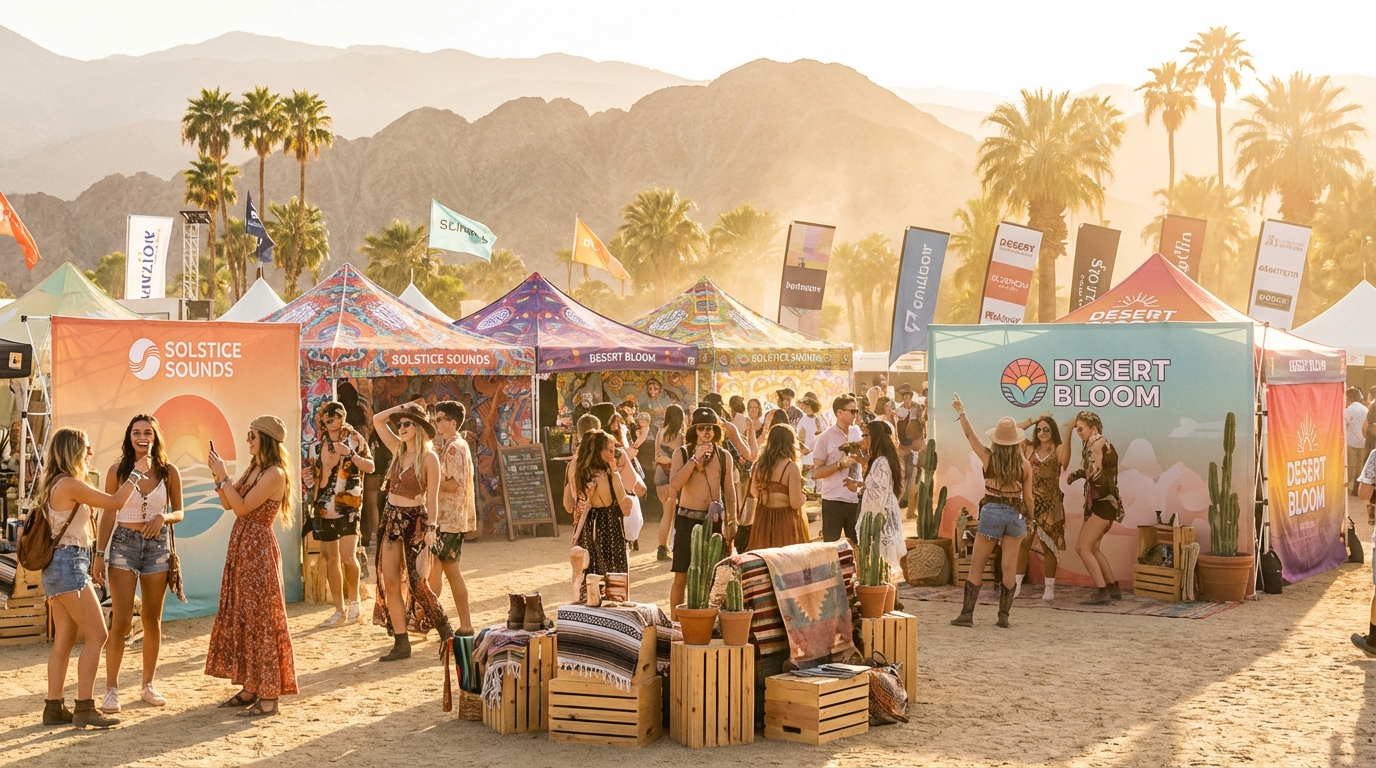

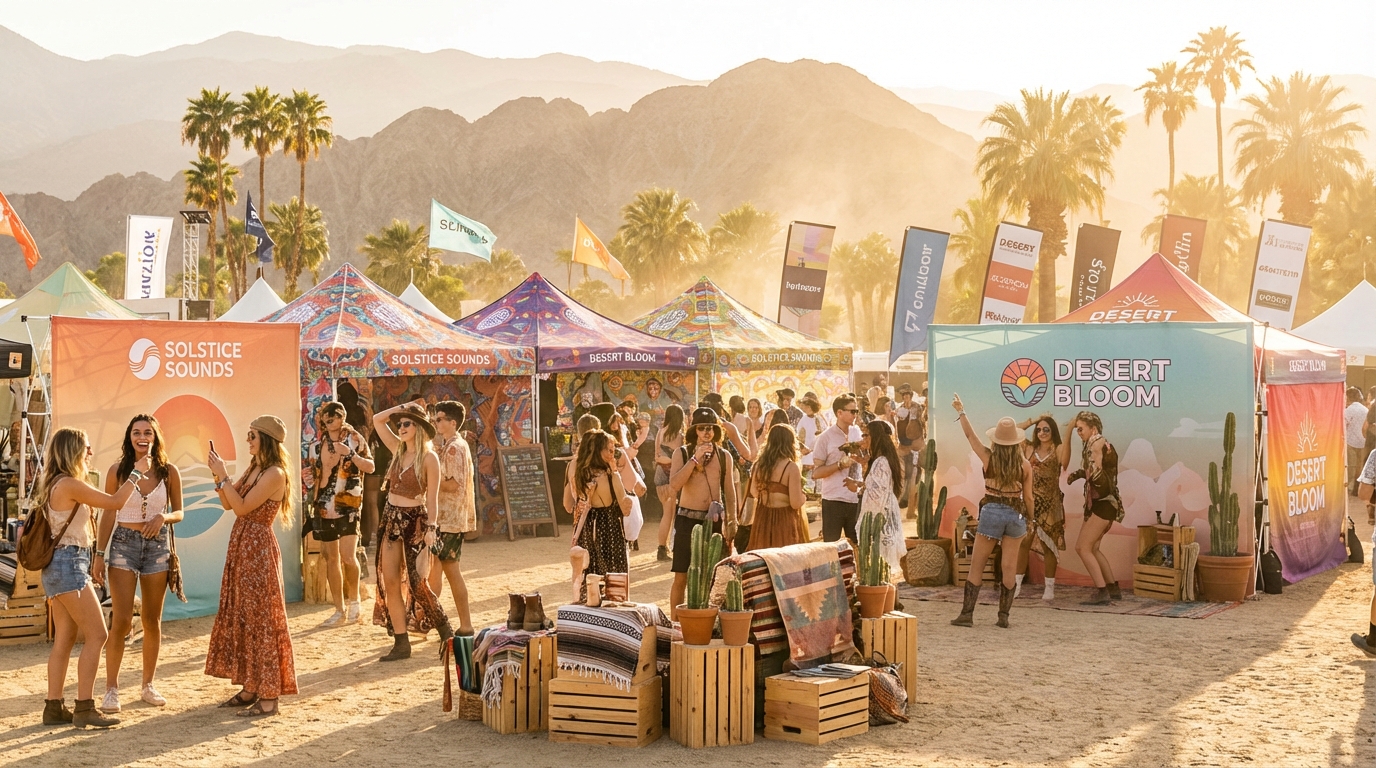
Every April, something unusual happens to social media. Fashion brands that haven’t posted in weeks suddenly flood every feed. Beauty products appear in golden-hour selfies in front of cactus installations. A hashtag that didn’t exist six months ago starts trending globally. And brands that planned for this moment months in advance watch their sales numbers climb in ways that a standard product launch simply cannot replicate.
This is the Coachella effect — and in 2026, it is more commercially significant than it has ever been.
But here is what most brand playbooks get wrong: they treat Coachella as a two-weekend event. They scramble in March to put together a creator gifting plan, post a few festival-adjacent photos during the event, then move on. The brands that actually convert the Coachella moment into measurable spring sales understand something different. They know that Coachella is not a weekend. It is a six-month commercial window with distinct phases, each requiring a different content approach, a different distribution strategy, and a different definition of success.
This guide is built for brands that want the full picture — not just the activation highlights, but the mechanics behind the content calendar, the creator mix, the platform strategy, and the post-festival repurposing system that keeps the sales window open long after the last headliner has left the stage.
Whether your brand has the budget for an on-site activation or you are running a lean digital-only campaign, the strategic principles here apply. What matters is understanding the window, planning into it, and executing with intentionality at every phase.
The Anatomy of the Coachella Sales Window
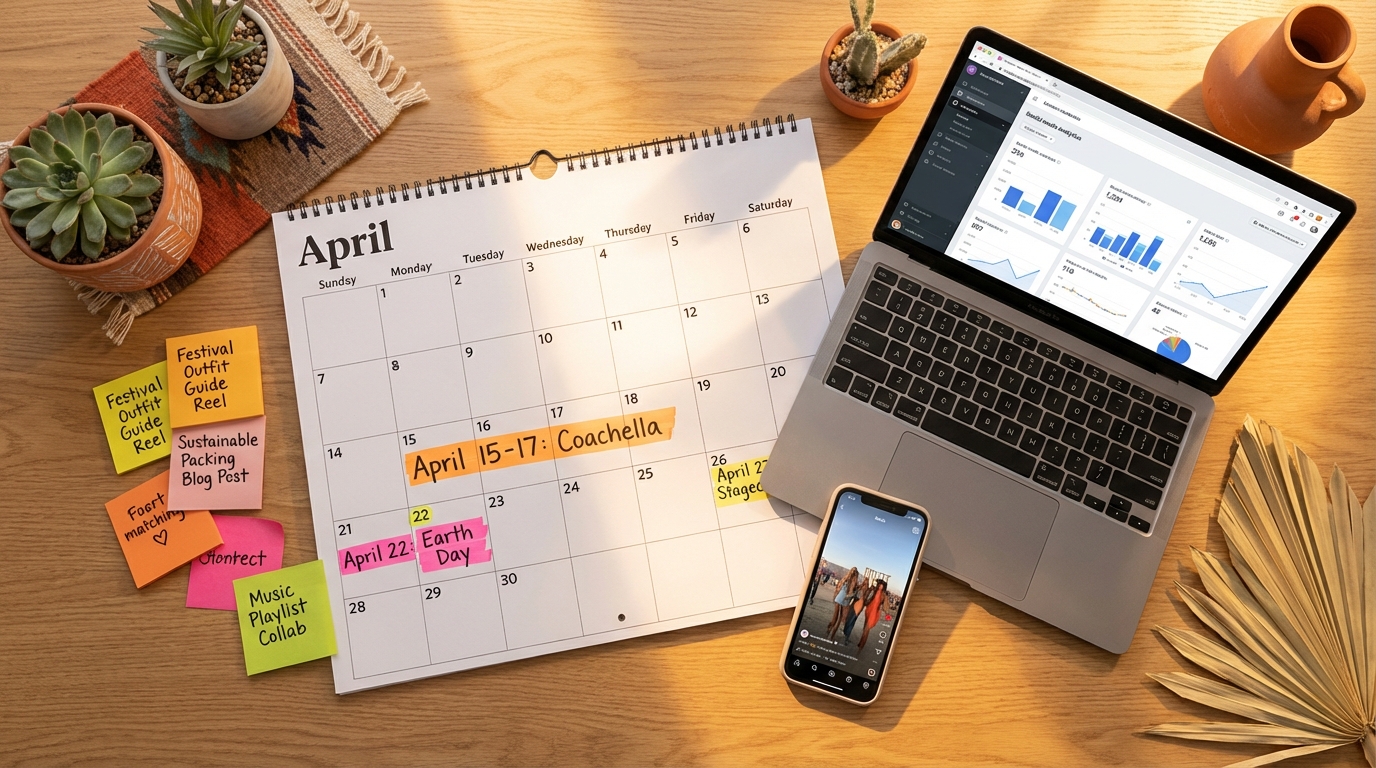
Coachella 2026 made a decision that fundamentally changed the brand marketing landscape around the festival: the lineup was announced in September 2025, a full 207 days before the first weekend of the event. That is not just a scheduling detail. That is a commercial runway that most brands are not using effectively.
Historically, festival lineups dropped in January, giving brands roughly 90 days to build content, negotiate creator deals, and plan activations. The early September 2025 announcement stretched that window to nearly seven months — and brands that recognized this shift and acted on it in the fall gained a measurable advantage. Data from the 2026 season shows that brands that launched phased merchandise strategies starting in October 2025 saw bundle order values run approximately 180% higher than those that launched in the traditional January-February window.
Phase One: The Anticipation Period (September – December)
The moment a festival lineup drops, conversation spikes across every platform. Search volume for artist names, festival fashion, and “what to wear to Coachella” surges within 48 hours. Brands that publish content during this window — even if the festival is six months away — capture organic traffic and social attention at the lowest possible competition.
This phase is about planting seeds. The content goals here are awareness and association, not conversion. A fashion brand dropping a “Coachella outfit inspiration” guide in October, a beauty brand publishing a “festival skin prep” post in November, or an accessories company teasing a limited-edition festival collection in December — these all build the association between the brand and the cultural moment before the advertising noise gets loud in March and April.
During Phase One, the most effective tactics include teaser content tied to confirmed headliners, early-access email capture campaigns using festival exclusivity as the hook, and light creator seeding with micro-influencers who are confirmed to attend or who have strong festival-adjacent audiences.
Phase Two: The Build-Up Period (January – Early April)
This is where the commercial machinery accelerates. By January, the general audience is aware the festival is coming. Ticket buyers are confirmed. The cultural anticipation is real. This is the phase where content should shift from association to consideration and purchase intent.
During Phase Two, brands should be publishing shoppable content, running festival-themed promotions, launching limited collections with actual urgency, and deepening creator partnerships with contracted content deliverables. The content mix should lean heavily into product showcases, styling guides, and “get the look” formats that make the purchase path obvious.
Pre-orders launched in this phase benefit from the urgency created by festival timing — products positioned as “arriving before Coachella weekend” or “limited to festival season” consistently outperform identical products without the temporal anchor.
Phase Three: The Live Event Window (Festival Weekends)
Coachella 2026 ran across two weekends — April 10 through 12, and April 17 through 19. These eight days represent the highest concentration of earned media, organic reach, and purchase intent in the entire six-month window. Social mentions hit 15.9 million during the festival period, with 90% positive sentiment across brand-adjacent content.
For brands with on-site activations, this phase is about real-time content amplification. For brands operating digitally, it is about publishing reactive content that meets the audience where they are culturally — even if the brand has no physical presence in the desert.
Phase Four: The Post-Festival Tail (Late April – May)
Most brands shut down their festival content strategy the Monday after Weekend Two. This is a significant missed opportunity. The post-festival content window — properly executed — can extend brand-relevant sales for four to six additional weeks and at lower cost per acquisition than the peak period, because the competition for attention drops dramatically while audience interest in festival aesthetics remains elevated.
Who Is Actually Watching: Understanding the Coachella Audience
Building a content strategy around Coachella without understanding the actual audience composition is one of the most common errors brands make. The assumption that Coachella is purely a Gen Z moment is partially correct but incomplete — and that incomplete picture leads to content that misses the real commercial opportunity.
The In-Person Audience
Coachella draws approximately 125,000 attendees per day across its grounds. The demographic skews toward millennials with disposable income and Gen Z trendsetters. Roughly 40% of in-person attendees are Gen Z, but a significant portion of the spending power lies with the 25-35 millennial cohort who have attended multiple years, have stronger brand loyalty, and carry higher average order values.
These attendees are not passive. They are active content creators. The average Coachella attendee produces multiple pieces of social content per day, tagged to location, tagged to brands they are wearing, and shared with audiences that trust their recommendations. This is the organic amplification engine that makes on-site activations so valuable — every attendee is a potential content distribution node.
The Digital Audience — The Larger Opportunity
Here is the number that should reset most brands’ strategic assumptions: the people who are not at Coachella but who are consuming Coachella content online vastly outnumber the physical attendees. During the 2026 festival, total potential impressions across brand activations reached 5.4 billion. Approximately 1,700 editorial articles were published in the two-week window. This is a media event being consumed by tens of millions of people who are watching from home.
This digital audience is the primary commercial target for most brands. They are engaged in the cultural moment, they are shopping the aesthetic, and they are accessible via content — without any requirement for a physical desert presence. A well-executed digital-only Coachella content strategy can reach and convert this audience at a fraction of the cost of an on-site activation.
The Pinterest Audience — Often Overlooked
Pinterest occupies a unique role in the Coachella content ecosystem. Festival fashion and beauty searches on Pinterest spike significantly in the weeks before and during the event, and Pinterest users convert to purchase at higher rates than most social platforms because they are actively planning — not just browsing. Seasonal content hubs built for Pinterest can lift organic traffic by 53.8%, and festival-specific boards capture search traffic from users who are explicitly shopping for inspiration and products. Brands that build Coachella-aligned Pinterest content during Phase One and Two benefit from search traffic spikes that arrive precisely during the highest purchase-intent window.
The Three-Phase Content Calendar Every Brand Should Use
The most effective Coachella content strategies are not built around the event dates. They are built around audience psychology at each stage of the six-month window. Here is what an actionable content calendar actually looks like across the three core phases of the build-up period.
The Teaser Phase (September – November): Association Over Conversion
During this phase, the goal is to become part of the cultural conversation before it gets crowded. Content formats that work here include trend forecasting posts — “These are the Coachella fashion trends we are watching for spring” — that position the brand as an authority on the aesthetic. Artist-adjacent content that references confirmed headliners generates early search traffic. Email campaigns offering early access to a festival collection, even if the collection does not launch until February, create an interested subscriber segment that will convert at higher rates when the product goes live.
For brands in beauty, this phase is the time to publish long-form content around festival-specific challenges — heat, sun, longevity of makeup — that captures search traffic from people planning months ahead. These posts compound over time and continue driving traffic through the live event window.
Social content during the teaser phase should be low in volume but high in relevance. One to two posts per week that establish the brand’s festival aesthetic and build anticipation. The aim is not viral reach in October. The aim is audience conditioning — so that when the brand’s content accelerates in February and March, the existing audience already associates the brand with Coachella.
The Launch Phase (December – March): Shifting to Conversion Content
This phase is where content strategy transitions from awareness to action. Limited collection launches, pre-order campaigns, and festival bundle offers are the commercial anchors. Content should now include clear calls to action, shoppable formats, and urgency mechanisms tied to the festival timeline.
During this phase, creator partnerships should activate. Contracts should be negotiated and content briefs delivered by January at the latest, so creators have time to produce genuinely high-quality content rather than rushed posts. The briefing process matters here — creators should receive clear brand guidelines and campaign messaging, but they need enough creative freedom to produce content that matches their authentic voice. Scripted, over-branded creator posts underperform consistently against creator-led content that happens to feature the brand naturally.
Email marketing becomes a primary driver during this phase. Segmented campaigns targeting past spring purchasers, festival-interested subscribers, and geographic segments near the Indio, California area all outperform broad sends. Personalized festival-themed subject lines and product recommendations tied to the Coachella aesthetic drive open rates and click-through rates that significantly exceed standard campaign benchmarks.
The Live Phase (April): Real-Time and Reactive Content
During the festival weekends themselves, content cadence should increase significantly. The goal is to be part of the real-time conversation while also driving direct sales. For brands with on-site activations, this means continuous posting from the activation, real-time story coverage, and amplification of creator content as it is published. For digital-only brands, this means publishing reactive content tied to trending moments, running time-limited flash sales tied to each festival weekend, and using paid amplification to boost the best-performing organic content from the prior months.
Reels and TikTok videos published during the festival weekend should align with trending audio and hashtags but should not feel forced. The content that performs best during this window is content that adds value to the festival conversation — styling advice, beauty tips for desert conditions, trend commentary — rather than content that simply inserts the brand name into a hashtag.
What Brands Without a Festival Presence Can Actually Do
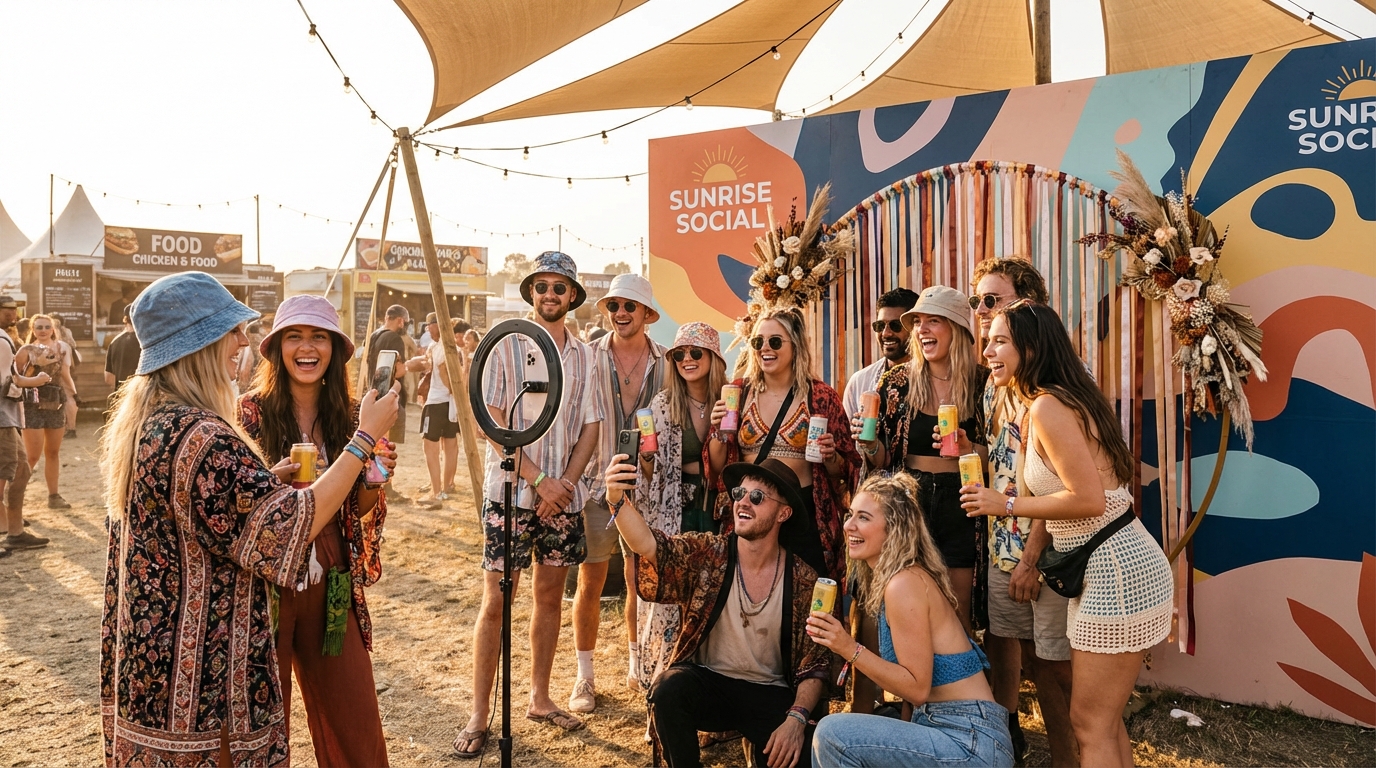
The assumption that Coachella content strategy requires a physical presence is one of the most limiting beliefs in festival marketing. Rhode Beauty generated $2.63 billion in earned media value from a minimalist photobooth. Gap’s Hoodie House activation was a rented space near — not inside — the festival grounds. The vast majority of Coachella-driven sales happen through digital channels, driven by digital content, consumed by an audience that is not in the desert.
This means the on-site activation is a content production strategy, not a retail strategy. Its value is in the assets it generates, not the sales it makes on-site. And if that is true, then a well-executed remote content strategy can generate many of the same assets without the significant activation cost.
Creator Gifting and Remote Seeding
The most accessible version of a Coachella presence for brands without an activation budget is a strategic creator gifting program. Rather than sponsoring a creator’s entire festival wardrobe, brands can seed specific products to confirmed Coachella attendees — creators with smaller but highly engaged audiences who will organically incorporate the product into their festival content.
The key word in that sentence is “organically.” Creator gifting programs that come with rigid posting requirements or scripted captions consistently underperform against programs that gift without strings and let authentic content happen. Many of the highest-performing Coachella creator posts from 2026 came from gifted creators who were not under contract — they posted because the product genuinely fit their festival experience.
The brands that do this best identify creators whose aesthetic already aligns with their product, gift early enough that the creator has time to genuinely use the product before the festival, and make the packaging or the product itself visually compelling enough that it becomes part of the content naturally.
The Desert-Adjacent Content Strategy
Brands can also produce Coachella-adjacent content entirely without physical festival access. Desert photography shoots, festival outfit flat lays, heat-proof beauty tutorials, and “festival season essentials” roundups all capture the cultural energy of the Coachella moment without requiring a ground presence.
This content performs well because it serves the digital audience — the tens of millions of people who are consuming Coachella content from home and shopping the aesthetic. If a user in Chicago is watching Coachella livestreams and searching “festival makeup look,” they do not need the product to have been photographed in Indio. They need the content to be useful, relevant, and shoppable.
Trend-Reactive Publishing
One of the most underutilized tactics for non-attending brands is trend-reactive publishing — monitoring Coachella fashion and beauty trends in real time during the festival weekends and publishing responsive content within hours. If a particular aesthetic is trending on the first Saturday of Weekend One, a brand with that product category can publish trend commentary content — “We are seeing a lot of [trend] at Coachella this year, here is how to get the look” — within the same day and capture the organic search and social traffic that trend generates.
This requires a small content team on standby during the festival weekends, pre-cleared product photography that can be pulled quickly, and a streamlined approval process. Brands that have this infrastructure in place consistently outperform brands that publish pre-planned content that misses the real-time moment.
The Creator Playbook: Micro, Macro, and the Celebrity Question
The creator mix for a Coachella content strategy is not a question of budget alone. It is a question of what kind of content generates the best outcomes for each specific brand and campaign goal.
The Case for Micro-Influencers at Festival Scale
The data on micro-influencer performance at music festivals is consistent across multiple years of measurement. Ambassador programs built around micro-influencers — creators with audiences between 5,000 and 100,000 followers — consistently deliver higher engagement rates, stronger trust metrics, and better conversion rates than celebrity activations at the same budget level.
The mechanism is straightforward. A micro-influencer’s audience follows them specifically for their taste and perspective. When that creator features a product in their genuine festival experience, the recommendation carries the weight of a trusted personal recommendation rather than an obvious advertisement. The Imagine Festival’s micro-influencer ambassador program generated 22 million impressions and a 2,400% ROI increase over traditional advertising. Lights All Night’s similar program achieved 2,584% ROI from micro-influencer partnerships.
At Coachella specifically, the most effective micro-influencer approach uses what might be called an “army model” — rather than investing heavily in a single creator, brands distribute seeding or modest paid partnerships across 30 to 50 smaller creators. This creates a volume of authentic content from multiple perspectives, reduces single-creator dependency risk, and generates a broader spread of audience reach.
What Macro-Influencers Actually Deliver
Macro-influencers — those with audiences between 100,000 and 1 million followers — occupy a middle ground that can be useful for specific campaign objectives but requires clear expectation-setting. Their reach is meaningful, but their engagement rates are typically lower than micro-influencers on a percentage basis. Where macro-influencers add value is in brand credibility signals and in content quality — creators at this level often have strong production values and an established visual aesthetic that makes brand-aligned content more polished.
REVOLVE’s model uses a curated combination of macro-influencers and celebrities at their invite-only REVOLVE Festival, and it works because the exclusivity of the event itself is the story. The brand is not paying for reach — it is paying for association with a certain level of cultural cache that the attendee list communicates. Not every brand has the resources or the positioning to replicate that model, but the underlying principle — using the exclusivity of access as the content hook — can be scaled down significantly.
The Celebrity Partnership Question
Celebrity partnerships at Coachella carry the highest cost and the most variable return. Rhode’s activation worked because Hailey Bieber is the brand founder, not a hired celebrity — her presence was authentic rather than transactional, and audiences read that difference accurately. A brand that hires a celebrity to attend an activation and post about it often generates impressive reach numbers but poor conversion, because audiences have become highly sophisticated at identifying and discounting paid celebrity endorsements.
If celebrity partnership is part of the budget, the most effective structure is one where the celebrity has genuine affinity with the product, the content is designed to showcase that affinity rather than simply shout out the brand name, and the partnership includes contractual content on the celebrity’s own channels that feels natural within their established content aesthetic.
Platform-by-Platform Content Strategy
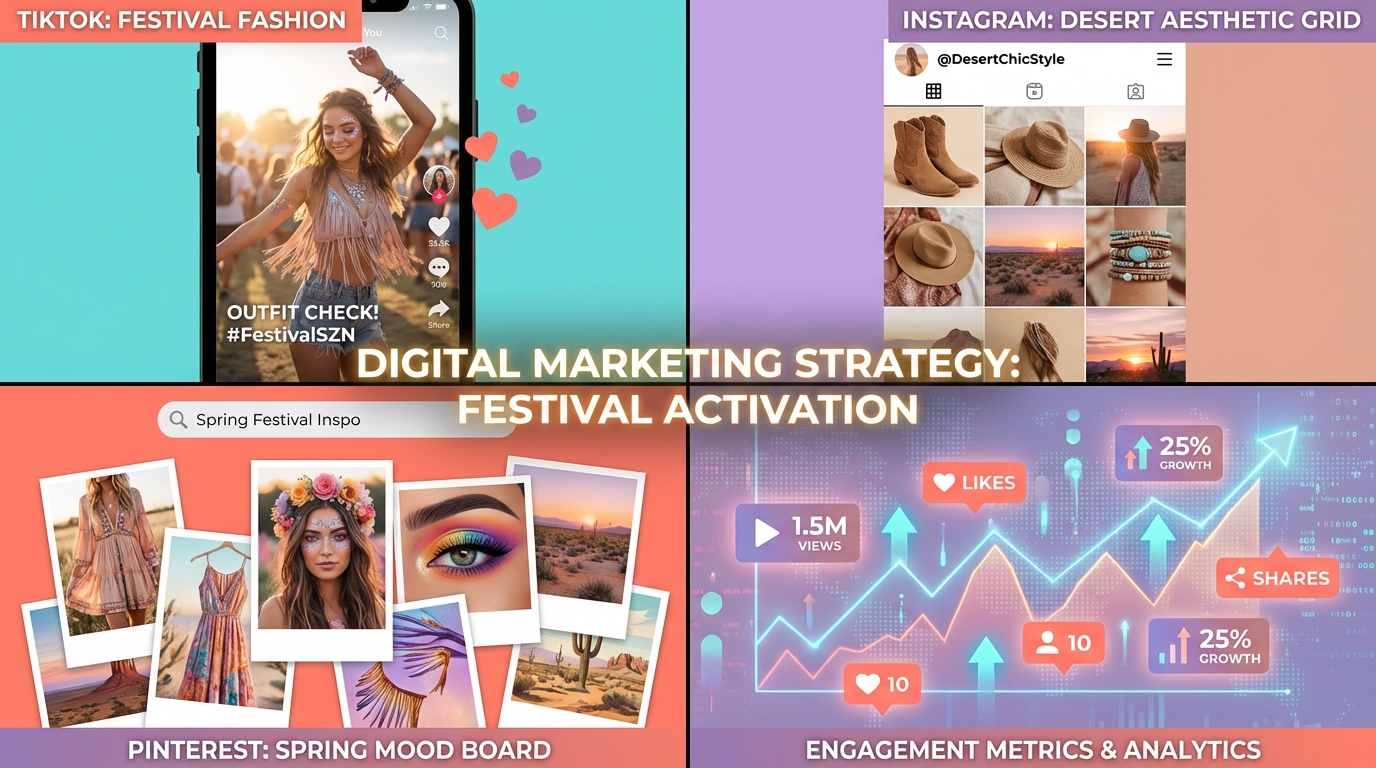
A Coachella content strategy that treats all platforms identically will underperform on all of them. Each platform has a distinct role in the sales funnel during festival season, a distinct content format that works, and a distinct audience expectation. The most effective strategies treat each platform as a separate channel with its own objectives and content brief.
TikTok: Volume, Authenticity, and Trending Sound
TikTok is the primary discovery platform for Coachella content in 2026. The platform’s algorithm rewards content that generates rapid engagement, and festival content — particularly outfit videos, beauty tutorials, and behind-the-scenes activation footage — performs exceptionally well in this format. The key differentiator on TikTok is authenticity over production quality. Unpolished, raw, handheld festival content consistently outperforms highly produced brand videos because TikTok users have trained themselves to skip anything that feels like an ad.
Content mix on TikTok should approximate: 30% UGC reposts and creator content, 30% product showcases in festival contexts, 20% behind-the-scenes and brand story content, and 20% educational content — tutorials, tips, how-tos — that provides genuine utility while featuring the product. Trending audio should be monitored daily during the festival weekends and incorporated into content where it fits naturally, not forced.
TikTok’s shoppable features — particularly TikTok Shop if it applies — should be active and linked throughout the festival period. Spring social commerce sales in the US exceeded $100 billion in 2026, and a significant portion of that volume flows through impulse purchases generated by festival-adjacent content on TikTok.
Instagram: Aesthetic Permanence and Story Velocity
Instagram serves a different function in the Coachella content mix. While TikTok drives discovery and viral reach, Instagram builds brand aesthetic credibility and drives more considered purchase behavior. The Instagram grid is a permanent record of a brand’s visual identity, and Coachella season is an opportunity to establish or reinforce a specific aesthetic that persists beyond the festival window.
During the festival, Instagram Stories and Reels should run at higher frequency — multiple times per day if there is sufficient content volume to justify it. Reels published during the festival weekend outperform static posts by 3.8 times on engagement metrics. The spring seasonal window, which overlaps with Coachella, shows that social engagement for fashion and beauty brands rises 21.4% during this period, with Reels and TikTok driving the majority of that lift.
Instagram’s shoppable features — product tags, link stickers in Stories, and shoppable Reels — should be fully deployed during the festival window. The path from content to purchase should be as short as possible, because purchase intent during this window is high and friction kills conversions.
Pinterest: The Sleeper Platform That Converts
Pinterest is consistently underestimated in festival marketing plans and consistently overdelivers on conversion metrics. Pinterest users who search for festival fashion and beauty content are in active planning mode — they are building boards, comparing options, and shopping with intent. This is fundamentally different from the passive discovery behavior on TikTok and Instagram.
The strategic approach on Pinterest is to publish content during the teaser and build-up phases, before the event, so that it has time to index and gain traction in Pinterest’s search algorithm. Boards curated around “festival fashion,” “Coachella beauty looks,” and “desert-ready skincare” that are built in October and November will capture significantly more search traffic by April than boards built in March. Seasonal content hubs on Pinterest can lift organic traffic by 53.8%, making early investment here disproportionately valuable.
Product-forward Pins — featuring clear product imagery, festival-specific use cases, and direct links to product pages — perform better on Pinterest than lifestyle-only content, because the audience is ready to purchase, not just browse.
Email: The Channel That Actually Closes Sales
Email marketing is the highest-converting channel in the Coachella content mix, and it is the one most brands underinvest in during festival season. While social media drives awareness and discovery, email drives purchase. The mechanics are straightforward: subscribers who opted in specifically for a festival collection or early-access offer are in an advanced state of purchase intent. A well-timed, well-segmented email sequence converts this intent into revenue more reliably than any social channel.
The email sequence for a Coachella campaign should include at minimum: a collection launch announcement, a mid-festival curated edit, a “last chance” reminder tied to the festival deadline, and a post-festival sale or extension offer. Subject lines tied specifically to festival timing — “Weekend One essentials are here” or “Your Coachella beauty kit” — consistently outperform generic promotional subject lines. AI-personalized seasonal email campaigns have shown conversion uplifts of 34.7% compared to non-personalized equivalents, and beauty brands using dynamic pricing combined with predictive segmentation have reported seasonal conversion spikes of up to 52%.
The REVOLVE and Rhode Case Studies: Dissecting What Actually Drove the Numbers
Two brands dominated the Coachella 2025 earned media conversation in ways that continued to shape strategy through the 2026 season. Understanding the mechanics behind their success — rather than just admiring the outcomes — reveals principles that brands at all budget levels can apply.
REVOLVE: The Content Machine Model
REVOLVE’s REVOLVE Festival is not a sponsorship of Coachella. It is a co-located, invite-only brand event that runs alongside the main festival and generates its own media coverage, its own social conversation, and its own cultural moment. In 2025, the REVOLVE Festival achieved a 40% increase in press impressions and a 25% increase in social impressions — despite operating on a reduced budget compared to the prior year. That budget efficiency improvement is the most important number in their data.
The mechanism behind REVOLVE’s results is what they have built over many years: a content machine model where the event itself is engineered to produce high volumes of brand-aligned content from hundreds of creators simultaneously. Desert-themed sets designed specifically for photography. Gifting suites that ensure every attendee is wearing REVOLVE. AI-powered virtual try-on kiosks that generate shareable digital content. Celebrity and musician bookings that anchor media coverage. The event is, functionally, a content production studio operating at festival scale.
The content that results — thousands of creator posts, hundreds of Stories, dozens of Reels, all tagged to #RevolveFestival — trended on TikTok and Instagram for 48 hours or more. It drove a 380% increase in brand searches and a 210% increase in ecommerce sales in the post-event window. Every element of the event was designed backward from the content output it would generate, not forward from the event experience itself.
The lesson for brands that cannot replicate REVOLVE’s scale: the principle of engineering experiences specifically for content output rather than in-person experience is scalable at any budget. A photobooth costs a fraction of a festival stage. A gifting suite can be a hotel suite. The content engineering principle works at $5,000 or $5 million.
Rhode: The Minimalist Activation That Outperformed Everyone
Rhode’s Coachella approach in 2025 was the opposite of REVOLVE in scale and very similar in principle. A photobooth. Branded coins exchangeable for free lip peptides and mini tequila bottles. Hailey Bieber present in person. The total activation infrastructure was minimal by festival standards — and the result was $2.63 billion in earned media value, the highest figure of any beauty or wellness brand at the festival.
The Rhode model succeeded for several interconnected reasons. First, the activation was designed to be photographed. A photobooth is a photo-generating machine, and every photo taken at the Rhode booth became a potential piece of branded social content. Second, the co-branding with 818 Tequila (Kendall Jenner’s brand) doubled the content distribution — every post reached both brands’ audiences simultaneously. Third, Hailey Bieber’s genuine presence rather than a hired ambassador appearance made the content feel authentic rather than commercial. And fourth, the product itself — lip peptide balm — is visually simple, easily applicable in a festival context, and photographable in a way that many products are not.
The Rhode case study demonstrates that activation scale is not the determining factor in earned media value. Content engineering is. A brand that thinks carefully about why someone would want to photograph their experience and share it will consistently outperform a brand that spends ten times as much on an activation that is not designed for content generation.
UGC Harvesting and Repurposing for Maximum Shelf Life
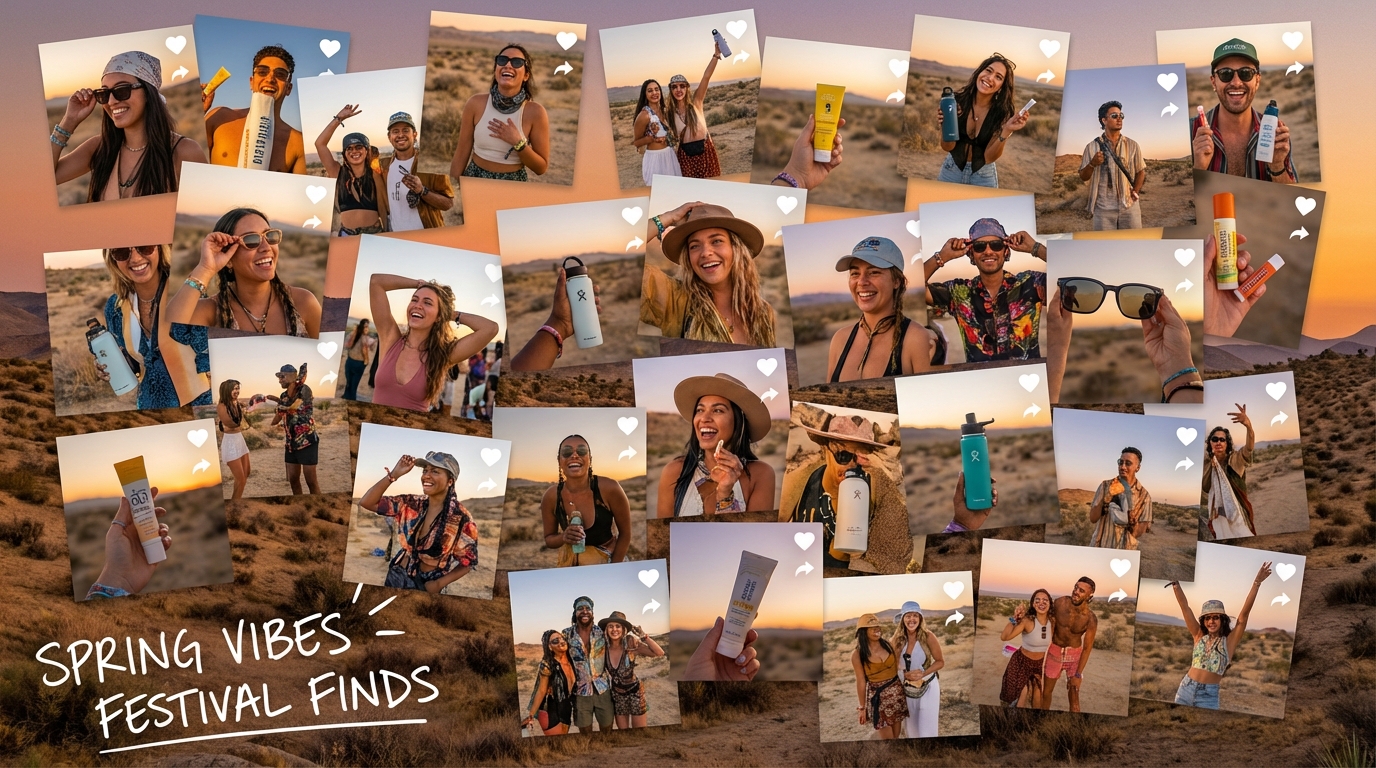
User-generated content from Coachella is among the most valuable content a brand can acquire — but only if there is a system in place to capture, clear, and deploy it effectively. Brands that run activations without a UGC rights management process in place are leaving one of their most powerful assets unused.
Building the Rights Management Infrastructure
The simplest version of UGC rights management is built into the activation itself. Rhode’s photobooth model collects implicit consent — anyone who uses the booth and tags the brand in their social post has effectively offered the content for brand use, particularly when clear signage at the activation communicates this. Activation entry consent forms can also explicitly grant limited usage rights for organic posts featuring brand products or branding.
For brands collecting UGC from non-activation sources — creators who tagged the brand in organic festival posts, attendees who appeared at the activation — a direct message rights request is the standard mechanism. Platforms have formalized this process: Instagram’s in-app rights request tool, for example, allows brands to request usage rights on specific posts with a single message. Response rates on sincere, personalized rights requests are typically higher than brands expect, particularly when the message clearly identifies how the content will be used.
The Whitelisting Advantage
Beyond organic repurposing, UGC collected from creator partners can be used for paid media amplification through creator whitelisting. This approach — running paid ads through the creator’s account rather than the brand’s account — consistently outperforms standard brand ads in both engagement rate and conversion rate, because the content appears to come from a trusted individual rather than a corporate account.
Whitelisting arrangements should be negotiated as part of creator partnership contracts before the festival, not as an afterthought afterward. The content brief should specify that whitelisting rights are included for a defined period — typically 30 to 90 days post-event — so that the highest-performing organic creator posts can be amplified with paid spend during and after the festival window.
The Content Waterfall System
The most efficient UGC repurposing approach is what some content strategists refer to as the content waterfall: a single high-performing piece of Coachella content — a creator video, an activation photo series, a behind-the-scenes reel — becomes the source for multiple downstream content pieces. The original video becomes a cut-down Story. The Story still frames become grid posts. The quotes or audio become caption copy. The behind-the-scenes footage becomes a “how we built this” long-form post. One asset, properly managed, generates ten or more pieces of additional content.
Brands that implement this system during the festival window — identifying the best-performing content in real time and immediately planning its downstream applications — significantly extend the commercial value of their festival investment without proportionally increasing content production costs.
Post-Coachella Content: Keeping the Sales Window Open
The week after Coachella Weekend Two is one of the most overlooked commercial opportunities in the spring marketing calendar. Audience interest in festival aesthetics remains elevated for several weeks after the event ends. The competition for attention drops sharply because most brands have moved on. The cost of paid amplification falls because demand from competing brands decreases. And the UGC and content assets from the festival period are now fully available for repurposing.
The Recap Content Strategy
Recap content — “best moments from our Coachella activation,” “the looks our creators wore,” “what we learned from two weekends in the desert” — performs well in the post-festival window because it gives the broader audience who did not follow the festival in real time a curated summary of what they missed. Rhode’s photobooth activation generated 2.5 million impressions on X in the 10 days following the 2024 event, largely driven by recap and highlight content that circulated after the live moment had passed.
Recap content should be published within three to five days of Weekend Two ending. After that window, audience attention has moved on sufficiently that recap content loses its relevance signal. The first post-festival week is the critical window for this content format.
The Festival-to-Summer Transition
Coachella is the cultural gateway to summer. The content bridge between festival season and summer — “transitioning your festival style to summer,” “the skincare routine that got us through the desert and is ready for summer” — captures the moment when the Coachella audience’s attention naturally shifts forward. Brands that publish this transition content in the last week of April and the first two weeks of May extend their festival content investment into the next commercial season without requiring a separate content strategy.
This is also the optimal moment for post-festival sales and clearance promotions. Festival-specific inventory that did not sell through at full price can move effectively in a “post-Coachella sale” framing, which carries a clear and credible reason for the discount without undermining the brand’s pricing integrity for non-festival products.
Turning Content Into Evergreen Assets
The highest-value post-festival content activity is converting festival-generated social content into evergreen, searchable assets. High-performing social posts become blog content. Creator videos become embedded website content. Behind-the-scenes activation photography becomes brand story material. This conversion transforms temporary viral moments into sustained search visibility that continues driving traffic and qualified leads long after the festival conversation has faded.
A brand that spends the four weeks after Coachella systematically converting its best festival content into optimized long-form assets is effectively compounding the return on its festival investment. The organic traffic generated by a well-optimized “Coachella beauty tutorial” blog post built in May will continue driving search clicks in September and January — the exact windows when the next festival season begins to build anticipation.
Measuring What Matters: Metrics Beyond Vanity Numbers
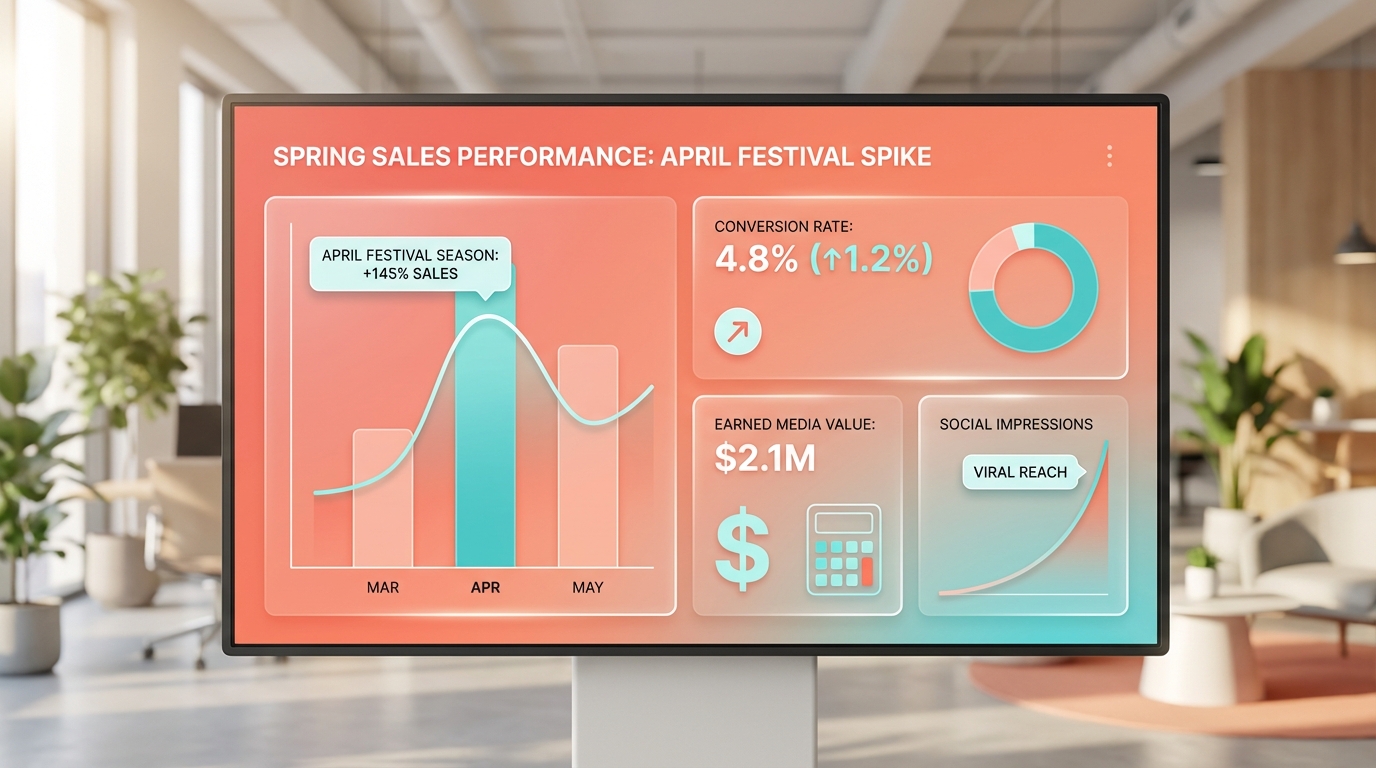
Coachella content campaigns generate enormous impression and reach numbers that look impressive in a post-campaign deck but tell very little about actual commercial performance. The brands that get progressively better at Coachella content strategy are the ones that measure the metrics that connect content activity to business outcomes.
Earned Media Value vs. Actual Revenue Attribution
Earned media value (EMV) is a useful comparative metric — it allows brands to benchmark their content performance against competitors and industry averages. Rhode’s $2.63 billion EMV is an extraordinary number that communicates the cultural scale of their activation. But EMV does not equal revenue. A brand could theoretically generate significant EMV and see minimal sales lift if the content resonated culturally but did not create purchase intent.
The metrics that sit between EMV and revenue — branded search volume increases, direct traffic spikes, social referral revenue during and after the festival, conversion rates on festival-specific landing pages, and customer acquisition cost for the festival period compared to standard periods — are the numbers that tell the actual story of campaign effectiveness.
REVOLVE’s data point of a 210% increase in ecommerce sales post-festival alongside their EMV and impression figures is the kind of complete picture that justifies ongoing investment. Brands should build measurement frameworks that capture both the awareness metrics and the revenue metrics before the campaign launches, not after, so that attribution is clean and comparable across seasons.
Creator Content Performance Benchmarks
For creator partnerships, the relevant metrics are engagement rate relative to the creator’s baseline (not industry average), the ratio of saves to likes (saves indicate purchase consideration, not just passive engagement), click-through rates on shoppable links, and post-collaboration search volume increases for the brand name. These metrics, tracked across the creator program, reveal which creator profiles and content formats drive commercial outcomes vs. which drive social engagement without downstream purchase behavior.
A creator who drives 500 swipe-ups to a product page is delivering more commercial value than a creator who generates 50,000 likes without any click behavior. Optimizing creator selection and briefing based on this data over multiple festival seasons compounds into a measurable competitive advantage.
Long-Tail Content ROI
The final and most undertracked metric category is long-tail content ROI — the traffic, leads, and sales generated by festival content assets in the weeks and months after the festival has ended. A blog post published in May that continues driving organic search traffic through August. A Pinterest board built in October that generates qualified traffic through the following January. A creator video that continues accumulating views and driving product page visits for months after posting.
Tracking this long-tail ROI requires attribution windows longer than the standard 7 or 30 days, and it requires tagging festival-specific content clearly enough in analytics systems that its ongoing performance can be isolated. Brands that implement this tracking consistently find that the true return on their Coachella content investment — measured over a 12-month attribution window — significantly exceeds what the immediate post-festival metrics suggest.
The Practical Execution Checklist: Planning Your Next Coachella Season
Translating strategy into execution requires a concrete timeline and a clear allocation of resources. The following framework is organized by the six-month planning window that Coachella’s early lineup announcement creates, and it applies regardless of activation budget.
September – October: Foundation Building
- Identify your festival content goals: Awareness, consideration, or conversion? Each requires a different content approach and a different measurement framework.
- Audit your existing content library for festival-adjacent assets that can be repurposed or updated. You almost certainly have relevant content from prior seasons that can be refreshed rather than created from scratch.
- Begin creator identification: Use the lineup announcement to identify creators whose audience has high overlap with your target customer and whose aesthetic aligns with your brand. Initiate outreach before agencies do.
- Commission or plan the teaser content — fashion inspiration guides, beauty tutorials, trend forecasting — that will publish in October and November.
- Set up your Pinterest boards and begin populating them with festival-adjacent content so they have maximum time to index and gain traction before the April traffic spike.
November – January: Creator Contracting and Content Pre-Production
- Finalize creator partnerships with clear deliverable schedules, content briefs, whitelisting rights, and performance expectations. The earlier this is done, the more latitude creators have to produce genuinely good content.
- Plan and pre-produce the conversion content — product pages, email sequences, collection launches, bundle offers — that will activate in Phase Two.
- Build your email subscriber segment using festival-specific lead magnets: early access to a festival collection, a downloadable festival packing guide, a subscriber-exclusive discount code.
- Develop your UGC rights management protocol including the platform-specific tools and message templates you will use during the festival period.
February – March: Full Launch and Acceleration
- Launch the festival collection or featured products with full content support across all platforms.
- Activate creator partnerships so that content begins publishing before the festival weekend and builds audience familiarity with the brand’s festival positioning.
- Deploy the email sequence to your festival-interested subscriber segment with clear product recommendations and purchase paths.
- Begin paid amplification of the best-performing organic content from Phase One to extend its reach into new audience segments.
April: Live Festival Execution
- Assign dedicated content monitoring during both festival weekends. Someone should be tracking trending content, identifying repurposing opportunities, and requesting UGC rights in real time.
- Publish reactive content within hours of emerging trends, not the following day.
- Run Weekend One and Weekend Two flash sales tied specifically to the festival timeline to create urgency for the digital audience.
- Amplify top-performing creator content with paid spend within 24 hours of posting, while organic momentum is still active.
Late April – May: Post-Festival Extension
- Publish recap content within three to five days of Weekend Two ending.
- Build the festival-to-summer content bridge that transitions the Coachella audience into your summer content cycle.
- Systematically convert top-performing social content into long-form, optimized blog and website content.
- Compile the full campaign performance data across all channels and attribution windows, and document the insights for next season’s planning.
Conclusion: Festival Season Is a Content Strategy Problem, Not a Budget Problem
The most important strategic shift for any brand approaching Coachella season is this: stop thinking of it as an event and start thinking of it as a six-month content calendar with a very specific peak moment. The brands that consistently outperform on Coachella ROI are not necessarily the ones with the biggest budgets or the most famous creator partners. They are the ones that understand the window, plan into every phase of it, and execute with a content-first mindset rather than an activation-first mindset.
Rhode did not beat its competitors by spending more. It beat them by designing an activation that was, fundamentally, a content generation system. REVOLVE did not keep its top-brand position by increasing its budget. It did so by cutting budget and improving the content engineering of every element of its event. The lesson is consistent: the return on Coachella investment is determined by content strategy, not by spend level.
For brands starting from a position of limited resources, the actionable path forward is to focus on the phases and tactics with the highest return-to-effort ratio: early Pinterest content that compounds over six months, strategic micro-influencer gifting that generates authentic UGC, a segmented email sequence that converts high-intent subscribers, and a post-festival content repurposing system that extends the commercial window by four to six weeks after the music stops.
The brands that execute all of this well — across every phase, on every relevant platform, with a consistent measurement framework — do not just have a good Coachella season. They build a compounding content asset library and a deepening audience relationship that makes every subsequent spring season more efficient and more profitable than the last.
That is not festival marketing. That is brand building — and Coachella is simply the most concentrated opportunity of the spring to do it.