



There are two types of Amazon sellers in 2026: those who react to trends and those who anticipate them. The difference between the two isn’t luck — it’s the tools they use and, more importantly, how they use them.
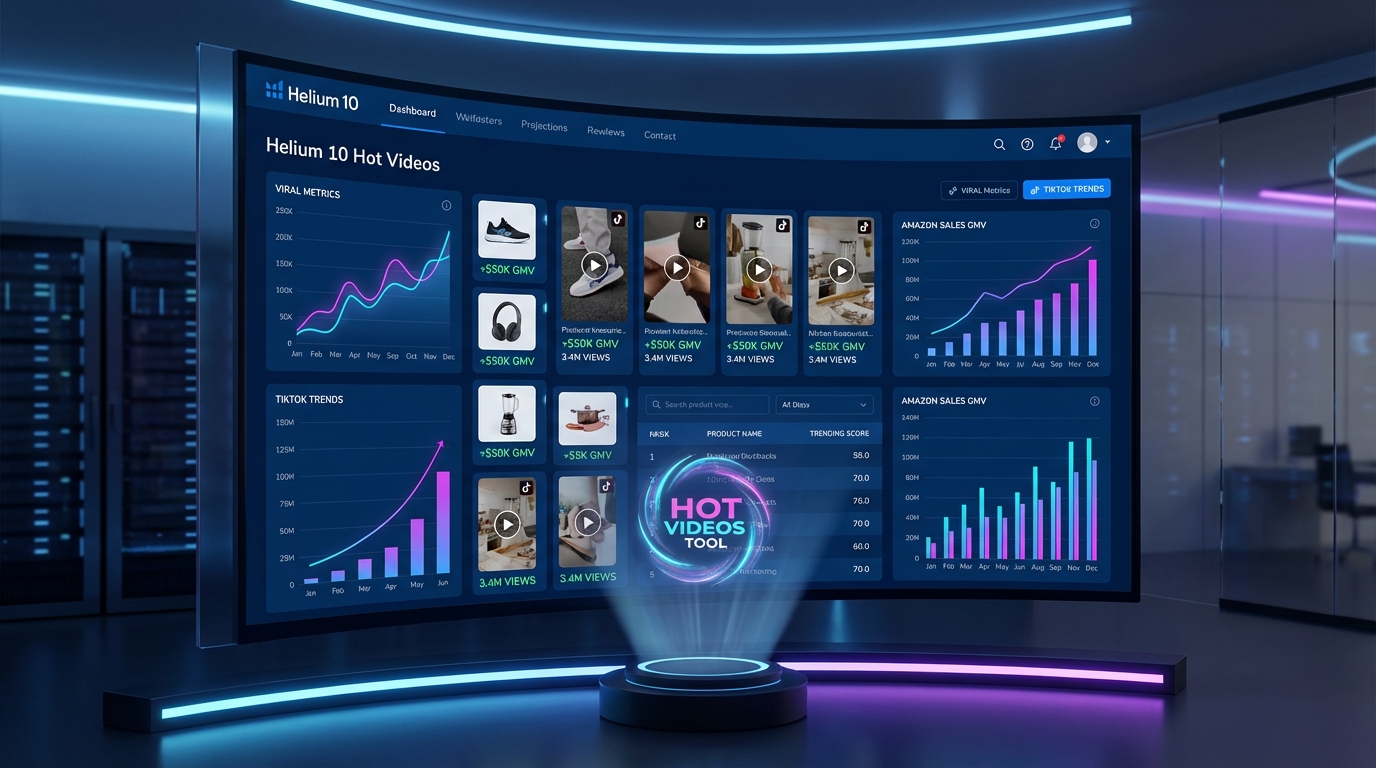
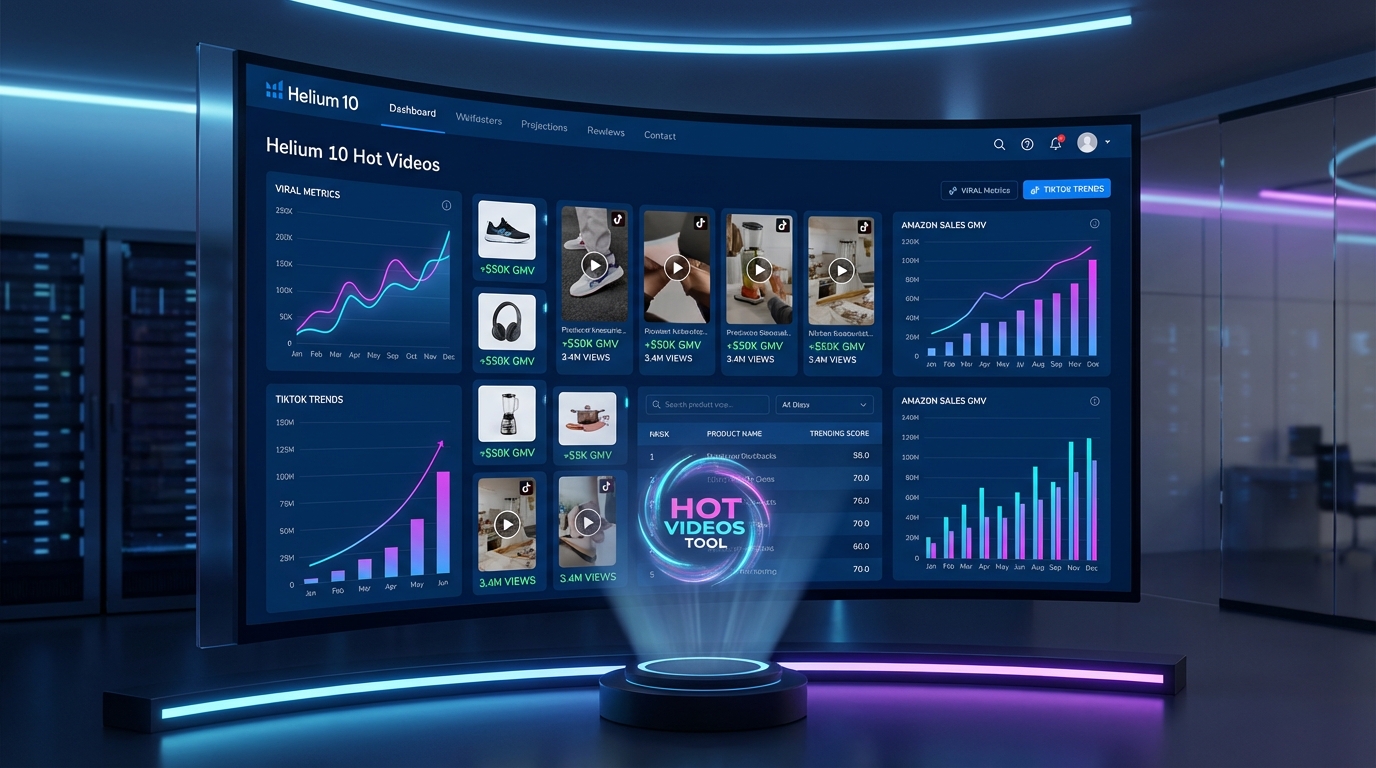
Helium 10’s Hot Videos tool sits squarely in the “anticipate” column. Built into the platform’s TikTok product research suite, it gives sellers a real-time intelligence feed into which TikTok videos are generating actual Gross Merchandise Value (GMV) — not just views, not just likes, but verifiable sales data tied to specific products. That distinction matters enormously.
Most conversations about social commerce product discovery stop at “watch trending hashtags” or “browse the For You page.” That’s surface-level advice that produces surface-level results. Hot Videos goes considerably deeper. It connects the entertainment layer of TikTok — the videos people scroll through — directly to the commercial layer: the products those videos are actually moving off virtual shelves.
This guide is for sellers who want to use Hot Videos not just to find products, but to use it with precision. That means understanding the data architecture behind the tool, building a validation workflow that connects it to the rest of your Helium 10 toolkit, decoding the hook formulas that drive the highest-converting videos, and knowing exactly when a TikTok trend translates into a defensible Amazon opportunity — and when it doesn’t.
By the end of this guide, you’ll have a repeatable system for spotting products before the market does, validating demand before you invest, and using winning video content as a blueprint for your own sales strategy — whether you’re launching on TikTok Shop, Amazon, or both.
What Helium 10 Hot Videos Actually Is — and Where It Fits in the Platform
Before building a strategy around any tool, you need to understand what it actually does. Hot Videos is not a general social listening platform. It’s a focused product intelligence tool that indexes TikTok Shop videos specifically — not all TikTok content — and ranks them by commercial performance rather than pure engagement metrics.
Where to Find It
Hot Videos lives inside the Product Research section of your Helium 10 dashboard, grouped within the TikTok tools suite. The full suite includes three closely related tools:
- TikTok Product Finder — searches for trending products using filters like GMV, category, price range, and sales velocity
- Hot Videos — searches for the specific videos driving those sales, with filters for engagement, conversion performance, and content type
- Influencer Finder — identifies the creators behind top-performing content, with outreach capabilities built in (available to Diamond tier users)
Think of these three tools as a pipeline. Product Finder shows you what is selling. Hot Videos shows you how it’s being sold — the specific content format, messaging, and presentation driving conversions. Influencer Finder shows you who is selling it successfully and gives you a direct line to those creators.
Why Hot Videos Is Different From Standard Social Listening
Generic social listening tools track mentions, shares, and engagement. Hot Videos tracks verified commercial outcomes. A video appearing in Hot Videos has been confirmed to generate real GMV — actual sales revenue from TikTok Shop purchases. This is a fundamentally different data type than view counts or engagement rates, which can be gamed, inflated by celebrity accounts, or driven by controversy rather than purchase intent.
This means when a product appears in Hot Videos with strong GMV figures, you’re not looking at a popularity signal — you’re looking at a buying signal. That’s the foundation of every effective research workflow built around this tool.
Access Level Requirements
Hot Videos is accessible to Helium 10 Platinum users and above. The Influencer Finder and Influencer Messenger tools — which form the outreach layer of the workflow — are gated to Diamond plan users. For sellers building a full TikTok-to-Amazon research and sourcing system, the Diamond tier gives you the complete toolkit.
The TikTok Halo Effect: Why This Tool Matters Far Beyond TikTok Shop
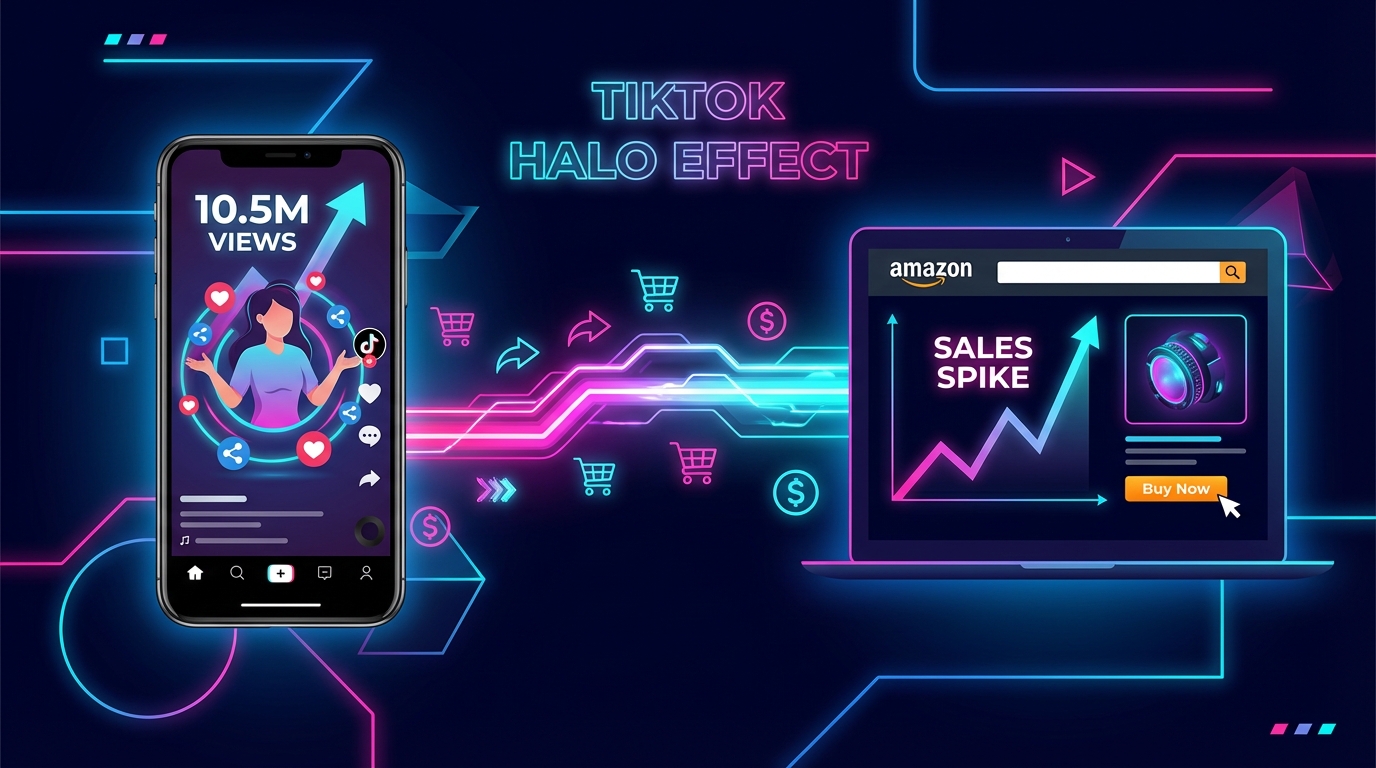
Perhaps the most important concept to internalize before using Hot Videos is one that Helium 10 has documented extensively: the TikTok Halo Effect. Understanding it changes how you think about the value of TikTok data — and why Hot Videos should be part of every Amazon FBA seller’s research process, even those who have never posted a single TikTok video.
What the Halo Effect Looks Like in Practice
When a product goes viral on TikTok — whether through organic creator content, a TikTok Shop affiliate campaign, or paid promotion — a measurable portion of viewers don’t buy through TikTok directly. Instead, they open Amazon, search for the product by name or description, and purchase there. This creates an indirect but highly significant traffic and conversion event on Amazon without any direct link between the TikTok video and the Amazon listing.
The documented case of Josh and Jenna Coleman’s meal planner product is one of the clearest illustrations. A single 10-second TikTok video accumulated half a million views in its first day and surpassed a million by day two. They sold out roughly 500 units on TikTok Shop in approximately two days — but the more striking data point was that they sold over 800 additional units on Amazon during the same period, with no direct link from the TikTok content to their Amazon listing. Customers discovered the product on TikTok and went looking for it on Amazon.
The Search Behavior Driving the Halo Effect
TikTok’s user base — with 170 million monthly active US users spending an average of 55 minutes per day on the platform — generates enormous amounts of product awareness. According to data reflected on Helium 10’s own TikTok tools page, 58% of TikTok users discover products via the app. But discovery and purchase don’t always happen in the same place.
Amazon buyers are conditioned to search Amazon first when they know what they want. So when TikTok creates awareness, many of those potential buyers migrate to Amazon where they’re more comfortable completing a transaction. This drives branded search volume, category search volume, and sessions on Amazon listings — all of which feed the A9 algorithm and can lift organic ranking for products already listed.
What This Means for Your Research Strategy
The implication is significant: Hot Videos is not just a TikTok Shop product research tool. It’s an Amazon FBA product research tool. When you identify a product generating strong GMV on TikTok through Hot Videos, you’re simultaneously identifying a product that is likely driving increased search volume and organic sales on Amazon — or will be soon. Getting there before competing Amazon sellers recognize the same trend is the competitive advantage the tool is designed to create.
Navigating the Hot Videos Dashboard: Filters, Metrics, and How to Read the Data
The Hot Videos interface is built around a searchable, filterable video database. But like any powerful research tool, its value is directly proportional to how well you understand what each data point means and how to use the filters strategically. Here’s a detailed breakdown.
The Core Search Layer
Your starting point is a keyword or category search. You can enter a product type (e.g., “auto-tracking tripod,” “water bottle,” “teeth whitening”), a niche, or browse by category. The results populate a feed of TikTok Shop videos, ranked by commercial performance rather than views — which is the crucial difference from simply searching TikTok directly.
Timeframe Filters: Why This Setting Matters Most
The timeframe filter is arguably the most strategically important control in Hot Videos. You can filter for videos from the past 7 days, 14 days, 30 days, or 3 months. Here’s how each timeframe serves a different research purpose:
- 7–14 days: Captures emerging trends in their earliest stages. Products appearing here with strong GMV may not yet have attracted significant Amazon competition. High opportunity, but also higher risk — these trends may not sustain.
- 30 days: The sweet spot for most sellers. Trends appearing here have demonstrated consistent performance over a meaningful period, suggesting they’re not one-off spikes driven by a single viral moment.
- 3 months: Ideal for validating whether a trend has sustained staying power or is already beginning to saturate. If you’re seeing strong GMV here and the product isn’t yet highly competitive on Amazon, that’s a meaningful signal.
The most effective researchers run the same search across multiple timeframes and compare the overlap. Products appearing consistently across the 7-day, 30-day, and 3-month views are demonstrating sustained demand — not flash trends.
Key Metrics Displayed in Hot Videos
Beyond the timeframe filter, each video entry in Hot Videos displays a set of core metrics that you should evaluate before diving deeper into any opportunity:
- GMV (Gross Merchandise Value): The total revenue generated through TikTok Shop sales attributed to the video. This is the primary commercial signal.
- Views: Total view count. Used in context with GMV to calculate implied conversion efficiency.
- Conversion Rate: The percentage of viewers who purchased through the video’s product link. A high-view, low-conversion video is entertainment. A moderate-view, high-conversion video is a selling machine.
- Engagement metrics: Likes, comments, and shares, which indicate the content resonated beyond just the purchase action.
- Product ASIN links: Where available, Hot Videos surfaces the associated product ASINs, giving you a direct bridge to validate the opportunity on Amazon.
Category Filters and Advanced Refinement
If you’re doing broad market research rather than looking for a specific product, the category filter lets you browse by niche — beauty, home, pet, fitness, kitchen, and others. Browsing by category with a 30-day timeframe and sorting by GMV gives you a rapid market intelligence snapshot: what’s selling, what types of content are driving those sales, and what price points are converting.
The GMV Signal: How to Read Gross Merchandise Value Without Getting Misled
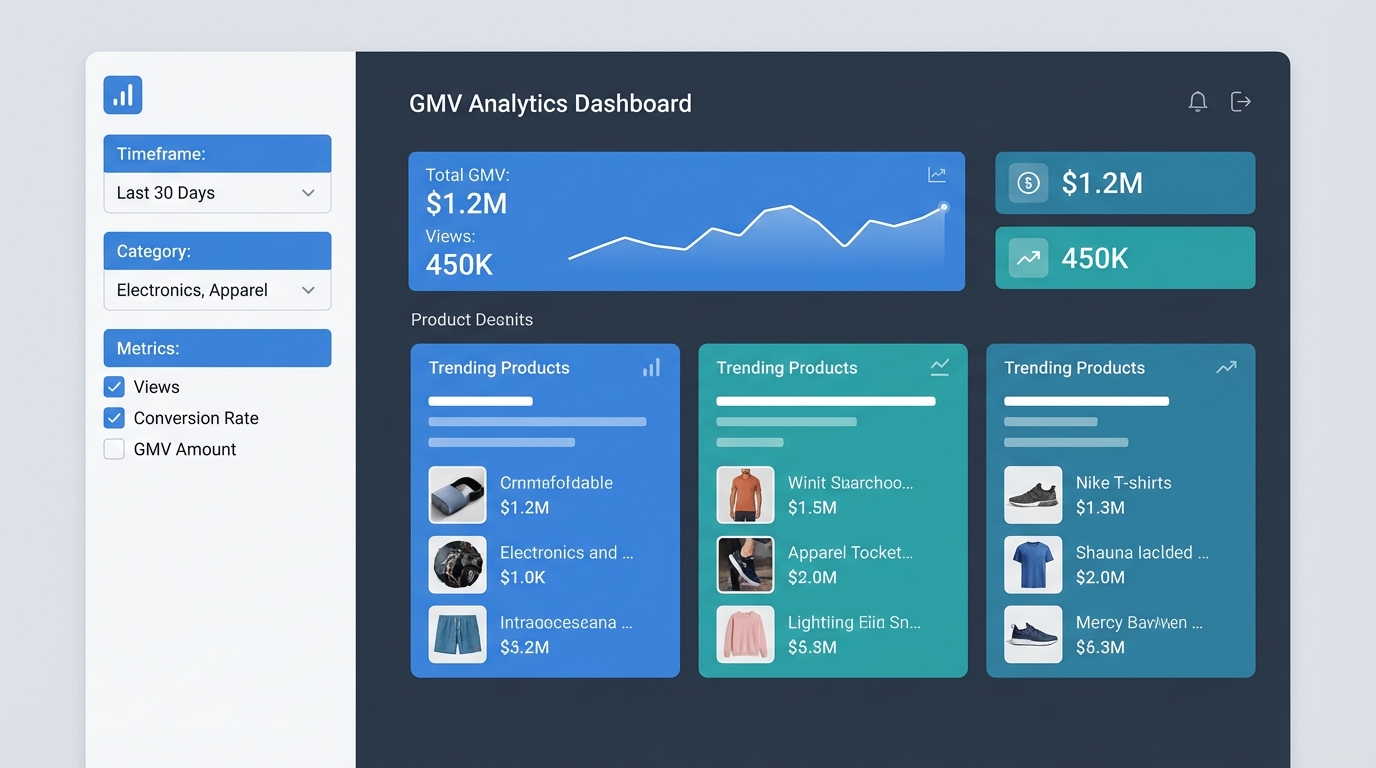
GMV is the headline number in Hot Videos, but it requires context to be genuinely useful. A high GMV figure doesn’t automatically mean an opportunity is worth pursuing — and a moderate GMV figure shouldn’t automatically disqualify a product from your research pipeline. Understanding how to interpret GMV correctly separates sophisticated researchers from those who chase shiny numbers.
Absolute GMV vs. GMV Relative to Views
Two videos with the same GMV are not equal if one achieved it with 100,000 views and another achieved it with 2 million views. The first video is demonstrating exceptional conversion efficiency — it converted a much higher percentage of viewers into buyers. The second may be riding on a large creator’s audience rather than the inherent appeal of the product.
When evaluating a video in Hot Videos, always calculate the implied conversion ratio: GMV ÷ views (adjusted for average selling price) gives you a rough sense of conversion performance. Videos where a small number of views generated disproportionately high GMV are the ones worth studying most closely, because they suggest the product and content combination is inherently compelling rather than amplified by celebrity reach.
GMV Velocity: Rising Stars vs. Sustained Performers
When you run the same keyword search across multiple timeframes, you can identify two distinct types of commercial winners:
- Rising stars: Products with rapidly accelerating GMV in the 7–14 day window that haven’t yet appeared in the 3-month view. These are early-trend opportunities. The risk is that the trend may not sustain, but the upside is minimal Amazon competition.
- Sustained performers: Products maintaining strong GMV across all timeframes. These are safer bets — proven demand — but Amazon competition may already be building. Your edge here comes from differentiating the product, not being first to market.
What High GMV Combined with Few Creators Means
One of the most valuable signals in Hot Videos is finding a product with strong GMV but a small number of creators promoting it. This suggests demand is real but hasn’t yet attracted a flood of affiliate creators — which means the opportunity hasn’t become obvious to the broader seller community yet. When you cross-reference this with Amazon data (more on this in the validation workflow section below) and find the product isn’t heavily competitive there either, you’re looking at a genuine gap in the market.
Using GMV Alongside Helium 10’s TikTok Product Finder
Hot Videos and TikTok Product Finder work as complementary tools. Product Finder’s Simple Mode surfaces products with high GMV and growth momentum automatically. Advanced Mode lets you filter specifically for products showing high GMV with very few affiliated creators or limited video volume — the hidden gems. Running a product you’ve identified in Hot Videos through Product Finder gives you broader market context: how many sellers are moving this product, what price range is performing, and how strong the overall category momentum is.
The Hook Anatomy Formula: Decoding What Makes a Hot Video Actually Convert

Hot Videos isn’t only a product discovery mechanism. It’s a content intelligence tool. Every high-converting video in the database is a working example of what a specific audience is responding to — in terms of presentation, format, pacing, messaging, and structure. Sellers who learn to read those videos analytically gain a significant advantage when creating their own content or briefing creators.
The First Three Seconds: Where Conversion Is Won or Lost
TikTok’s own creator data consistently shows that the first three seconds of a video determine whether a viewer will continue watching or scroll past. In the context of a selling video, those three seconds need to accomplish two specific things: grab attention and establish purchase relevance. Every top-performing Hot Videos entry does both.
Seven-figure TikTok Shop sellers recommend a dual-hook approach: a verbal hook delivered both spoken and as on-screen text simultaneously, paired with a visual hook that creates immediate curiosity about what the product does. The verbal hook should speak directly to a specific audience (“Attention, fishermen—”) or trigger a specific emotion (“Stop throwing money away on—”). The visual hook should be something unexpected: a demonstration, a transformation, a surprising use case, or a product detail that immediately raises a question the viewer wants answered.
The HACK Formula That Top Sellers Use
One widely discussed framework among experienced TikTok Shop sellers breaks down effective video hooks into a structure many call the HACK formula, designed for the short-form selling environment:
- Hook: The opening verbal or visual statement that stops the scroll
- Agitate: A brief acknowledgment of the problem or frustration the product solves
- Claim: A specific, credible statement about what the product does differently
- Keep watching: An implicit or explicit reason to continue — a demonstration, a reveal, or a promise of information coming next
When you watch the top-performing videos in Hot Videos through this lens, the structure becomes visible almost immediately. The best-converting videos aren’t random — they’re following a consistent logic of building and sustaining purchase intent within a very compressed timeframe.
Categories of Visual Hooks to Study
As you review Hot Videos content in your target categories, watch specifically for these recurring visual hook patterns, which consistently appear in high-GMV videos:
- Demonstration hooks: The product being used in an immediately impressive or surprising way — often before any explanation is given
- Comparison hooks: A before/after or side-by-side that makes a quality or functionality difference visible in seconds
- Stacking hooks: Showing product variety, quantity, or color range in a way that creates desire through abundance
- Text overlay hooks: Bold, direct claims or curiosity triggers as on-screen text that function even when a viewer watches without sound
- Problem recreation hooks: Showing the frustrating problem the product solves — making viewers say “that’s me” — before introducing the solution
Cataloging the hook types that dominate your specific product category within Hot Videos gives you a directional brief for any creator outreach or content production you undertake.
Cross-Referencing Hot Videos with Black Box, Xray, and Cerebro
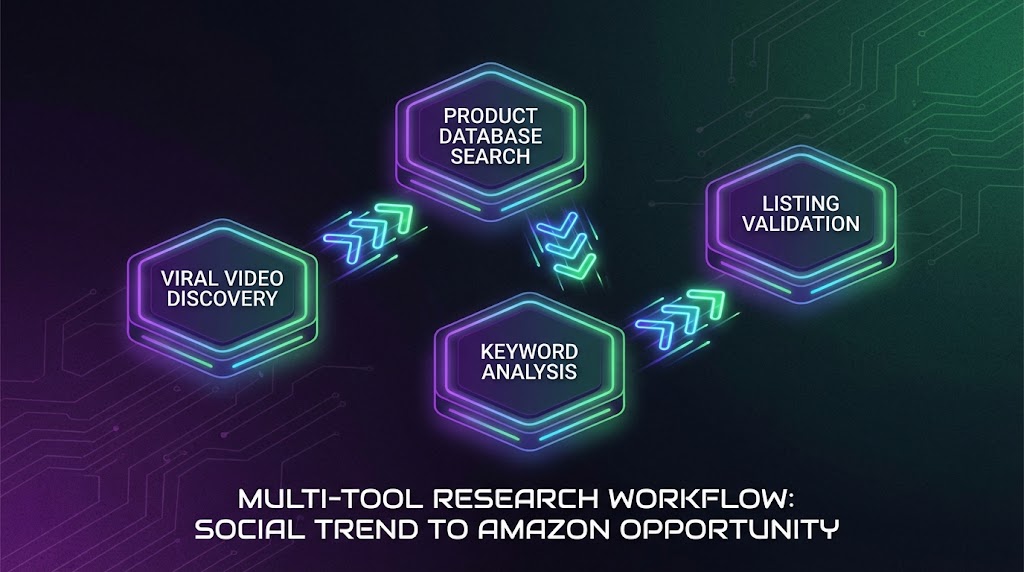
Hot Videos gives you a commercially validated TikTok signal. That signal needs to be tested against Amazon’s data environment before you invest in sourcing, inventory, or a listing. The cross-referencing workflow that connects Hot Videos to Helium 10’s Amazon research tools — Black Box, Xray, and Cerebro — is where raw opportunity becomes actionable intelligence.
Step 1: Hot Videos Identifies the Product
Your starting point is a product identified through Hot Videos with credible GMV, good conversion efficiency relative to its view count, and ideally limited creator saturation. Before moving forward, note the product category, approximate price point, and any ASIN links surfaced in the Hot Videos interface.
Step 2: Black Box Validates Market Size and Competition
Black Box is Helium 10’s primary Amazon product research database. Use it to run a broad search for the product category you’ve identified. Set filters for:
- Monthly revenue range (look for categories where the top sellers are generating meaningful revenue but where there are multiple sellers achieving it — not just one dominant player)
- Review count ceiling (products with under 500 reviews on the top listings suggest the market hasn’t been fully captured yet)
- Price range (match what you observed in Hot Videos to ensure you’re analyzing the correct segment)
- Rating minimums (above 3.8 stars indicates the market has established quality expectations)
What you’re looking for in Black Box is confirmation that the product type has real Amazon demand and that the competitive landscape isn’t already locked up by entrenched players with thousands of reviews and dominant BSR positions.
Step 3: Xray Analyzes the Live Competitive Landscape
Once Black Box confirms the market has potential, use Helium 10’s Xray Chrome extension directly in Amazon search results for the product you’ve identified. Xray surfaces real-time sales estimates, revenue figures, pricing data, review counts, and BSR for every listing on the search results page.
The analysis you’re performing here has two objectives. First, you want to confirm that the market is generating the revenue volume you’d need it to generate for the opportunity to be worth pursuing. Second, you want to identify gaps — listings with weak review counts, poor images, thin listing copy, or limited keyword coverage — that suggest there’s room to win with a properly executed listing.
Step 4: Cerebro Builds Your Keyword Foundation
Cerebro is Helium 10’s reverse-ASIN keyword research tool. Take the top-performing ASINs you identified in Xray and run them through Cerebro. This reveals every keyword those ASINs rank for, their monthly search volumes, the position those competitors currently hold, and estimated organic and sponsored revenue attribution by keyword.
For a product you’ve discovered through Hot Videos, Cerebro serves two critical functions. First, it tells you whether the Amazon search volume exists to support a profitable launch — TikTok virality doesn’t always translate to significant Amazon search traffic immediately. Second, it reveals which keywords the existing competition is missing or ranking weakly for, which becomes your keyword targeting roadmap.
The Cross-Reference Conclusion
A product worth pursuing through this workflow should check all of these boxes: meaningful GMV in Hot Videos with good conversion efficiency, sufficient market revenue in Black Box, a competitive landscape in Xray that has identifiable gaps, and keyword data from Cerebro confirming both Amazon search demand and competitive weaknesses to exploit. If any of these fail, you cycle back to Hot Videos and identify the next candidate.
The Full Validation Workflow: From TikTok Viral to Amazon FBA Decision
Combining all of the above into a repeatable process requires structure. Here is a complete, step-by-step validation workflow that experienced sellers use when taking a Hot Videos discovery all the way through to a sourcing decision.
Phase 1: Discovery (Hot Videos)
- Open Hot Videos and search your target category or keyword
- Set timeframe to 30 days as your primary view
- Sort by GMV, then manually filter for high GMV relative to view count
- Identify 3–5 candidate products with consistent GMV presence
- Run the same search at 7-day and 3-month timeframes to assess trend maturity
- Check creator count for each product — fewer creators with high GMV is ideal
Phase 2: Amazon Market Validation (Black Box + Xray)
- Search for each candidate product in Black Box with appropriate filters
- Confirm monthly revenue potential across the market (not just top 1–2 sellers)
- Check the distribution of revenue — markets where #3–10 sellers each earn meaningfully are healthier entry points than winner-takes-all markets
- Open Amazon and run Xray on the search results page for the product
- Review pricing, review counts, sales velocity, and listing quality gaps
- Flag any listings with under 300 reviews and strong sales as direct opportunity targets
Phase 3: Keyword Intelligence (Cerebro + Magnet)
- Run the top 2–3 competitor ASINs through Cerebro
- Filter results for keywords with monthly search volume above 1,000
- Identify keywords where competitors rank on page 2 or lower — these are ranking opportunities
- Run supplementary keyword research in Magnet to catch terms Cerebro’s reverse-ASIN lookup may miss
- Flag high-volume, low-competition keywords as your primary launch targets
Phase 4: The Go/No-Go Decision
With all research complete, the decision framework is straightforward. Proceed if: the product has demonstrated sustained TikTok GMV (not a single spike), the Amazon market has at least 3–5 sellers earning meaningful monthly revenue with no single dominant player controlling the category, listing quality gaps exist that your product can improve upon, and Cerebro data confirms keyword opportunities for organic ranking. If three or more of these conditions aren’t met, move to the next candidate from your Hot Videos shortlist.
Influencer Finder + Hot Videos: The Outreach Power Combination
Identifying a winning product through Hot Videos and validating it against Amazon data is the research phase. But the execution phase — actually driving sales on TikTok Shop — requires connecting with creators who can produce high-converting content for your product. This is where Influencer Finder becomes the natural next step in the workflow.
What Influencer Finder Does
Influencer Finder is available to Helium 10 Diamond users and lets you search TikTok creators by keyword, category, follower count, engagement rate, bio content, and location. The tool surfaces creators whose audience and content style match your product — rather than relying on inbound applications or general creator marketplaces where match quality is inconsistent.
How Hot Videos Informs Your Influencer Search
Here’s where the two tools create genuine synergy. When you’ve identified a high-performing video in Hot Videos, you know exactly what type of content is converting for your product category. You know the hook style, the content length, the presentation approach, and the audience language that’s working. Carry that intelligence into Influencer Finder and use it to filter for creators who are producing similar content — not by style alone, but by demonstrated conversion performance.
Specifically, look for creators who:
- Have produced videos in your product category with above-average engagement rates
- Use content formats similar to the top performers you identified in Hot Videos
- Have follower counts that suggest a genuinely engaged niche audience rather than a broad, diffuse following
- Appear in multiple Hot Videos results (not just one), indicating consistent commercial performance rather than one lucky post
Influencer Messenger for Scaled Outreach
Once you’ve built a shortlist of target creators from Influencer Finder, Helium 10’s Influencer Messenger tool handles outreach at scale. TikTok’s native messaging system limits sellers to roughly 50 outbound messages per day — a significant constraint for any meaningful affiliate campaign. Influencer Messenger bypasses this limitation, enabling bulk outreach with personalized, AI-assisted messages that can be tailored by creator category or audience type.
Commission structures for TikTok Shop affiliates typically run between 10% and 15% for physical products, with the exact rate negotiated based on the creator’s GMV track record. Influencer Messenger tracks replies, agreements, and performance metrics from a single dashboard, which is critical when managing relationships with multiple creators simultaneously.
Avoiding the Trend Traps: Common Mistakes Sellers Make With Hot Videos

Hot Videos is a powerful tool, but it’s not a guarantee. Every research tool in any seller’s stack can produce false positives — signals that look like opportunities but don’t survive contact with real market dynamics. Knowing the most common mistakes sellers make when using Hot Videos is as important as knowing how to use the tool correctly.
Mistake 1: Confusing Views for Demand
A video with 10 million views and minimal GMV is telling you something important: this product is entertaining to watch but not compelling enough to buy. Some product categories generate enormous curiosity on TikTok — satisfying processes, unusual gadgets, aesthetic transformations — without that curiosity converting to purchase intent at meaningful rates. Always return to GMV and conversion efficiency as your primary metrics. Views are context, not signal.
Mistake 2: Acting on a Single Viral Spike
The most dangerous pattern in Hot Videos is a product showing explosive GMV in the 7-day view that completely disappears in the 30-day view. This almost always indicates a single creator with a very large following drove a one-time spike — and when that creator’s audience moved on, the product’s commercial performance collapsed. The multi-timeframe check described in the validation workflow exists specifically to protect against this trap. If a product’s GMV in the 7-day view is dramatically higher than its performance in the 30-day view, treat it as a one-off event rather than a trend signal.
Mistake 3: Ignoring Amazon Search Validation
The TikTok Halo Effect is real, but it’s not automatic for every product. Some TikTok-viral products generate strong TikTok Shop sales without creating corresponding Amazon search volume — particularly if the product is strongly branded, has an unusual name, or if the buying population skews heavily toward the TikTok shopping tab itself. Before committing to an Amazon FBA launch based purely on Hot Videos data, always run Cerebro to confirm actual Amazon keyword search volume exists. The Halo Effect amplifies existing Amazon demand — it doesn’t create it from scratch in all cases.
Mistake 4: Overlooking Regulatory and Compliance Issues
Rapidly trending products on TikTok occasionally fall into categories with complicated regulatory, safety, or intellectual property considerations. Health and wellness products, child safety items, electronic devices, and beauty products with active ingredient claims all have specific compliance requirements on both TikTok Shop and Amazon. Moving fast on a Hot Videos opportunity without checking compliance requirements first can result in listing suppression, account warnings, or inventory that can’t be sold. Build a compliance check into your validation workflow, particularly for beauty, health, and electronics categories.
Mistake 5: Sourcing Too Slowly
The value of early trend identification through Hot Videos decays over time. A product appearing in Hot Videos with strong GMV and limited competition today may have five additional sellers listing on Amazon within 60 to 90 days — because other researchers are running the same workflow. The sourcing and launch timeline matters. If your validation workflow confirms an opportunity, the next step is initiating supplier conversations immediately, not after completing additional rounds of analysis. Speed is part of the strategy.
Advanced Strategies: Using Hot Videos to Inform Your Own Content Production
The highest-leverage use of Hot Videos isn’t just finding new products to sell. It’s using the intelligence it provides to produce better content for products you already carry. Every top-performing video in the database is a market research report on what your target customer responds to — delivered in the most direct possible format: a video that made real people pull out their wallets and buy.
Building a Content Blueprint from High-Converting Videos
When you find a cluster of high-GMV videos for a product you’re already selling or planning to launch, watch them systematically with a structured analysis framework. For each video, document:
- The exact language used in the first three seconds (both spoken and as text overlay)
- The visual structure of the opening shot
- The duration of the video and the pacing of information delivery
- The specific problem or benefit referenced in the hook
- The call-to-action format and placement in the video
- The product presentation style (lifestyle, demonstration, unboxing, comparison)
- The comment section — what specific questions, reactions, or objections appear repeatedly
After analyzing 8–10 high-performing videos in your category, patterns will emerge. These patterns become your content brief — not just for TikTok videos but for Amazon listing images, A+ content, and product video content as well, since the same buying psychology that converts on TikTok converts on Amazon.
The Comment Section as Competitive Intelligence
One often-overlooked layer of Hot Videos analysis is the comment sections of the top-performing videos. Comments reveal what potential buyers are most curious about, what objections they’re raising before purchase, and what vocabulary they use to describe the problem the product solves. This is first-party customer language — more authentic and current than any keyword tool can provide.
Specific comment patterns to watch for:
- “Where can I get this on Amazon?” — direct Halo Effect signal
- Repeated questions about size, color, or compatibility — product differentiation opportunities
- Complaints about quality from buyers of competitor products — your listing copy improvement opportunity
- Specific use cases mentioned by commenters that the video didn’t cover — content gap for your own videos
Applying Hot Videos Intelligence to Amazon Listing Images
The visual hooks that drive conversions in TikTok videos translate directly into effective Amazon listing images. If multiple high-GMV videos for your product type open with a dramatic before/after demonstration, your main or secondary images should include a before/after visual. If the top-performing videos use a specific pain point in their hook (“stop losing your keys again”), your infographic images should address the same pain point directly. The conversion psychology is consistent across platforms — the format changes, but what resonates with buyers doesn’t.
Seasonal and Category Trend Monitoring
Hot Videos is particularly powerful as a seasonal intelligence tool. Running category searches in the weeks before major shopping periods (Q4, Valentine’s Day, back-to-school, summer outdoor season) reveals which product types are already building TikTok GMV — before those trends have fully hit Amazon search volumes. This gives sellers who check Hot Videos regularly a meaningful head start on inventory positioning and PPC strategy for seasonal spikes.
Integrating Hot Videos Into Your Full Weekly Research Routine
Hot Videos delivers the most value when it’s used systematically rather than sporadically. Building it into a regular research cadence — rather than treating it as a one-time discovery tool — keeps you continuously aware of what’s moving in your market and what’s emerging in adjacent categories.
A Practical Weekly Check-In Protocol
A structured weekly routine doesn’t need to be time-intensive. Here’s a framework that experienced sellers use to stay current without burning hours every week:
- Monday (20 minutes): Run the 7-day view for your primary product categories in Hot Videos. Flag any new entries with meaningful GMV. This serves as your early-warning radar for emerging trends.
- Wednesday (30 minutes): Run the 30-day view for the same categories, noting anything that appeared in Monday’s 7-day check and is now showing up with sustained GMV. These are your highest-priority candidates.
- Friday (15 minutes): Review the top 3–5 videos in your primary category this week, focusing specifically on hook formats and comment patterns. Document any new hook styles or customer language patterns.
This routine generates a steady pipeline of potential opportunities without requiring a full research session every time you open the tool. Once a month, take one of your flagged candidates through the full validation workflow (Black Box → Xray → Cerebro) to make a formal go/no-go assessment on sourcing.
Tracking Trend Trajectories Over Time
One of the most valuable practices for sellers who use Hot Videos consistently is building a simple tracking log — a spreadsheet documenting which products you flagged, when you first spotted them, what their GMV was at that point, and how the Amazon competitive landscape looked when you validated them. Over time, this log reveals patterns specific to your category: how long trends typically take to move from TikTok viral to Amazon competitive, which product types have the longest trending windows, and which tend to spike and collapse quickly.
This category-specific knowledge compounds over months and makes your future research significantly more efficient. You stop chasing every signal and start recognizing the specific pattern signatures that have historically led to durable Amazon opportunities in your space.
Conclusion: The Competitive Advantage Is in the Workflow, Not Just the Tool
Helium 10’s Hot Videos tool gives Amazon and TikTok Shop sellers something they’ve historically had to build ad-hoc: a commercially validated window into what’s driving real consumer purchases on social media before those trends fully materialize on Amazon. The data is real, the signals are actionable, and the integration with Helium 10’s broader research toolkit — Black Box, Xray, Cerebro, Influencer Finder — creates a research pipeline that goes from trend identification to sourcing decision without requiring you to jump between disconnected tools.
But it’s worth being clear: the tool creates the opportunity. The workflow converts that opportunity into results. Sellers who browse Hot Videos occasionally and act on gut feel will get occasional wins. Sellers who build the structured validation workflow described in this guide — the multi-timeframe GMV analysis, the creator count check, the Black Box market sizing, the Xray competitive landscape review, the Cerebro keyword validation — will make consistently better sourcing decisions with meaningfully less wasted capital.
Your Immediate Action Steps
- Open Hot Videos today and run a 30-day search in your primary product category, sorted by GMV. Identify 3 candidates worth validating further.
- Run those 3 candidates through the cross-reference workflow: Black Box for market sizing, Xray for competitive landscape, Cerebro for keyword opportunity.
- Watch the top 5 videos in your category this week as a content analyst, not a viewer. Document the hook structures, content patterns, and comment reactions.
- Set up a weekly calendar block for your Hot Videos check-in routine — even 20 minutes three times a week generates compounding market intelligence.
- If you’re on Diamond: Cross-reference your Hot Videos product candidates with Influencer Finder and begin building your creator shortlist before you’ve even sourced inventory.
The sellers who consistently get ahead of Amazon trends in 2026 aren’t working harder than their competitors — they’re looking at better data, earlier, with a more rigorous process for separating signal from noise. Hot Videos, used with the discipline and systematic approach this guide describes, is one of the clearest competitive advantages available in today’s Amazon research toolkit.