
Automation Debt: What AI Automation Really Costs Your Business After Launch
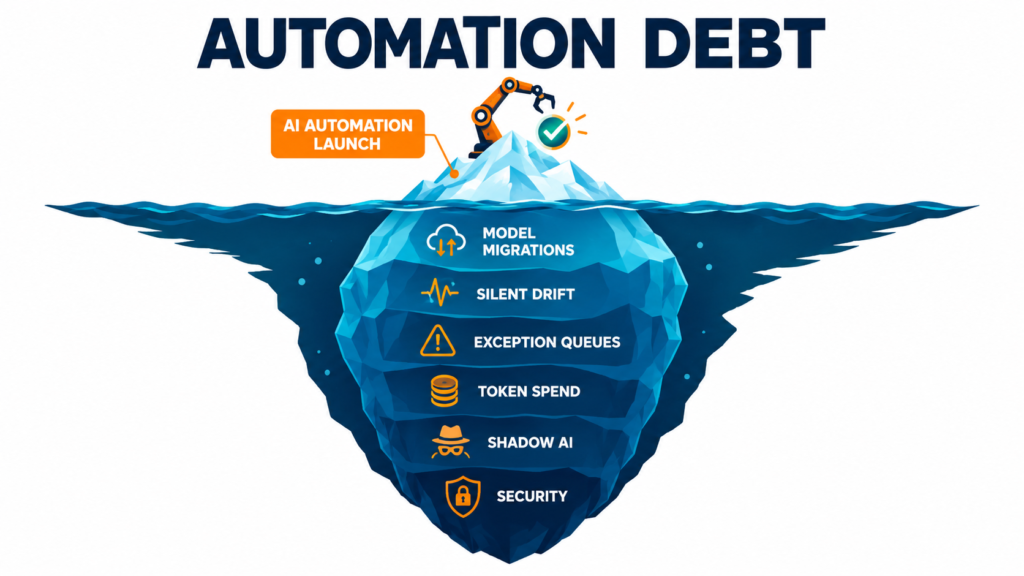
AI automation doesn’t get cheaper after go-live. Model retirements, silent drift, exception queues, and shadow AI add up. Here’s how to budget for them.
Which Business Tasks Should You Actually Hand to AI? A Task-Sorting Method for Small Teams
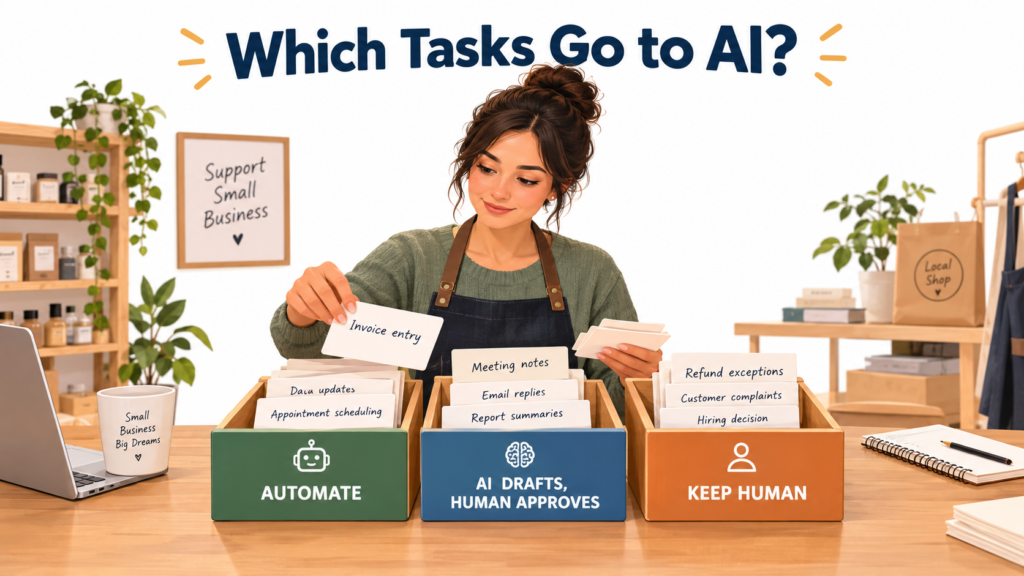
A practical way for small teams to decide which tasks AI should fully automate, which it should draft for human approval, and which must stay human.
Who Pays When the Bot Is Wrong? The Liability Side of AI Automation for Business
AI automation moves work, not responsibility. What the court cases, regulations, and security risks mean for businesses deploying AI in 2026.
Who Owns the Output? The Accountability Gap in AI Automation for Business
Courts say you own what your AI says. Here’s how to assign decision rights, guardrails, and metrics so business AI automation doesn’t become a liability.
Automation Debt: Why AI Workflows Decay After Launch — and Who Pays for It
AI automations don’t fail on launch day. They decay quietly afterward. Here’s how model drift, deprecations and ownership gaps create automation debt.
The Second-Year Problem: Why AI Automations Quietly Decay — and What It Costs to Keep Them Working
Most AI automation budgets stop at launch. Here’s where automation debt comes from, what it costs in year two, and how to own, monitor, and retire workflows.
Who Maintains the Bots? The Real Cost of Keeping AI Automation Running After Launch
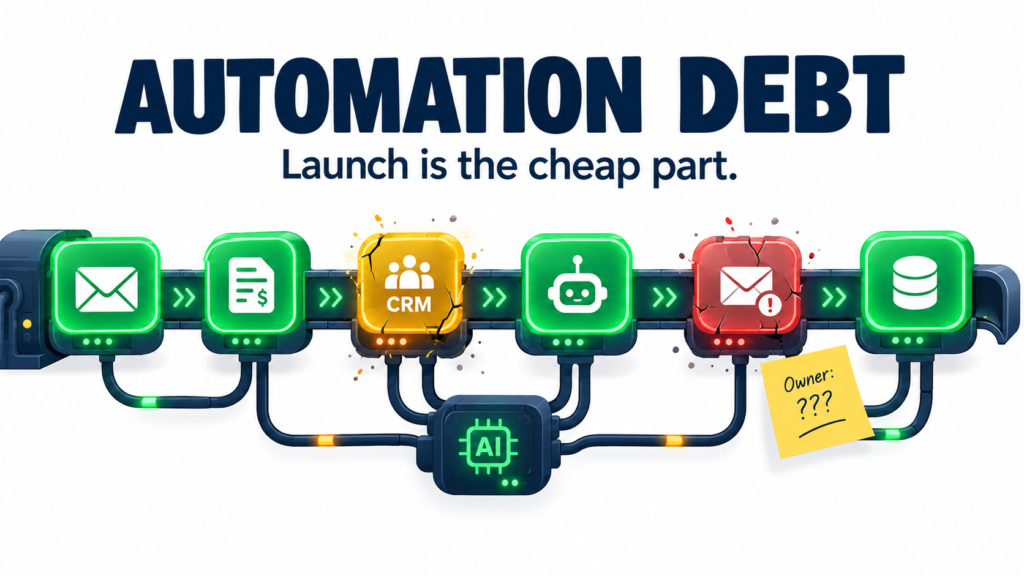
AI automation doesn’t fail at launch, it decays after. Here’s how model updates, drift, and orphaned workflows build automation debt, and how to manage it.
What AI Automation Really Costs After Go-Live: The Line Items Nobody Budgets For
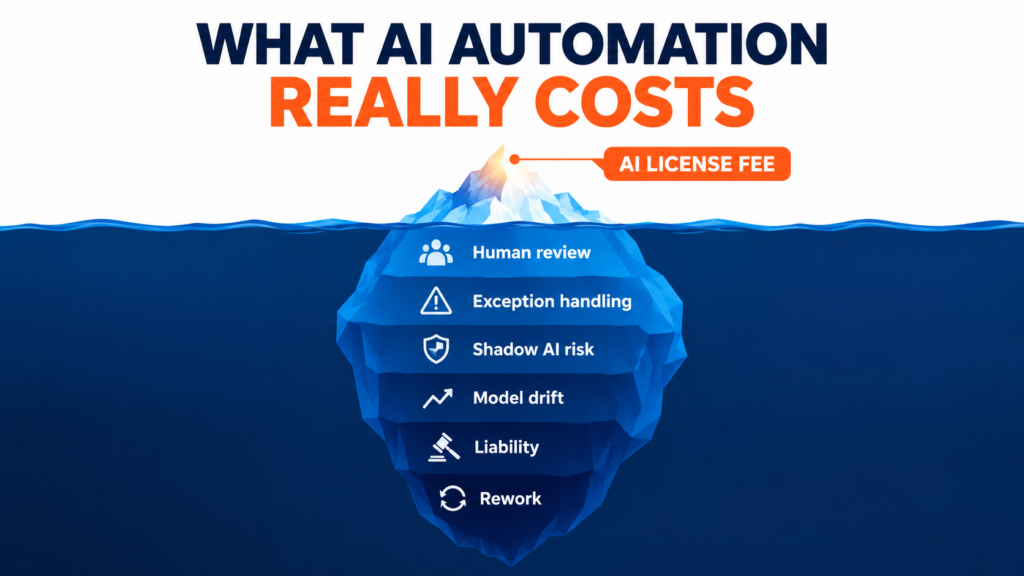
The license fee is the smallest cost of AI automation. Review labor, workslop, exceptions, shadow AI, drift and liability decide whether it pays.
Who Does the Work Now? How AI Automation Is Quietly Redrawing the Business Org Chart

AI automation is changing headcount through attrition, new roles, and missing entry-level rungs. What Klarna, MIT, and Microsoft data reveal for 2026.
Your 20-Person Company Doesn’t Need an AI Strategy. It Needs a Task List.
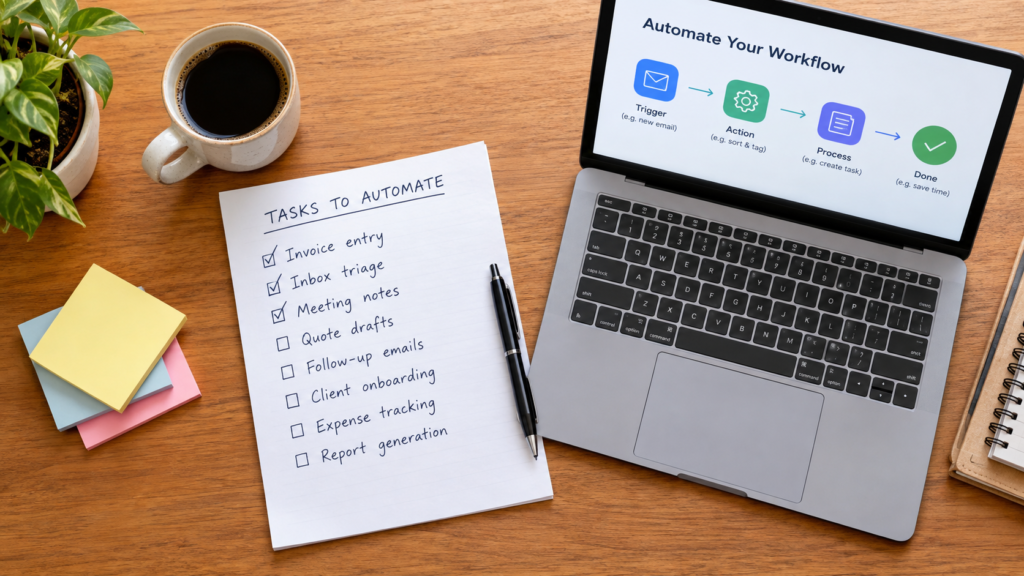
Why small teams should automate tasks, not buy AI strategies: research-backed guidance on what to automate first, what to avoid, and how to stay safe.