


There is a particular kind of operational pain that TikTok Shop sellers know well: you discover that a policy changed not by reading an announcement, but by watching your account health score drop, your settlement timing shift, or your listing disappear from search without warning. By the time you find the update that explains what happened, the damage is already done.
This is not an accident. TikTok Shop’s policy environment in 2026 moves fast — faster than most seller teams are built to track. Between the Seller Blog, the Seller Center notice board, the Seller University policy hub, the Policy Pulse newsletter, and the in-dashboard alert system, there are at least four distinct official channels publishing updates, and they don’t always publish the same things at the same time. Miss one channel and you miss a rule that could affect your margins, your fulfillment metrics, or your entire catalog.
This post is designed to fix that. Rather than another surface-level roundup of “what’s new on TikTok Shop,” this is a structured watchlist framework: which official channels publish which type of update, what the most consequential 2026 changes have been across returns, fulfillment, product compliance, affiliate programs, and paid media, and how to build a monitoring system so that your team is never caught off-guard again.
If you sell — or plan to sell — on TikTok Shop at any meaningful volume, the information architecture of how platform rules reach you matters just as much as the rules themselves.
The Update Overload Problem: Why Most Sellers Are Always Behind
Ask any experienced TikTok Shop seller when they last read a full policy update and you’ll get a familiar answer: “I try to keep up, but it’s a lot.” That’s not a personal failing — it’s a structural one. TikTok Shop does not publish a fixed public schedule for how often policies change. Instead, updates arrive through a combination of official posts, in-dashboard notices, university articles, and regional seller center pages that can differ market by market.
In practice, based on what’s been tracked in TikTok’s own “Latest Policy Updates” hub, changes are arriving at least monthly in 2026, with some metrics and settlement rules updated multiple times in a single quarter. The hub was last updated on 27 May 2026 with changes taking effect in May and June of that year — covering settlements, logistics metrics, seller ratings, and content limits simultaneously.
The signal-to-noise problem
Not all updates carry the same operational weight, and TikTok does not rank them by urgency. A change to how buyer-fault return costs are assigned sits alongside a feature announcement about a new seller dashboard widget. A shift in how Shop Performance Score affects your payout timing is buried in the same monthly roundup as a guide to creating better unboxing content. The signal-to-noise ratio is brutal for time-constrained operators.
The sellers who consistently stay ahead are not reading everything — they have built a triage system. They know which channel publishes compliance-critical changes, which publishes feature news, and which publishes operational guidelines. They read selectively and with a clear framework for what needs immediate action versus what is informational.
Regional variations add a layer of complexity
TikTok Shop operates across multiple markets — the US, UK, Southeast Asian markets (Indonesia, Thailand, Malaysia, Vietnam, Philippines), and others — and policy updates are not always synchronized across regions. A change effective in June 2026 for Vietnamese sellers may appear on a different page than the equivalent US policy update. Cross-border sellers in particular need to track multiple regional Seller Center pages simultaneously, which multiplies the monitoring burden considerably.
The result: the average seller is reactive, not proactive. They respond to penalties after the fact rather than adjusting operations before a rule takes effect. The rest of this post is about reversing that pattern.
Seller Blog vs. Seller Center vs. Policy Pulse: They Are Not the Same Thing

One of the most common sources of confusion in TikTok Shop’s communications ecosystem is treating the Seller Blog, the Seller Center, and the Policy Pulse as interchangeable. They serve fundamentally different purposes and publish fundamentally different content. Understanding the distinction is the first step in building an effective watchlist.
The TikTok Shop Seller Blog
The Seller Blog is TikTok’s public-facing content hub for brand and seller awareness. It publishes strategy guides, success stories from real brands, seasonal selling tips, feature spotlights, and category-specific growth advice. It is valuable for inspiration and for understanding what TikTok wants to highlight as best practice — but it is not where you go to find compliance-critical policy changes. The blog does not carry the operational weight of a policy update. You can safely treat it as a “when time permits” read for tactical ideas, not as your primary alert system.
The blog does, however, occasionally contain signals about platform priorities. When TikTok publishes multiple back-to-back posts about creator collaboration or product authenticity, that typically precedes a tightening of related rules. Reading the blog with a strategic eye — asking “what enforcement wave is this preparing sellers for?” — can give you a few weeks of lead time before a formal policy drops.
The Seller Center Policy Pages
The Seller Center contains the actual operational rules of the platform. The “Latest Policy Updates” hub within Seller University is where dated, effective-date-stamped changes are published. This is the authoritative source for compliance. Entries here carry direct operational consequences: they define when rules change, what the new thresholds are, and what penalties apply. If a rule change is going to affect your payout timing, your account standing, or your listing visibility, it will appear here first — or simultaneously alongside an in-dashboard notice.
The Seller Center is also where you’ll find the full text of policies in categories like product compliance, advertising rules, fulfillment standards, and dispute resolution. It is the primary channel to monitor for anything with a real financial or operational impact on your business.
Policy Pulse
Policy Pulse is TikTok Shop’s monthly roundup article — a digest of recent policy changes, upcoming rule updates, and operational reminders. It sits within the Seller Center environment but functions as a consolidated digest rather than a primary publication. Think of it as a “in case you missed it” summary of changes that have already appeared in individual policy notices.
The April 2026 edition of Policy Pulse, for example, included updates on buyer-fault return cost responsibility, changes to video editing compliance requirements, and upcoming threshold changes for performance penalties. Each of those items had appeared separately in official policy pages, but the Pulse brought them together in one readable document. For teams that prefer a monthly briefing format over continuous monitoring, Policy Pulse is the minimum viable read — but it is always retrospective, not prospective.
In-dashboard notices
Within Seller Center itself, the notification and announcement system pushes alerts directly to individual accounts. These are often the first place a seller encounters a change that affects their specific account status, a product listing, or a pending order. They can be dismissed easily if teams aren’t paying attention, but they are important: some notices carry deadlines for action (such as documentation requirements for restricted products) and the clock starts running whether or not you’ve read the notification.
The Policy Pulse Editions of 2026: What’s Actually Inside
For sellers who haven’t read every issue, the 2026 Policy Pulse editions have been unusually dense with operational changes. Rather than platform feature announcements, the early-to-mid 2026 editions have focused heavily on risk transfer — moving more financial and logistical responsibility from TikTok to sellers. This is a theme that runs through almost every category of recent updates and deserves explicit acknowledgment.
January 2026: Auto-approval and inactive inventory
The January policy update introduced automatic approval of refund-only requests for deactivated products and closed shops. In plain terms: if a product in your catalog is inactive (delisted, out of stock, or deactivated for any reason), TikTok will now automatically grant refund-only requests for orders related to that product without requiring seller review or approval.
The implication is significant for catalog hygiene. Sellers who maintain large catalogs with intermittently active products, or who deactivate listings temporarily during supply chain disruptions, now face the possibility of automatic refund approvals on those SKUs without any opportunity to intervene. It makes the case for active, disciplined catalog management — not as a best practice but as a financial protection measure.
April 2026: Return cost responsibility and content compliance
The April 2026 Policy Pulse delivered two notable changes. First, return cost responsibility for buyer-fault returns — meaning cases where the buyer changed their mind, ordered incorrectly, or otherwise initiated a return without product defect — shifted to sellers taking full cost control. Sellers gained more autonomy over which return method to specify and how to manage associated costs, but crucially, the financial responsibility shifted with it.
The second major item in April’s edition addressed prohibited editing methods in seller videos. TikTok tightened its rules around how sellers can modify or enhance video content that’s used for commercial purposes in Shop, including stricter limits on AI-generated imagery in product demonstrations and tighter requirements around what constitutes authentic product representation versus misleading enhancement.
May–June 2026: Settlements, ratings, and logistics metrics
The May 27, 2026 update to the Latest Policy Updates hub covered several simultaneous changes effective across May and June: revised settlement timing tied to performance scores, updated rating and review standards, new logistics performance thresholds, and content volume limits for certain promotional formats. This was one of the more substantive batches of simultaneous changes in recent months and is the primary reason why sellers who check Policy Pulse once a quarter are consistently behind the curve.
Shop Performance Score: The Metric That Now Controls Your Money

If there’s a single metric that sellers need to understand deeply in 2026, it is the Shop Performance Score, commonly abbreviated to SPS. TikTok doesn’t call it a “trust score” in public documentation, but SPS now functions as the primary financial and visibility lever for seller accounts — controlling settlement timing, payment reserves, account standing, and in some penalty thresholds, feature access.
The shift is significant because it replaced two metrics — Late Dispatch Rate (LDR) and Seller-Fault Cancellation Rate (SFCR) — as the primary drivers of financial terms. Those metrics still matter for penalty point accumulation, but SPS is now what determines how and when your money moves.
What feeds into SPS
SPS is a composite score drawing from multiple input signals. The core contributors in 2026 are:
- Late Dispatch Rate: The percentage of orders not handed to a carrier within the required dispatch window. Tighter dispatch SLAs in 2026 mean that even modest delays during high-volume periods can materially impact this component.
- Seller-Fault Cancellation Rate: The proportion of orders cancelled for reasons attributable to the seller — most commonly out-of-stock situations, pricing errors, or fulfillment capacity issues. Maintaining accurate inventory and realistic pricing is a direct SPS protection measure.
- Voice of Customer (VoC): Buyer ratings, review scores, and post-purchase feedback signals. VoC now carries more weight in the SPS calculation than in previous iterations of TikTok’s performance system, making customer satisfaction a financial variable rather than just a reputational one.
- Return and dispute handling: How sellers manage return requests, dispute resolutions, and customer service interactions also contributes to SPS, creating a holistic picture of seller quality that goes beyond pure logistics.
Consequences of poor SPS
A low or declining SPS triggers a cascade of consequences. Settlement timing lengthens — meaning the money from completed orders sits in reserve for longer before being released to the seller. Payment hold thresholds become more restrictive. In severe cases, feature access is restricted and account visibility within the Shop feed can decline, though TikTok does not publicly confirm that SPS directly affects algorithmic distribution in the same way it affects financial terms.
The penalty points system adds another layer. Specific violations — a late dispatch, a seller-fault cancellation, a failed content compliance check — each carry point values that accumulate over rolling time windows. Exceed defined thresholds and the penalties escalate: initial warnings, then restrictions, then potential suspension. SPS and penalty points are distinct systems but interact: a poor penalty point record feeds into SPS deterioration, and both compound.
What strong SPS unlocks
The incentive structure works in both directions. Sellers with consistently strong SPS scores access faster settlement windows, lower reserve levels, and in some markets, priority placement in promotional programs and flash sale events. TikTok has built SPS to function as a gate for growth opportunity: the sellers who operate most professionally receive the most commercial access. For catalog-heavy or high-volume sellers, the compounding effect of strong SPS over time is material.
Returns and Refunds in 2026: How Cost Responsibility Shifted

Returns are a cost center that most sellers don’t model with enough precision until a policy change makes the numbers visible. The 2026 returns policy updates on TikTok Shop represent one of the most financially significant — and most quietly implemented — shifts in the platform’s seller economics.
The pre-2026 returns baseline
Prior to the 2026 policy changes, TikTok Shop’s return cost structure provided sellers with a degree of protection on buyer-fault returns — situations where the buyer changed their mind, ordered the wrong item, or otherwise initiated a return without a product defect being the cause. In many of those scenarios, TikTok’s policies either absorbed some return costs or shared responsibility in ways that softened the seller-side impact.
That baseline began shifting in late 2025 and accelerated into 2026, with the April Policy Pulse formalizing the change: sellers now assume full cost control for buyer-fault returns. “Full cost control” is a phrase that sounds like empowerment but contains a financial sting — the autonomy to choose the return method and logistics path comes with the responsibility of paying for it when the return is buyer-initiated.
Auto-approval risk for deactivated products
The January 2026 auto-approval change compounded this shift in a specific but important way. When a product is deactivated — whether because a seller temporarily pulled a SKU, a listing was removed for compliance reasons, or a shop closed — refund-only requests for orders related to that product are now automatically approved. The seller has no review window, no opportunity to dispute the basis of the refund, and no ability to require a return before issuing a refund.
For sellers who cycle products in and out of active status (common in seasonal or trend-driven categories), this creates a meaningful exposure window. A product deactivated during a quality audit or a supply disruption period is simultaneously a trigger for automatic refund processing on any pending orders or recent purchases. Active catalog management — keeping only genuinely in-stock, active products listed — becomes a direct cost-control measure.
The dispute resolution evolution
Separately from the cost-responsibility shift, TikTok Shop is implementing a more formal returns-dispute process rolling out from May 2026 onward. Rather than relying purely on automated rules, this process introduces structured dispute windows where sellers can contest specific return requests with documented evidence — product condition records, delivery confirmation data, customer communication logs.
The new dispute process gives sellers a legitimate channel to challenge return requests they believe are fraudulent or contrary to policy — but it requires documentation discipline. Sellers who don’t systematically capture delivery confirmations, product condition records, and customer communications will find the dispute channel largely inaccessible in practice even if it’s theoretically available to them.
How to model the financial impact
A practical approach to the new returns landscape involves three steps. First, audit your return rate by product and identify which SKUs generate the highest buyer-fault returns — those are the ones where the new cost responsibility is most financially significant. Second, review your deactivation protocols: which products get deactivated temporarily, for what reasons, and what’s the typical order volume in the days preceding deactivation? Third, implement documentation systems that would support a dispute filing if needed. The sellers who’ve absorbed the 2026 returns changes most cleanly are those who treated them as an inventory and operations problem rather than purely a policy problem.
Fulfillment and Logistics: Faster SLAs, 3PL Shifts, and the Shipping Mandate Story
Fulfillment has been the battleground where TikTok’s aspirations to become a serious ecommerce platform are most visibly tested. The platform’s moves in 2026 make clear that it intends to compete on delivery speed and reliability in a way that favors sellers who have invested in professional logistics infrastructure — and disadvantages those running fulfillment as an afterthought.
Tighter dispatch and delivery SLAs
The defining fulfillment trend of 2026 on TikTok Shop is the tightening of delivery service level agreements. Dispatch deadlines — the window between an order being placed and the item being handed to a carrier — have become stricter, with more granular expectations around same-day and next-day dispatch during peak demand windows. Sellers who relied on two- or three-day dispatch timelines in previous periods are now working with shorter windows, and exceedances tie directly back into the SPS calculation described above.
Delivery expectations have followed suit. The platform is pushing toward domestic inventory models that enable sub-three-day delivery timelines in key markets, which is creating visible pressure on sellers whose supply chains involve cross-border shipping or limited warehouse footprints. The direction of travel is unmistakable: TikTok Shop wants delivery experience that can credibly compete with what buyers expect from established e-commerce players.
The US shipping mandate reversal
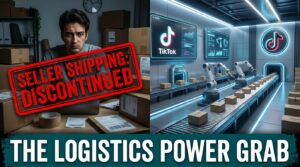
One of the most instructive episodes in TikTok Shop’s 2026 logistics story was a planned US shipping mandate that was subsequently rolled back. The policy, which would have required US sellers to shift away from Seller Shipping toward TikTok-controlled logistics pathways, was announced and then reversed — an unusual public policy reversal that highlighted the tension between TikTok’s long-term logistics ambitions and the practical readiness of its logistics infrastructure to handle mandated volume.
The reversal matters not just as a logistics story but as a communications lesson. Sellers who had begun adjusting their fulfillment operations in anticipation of the mandate — signing contracts with specific 3PL providers, shifting inventory positioning — faced operational disruption when the mandate was pulled back. It illustrates the importance of treating announced-but-not-yet-effective TikTok Shop policy changes with some caution: the platform has demonstrated willingness to reverse course when operational reality doesn’t match the announced timeline.
The 3PL premium in 2026
Despite the mandate reversal, the broader trend toward third-party logistics (3PL) adoption among serious TikTok Shop sellers has continued. The platform’s performance metrics are more forgiving for sellers using dedicated 3PL infrastructure — consistent dispatch times, better tracking data, and more reliable delivery windows all feed positively into SPS components. Sellers who’ve invested in 3PL relationships are absorbing the tighter SLAs without major operational pain; those running fulfillment from their own facilities are more exposed.
For sellers evaluating 3PL partnerships specifically for TikTok Shop compliance, the key criteria in 2026 are same-day dispatch capability for orders placed before a defined cutoff, reliable carrier handoff tracking, and returns processing that feeds clean condition records back to the seller for dispute documentation purposes.
Product Listing Compliance: Prohibited Categories, Unsupported Brands, and Automated Enforcement

Product listing compliance on TikTok Shop has evolved from a relatively forgiving “catch-and-remove” enforcement model into a proactive, automated detection system with escalating consequences. The 2026 changes represent a meaningful step-change in enforcement rigor, and the “Unsupported Brands” framework in particular has caught many sellers off guard.
The three-tier product framework
TikTok Shop’s compliance structure divides products into three tiers. At the bottom are fully approved products that pass through the standard listing flow without additional requirements. In the middle sit restricted products — categories that can be sold but require documentation, certification, or pre-approval. Examples include health supplements, certain electronics, items with age restrictions, and products with specific safety certification requirements. At the top (and most consequential) are prohibited products — items that cannot be listed under any circumstances regardless of documentation.
The 2026 tightening affected all three tiers. Prohibited category lists expanded, particularly for cross-border sellers operating in markets with differing regulatory regimes. Restricted product documentation requirements became stricter, with more categories requiring current certifications rather than one-time submissions. And enforcement at the approved tier became more automated — AI-powered listing screening that can flag and suppress non-compliant listings without manual review.
The Unsupported Brands regime
The Unsupported Brands framework is one of the more impactful and least-discussed compliance developments of recent quarters. Under this regime, TikTok Shop maintains a list of entire brand catalogs that cannot be sold on the platform — not because individual products are non-compliant, but because the brand itself has been flagged at the account level. The practical consequence is that a seller can find their entire inventory from a specific brand removed simultaneously, rather than receiving product-by-product violations.
The reasons brands land on the Unsupported list vary: intellectual property disputes, authentication issues, regulatory concerns, or failure to complete brand registration processes. Sellers who sell multi-brand catalogs — particularly those in beauty, electronics, or fashion — need to actively monitor which brands they carry against any emerging Unsupported lists, and should consider whether brand registration in TikTok’s brand management system provides protection or just creates a verification paper trail.
Automated detection and listing velocity risk
Automated listing screening creates a specific risk for sellers who list products at high velocity — adding many new SKUs per day or week. Under manual review systems, flagged products were removed individually after human review, giving sellers some time to catch issues. Under automated detection, non-compliant listings can be suppressed immediately upon creation or shortly after, with account health consequences accumulating for repeated violations even if the seller corrects each one quickly.
The practical implication: listing quality review needs to happen before submission, not after. Batch-listing tools that push thousands of products without pre-screening for category compliance, missing documentation, or brand eligibility are now higher-risk operations than they were two years ago. A pre-submission compliance check — whether manual or via third-party catalog management software — has moved from nice-to-have to operationally necessary for high-volume sellers.
Regional compliance divergence
One additional complexity layer in 2026: product compliance rules are not identical across TikTok Shop markets. Health supplement listing requirements that were updated for the Vietnam Seller Center effective June 8, 2026, for example, appeared on a different update path than equivalent global policy updates. Cross-border sellers and those operating in multiple TikTok Shop markets simultaneously need to track compliance updates per-market, not just at the global policy level.
Affiliate and Creator Program Updates: What the Commission Structure Actually Looks Like
TikTok Shop’s affiliate and creator commerce infrastructure is one of the platform’s most distinctive competitive advantages — and one of the most actively updated areas of the seller ecosystem. The 2026 changes to commission structures, product seeding rules, and collaboration frameworks represent an evolution toward a more performance-driven, less experimental affiliate model.
Commission structure in 2026: The realistic ranges
For sellers newer to TikTok Shop affiliate commerce, understanding where commissions actually land in practice is a starting point. Open affiliate campaigns — where creators browse and apply to promote products without a direct seller invitation — still cluster primarily in the 10–15% commission range for most categories. That’s the “market rate” for getting passive creator pickup without targeted outreach.
In higher-competition categories (beauty, wellness, fashion accessories) and for targeted collaboration campaigns with established creators, commission rates have been moving upward into the 15–25% range and occasionally higher for time-limited promotional pushes. TikTok has not formally mandated higher commission floors in its 2026 policy updates, but the competitive dynamics of the creator marketplace have moved the effective rate ceiling upward as brands compete for top creator attention.
Targeted Collaboration vs. Open Collaboration
TikTok Shop distinguishes between Open Collaboration — where any eligible creator can find and apply to promote a product — and Targeted Collaboration, where brands proactively invite specific creators. The 2026 trend has favored Targeted Collaboration for serious sellers for a practical reason: as the TikTok Shop creator base has grown, the volume of content created under Open Collaboration has increased, but quality and conversion performance have become more variable.
Targeted Collaboration campaigns that identify creators based on demonstrated purchase intent in relevant categories — not just raw follower count — consistently outperform equivalent Open Collaboration spend. TikTok’s own data tools, including creator analytics in Seller Center and the TikTok Creative Center, have improved in 2026 to support more granular creator selection, making the research component of Targeted Collaboration more tractable than in previous years.
Product seeding rules and compliance
Product seeding — sending physical products to creators before a campaign, either for review or as advance inventory — has developed its own compliance framework in 2026. Key requirements include clear documentation of the commercial relationship when seeded products result in affiliate content, compliance with disclosure rules for any content where the creator receives free product, and in some markets, pre-approval requirements for certain product categories in seeded campaigns (particularly health and supplement categories).
The compliance risk in seeding is asymmetric: if a creator fails to disclose a commercial relationship on content that then runs as affiliate commerce, the brand can receive account health consequences alongside or instead of the creator. Building clear briefing documents for seeded creators — with explicit disclosure requirements and confirmation steps — is an operational protection measure that many brands still haven’t formalized.
The Seller Trust dimension of affiliate management
There’s an underappreciated connection between affiliate program management and seller account health in 2026. Commission non-payment, late payment, or disputes with creators about tracked conversions can generate complaint escalations that feed into seller standing metrics. Affiliate program management has historically been treated as a marketing function, but it has increasingly become an operations and compliance function as TikTok’s creator commerce rules have tightened.
Paid Media Updates: How the TikTok Shop Ad Stack Has Evolved
TikTok’s advertising formats for sellers have continued to evolve in 2026, with the clearest trend being the deepening integration between content, commerce, and paid distribution. For sellers who are primarily organic-first — relying on affiliate content and SEO within TikTok Shop — the paid media updates may seem secondary, but they increasingly affect the overall competitive context in which organic content performs.
Spark Ads as the default performance format
Spark Ads — the format that allows sellers to boost existing organic content (their own or creator content) as paid promotion — have become the default performance advertising format for TikTok Shop sellers in 2026. The format’s strength is its authenticity: boosting organic creator content retains the native feel that drives engagement on TikTok, while adding the precision targeting and spend control of paid media.
For sellers, the practical implication is that the quality of organic affiliate content now has a direct paid media multiplier. A creator video that performs well organically is also the best-performing Spark Ads candidate. This creates a strong incentive to invest in creator quality upfront rather than relying on volume: one well-produced, high-engagement creator video that becomes a Spark Ad target is more valuable than ten mediocre pieces that only perform in organic.
TikTok Shop Ads and Shopping Ad placements
TikTok’s Shopping Ads — product-tagged ads that link directly to Shop listings — have matured in 2026 into a more structured format with clearer performance benchmarks. These ads appear across TikTok’s various surfaces and can target users based on interest signals, purchase behavior, and category intent. For high-volume sellers, Shopping Ads are increasingly the primary direct-response paid channel, operating in parallel with (rather than in competition with) affiliate commerce.
The convergence point is important: Shopping Ads, Spark Ads, and affiliate content are no longer cleanly separate channels in a seller’s TikTok media plan. The platform’s attribution and reporting infrastructure now allows sellers to see how paid promotion of creator content (Spark Ads) interacts with organic affiliate reach, and how Shopping Ad impressions affect conversion rates on product pages that also receive affiliate traffic. Managing TikTok Shop paid media effectively in 2026 requires treating these as an integrated system, not separate line items.
TopView and brand awareness in the seller mix
TopView — TikTok’s full-screen, sound-on first-impression ad unit — remains a premium branding tool rather than a direct-response format for most Shop sellers. Notable for 2026: newly created TopView ad groups now default to TikTok Lite delivery in Japan and Korea, a change that affects geo-targeting and reporting accuracy for sellers running brand awareness campaigns in those markets. It’s a minor update on its own, but representative of the kind of placement change that doesn’t make headlines but does affect campaign performance if your geo-targeting models don’t account for it.
Content Compliance: Video Editing Rules, Commercial Disclosure, and Livestream Standards
Content compliance is the area of TikTok Shop policy that generates the most confusion among sellers because it sits at the intersection of marketing practices, platform rules, and consumer protection regulations — and TikTok’s rules in this space have been evolving faster than in almost any other area.
Prohibited editing methods: The 2026 tightening
The April 2026 Policy Pulse explicitly addressed prohibited editing methods in seller videos. The update targeted a specific category of content manipulation: the use of video editing, AI enhancement, or post-production techniques that misrepresent the appearance, performance, or characteristics of a product in ways that would constitute misleading commercial claims.
In practical terms, this affects sellers who have been using AI image enhancement, before-and-after editing effects, or performance simulations in product demonstration videos. The line that TikTok is drawing is between legitimate production quality improvement (better lighting, color correction, standard post-production) and deceptive visual modification (making a product look materially different from how it actually appears, using AI to demonstrate effects that the product doesn’t actually produce).
The distinction requires judgment, and TikTok’s enforcement of this rule will inevitably be imperfect. But the direction is clear: content that has been flagged or removed for prohibited editing in the past should be reviewed against the 2026 guidance, and new content production workflows should include a compliance check against these standards before publishing.
Commercial disclosure requirements
Commercial disclosure — the requirement that content with commercial relationships is clearly identified as such — has been a TikTok Shop requirement for affiliate and sponsored content since the platform launched. In 2026, enforcement has tightened considerably, with more consistent detection of non-disclosed commercial content and more direct consequences for both brands and creators when disclosures are missing.
The disclosure requirement applies whether the commercial relationship involves a paid commission, free product, or any other form of compensation. For sellers managing large affiliate programs with dozens or hundreds of active creators, the challenge is that individual creator non-compliance creates brand-side risk. Systematic briefing of all active creators, with explicit disclosure instructions and confirmation steps, is now an operational requirement rather than a best-practice recommendation.
Livestream content standards
TikTok Shop’s livestream commerce features — which allow sellers and creators to sell products directly during live video sessions — are subject to their own content standards that have been updated in 2026. Key areas of tightening include prohibited claim types (particularly for health and wellness products), required disclosure language for promotional pricing, and limits on certain high-pressure sales tactics that generate buyer complaints.
Livestream violations are processed faster than VOD content violations because TikTok has live moderation systems active for high-traffic streams. A compliance failure during a livestream can result in stream interruption, product delisting from the live session, and account health consequences in a much shorter timeframe than equivalent violations in pre-recorded content. Sellers running regular livestream commerce need a compliance briefing process for hosts that is as rigorous as their product listing review.
Building Your TikTok Shop Update Monitoring System

Having covered the content of what’s been changing, the more durable value this section provides is a systematic approach to monitoring future changes — because whatever has happened through mid-2026, the update cadence will continue. The platform is actively evolving, and the sellers who build institutional monitoring capacity will have a structural advantage over those who rely on catching updates by accident.
The four-channel monitoring framework
A functional TikTok Shop update monitoring system needs to track four channels simultaneously:
- Policy Pulse (monthly read): Set a recurring monthly task to read the latest Policy Pulse edition on the first business day it becomes available. This is your minimum viable compliance read — a digest of recent changes with enough context to identify which items require action. Treat anything that touches returns, fulfillment metrics, listing compliance, or financial terms as requiring same-week action review.
- Latest Policy Updates hub (bi-weekly scan): The Seller University’s dated policy update log should be scanned every two weeks, not once a month. Changes appear here before they’re summarized in Policy Pulse, and the effective dates are specific — knowing that a rule changes on a specific date two weeks away is operationally different from discovering it after the fact.
- In-dashboard Seller Center notices (daily check): For sellers with active shops, in-dashboard notifications should be checked as part of daily operational review — the same priority as order management. Dismissing or ignoring notices that carry deadlines (documentation requests, compliance actions, account review responses) is one of the most common and avoidable sources of account health penalties.
- Industry analysis and peer networks (ongoing): TikTok’s official channels tell you what the rules are; industry blogs, seller forums, and peer networks tell you how those rules are being enforced in practice. Enforcement realities often diverge from policy text in ways that take weeks to surface in seller community reporting but never appear in official documentation.
Building the team protocol
For most TikTok Shop operations above a basic one-person seller level, monitoring shouldn’t be an individual’s responsibility — it should be a defined team protocol. A practical structure assigns Policy Pulse and Seller University monitoring to one person (often an operations manager or seller account manager), in-dashboard notice response to whoever manages the account day-to-day, and industry analysis tracking to a marketing or strategy function that reads seller community discussions.
Critically, the monitoring function needs a clear escalation path: when a policy change has material financial implications (changes to return cost responsibility, SPS threshold changes, settlement timing adjustments), it should be escalated to decision-makers with authority over pricing, inventory, and fulfillment configuration. Keeping policy awareness at the operational level and not surfacing it to business leadership is how small rule changes become big financial surprises.
Changelog documentation as competitive infrastructure
A practice that separates the most sophisticated TikTok Shop operators from the average is maintaining an internal changelog — a running document that records every policy update they encounter, when it was effective, what it changed, and what operational response it required. Over time, this changelog becomes a strategic resource: it reveals patterns in how TikTok enforces rules (which categories get stricter enforcement first, which changes are announced long before effective dates vs. which are immediate), and it provides institutional memory when team members change.
The changelog also serves a compliance defense function. If a listing is removed or an account receives a warning, having documented that you reviewed and implemented the relevant policy update on its effective date is useful context in an appeal or review process. TikTok Shop’s dispute and appeal processes reward documented, systematic seller behavior over reactive explanations.
Forward-looking signals to watch
Based on 2026 patterns, several areas appear likely to see continued tightening in the next two to three quarters. Health and supplement category compliance — already updated in multiple markets in mid-2026 — is likely to continue adding documentation requirements as TikTok Shop expands in markets with stricter regulatory regimes. Creator disclosure enforcement will likely become more automated as TikTok’s content moderation systems improve. And the SPS framework will continue to be refined, with additional input signals added and thresholds potentially tightened as TikTok improves its data quality on seller performance.
Sellers who have already invested in the operational foundations that support strong SPS — accurate inventory, fast dispatch, clean returns documentation — are well positioned regardless of where the thresholds move. The platform is building toward the same high-trust, high-accountability seller environment that matures marketplaces consistently require. Getting there ahead of enforcement is always cheaper than adapting under pressure.
What the Sellers Who Stay Ahead Actually Do Differently
After cataloging what has changed and how to track future changes, it’s worth naming the operational pattern that distinguishes sellers who absorb TikTok Shop policy updates smoothly from those who consistently get caught off-guard. The difference isn’t primarily knowledge — most sellers can access the same official channels. The difference is operational discipline applied to information management.
They treat policy reading as a recurring business process
The sellers who navigate the 2026 update environment most effectively have institutionalized policy monitoring as a business process — not a periodic scramble when something breaks. This means scheduled calendar time, assigned ownership, and a defined output (internal briefing, changelog entry, operations adjustment ticket) rather than informal awareness that may or may not filter into team decisions.
They distinguish between “noted” and “actioned”
Reading a policy update and noting its existence is not the same as actioning it. The most consequential 2026 changes — the SPS threshold revisions, the return cost responsibility shift, the auto-approval rules for deactivated products — required not just awareness but operational responses: repriced return allowances, adjusted catalog management protocols, revised dispatch SLA monitoring. Sellers who note updates but don’t assign action items with owners and deadlines experience the same outcome as sellers who don’t read updates at all.
They model financial implications before effective dates
Changes to return cost responsibility, settlement timing, and commission structures have direct P&L implications. The sellers who absorb these changes without margin surprises are those who model the financial impact before the change takes effect — calculating what the new return cost structure means for their highest-return SKUs, adjusting product pricing or commission rates where the math changes, and communicating changes to their financial planning model rather than discovering them in end-of-month reconciliation.
They maintain relationships with other serious sellers
No individual seller catches everything. The most useful early warning signals for policy changes — particularly around enforcement realities versus policy text — come from peer networks of other serious TikTok Shop operators. Whether through formal industry groups, agency relationships, or informal seller communities, operators who have real-time peer intelligence about what’s being enforced, what’s being ignored, and what’s coming next have a meaningful informational advantage over those who rely solely on official channels.
Conclusion: The Changelog Is the Competitive Edge
TikTok Shop’s policy environment in 2026 is not going to become simpler. The platform is maturing, standards are rising, and the update cadence that characterized early-to-mid 2026 will continue — and likely accelerate — as TikTok Shop expands into more markets and builds toward the high-trust commerce ecosystem it has consistently signaled it wants to be.
The sellers who treat this as a burden will consistently find themselves adapting under pressure, absorbing avoidable penalties, and leaving margin on the table when policy changes affect their unit economics in ways they didn’t model in time. The sellers who treat it as infrastructure — building systematic monitoring, assigning ownership, maintaining internal changelogs, and connecting policy awareness directly to operational and financial decisions — will find that staying ahead of the update cycle is itself a source of competitive advantage.
Every seller on TikTok Shop is subject to the same official policies. Not everyone responds to them with the same speed and discipline. That gap — between when a policy changes and when a seller’s operations reflect the change — is where operational advantage and disadvantage are created, quietly and repeatedly, every time TikTok Shop publishes a new Policy Pulse edition.
Start with the four-channel monitoring framework. Build the changelog habit. Assign ownership of policy updates as a defined business responsibility. And stop treating the TikTok Shop Seller Blog as the same thing as the policy update system — because that particular confusion, alone, is responsible for more compliance gaps than any individual policy change.
Actionable Takeaways
- Set a bi-weekly calendar reminder to check the “Latest Policy Updates” hub in TikTok Shop Seller University — don’t wait for Policy Pulse to summarize it.
- Review your deactivated or temporarily inactive product list against the January 2026 auto-approval rule: any pending orders on deactivated SKUs are now refund-exposed without seller review.
- Audit your SPS score components (Late Dispatch Rate, Seller-Fault Cancellations, VoC) and identify which one is most at risk under your current operations before it affects your settlement timing.
- Build a compliance briefing template for affiliate creators that explicitly addresses disclosure requirements and confirms understanding before product seeding or campaign launch.
- Assign one person as the policy monitoring owner for your TikTok Shop operation and define their escalation path to leadership for financially material changes.
- Start an internal changelog — even a simple spreadsheet — recording each policy update, its effective date, and the operational response it required.