

Skip to content
ZonFlip Logo
  • Amazon Management
  • TikTok Shop Management
    • TikTok Shop
    • Live Social Selling
  • 3PL – Storage and Prep
    • 3PL – Storage and Prep
    • Return Services
  • About Us
    • Free Tools
    • Newsletter / Blog
    • About
    • Why Us
    • Tech Stack
  • Get Started
  • Amazon Management
  • TikTok Shop Management
    • TikTok Shop
    • Live Social Selling
  • 3PL – Storage and Prep
    • 3PL – Storage and Prep
    • Return Services
  • About Us
    • Free Tools
    • Newsletter / Blog
    • About
    • Why Us
    • Tech Stack
  • Get Started
amazon ads verified partner logo

Author: Joe Glyshaw

Who Pays When the Bot Is Wrong? The Liability Side of AI Automation for Business
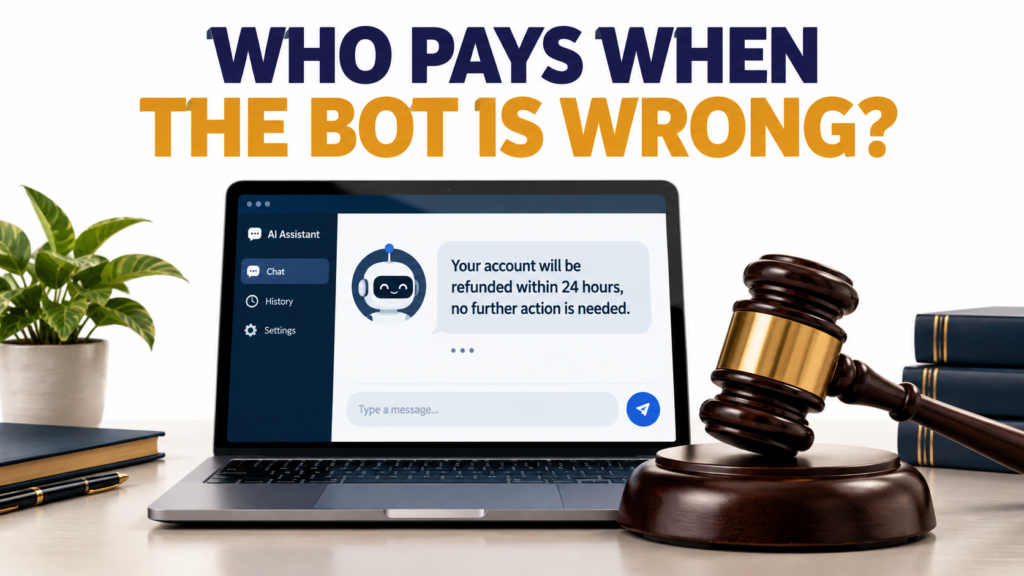
A customer service chatbot giving a confident wrong answer on a laptop, next to a courtroom gavel, under the headline Who Pays When the Bot Is Wrong?

AI automation moves work, not responsibility. What the court cases, regulations, and security risks mean for businesses deploying AI in 2026.

The $50 Ceiling Is Gone: How Sellers Are Moving High-Ticket Products on TikTok Shop in 2026

Smartphone showing a TikTok Shop product page for a $699 self-cleaning litter box, surrounded by high-ticket items like a sauna, luxury handbag and diamond ring

$699 litter boxes, $2,000 saunas, $25,580 handbags: what’s behind high-ticket sales on TikTok Shop in 2026, and how sellers set up LIVE, pricing and fulfillment.

Who Owns the Output? The Accountability Gap in AI Automation for Business

AI chatbot on an office monitor connected by a red thread to a company stamp and a liability document, with the headline Who Owns the Output

Courts say you own what your AI says. Here’s how to assign decision rights, guardrails, and metrics so business AI automation doesn’t become a liability.

Automation Debt: Why AI Workflows Decay After Launch — and Who Pays for It

Illustration of an AI automation conveyor with rusting gears and amber warning lights under the headline Automation Debt

AI automations don’t fail on launch day. They decay quietly afterward. Here’s how model drift, deprecations and ownership gaps create automation debt.

Sellers Who Went LIVE Grew Sales 84% Last Black Friday. Here’s How to Plan TikTok Shop’s 20-Day 2026 Holiday Window

TikTok Shop seller streaming a holiday LIVE session from a home studio, with the text overlay Nov 11–30: The 20-Day Window

TikTok Shop’s 2026 Black Friday runs Nov 11–30. Use last year’s data on LIVE, pricing, fulfillment and returns to build a week-by-week holiday plan.

Your AI Automation Works. Who’s Paying to Keep It Working?

Operations engineer monitoring an AI workflow dashboard with warning icons, headline reading Launch Day Is the Cheapest Day

Launch day is the cheapest day of any AI automation. Here’s what drift, model retirements, token bills, and exceptions really cost after go-live.

What Changed About Amazon Selling When Rufus Became Alexa for Shopping

Smartphone showing an Amazon shopping app with an AI assistant answering a shopper

Rufus is now Alexa for Shopping. Here’s how Amazon’s AI assistant builds answers, picks products, and what sellers should change in their listings in 2026.

The Second-Year Problem: Why AI Automations Quietly Decay — and What It Costs to Keep Them Working

An automated document workflow whose gears rust and belts fray as the calendar moves from month 1 to month 14, illustrating the second-year problem of AI automation

Most AI automation budgets stop at launch. Here’s where automation debt comes from, what it costs in year two, and how to own, monitor, and retire workflows.

Amazon Has 16% Fewer Sellers and More Shoppers Than a Year Ago. Here’s Who Is Winning the Gap.

Illustration of a crowded Amazon marketplace with shrinking seller stalls, showing active sellers down 16% and traffic per seller up 25%

Active Amazon sellers fell 16% while traffic grew. What the 2026 data shows about concentration, AI discovery, and who actually wins on Amazon now.

Amazon Lost 84,000 Active Sellers in 14 Months. Here’s Who Is Winning What They Left Behind

Amazon marketplace with many closed seller stalls and a few busy ones, showing active U.S. sellers falling from 584K to 500K while visits per seller rise to 3,544

Amazon’s active U.S. seller count fell from 584K to 500K while traffic per seller rose 25%. Here’s what the 2026 data says about who wins and why.

← Previous
Next →
  • Our Services
  • Why Us
  • About
  • Newsletter / Blog
  • Privacy Policy
  • Terms of Service
  • Our Services
  • Why Us
  • About
  • Newsletter / Blog
  • Privacy Policy
  • Terms of Service
Get Started
© 2026 ZonFlip, LLC. All Rights Reserved.

Website managed and hosted by ZonFlip, LLC 

ZonFlip, LLC is affiliated with The SmartHome Stores, LLC

Usage rights, trademarks, and intellectual property of ZonFlip, LLC and The SmartHome Stores, LLC are interchangeable and may be utilized by either entity as permitted by their respective agreements