



Everyone in e-commerce has heard the TikTok Shop story by now: a brand posts a few videos, a product goes viral, and suddenly the orders won’t stop. The #TikTokMadeMeBuyIt phenomenon generated billions in consumer spending before TikTok Shop even officially launched in the US. Since the platform’s US debut in September 2023, the stories have only multiplied.
But here’s what rarely makes it into the highlights reel: for every seller who turned a viral moment into a real business, there are dozens who peaked at $8,000–$12,000 a month and couldn’t figure out how to push past it. They had product. They had some content. They had a shop. And yet the revenue plateau arrived faster than they expected, margins were tighter than the headline numbers suggested, and the operational complexity caught them completely off guard.
This post is about that gap — between what TikTok Shop looks like from the outside and what it takes to build a business that actually compounds. It’s not about going viral. It’s about what happens after the first wave of orders, how you structure the machine that keeps selling, and the specific operational decisions that separate sellers who build durable income from those who chase the next spike and wonder why nothing sticks.
TikTok Shop is projected to reach $23.41 billion in US sales in 2026. The opportunity is real. The question is whether you’re set up to capture a slice that actually survives quarter to quarter — or just another seller riding a trend until it runs out.
The $23 Billion Platform That Still Trips Up Most Sellers
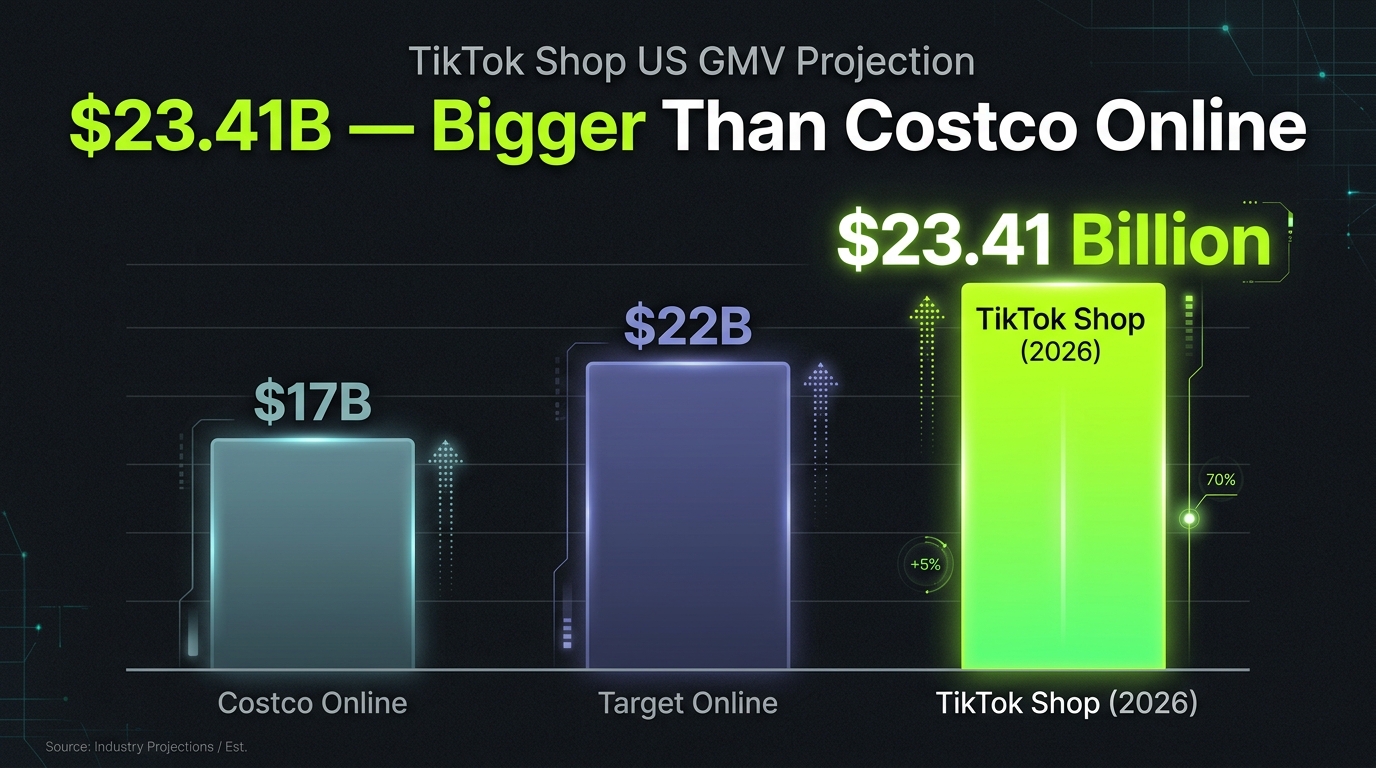
The scale of TikTok Shop’s growth is genuinely striking. At $23.41 billion in projected US GMV for 2026, the platform is on track to outperform major household-name retailers. That puts it in a different conversation than “social commerce experiment” — it’s become a significant commercial infrastructure in its own right.
The platform currently hosts more than 70 million products across its US marketplace. A 2025 GlobalData survey found that 76% of consumers who used TikTok Shop bought an item from a livestream in the prior year — a conversion rate that would make most traditional e-commerce brands dizzy. These numbers are why brands of every size are scrambling to establish a presence.
Why the Numbers Don’t Tell the Whole Seller Story
Platform-level GMV is a seller acquisition tool, not a seller performance metric. When TikTok says $23 billion in sales, that’s the sum of everything transacted across the platform — including the top 0.1% of sellers who account for a disproportionate share of that volume. The median TikTok Shop seller’s experience looks quite different.
Most new sellers enter the platform with a single product or a small catalog, limited content infrastructure, no affiliate relationships, and no live commerce experience. They treat TikTok Shop as a listing destination — the same way they might approach Amazon or Etsy — and wonder why organic traffic is inconsistent and conversion rates are low. The fundamental misread is thinking that TikTok Shop is a marketplace you list in. It isn’t. It’s a media business with a checkout button attached.
The Platform’s Unique Commerce Logic
TikTok Shop’s algorithm doesn’t distribute products the way Amazon’s A9 or A10 does. On Amazon, a product page earns traffic primarily through keyword relevance, purchase history, and reviews. On TikTok Shop, distribution is primarily driven by content engagement — video watch time, saves, shares, comments — and then secondarily by listing quality and conversion performance.
This means the best product in a category can sit invisible if no one is creating content about it. Conversely, a mediocre product with genuinely entertaining demo content can move thousands of units in a weekend. The implication for sellers is profound: your content production capacity is as important as your product quality. Possibly more important, at least in the early stages.
This also means that the skills that made someone successful on Amazon — meticulous keyword research, PPC bid management, backend search term optimization — translate imperfectly to TikTok Shop. Some of those instincts are useful. Many are not. The sellers who struggle most are those who import an Amazon operating model onto a platform that requires a fundamentally different approach.
Why Product Economics on TikTok Shop Are Different From Every Other Channel
Before you build anything — a content strategy, an affiliate program, a live schedule — you need to understand whether your product actually works on TikTok Shop at an economic level. This is where most sellers skip steps, and it’s where margins get destroyed.
The TikTok-Specific Price Architecture
TikTok Shop buyers skew heavily toward impulse purchases in the $15–$80 range. Products priced under $15 often struggle to absorb platform fees and shipping costs while leaving any meaningful margin. Products above $80 face a longer consideration cycle — buyers may favorite the product, leave the app, and never return. The sweet spot for most categories is $25–$60, where impulse is still plausible and margin math can work.
TikTok’s seller fees are not trivial. The platform charges a referral fee (which varies by category but commonly sits in the 5–8% range) on top of any affiliate commissions you’re paying. If you’re running an affiliate program at a 15% commission rate — which is competitive enough to attract quality creators — and paying a 6% platform fee, you’ve already committed 21% of revenue before COGS, shipping, or advertising spend enters the equation.
Run the math on a $35 product with a 45% gross margin:
- Revenue: $35.00
- COGS: $19.25 (55% of revenue, leaving 45% gross margin)
- Platform referral fee (6%): $2.10
- Affiliate commission (15%): $5.25
- Shipping (self-fulfilled, domestic avg): ~$4.00
- Remaining before ad spend and returns: $4.40
That $4.40 needs to absorb returns, customer service overhead, and any paid promotion you run. At scale, with optimized fulfillment, this can be a viable business. But sellers who eyeball TikTok Shop margins without doing this arithmetic end up confusing revenue growth with profit growth — and run out of runway.
Product Characteristics That Win on TikTok
Beyond price architecture, the product itself needs to be demonstrable. The highest-converting products on TikTok Shop share a common trait: they show well in 30–60 seconds of video. This isn’t just aesthetic — it’s functional. Products that require explanation, comparison, or extensive trust-building are harder sells on TikTok than products that create immediate “I need that” moments.
The categories that consistently outperform on TikTok Shop include beauty and skincare (transformation content drives enormous engagement), kitchen gadgets (satisfying demonstration clips), home organization, fashion accessories, health supplements, and pet products. What these categories share is visual impact — they’re easy to demo, the results are quick, and the “wow” moment fits neatly into a short video.
If your product requires three paragraphs of explanation before someone understands the value, TikTok Shop is not your primary sales channel — it might still be a useful supplementary channel, but you’ll be fighting the current the whole time.
The Four Revenue Channels — And Why Most Sellers Only Use One
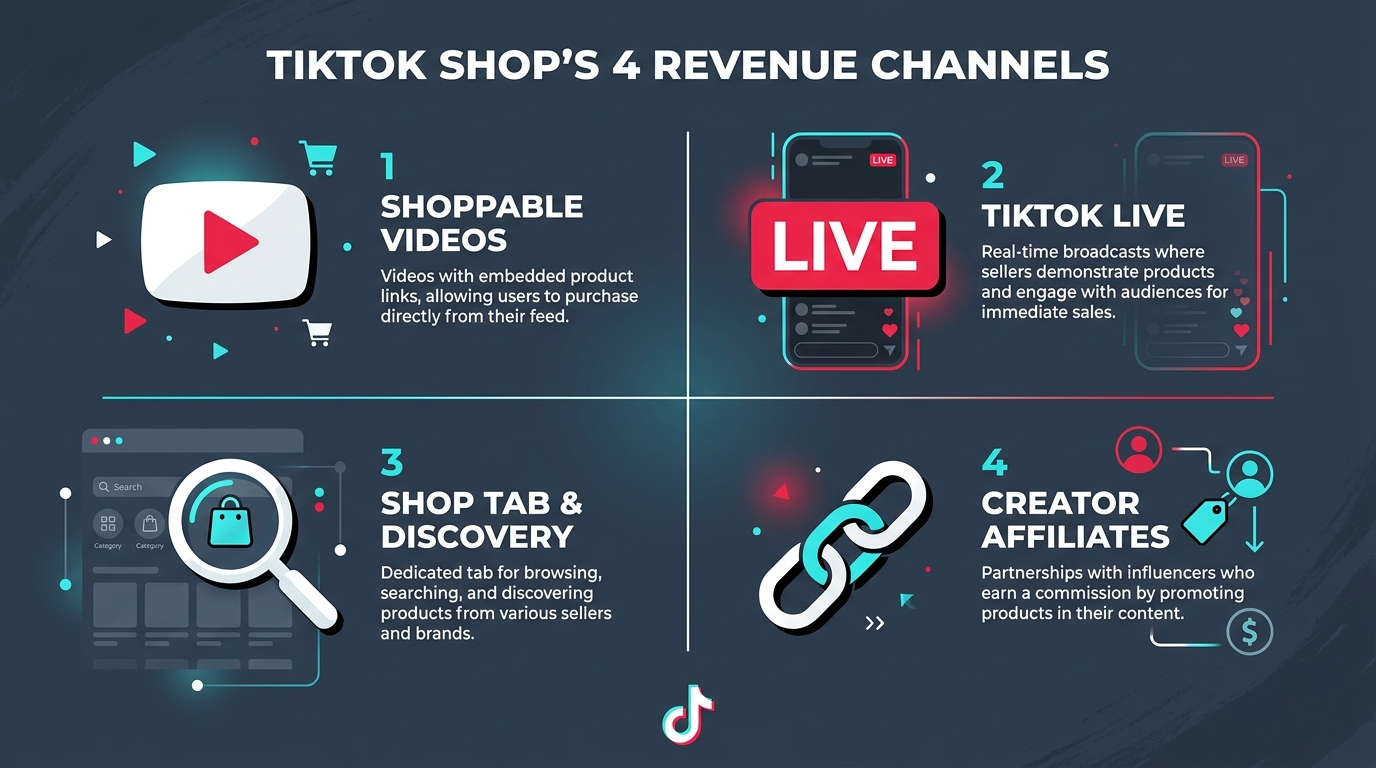
TikTok Shop gives sellers four distinct ways to generate revenue, each with its own traffic source, conversion dynamics, and operational requirements. Most sellers, especially those new to the platform, activate only one or two. The sellers generating consistent five- and six-figure monthly revenue are almost always running all four in parallel — not because it’s more complicated, but because each channel has different peak windows, different buyer intent, and different resilience when one channel dips.
Channel 1: Shoppable Videos
Shoppable videos are the entry point for most sellers. You create in-feed content — either organic or promoted — and embed a product link that allows viewers to purchase without leaving the video. This is TikTok’s most familiar commerce format, and the one most aligned with the platform’s native entertainment experience.
The key variable with shoppable videos is not production quality — it’s hook strength and pacing. Videos that drop viewers into the action immediately (showing the product in use within the first two seconds) dramatically outperform videos that open with branding, intros, or context-setting. The algorithm amplifies content that earns watch-through completions, so a 20-second video that almost everyone watches to the end will outperform a 90-second video with 30% drop-off, even if the longer video is “better” by conventional marketing standards.
Channel 2: TikTok Live
Live commerce is the highest-ceiling channel for most product categories, and the most underused by Western sellers. The 76% livestream purchase rate among TikTok Shop users cited by GlobalData isn’t an accident — live creates urgency, authenticity, and real-time social proof in a way that pre-recorded content cannot replicate.
The barrier for most sellers is psychological: going live feels high-effort, high-risk, and high-skill. We’ll cover what actually separates successful live sessions from empty rooms in the next section. For now, the strategic point is simple — if you’re not using TikTok Live, you’re leaving the highest-converting channel on the table.
Channel 3: Shop Tab Discovery
TikTok’s Shop tab is a dedicated commerce destination where buyers browse products based on personalized recommendations. Traffic here is algorithmically driven — your listing’s visibility in the Shop tab depends on conversion rate history, listing completeness, review volume and quality, and pricing competitiveness relative to similar products in the same category.
Many sellers treat the Shop tab as a passive benefit — set up your listing and let the algorithm decide. The sellers who actively manage it look at category-level pricing benchmarks, regularly refresh listing images and copy, use promotional pricing to trigger increased visibility, and monitor which products are getting impressions versus which are actually converting.
Channel 4: Creator Affiliates
The affiliate channel is arguably TikTok Shop’s most powerful differentiator from other e-commerce platforms. The TikTok Shop Affiliate Program lets creators browse a marketplace of seller products, choose items that fit their audience, and earn commissions on sales their content generates. For sellers, this means an army of content producers working on a pure performance basis — you only pay when sales actually happen.
Done well, the affiliate channel can account for 50–70% of a seller’s total TikTok Shop revenue. But it requires active management to work at that level — setting the right commission rates, writing compelling affiliate briefs, sampling to high-quality creators, and tracking which creators are actually generating profitable traffic versus volume that doesn’t convert.
Live Commerce as a Sales Engine: What Separates $50K Sessions from 12 Viewers
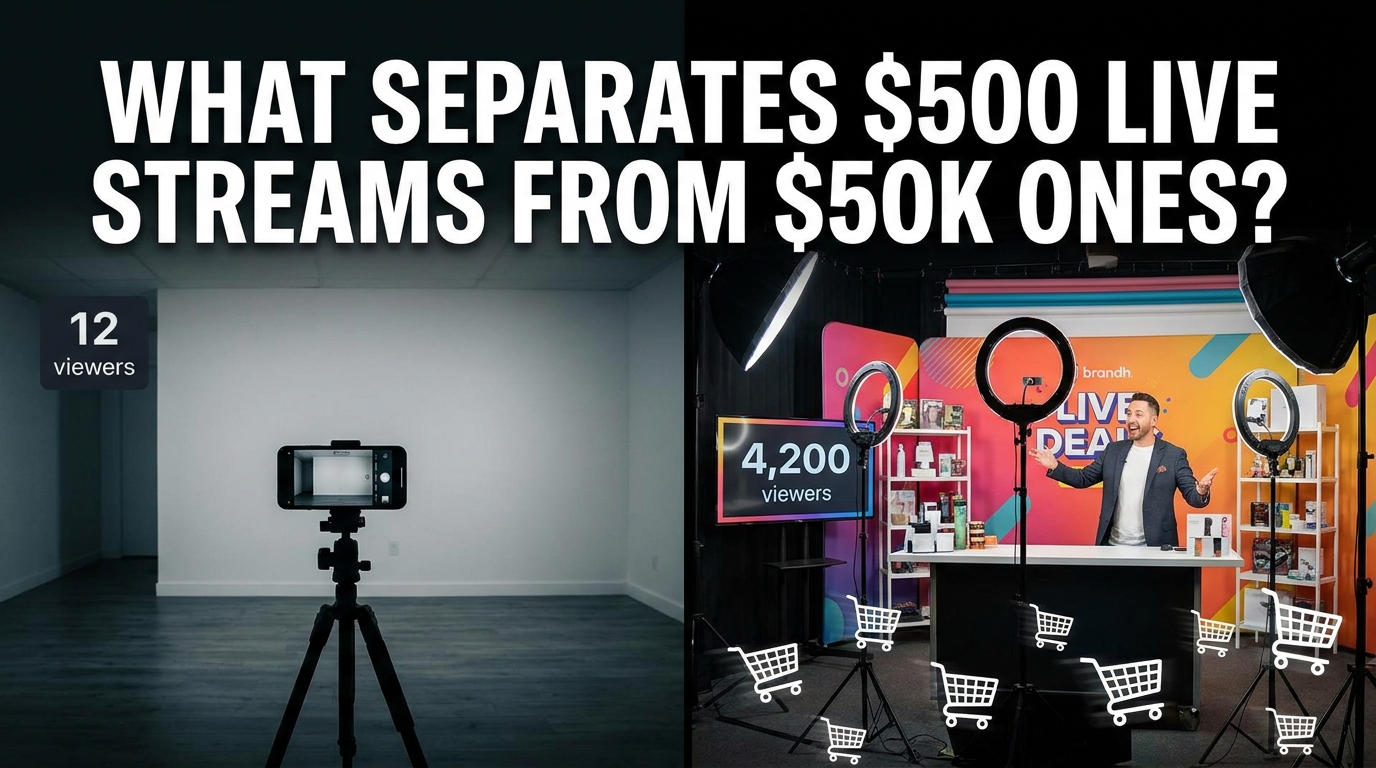
Ask sellers about their TikTok Live experience and you’ll get two very different answers. One group describes it as transformative — sessions that generate more revenue in two hours than their entire catalog made in the previous week. The other group describes wasted evenings talking to an empty room, wondering why nobody showed up.
The difference is almost never the product. It’s almost always a combination of timing, warm-up strategy, and what happens in the first five minutes of going live.
The Algorithm’s Live Boost Mechanism
TikTok’s algorithm actively promotes live streams that show early engagement momentum. When you go live, TikTok evaluates how quickly your viewer count grows and how engaged those early viewers are (comments, gifts, product taps). If you spike engagement in the first 10–15 minutes, the algorithm begins distributing your live to cold audiences on the For You page. If your first 15 minutes are slow and quiet, the algorithm reads low engagement as a signal to stop distributing — and you’re effectively invisible.
This creates a critical chicken-and-egg problem: you need viewers to get viewers. The sellers who crack live commerce solve this with deliberate warm-up tactics. This includes posting a pre-live teaser video 1–2 hours before the session announcing an exclusive deal only available during the live. It includes telling your existing followers directly in previous videos exactly when to tune in and what they’ll get. Some sellers even run a brief countdown on their profile in the hour before going live.
Session Structure and Selling Cadence
Successful live commerce sessions are structured, not improvised. The sellers doing consistent high volumes treat their live sessions like scripted retail events with a distinct cadence:
- Minutes 0–10: Rapid engagement hook. Greet viewers by name in comments, ask a question, create activity. The goal is not selling — it’s building the engagement signal that triggers algorithmic distribution.
- Minutes 10–30: Introduce the first product with a demonstration. Show it working. Use a limited-time offer or quantity constraint to create urgency. Pin the product link prominently.
- Minutes 30–45: Audience interaction beat. Answer questions, respond to comments. This maintains engagement depth while giving viewers who just joined context.
- Minutes 45+: Product rotation. Introduce the next item, follow the same demo-urgency pattern. The best live sellers have 3–6 products lined up and cycle through them deliberately, returning to best-sellers periodically.
Technical Setup Is Not Optional
Viewers will leave a live stream that looks amateurish within seconds — not because they’re judgmental, but because TikTok’s feed gives them infinite alternatives. A ring light, a clean branded background, and a stable camera position are not luxury investments for sellers serious about live commerce. Neither is a reliable internet connection with enough bandwidth to sustain HD streaming. Audio quality matters enormously; a cheap clip-on lavalier microphone ($20–$30) is one of the highest-ROI investments a live seller can make.
If you’re scaling live commerce operations, consider investing in a dedicated streaming setup rather than using a phone propped against a box. Sellers running frequent live sessions often build out a small, permanent set within their workspace — saving setup time and ensuring consistent quality across every session.
Building an Affiliate Army Without Burning Your Margins
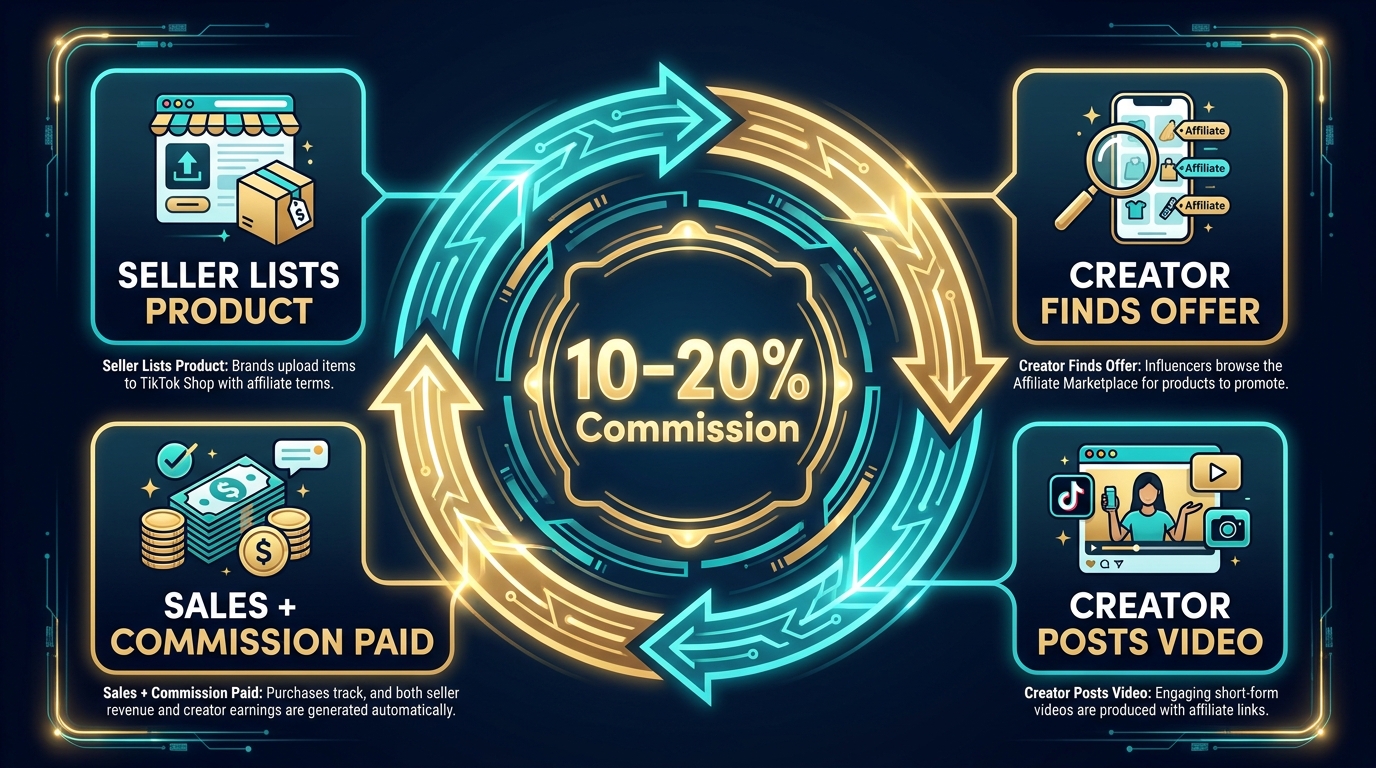
The TikTok affiliate flywheel, when it spins correctly, is one of the most efficient customer acquisition mechanisms in e-commerce. You provide product, creators provide distribution, and you pay only on confirmed sales. There’s no upfront ad spend, no wasted impressions on uninterested audiences, and no creative fatigue from running the same ad to the same people.
But the flywheel breaks in predictable ways, and most sellers don’t diagnose the failure points correctly.
Commission Rate Strategy
The first and most important decision in your affiliate program is commission rate. The TikTok Shop affiliate marketplace lists thousands of products from sellers across every category. Creators browse this marketplace looking for offers with commission rates high enough to be worth their time and attention.
The rule of thumb many experienced sellers use: your commission rate needs to be in the top 25% of your category to reliably attract quality creators. For most consumer product categories, competitive affiliate rates fall in the 10–20% range. Some high-volume categories with intense competition push to 25–30%. If you’re at the category floor, you’ll get ignored in favor of sellers who pay better.
The trap here is thinking about commission purely as a cost. The better mental model is to think about affiliate commission as your content acquisition cost. If a creator posts a video that drives $1,000 in sales and earns $150 in commission, you’ve acquired a piece of customer-generating content for $150 — often cheaper than a comparable paid media campaign. The comparison benchmark isn’t “how much am I paying?” but “what would this traffic cost me in TikTok Spark Ads or Google Shopping?”
Targeting the Right Tier of Creator
Many sellers default to chasing large accounts — creators with hundreds of thousands of followers — on the assumption that more followers means more sales. This is frequently wrong. Mega-creators with audiences of 500K+ often have diffuse, generalist audiences and lower purchase intent within specific product categories. Their followers came for entertainment; your product may be tangential to why they showed up.
The sweet spot for TikTok Shop affiliate performance tends to be mid-tier creators in the 10,000–100,000 follower range who operate in a specific niche. A beauty creator with 40,000 highly engaged skincare enthusiasts will often outperform a general lifestyle creator with 400,000 casual followers when you’re selling serums or face masks. Niche alignment is more predictive of sales conversion than follower count.
Sampling and the Creator Brief
If you want creators to produce quality content for your product, you have to give them what they need to do that. This means sending product samples proactively — don’t wait for creators to request them. It also means writing a creator brief that explains what your product does, who it’s for, what problem it solves, and two or three content angle suggestions. Good creators will iterate on these angles with their own voice; bad briefs result in generic videos that don’t convert.
Your brief should never be a script. Creators’ audiences follow them for their authentic voice, and content that reads as corporate messaging will underperform content that feels genuine. Give them guardrails and product facts, then trust them to create. If a creator’s authentic take on your product generates $3,000 in sales, resist the urge to over-direct the next piece of content — you’ll often kill the thing that was working.
Monitoring Affiliate Performance Without Micromanaging
Track affiliate performance by GMV generated per creator, not video views. A video with 200,000 views that generates $400 in sales is underperforming relative to a video with 12,000 views that generates $1,800. Conversion rate is everything. When you identify a creator whose content consistently converts, invest more in that relationship — send more samples, offer a higher commission tier, consider a formal brand ambassador arrangement.
Equally important: know when to cut underperforming affiliate relationships. Sellers who maintain large affiliate rosters with dozens of creators generating zero sales are paying overhead (samples, time) for no return. Tight curation of your affiliate program beats broad outreach every time.
Fulfillment Operations: The Unsexy Backbone That Determines Your Star Rating
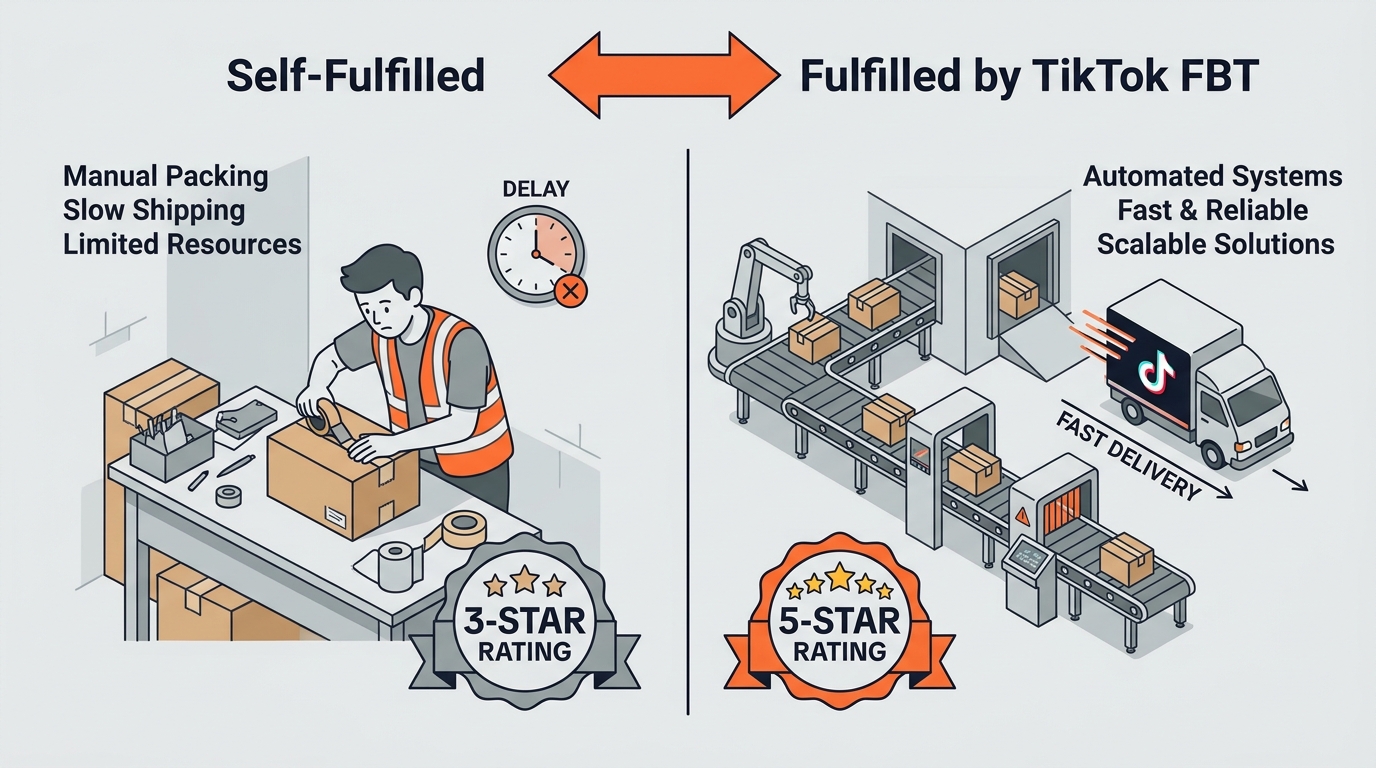
Nothing kills a TikTok Shop business faster than a string of bad fulfillment experiences. A buyer who discovers your product through an entertaining video and completes a purchase has given you a moment of genuine trust. If that package arrives late, damaged, or accompanied by a confusing customer experience, that trust is broken — and they’ll say so in a review that every future visitor to your listing will read.
TikTok Shop’s seller rating system is visible on your listing, and it materially affects both conversion rate and algorithmic distribution. Low-rated shops get deprioritized in the Shop tab. Poor logistics scores can trigger account health warnings. This isn’t a soft concern — it’s a direct revenue lever.
Understanding Your Fulfillment Options
TikTok Shop sellers have three primary fulfillment paths:
Self-fulfillment means you store inventory, pick and pack orders, and arrange shipping through your own carrier accounts or a local courier. This gives you the most control over packaging and branding, and can be cost-effective at low volumes. The risk is capacity — when a video goes viral and order volume spikes 10x overnight, self-fulfillment operations frequently crack. Sellers in this situation face delayed shipments, missed delivery windows, and the cascade of negative reviews that follows.
Third-party logistics (3PL) providers give you outsourced warehousing, pick-and-pack, and shipping without the overhead of managing your own facility. The best 3PLs that serve TikTok Shop sellers can handle volume spikes, process returns, and ship within the 48-hour window that keeps your logistics score healthy. The trade-off is setup time (onboarding a 3PL takes weeks, not days) and minimum volume requirements that may not fit early-stage sellers.
Fulfilled by TikTok (FBT) is TikTok’s own logistics service, operated in partnership with third-party logistics providers including ShipBob. With FBT, you send inventory to a TikTok-affiliated warehouse, and they handle storage, packing, shipping, and some returns processing. The major advantage of FBT is the platform’s preference for FBT orders in algorithmic distribution — similar to how Amazon historically favored FBA listings. Products fulfilled through FBT tend to receive a badge that signals fast shipping, which improves conversion rates.
The 48-Hour Rule
TikTok Shop’s performance standards require sellers to ship orders within a defined window — typically 48 hours of order placement. Missing this window repeatedly triggers logistics score degradation. At a certain threshold, TikTok can suppress your listings, restrict your ability to run promotions, or flag your account for review.
The 48-hour rule sounds simple until your content goes viral. A video that reaches a million people can generate hundreds or thousands of orders in 24 hours. If your fulfillment operation isn’t designed to handle surge volume, you’ll violate the shipping window on exactly the orders that matter most — the ones coming from your highest-traffic moment.
The solution is to plan for scale before you need it. Know your fulfillment operation’s realistic capacity ceiling. Have a contingency plan for when volume exceeds that ceiling. If you’re running a product that you believe has viral potential, consider pre-positioning inventory in a 3PL or FBT before the video launches.
Returns: The Hidden Margin Drain
TikTok Shop’s return rate tends to be higher than traditional e-commerce for a specific reason: buyers are making impulse purchases based on 30-second videos. When the product arrives and doesn’t match the expectation set by an entertaining clip, returns follow. Categories like fashion and electronics tend to have the highest return rates; categories like consumables (supplements, food) and tools tend to be lower.
Building a realistic return rate assumption into your unit economics is essential. If your product category averages 10–15% returns and your margin math doesn’t include this, you’ll be consistently surprised when your actual profitability underperforms your projections.
The Seller Center Data Most Sellers Ignore (And How to Actually Use It)
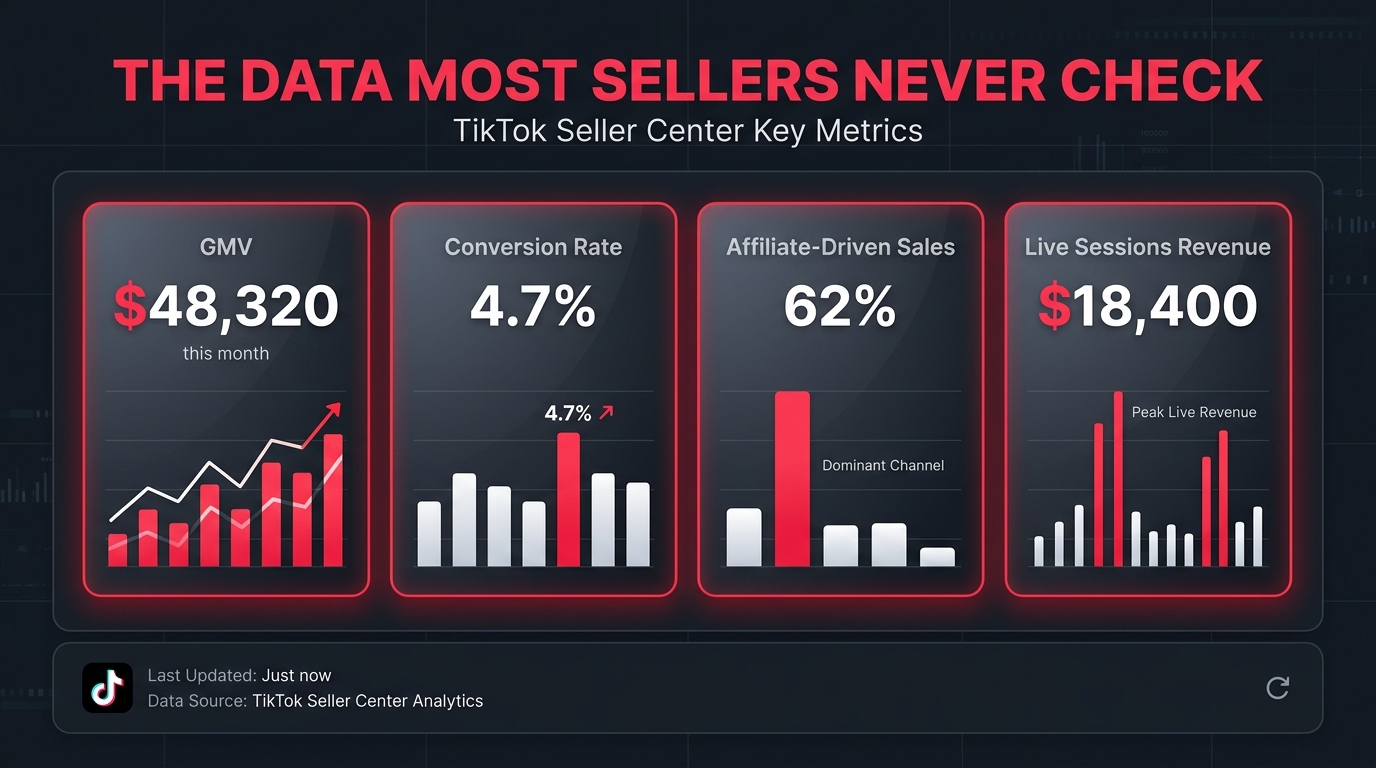
TikTok’s Seller Center provides a substantial amount of performance data that most sellers look at superficially — checking total orders and revenue — without actually using it to make decisions. The sellers who compound growth consistently are in the Seller Center with intentional questions, not just checking the dashboard to feel good or bad about the day’s numbers.
The Metrics That Actually Drive Decisions
Traffic source breakdown is one of the most actionable reports in Seller Center. It shows you what percentage of your GMV is coming from shoppable videos, live sessions, the Shop tab, and affiliate-driven content. If 90% of your revenue is coming from one channel, you have a concentration risk — that channel’s performance can fluctuate significantly based on algorithm changes, content performance, or seasonal shifts. Healthy multi-channel distribution looks more like 30–40% from one source with no single channel exceeding 50%.
Product conversion rate — the percentage of product page visitors who complete a purchase — is the most direct signal of listing health. If you’re getting traffic to a product page but conversion is below 2–3%, something is wrong at the listing level: the price may be too high relative to the category, your images may not match buyer expectations, your review count may be too low to establish trust, or the product description is confusing. High traffic with low conversion is a solvable problem, but you can’t solve it if you’re not looking at the data.
Affiliate performance by creator should be reviewed at least weekly. Sort by GMV generated, calculate effective cost per sale for each creator, and identify your top performers. Equally important: look for creators who are generating high click-through rates but low conversion — this often signals that the creator’s audience doesn’t match the product, and sending them more samples will not improve ROI.
Using Seller Center to Time Promotions
TikTok Shop’s promotional tools — flash sales, coupons, limited-time offers — have a disproportionate impact on algorithmic distribution. The platform surfaces discounted products more prominently in the Shop tab and in personalized recommendations. This means strategic promotions aren’t just demand drivers; they’re traffic acquisition mechanisms.
The Seller Center data tells you when your audience is most active and when your conversion rates are highest by time of day and day of week. Using this data to schedule your flash sales and live sessions — aligning promotions with your peak engagement windows — consistently outperforms running promotions at arbitrary times. A 20% flash sale launched at 7 PM on a Tuesday might underperform the same promotion launched at 8 PM on a Saturday if your audience data shows weekend evenings as peak activity.
Review velocity is another often-ignored Seller Center metric. Products with fewer than 10 reviews convert significantly worse than products with 25 or more, regardless of average rating. Early in a product’s lifecycle, using the platform’s request-a-review features and packaging inserts that encourage feedback should be a systematic process, not an afterthought.
Multi-Channel Reality: How to Stack TikTok Shop With Shopify and Amazon Without Cannibalizing Yourself
Most established e-commerce sellers don’t operate TikTok Shop in isolation. They’re running Shopify stores, Amazon FBA listings, potentially Walmart or eBay channels — and they’re trying to figure out how TikTok Shop fits into that stack without creating pricing conflicts, inventory headaches, or audience confusion.
Pricing Coherence Across Channels
TikTok Shop buyers frequently comparison shop. A buyer who discovers your product through a TikTok video and visits your product page may also quickly check your Amazon listing or Google Shopping results before completing purchase. If your prices are meaningfully different across channels — either because you’re running heavy promotions on one channel or because your pricing strategy isn’t coordinated — you risk losing sales to your own listings on other platforms.
The general best practice is price parity or a defined differential. If TikTok Shop runs at a discount to Amazon (which many sellers do to drive platform-native conversion), that discount should be consistent and intentional, not an accident of running uncoordinated promotions. Your Shopify store price point is your reference anchor; use it deliberately.
Inventory Management Across Channels
One of the most common operational headaches for multi-channel sellers is inventory synchronization. A viral TikTok video can drain a SKU that’s also listed on Amazon, creating out-of-stock situations that hurt your Amazon ranking at precisely the moment you’re riding a traffic wave. Conversely, if you’re using FBA for Amazon and FBT for TikTok, you’re splitting inventory across multiple fulfillment networks — which improves speed for each channel but requires more total inventory commitment and more careful SKU-level planning.
The Shopify-to-TikTok integration is the most mature native connection available. Sellers using Shopify can sync product catalogs, inventory levels, and order data between their store and TikTok Shop through TikTok’s official Shopify app. This doesn’t solve the FBA/FBT inventory split — that requires separate inventory allocation decisions — but it does eliminate the manual work of updating listings and tracking orders across both systems.
Audience and Brand Consistency
Your TikTok presence and your broader brand need to be coherent, but they don’t need to be identical in tone. TikTok audiences expect authenticity and entertainment; they’re more tolerant of casual, imperfect content than audiences on, say, a polished Shopify store. The mistake sellers make is swinging too far in either direction — either being so polished on TikTok that they seem like another faceless ad, or being so casual and chaotic that buyers don’t trust the brand when they go to check out the Shopify site.
The best multi-channel sellers treat TikTok as their brand’s most human touchpoint — the place where the people behind the product are visible and real — while maintaining professional product presentation across all purchase-completion touchpoints. The content that brings people in from TikTok should feel like the same brand they encounter when they arrive at checkout, even if the tone shifts slightly.
What the Top 1% of TikTok Shops Do Differently (And How to Copy It)
The sellers consistently doing $100,000+ months on TikTok Shop — the ones whose names come up when serious e-commerce practitioners compare notes — aren’t doing mysterious things. They’re doing the standard things more systematically, more consistently, and with better feedback loops than everyone else. Here’s what that looks like in practice.
They Treat Content Like an Assembly Line
Top TikTok Shop sellers don’t create content when inspiration strikes. They have a production system: a content calendar, a filming schedule, designated days for batch-creating shoppable videos, and defined formats they rotate through (unboxing, demonstration, testimonial, problem-solution). This consistency produces two benefits — volume (more content means more distribution opportunities) and institutional learning (shooting 30 videos teaches you more about what works than shooting 5).
The sellers operating at the highest levels often work with dedicated content creators or small creative teams. The founder or operator doesn’t need to be on camera for every video — what matters is that someone credible to the product’s audience is consistently creating. Some sellers rotate among 2–3 on-camera personalities to A/B test which voice resonates best with which audience segment.
They Run Their Affiliate Program Like a Sales Team
Rather than posting a product in the affiliate marketplace and hoping creators find it, top sellers actively recruit. They identify creators in their niche, reach out with personalized messages that demonstrate they’ve actually watched the creator’s content, send samples with detailed briefs, and follow up. They track response rates, monitor which outreach messages generate the most creator activation, and iterate on their recruitment pitch the same way a good sales team iterates on prospecting messages.
They also treat high-performing affiliates like talent, not contractors. Regular communication, first access to new products, higher commission tiers, and genuine appreciation for the creators who are generating meaningful revenue for the business. Creator relationships that feel transactional tend to produce transactional content. Creator relationships that feel collaborative tend to produce authentic content that actually converts.
They Build Live Commerce Into Their Weekly Operations
The sellers doing real volume on TikTok Live don’t go live occasionally when they feel like it. They go live on a regular schedule — often three to five times per week — because consistency builds an audience that shows up. Regular viewers know when to tune in, what kind of content to expect, and develop a genuine relationship with the seller that translates to repeat purchase behavior.
Schedule regularity also gives you a systematic way to test and improve. If you go live every Tuesday and Thursday, you accumulate meaningful data quickly: which products sell better in which order, what time of day gets the best viewership, what urgency frames drive faster add-to-cart behavior. Inconsistent, occasional live sessions produce inconsistent, unreliable data.
They Optimize Listings Continuously, Not Once
A TikTok Shop product listing is not a set-it-and-forget-it asset. Top sellers review their listing images, titles, descriptions, and pricing regularly — monthly at minimum, weekly for top-selling SKUs. They use conversion rate data to identify underperforming elements and test changes with the same rigor they’d apply to a paid media campaign. If a new hero image increases conversion from 3.1% to 4.5%, that improvement compounds across every piece of traffic that listing receives for the rest of its life.
The one-time listing mindset is one of the biggest levers between median and top-tier performance on TikTok Shop. The platform’s competitive landscape is not static — new sellers enter categories constantly, pricing benchmarks shift, and consumer visual preferences evolve. Listings that were optimized six months ago may be underperforming relative to current category standards.
Building a Durable Business, Not a Viral Moment
TikTok Shop is a legitimate commerce infrastructure with real scale behind it. The $23.41 billion in projected US GMV for 2026 isn’t a rounding error or a speculative projection built on wishful thinking — it reflects the actual consumer behavior of tens of millions of people who have made purchasing through TikTok a regular habit.
But the platform’s viral mechanics create a seductive illusion: that one great video is the business model. It isn’t. A viral video is a customer acquisition event. What you build with those customers — the repeat purchase rate, the affiliate flywheel, the live audience that shows up every week, the operational infrastructure that can handle volume — is the actual business.
The sellers who are still on TikTok Shop two and three years from now, growing steadily, aren’t the ones who had the most viral moments. They’re the ones who treated the platform as a serious commercial operation from day one: doing the margin math, building the fulfillment systems before they were overwhelmed by demand, investing in creator relationships before they needed them, and reading their data with enough honesty to change what wasn’t working.
The Actionable Takeaways
- Do the margin math first. Map out your full unit economics — COGS, platform fee, affiliate commission, shipping, returns — before you commit to a product strategy. If the numbers don’t work at a 15% affiliate commission, they won’t work at all once you build a real affiliate program.
- Activate all four revenue channels. Shoppable videos, TikTok Live, Shop tab optimization, and affiliates. Single-channel TikTok Shop sellers are fragile. Multi-channel sellers are resilient.
- Build your fulfillment infrastructure before the viral moment arrives. Know your capacity ceiling. Have a 3PL relationship in place. Understand FBT and whether it’s right for your volume and category.
- Treat your affiliate program like a sales function. Active recruitment, creator briefs, sample programs, performance tracking. The sellers getting 60%+ of revenue from affiliates are not passive — they’re working that channel deliberately every week.
- Go live consistently, not occasionally. Build a schedule, build an audience, and accumulate data from every session. Live commerce at scale is a skill that compounds with repetition.
- Use Seller Center data to make decisions. Check traffic source breakdown, product conversion rate, affiliate GMV by creator, and promotional timing against your audience’s peak activity windows.
- Keep your listings current. Monthly reviews of images, copy, and pricing relative to category benchmarks. Your listing from six months ago may already be losing conversions to better-optimized competitors.
TikTok Shop rewards operators who respect its complexity. The sellers who approach it as a business — with the same rigor they’d apply to any channel that handles millions in revenue — are the ones who build something that lasts past the next algorithm update, the next commission change, and the next platform news cycle.
That durability doesn’t come from going viral. It comes from the decisions you make the week after your first viral moment, and every week after that.