
Skip to content
ZonFlip Logo
  • Amazon Management
  • TikTok Shop Management
    • TikTok Shop
    • Live Social Selling
  • 3PL – Storage and Prep
    • 3PL – Storage and Prep
    • Return Services
  • About Us
    • Free Tools
    • Newsletter / Blog
    • About
    • Why Us
    • Tech Stack
  • Get Started
  • Amazon Management
  • TikTok Shop Management
    • TikTok Shop
    • Live Social Selling
  • 3PL – Storage and Prep
    • 3PL – Storage and Prep
    • Return Services
  • About Us
    • Free Tools
    • Newsletter / Blog
    • About
    • Why Us
    • Tech Stack
  • Get Started
amazon ads verified partner logo

Tag: Enterprise Automation

AI-Ready Data Foundations: The Infrastructure Gap That’s Actually Costing You Automation ROI
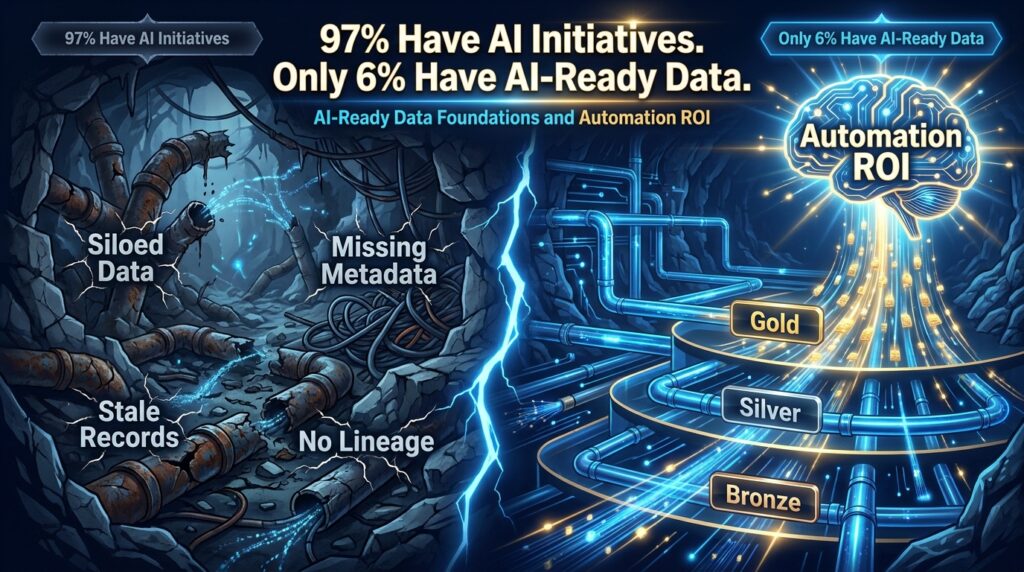
Split-scene illustration showing fragmented enterprise data on the left versus clean layered AI-ready data pipeline on the right, with text overlay: 97% Have AI Initiatives, Only 6% Have AI-Ready Data

Only 6% of enterprises have AI-ready data. Here’s what that gap costs, why it breaks automation ROI, and the infrastructure roadmap to fix it.

AI Ops Rooms: The Architecture Executives Actually Need (And Why Most Deployments Are Built Backwards)
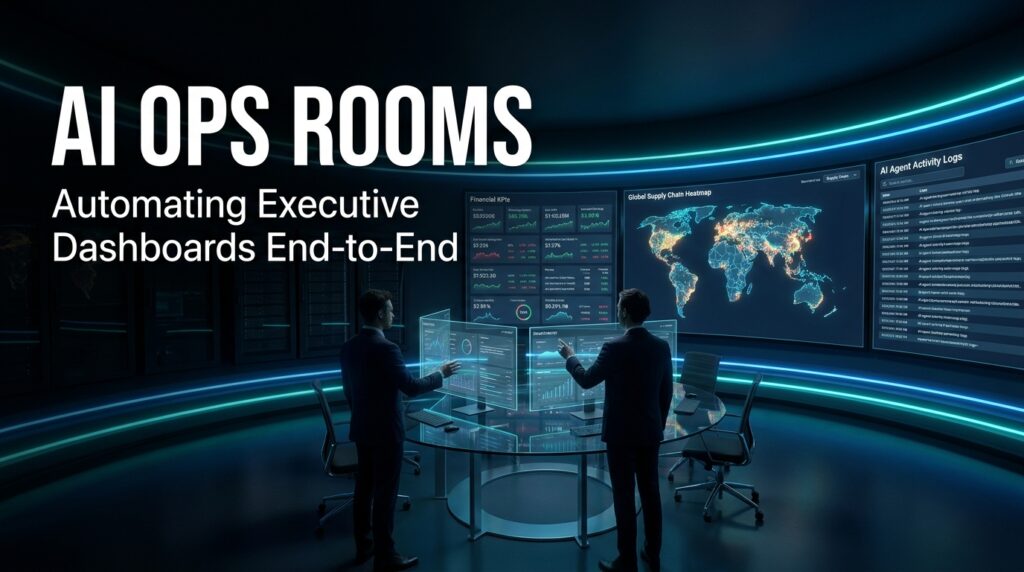
AI Operations Command Center with executives reviewing real-time executive dashboards and data streams across multiple screens

Most AI ops room builds are backwards. Here’s the 5-layer architecture, governance model, and decision-speed framework that actually works for executive dashboards in 2026.

When AI Agents Stop Assisting and Start Owning: The Workflow Handoff Most Companies Get Wrong
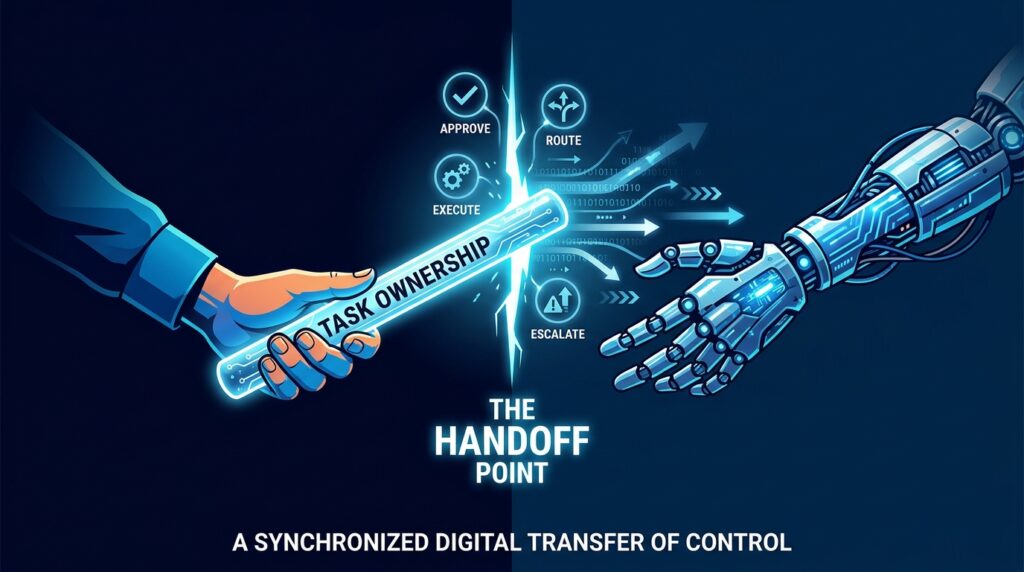
The AI workflow handoff — the moment task ownership transfers from human to AI agent, illustrated as a baton pass across a threshold dividing human and autonomous execution

The workflow handoff from human to AI agent is the defining challenge of 2026. Here’s what structurally changes when agents stop suggesting and start executing — and why most companies get the transition wrong.

From Zapier to Agents: How to Upgrade Legacy Automations Without Breaking What Already Works
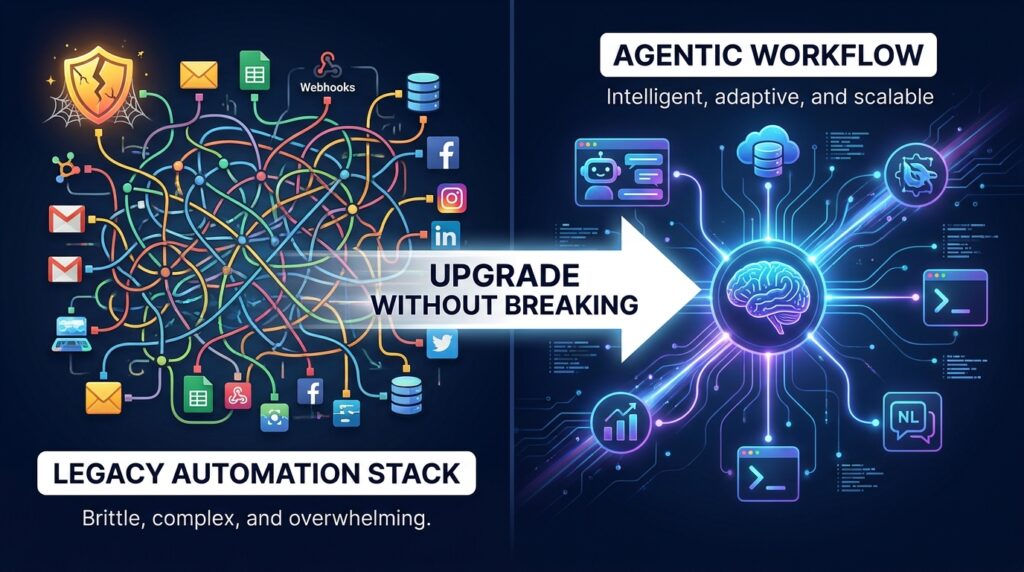
Split-screen showing tangled legacy Zapier automation stack on the left versus clean AI agent workflow on the right, with the text

How to audit, classify, and migrate legacy Zapier workflows to AI agents without breaking production — including shadow mode, governance, and the right sequencing.

Where LLM Agents End and RPA Begins: Drawing the Right Boundary for Production Orchestration

Three-layer enterprise automation stack diagram showing LLM Agent Layer, Orchestration Control Plane, and Deterministic RPA Execution

Where LLM agents end and RPA begins in production orchestration — tool contracts, MCP/A2A protocols, 5 failure modes, and real enterprise deployment patterns for 2026.

The Hyperautomation Sequencing Problem: Why the Order You Automate In Determines Whether You Win or Waste Millions

Hyperautomation roadmap wave planning diagram showing sequenced use case pathways labeled Wave 1, Wave 2, Wave 3 on a circuit board background

Most hyperautomation programs fail because of sequencing, not technology. Learn the wave-based framework for ordering use cases to deliver fast, compounding ROI.

Agentic AI for End-to-End Workflows: How Autonomous Systems Are Rewriting the Rules of Enterprise Execution

Agentic AI end-to-end workflows — network of autonomous AI agents orchestrating enterprise processes with 171% average ROI

How agentic AI enables fully autonomous end-to-end workflows in 2026. Architecture, real case studies, ROI data, governance, and a practical deployment roadmap.

  • Our Services
  • Why Us
  • About
  • Newsletter / Blog
  • Privacy Policy
  • Terms of Service
  • Our Services
  • Why Us
  • About
  • Newsletter / Blog
  • Privacy Policy
  • Terms of Service
Get Started
© 2026 ZonFlip, LLC. All Rights Reserved.

Website managed and hosted by ZonFlip, LLC 

ZonFlip, LLC is affiliated with The SmartHome Stores, LLC

Usage rights, trademarks, and intellectual property of ZonFlip, LLC and The SmartHome Stores, LLC are interchangeable and may be utilized by either entity as permitted by their respective agreements