




Most advice about TikTok Shop selling is about content: hooks, trends, the first three seconds. That matters. But it skips the part that decides whether a shop is still running in six months, which is operations.
A video can send a flood of orders in a day. If your stock, packing, shipping and refund process can’t absorb them, the flood turns into late shipments, cancellations and a damaged account. This post treats TikTok Shop as an operations business that happens to use video for demand.
A note on sourcing: I tried to pull current platform statistics while preparing this piece, and the research tools returned nothing usable. So I have not included figures such as fee percentages or conversion rates. Fees, thresholds and policies change often, and you should check the Seller Center for current numbers. What follows is a framework and a set of working habits, not a data report.
Why the Operating Mindset Beats the Viral Mindset
Viral content is a variable you can’t control. Fulfillment speed, margin discipline and response times are variables you can. Sellers who treat the second group as the main job tend to survive the swings in the first.
What a spike really tests
A sudden spike tests four things at once: inventory depth, packing capacity, customer service response, and cash flow. Cash flow is the one people forget. You pay for stock, shipping materials and often affiliate commissions before or alongside the payout cycle.
The practical rule
Before you push any product, decide the maximum number of orders per day you can ship on time. Treat that as your ceiling. If a video starts to outrun it, you pause promotion or add capacity rather than hoping.
Choosing Products That Fit the Format
TikTok is a discovery platform. People are not searching for something they already know they want. That favors products that show their value quickly on camera.
A five-question product filter
- Can it be demonstrated in under 15 seconds? Before-and-after, a visible effect, or a satisfying use.
- Is it easy to explain without reading a manual?
- Does it survive shipping? Fragile items raise damage claims.
- Is the return risk low? Sizing-heavy apparel and compatibility-dependent electronics tend to bring more returns.
- Can the margin carry a creator commission? If not, the affiliate channel is closed to you.
A product that fails two or more of these is a hard first product, however good it looks in a trend report.
Build the Margin Sheet Before You List
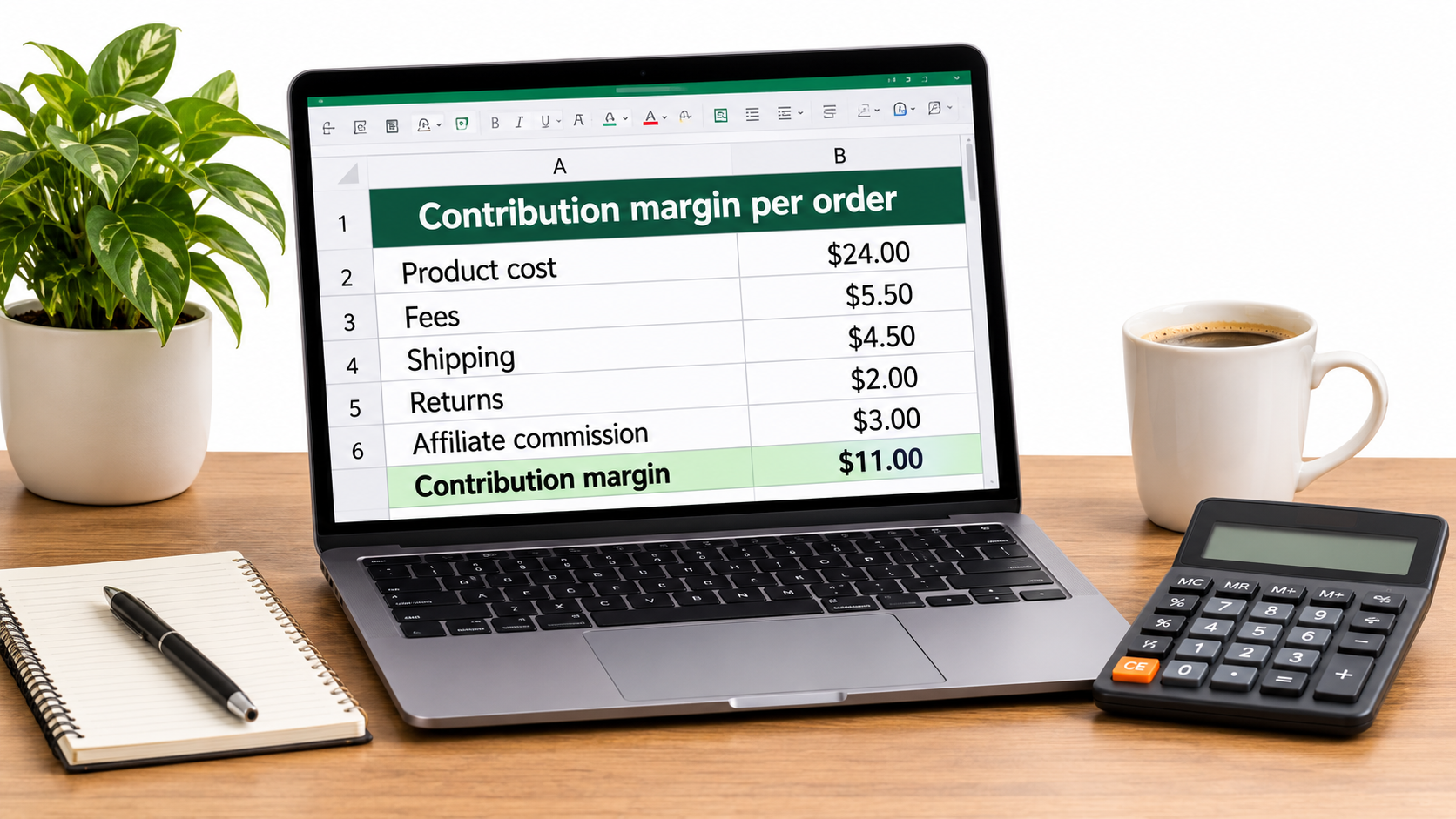
The most common failure is pricing from product cost alone. Work out contribution margin per order, then check it against every discount you plan to run.
Lines to include
- Landed product cost, including inbound freight
- Platform referral fee (look up the current rate for your category)
- Payment and any other transaction fees
- Packaging and labor per order
- Outbound shipping, including what you subsidize
- Expected return and refund cost, as a percentage of orders
- Affiliate commission, at the rate you offer creators
- Sample cost, spread across expected sales
Stress test it
Run the sheet at your full price, at your planned promotional price, and at promotional price plus a high commission. If the last case goes negative, you know that stacking those three is off limits. Write that down as a rule so a flash sale doesn’t quietly erase your profit.
Fulfillment: Decide Your Model Early
You generally choose between shipping orders yourself, using a third-party logistics provider, or using the platform’s fulfillment option where it’s available to you. Each trades cost against control and speed.
Self-shipping
Lowest setup cost and total control. It works while volume is low, and it breaks when you have a spike and one person doing the packing.
Third-party logistics
Adds a per-order cost but gives capacity and consistent handling times. Ask providers how they handle platform integration and what their cutoff times are.
Platform fulfillment
Can reduce operational load and may help with delivery promises. Check eligibility, inbound requirements and fee structure in the Seller Center before committing stock.
Whichever you pick, measure your dispatch time every day. Late shipment is one of the most avoidable causes of account trouble.
The Sample Loop: Your Real Growth Engine
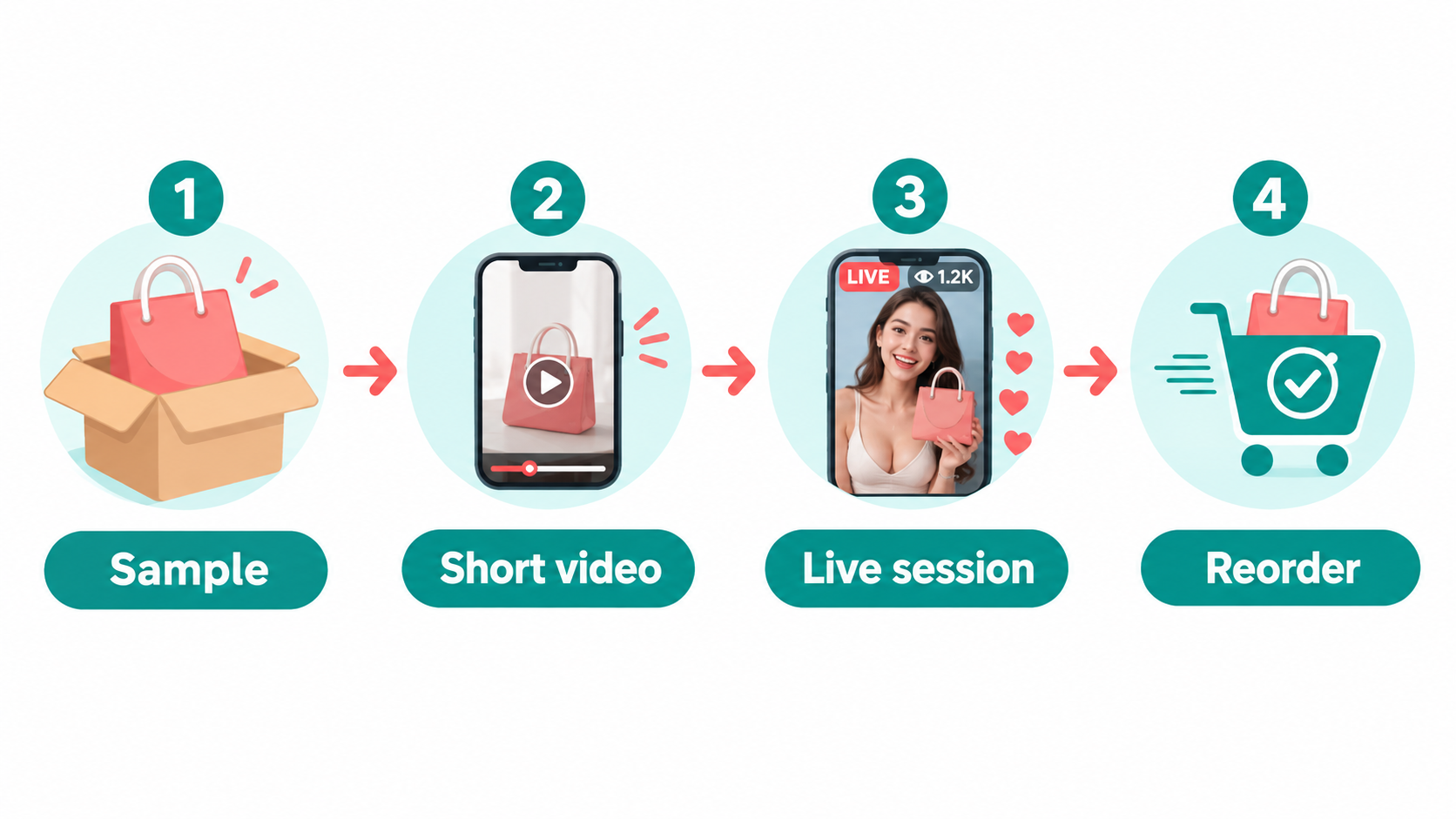
For many new shops, creators are the main source of traffic and credibility. The mechanism is simple: send samples, creators post, you learn which angles sell, you repeat.
Run it like a pipeline
- Keep a tracking sheet: creator, date sent, date posted, orders attributed, notes.
- Set a sample budget per week, and stop when you reach it.
- Follow up once, politely. Don’t chase.
- Drop creators who haven’t posted after a reasonable window.
Learn from the winners
When a creator’s video sells, note exactly what it showed: the hook, the use case, the price framing. Then brief the next creators with that angle, while leaving room for their own style. Creators know their audience better than you do.
Content Cadence for a Small Team
You don’t need to post constantly. You need a repeatable rhythm that produces tests you can learn from.
A workable weekly rhythm
- Three to five short product videos, each testing a different hook
- One customer-question video, built from real messages
- One live session, if you can ship the resulting orders
Change one thing at a time
If you change the hook, the product angle and the price together, you can’t tell what worked. Keep a log: video, hook type, views, clicks, orders. After two or three weeks, patterns appear.
Live Selling Without Burning Out
Live sessions let buyers ask questions in real time, which helps with products that need explanation. They also demand preparation.
Before you go live
- Have enough stock for the offers you plan to run
- Prepare three or four products, with one clear offer for each
- Write a short script for the opening, the demo and the call to action
- Assign someone to watch comments, if you can
During and after
Answer questions by name, repeat the offer often because viewers join at different times, and keep sessions to a length you can sustain. Afterwards, review the comments. Questions asked repeatedly are your next video topics and your next listing edits.
Affiliate Terms That Protect Your Margin
Commission is a cost of acquiring customers, and it should be set from your margin sheet, not from what competitors seem to offer.
Practical guardrails
- Set a base commission you can afford at promotional prices.
- Use higher rates selectively for proven creators or specific campaigns.
- Time-limit promotions so they end on their own.
- Review commission as a share of revenue weekly.
Returns, Reviews and Account Health
On a marketplace, your operational record affects your visibility and your standing. Treat the account health dashboard as a daily instrument.
What to watch
- Late dispatch and cancellation rates
- Refund and return rates, with reasons
- Customer service response time
- Product ratings and the themes in negative reviews
- Any policy warnings or listing violations
Fix upstream
If returns cluster around one reason, such as “not as shown,” the fix is usually in the video or listing. Make the product’s size, color and use honest in the content. A slightly lower click rate with fewer returns is often the better trade.
The Weekly Review
Pick one hour each week and look at the same numbers every time.
- Orders, revenue and contribution margin per order
- Dispatch time and any late orders
- Refunds and their reasons
- Top videos and top creators
- Stock on hand against the next two weeks’ likely sales
- Sample spend against attributed orders
Then decide three actions for the week. Not ten. Three.
A 30-Day Plan
Days 1 to 7: Foundation
Finish the margin sheet, choose a fulfillment model, set a daily order ceiling, and write clear listings with honest images. Read the current seller policies in full.
Days 8 to 14: First tests
Post short videos with different hooks. Start sending samples within your weekly budget. Ship every order quickly, even if volume is small.
Days 15 to 21: Learn
Identify the best hook and the best creator. Write a brief based on that. Run your first live session with a small, well-stocked offer.
Days 22 to 30: Tighten
Review returns and reviews, fix listing issues, adjust commissions to your margin, and decide whether to reorder stock. Scale only the parts that held up.
Conclusion
TikTok Shop rewards sellers who can turn attention into delivered, satisfactory orders at a margin that works. Content gets people to the door. Operations decide whether they come back.
Your takeaways: price from contribution margin, set a daily shipping ceiling, run samples as a tracked pipeline, change one variable at a time in your content, and review account health weekly. Verify every fee and policy against the current Seller Center before you act, since those details shift.