



Ask ten new Amazon sellers what decides their success and most will say “finding the right product.” Ask ten sellers who have survived several years and you will hear something different: cash, margins and discipline. The product matters, but the business is mostly a working-capital machine that happens to sell products.
This article reframes Amazon selling around that idea. It does not rely on headline statistics, because fees, policies and benchmarks change often. Check Amazon’s current fee schedule in Seller Central before using any numbers. All figures below are illustrative examples, not market data.
Why “Good Product” Is the Wrong First Question
A good product with bad economics is a slow way to lose money. A mediocre product with strong economics and a healthy cash cycle can fund its own improvement.
Before you ask whether a product will sell, ask whether it can sell profitably at the price the market will bear. That means working backward from the shelf price, not forward from the factory quote.
Work Backward From the Price
Start with the realistic selling price of the top competitors, not the price you wish to charge. Subtract Amazon’s referral fee, the fulfillment fee for your size tier, storage, and a return allowance. What remains is the money available for product cost, freight, advertising and profit.
The Ceiling Test
If the money left after Amazon’s fees cannot cover landed cost, advertising and a profit you would accept, the product fails before you spend anything. This single test removes most bad ideas.
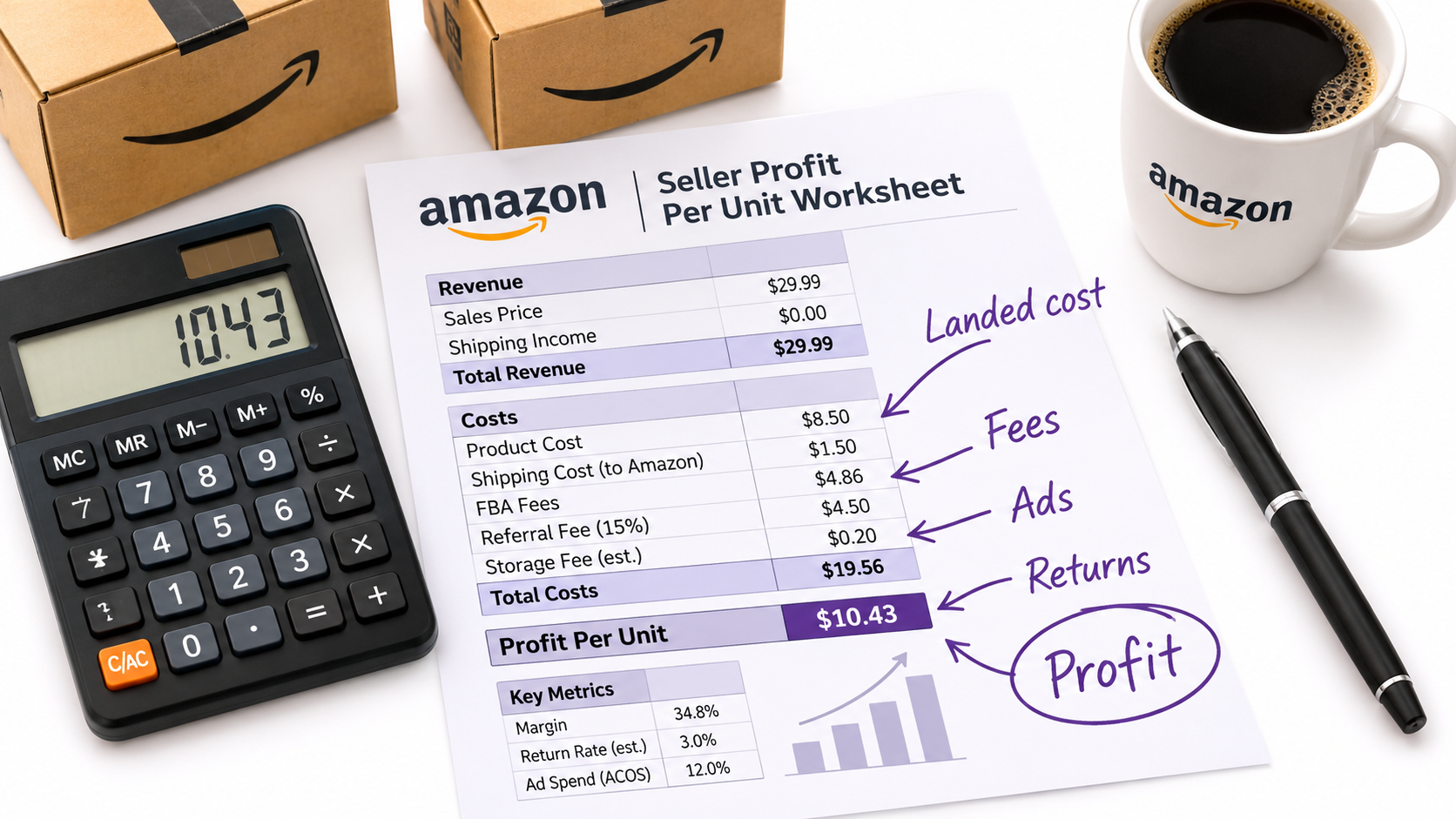
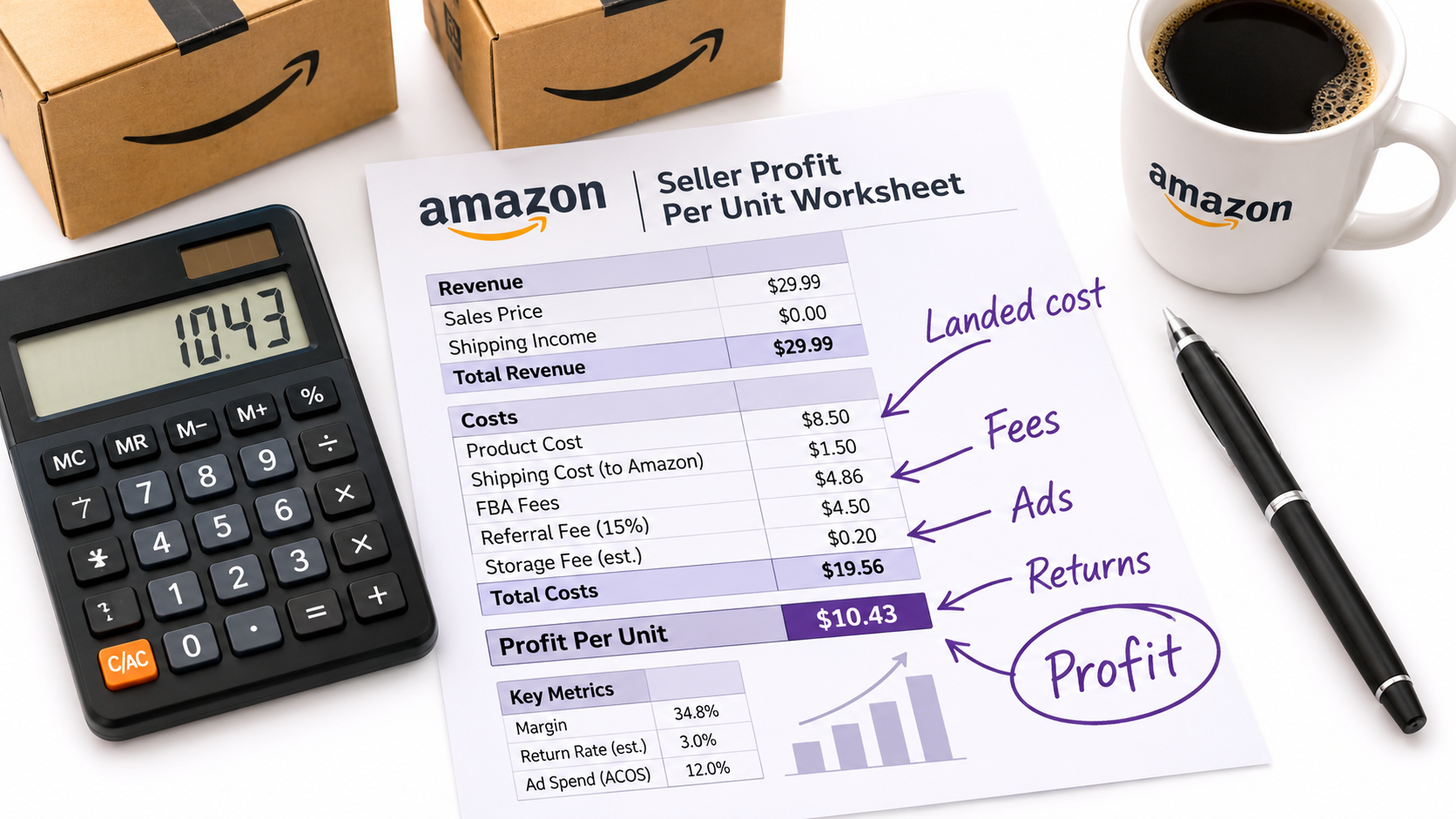
The Contribution Margin Worksheet
Contribution margin is what each unit earns after every cost that scales with sales. Many sellers look only at “margin after Amazon fees,” which hides advertising and returns.
Here is an illustrative unit at a $30 price:
- Selling price: $30.00
- Referral and fulfillment fees: $10.50
- Landed cost (product, freight, duty): $8.00
- Storage and prep allowance: $0.60
- Return and damage allowance: $0.90
- Advertising per unit sold: $4.00
- Contribution: $6.00 (20%)
Now change one thing. If advertising rises to $7 per unit, contribution drops to $3, a 50% cut in profit from a $3 change. Small cost movements have large profit effects, which is why this math should be rebuilt monthly.
Use TACoS, Not Just ACoS
ACoS measures ad spend against ad-attributed sales. TACoS measures ad spend against total sales, including organic. A falling TACoS over time suggests ads are building organic rank. A flat or rising TACoS suggests you are renting every sale.
The Cash Conversion Cycle Nobody Draws
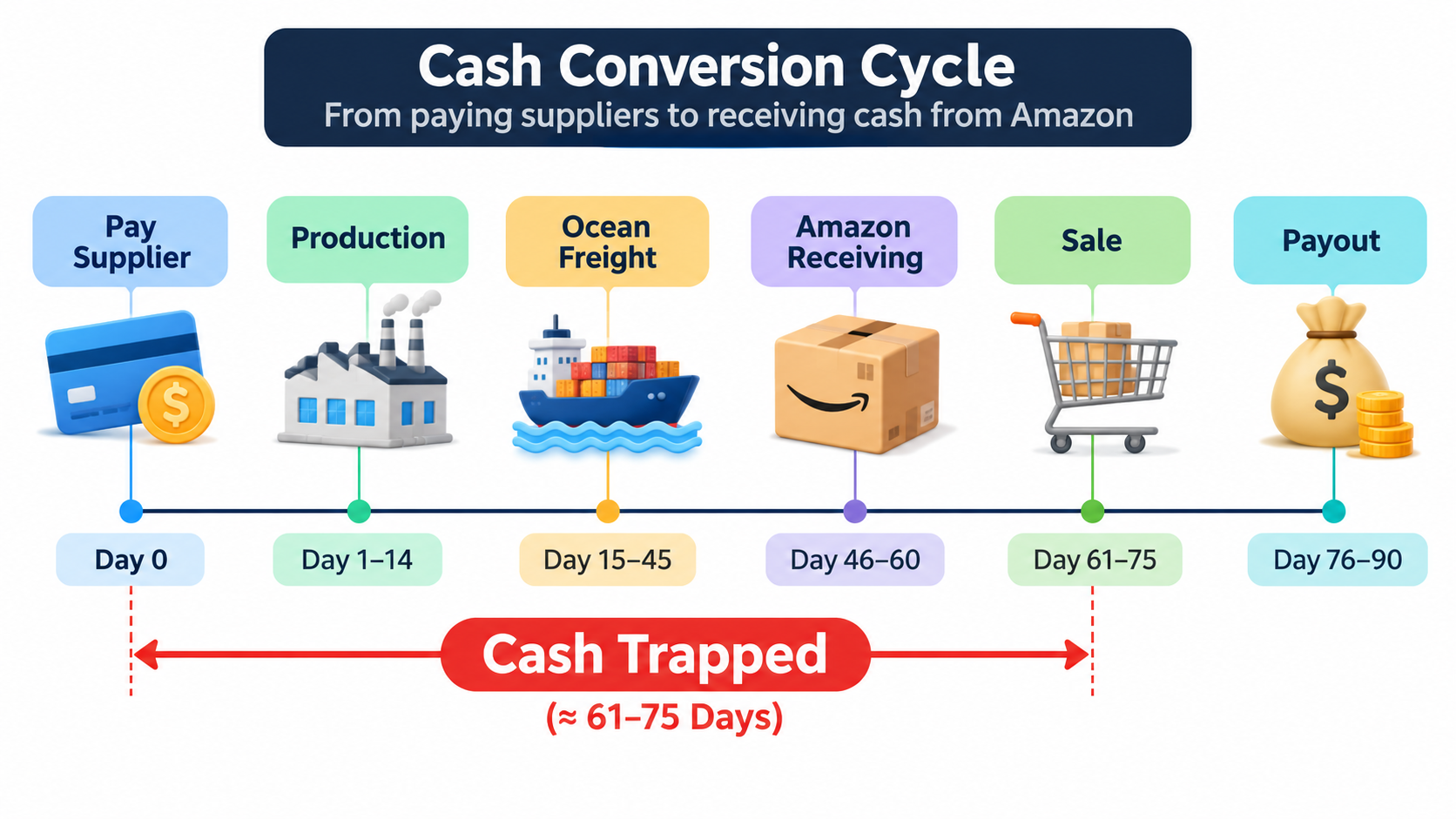
You pay a supplier, wait for production, ship, clear receiving, sell, and finally receive a payout. During that gap your cash is inventory. A product with a 20% margin that takes four months to turn into cash can be worse than one with 12% that turns in six weeks.
Map Your Own Timeline
Write down the real number of days for each stage: supplier deposit to production end, transit, receiving, average days to sell through, and payout delay. Add them. That total is how long each dollar is locked up.
Return on Inventory, Not Just Margin
Measure annualized profit per dollar of inventory. Faster turns let the same capital be reused several times a year. A modest-margin product with fast turns often beats a high-margin slow mover.
Inventory Is Where Sellers Get Hurt
Overstock ties up cash and attracts storage costs. Stockouts lose rank and sales momentum. Both are forecasting errors, and both are costly.
Forecast With Ranges
Plan for a low, expected and high demand case. Order for the expected case and hold a plan, such as reduced ad spend or a promotion, for the low case. Have an air or expedited option priced in advance for the high case.
Reorder Points
Set reorder points as lead time demand plus a safety buffer. Because lead times are variable, buffer against the slowest realistic delivery, not the average one.
Advertising as an Investment With a Payback Period
Treat launch advertising like a loan. You accept a loss per unit for a defined period in exchange for rank and reviews. Set a cap on total launch loss and a date to review it.
After launch, separate campaigns by purpose: defending branded terms, capturing proven converting keywords, and exploring new ones. Judge each by its job, not by one blended number.
Listings: Conversion Is Margin in Disguise
Raising conversion rate lowers advertising cost per sale, because the same click spend yields more orders. A listing improvement is therefore a margin improvement.
Test one variable at a time: main image, title lead, price, or first bullet. Amazon’s Manage Your Experiments tool is available to eligible brand-registered sellers. Record results so you do not repeat tests.
Returns, Reviews and the Hidden Cost of Quality
Read return reasons and negative reviews as a product development feed. Each recurring complaint is a cost you pay on every unit until you fix it. A packaging change or insert that prevents damage can add more profit than a price increase.
Reduce Concentration Risk
Dependence on one product, one supplier or one channel is the largest hidden risk. Account suspensions, listing changes or supplier failure can halt revenue overnight.
- Keep at least a second qualified supplier for your best seller.
- Know the policy areas relevant to your category and keep documentation ready.
- Build an email list or direct channel where permitted by Amazon’s rules.
- Avoid letting one SKU exceed a share of revenue you could not survive losing.
A Monthly Operating Rhythm
- Week 1: Rebuild contribution margin for each SKU with current fees and ad costs.
- Week 2: Review inventory days of cover and reorder points.
- Week 3: Review listing tests, returns and reviews.
- Week 4: Review cash position and plan the next purchase order.
Conclusion: Actionable Takeaways
Amazon selling rewards sellers who treat it as a cash flow business. Product choice gets you in the game; economics and operations keep you there.
- Run the ceiling test before sourcing anything.
- Track contribution margin, not just margin after fees.
- Watch TACoS trends alongside ACoS.
- Calculate your cash conversion cycle and annualized return on inventory.
- Forecast in ranges and set reorder points using worst-case lead times.
- Reduce concentration across SKUs, suppliers and channels.
Start this week by building the worksheet for your best-selling SKU with current numbers. What you find will likely change what you do next.