

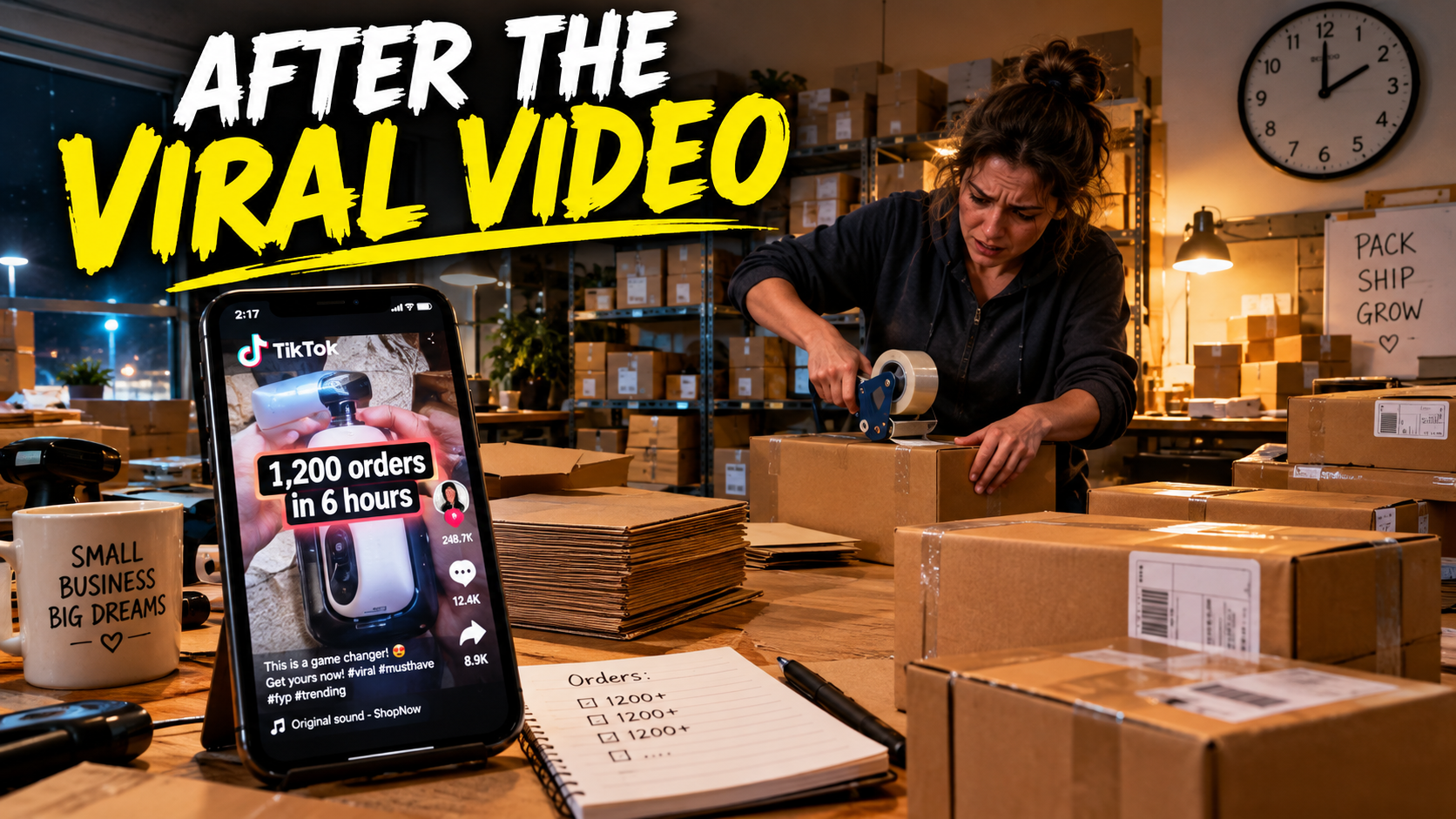

Most advice about TikTok Shop selling stops at the moment of success. It covers how to find a winning product, how to brief creators, and how to get a video into the For You feed. Then the video lands, orders arrive by the hundreds, and the advice runs out.
That’s the moment this article is about. On TikTok Shop, a single creator video can push a store from a few dozen orders a day to more than a thousand in an afternoon. Unlike search-driven marketplaces, where demand builds gradually and you can watch it coming, demand here shows up all at once, driven by content you may not have known about until it went live.
For sellers, that turns operations into the real test. Inventory, fulfillment speed, tracking accuracy, customer service, returns, and cash flow decide whether a viral moment builds a business or wrecks an account. A store that ships late during a spike can pick up performance penalties that outlast the sales.
The stakes keep rising. According to eMarketer figures compiled by DemandSage, US TikTok Shop sales reached about $15.8 billion in 2025 and are projected to hit roughly $23.4 billion in 2026, or about 22.8% of US social commerce. Global GMV is estimated at $123.5 billion in 2026, nearly double 2025’s $64.3 billion. More money means more competition and higher expectations from buyers and from the platform.
This guide covers the back office: the systems, buffers, and habits that let a TikTok Shop take a spike without breaking. It isn’t about getting the views. It’s about being ready when they come.
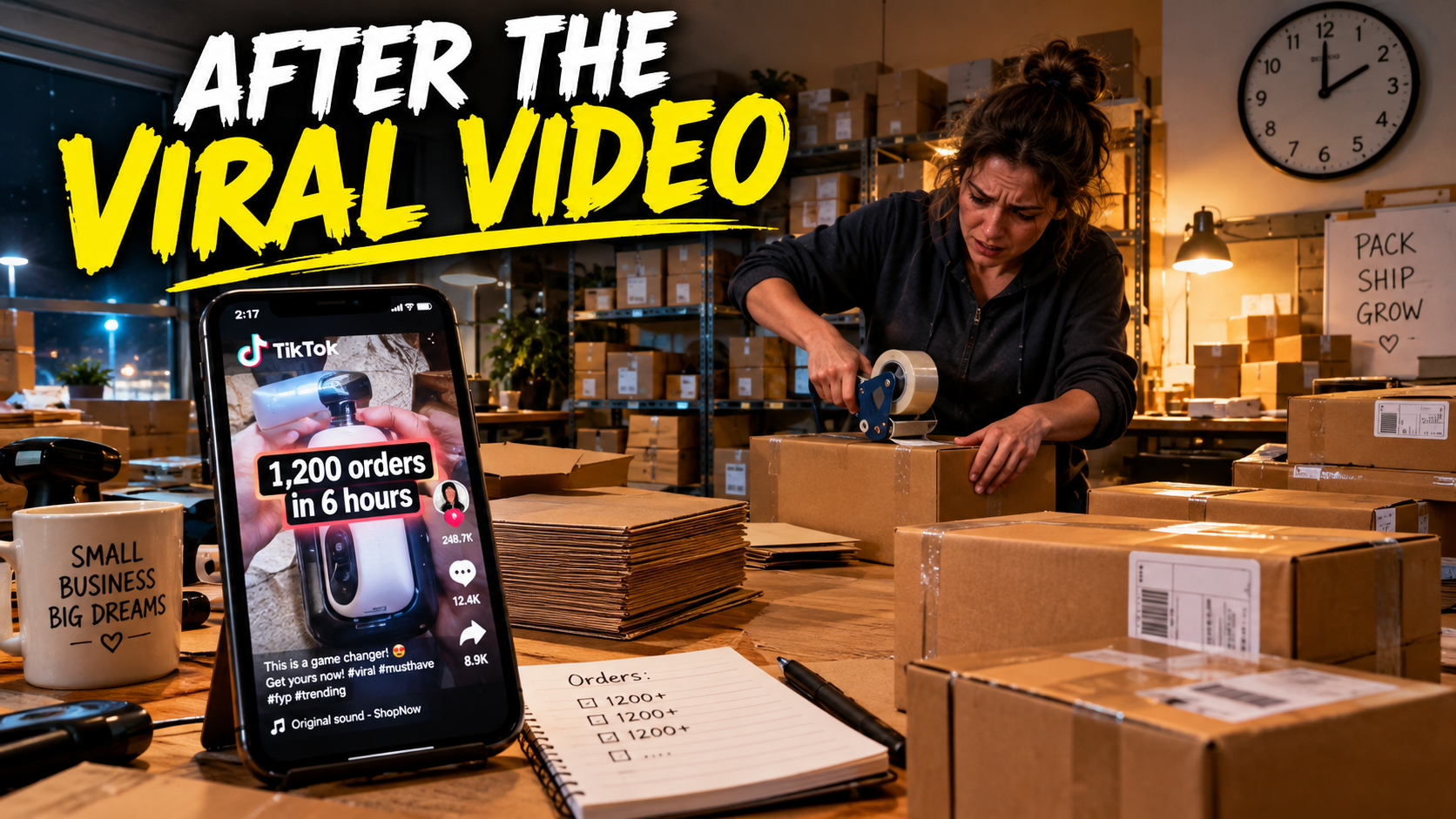
Why Operations Has Become the Real Bottleneck on TikTok Shop
In TikTok Shop’s early days, the hard part was demand. Few sellers knew how to make content that converted, and the ones who did could get away with messy logistics. That has changed.
The market has matured fast
DemandSage, citing eMarketer, CNBC, and Modern Retail, reports that TikTok Shop now has more than 15 million sellers worldwide and over 215,000 small businesses selling in the US. The same source estimates US GMV hit $11.8 billion in the first half of 2026, more than double the same period a year earlier.
With growth like that, the platform has every reason to protect the buyer experience. Late shipments, cancellations, and bad tracking hurt trust in the whole channel, not just one store. So performance standards tend to tighten as a marketplace grows up, and TikTok Shop is following the same path Amazon and eBay took before it.
The de minimis shift changed who’s selling
One policy change made operations even more central. When the US ended the de minimis import exemption in May 2025, sales from foreign sellers dropped sharply, according to the DemandSage summary of CNBC and eMarketer reporting. Domestic businesses picked up much of that demand.
For US-based sellers, that’s an opening. It also raises the bar. Domestic sellers win partly because they can ship faster and handle returns locally. If your fulfillment doesn’t actually deliver on that speed, you lose the main thing setting you apart.
Creators move demand faster than you can react
DemandSage reports that creators drive around 42% of US TikTok Shop sales. That matters for operations because creator content is mostly out of your hands. An affiliate you sent a sample to three weeks ago can post on a Tuesday night, and by Wednesday morning you’ve sold through a month of stock.
On search-driven marketplaces, you can forecast from keyword trends and past sales. On TikTok Shop, a big share of your demand depends on what other people decide to post and when. Your systems have to assume surprise is normal.
What this means in practice
- Marketing skill alone no longer sets winners apart. Plenty of sellers can now make content that converts.
- Operational failures add up. Poor shop performance can mean less visibility, fewer affiliates willing to work with you, and in serious cases, restrictions.
- Your back office is a growth lever. Stores that ship reliably can say yes to bigger creator partnerships and campaigns without worrying about falling over.
The Anatomy of a TikTok Shop Demand Spike
To plan for spikes, you need to know what they look like. They’re far from random, and once you’ve seen a few, the pattern repeats.
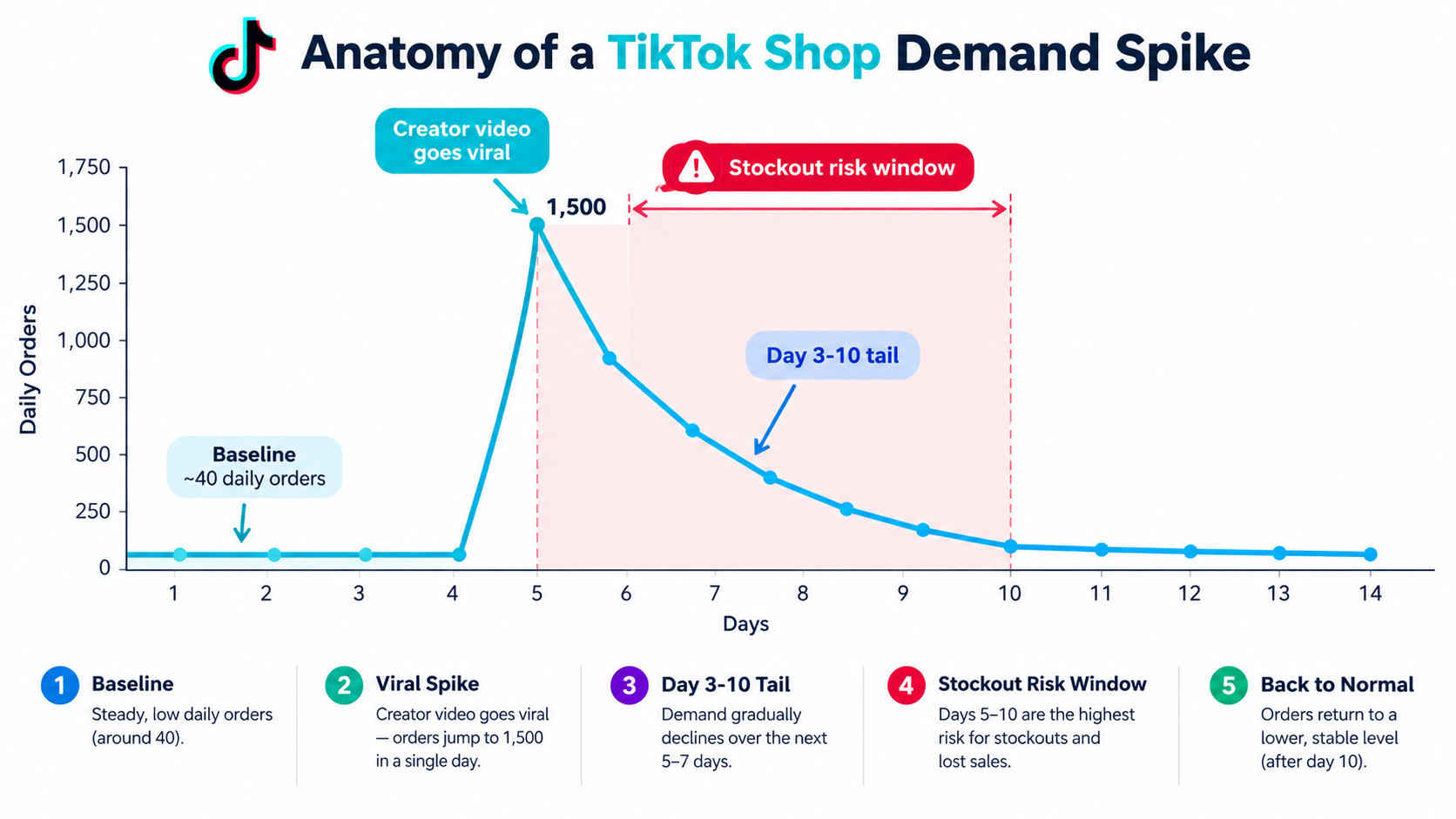
Phase 1: The trigger (hours 0 to 6)
A creator video or LIVE session starts getting real distribution. Orders climb faster than usual. Many sellers first notice through a flood of order notifications or a sudden drop in inventory, not an analytics dashboard.
The decisions in this window matter most. Do you have enough stock? Can your packing setup handle five or ten times the usual volume? Is anyone actually watching?
Phase 2: The peak (hours 6 to 72)
The video spreads, other creators may pick up the product, and the algorithm may push related content. Orders peak here. This is also when your shipping deadlines start piling up, since every order placed in this window has a dispatch clock running.
Sellers who come out of a spike with penalties usually lose here. Orders keep coming while the packing team falls further behind, and late dispatches build up in a matter of days.
Phase 3: The tail (days 3 to 14)
Demand comes down, but not to the old baseline. A successful video often keeps selling for days or weeks, especially if other affiliates post their own versions. Copycat videos can set off smaller spikes inside the tail.
The tail is where stockouts do the most damage. Running out of inventory while demand is still high wastes the momentum the viral moment gave you, and the content keeps sending people to a listing they can’t buy from.
Phase 4: The aftermath (weeks 2 to 6)
Returns, refund requests, product questions, and reviews arrive. Customer service volume follows order volume with a lag of one to three weeks. Many sellers relax after the peak, which is exactly when the second wave of work shows up.
Planning around the curve
Once you can see these phases, plan for each one separately:
- Trigger: monitoring and alerts so you know within the hour.
- Peak: packing capacity that can stretch quickly.
- Tail: fast restocks and purchase orders ready to go.
- Aftermath: customer service and returns capacity sized to the peak, not the baseline.
Inventory Planning When Demand Isn’t Linear
Traditional inventory planning assumes demand is fairly smooth. You estimate average daily sales, add safety stock, factor in lead time, and reorder at a set point. On TikTok Shop, that math breaks.
Why average daily sales misleads you
Picture a store that sells 30 units a day for three weeks, then 1,200 in one day after a viral video. The monthly average looks like about 70 units a day, but that number describes no real day. Plan around it and you’ll be overstocked in quiet weeks and sold out in busy ones.
A better approach treats baseline and spike demand as two separate planning problems.
Baseline stock vs. spike reserve
Baseline stock covers organic, steady demand from search, your storefront, and evergreen content. Plan it the usual way, with reorder points and safety stock.
Spike reserve is a deliberate buffer for creator-driven surges. Its size should depend on how much creator activity you’re running. If you just sent samples to 50 affiliates, the odds of a spike in the next few weeks are much higher than if you sent none.
Tie inventory to your affiliate pipeline
One of the most practical habits is to treat your sample and affiliate pipeline as a leading indicator. Samples shipped, videos confirmed, and LIVE sessions scheduled all predict near-term demand better than last month’s sales.
- Keep a simple tracker of which creators received samples and their typical posting window.
- Flag creators with large or highly engaged audiences as high-impact.
- Increase your spike reserve when several high-impact creators are due to post in the same period.
Shorten your restock lead time
Even a good buffer can run out. What matters next is how fast you can refill it. Sellers who weather spikes well usually have:
- Pre-negotiated rush terms with suppliers, even at a higher unit cost.
- Domestic or nearshore backup sourcing for top SKUs, which counts for more after the de minimis change made cross-border small parcels harder.
- Components or blanks on hand if you do any final assembly, kitting, or labeling yourself.
Decide in advance what happens at zero
Decide before a spike how you’ll handle a stockout. Will you pause the listing, cut available quantity to slow sales, or allow pre-orders if your category and the platform permit it? Selling inventory you don’t have, then canceling, is almost always the worst choice. Seller-fault cancellations hurt buyers, frustrate creators, and can count against your shop’s performance.
Most importantly, keep inventory counts accurate across every channel. More on that in the multi-channel section below.
Choosing a Fulfillment Model That Can Absorb a Surge
How you get orders from shelf to buyer decides how much volume you can handle. Most TikTok Shop sellers use one of three models, or a mix.
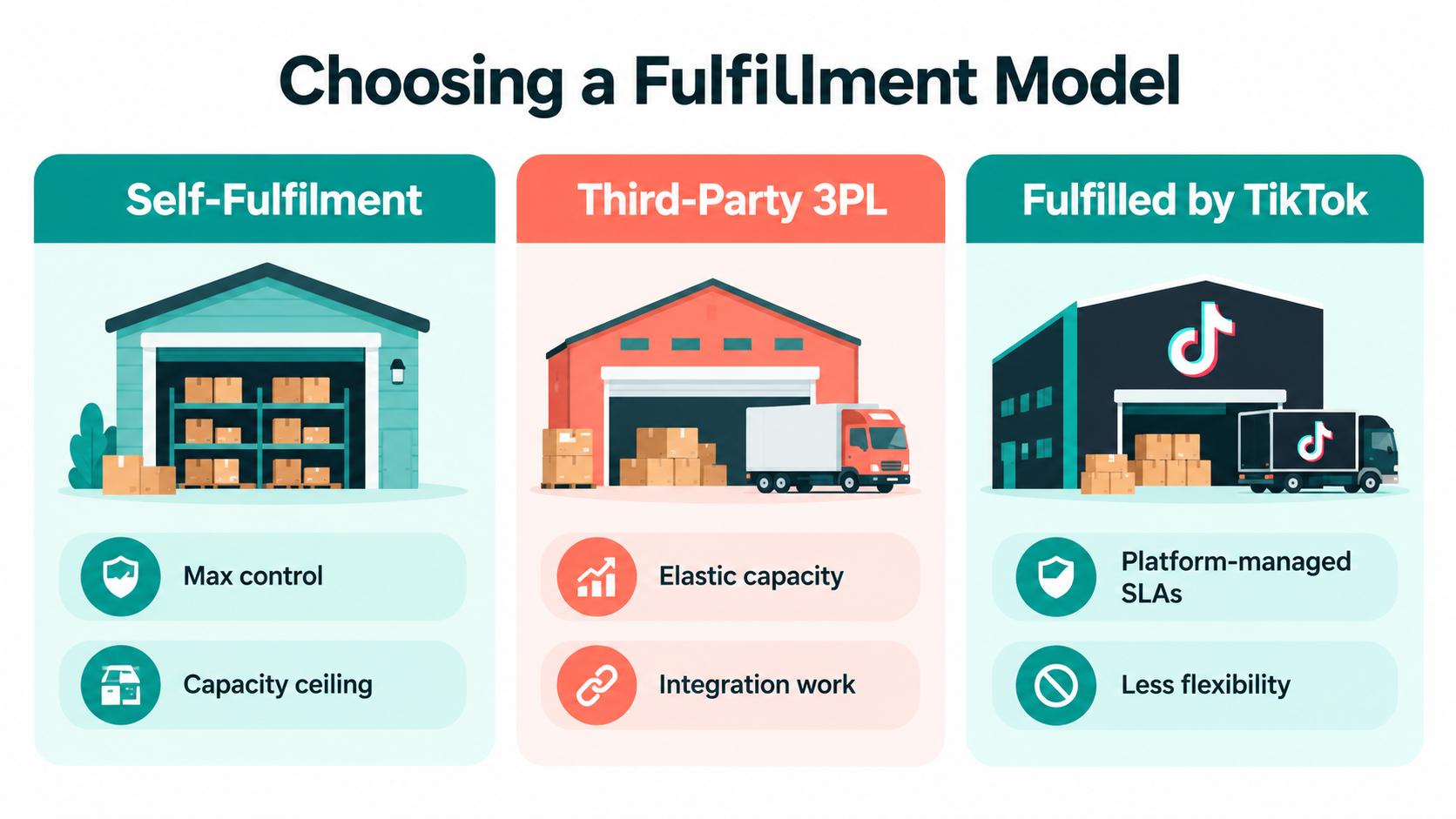
Self-fulfillment
Many sellers start by packing orders themselves from a garage, spare room, or small warehouse. You get full control over packaging, inserts, quality checks, and costs.
The weakness is a hard capacity ceiling. A two-person team that packs 100 orders a day comfortably can’t suddenly pack 1,500. Temporary staff need training, space runs out, and carrier pickup times limit what goes out each day.
Self-fulfillment works best for stores with steady volume, products that need special handling, or sellers early enough that spikes are still rare. If you go this route, write down your surge plan: who you’d call in, where extra packing stations would go, and how you’d get more carrier pickups.
Third-party logistics (3PL)
A 3PL stores your inventory and ships orders for you. A good one can absorb volume swings much better than a small in-house team because it spreads labor across many clients.
The tradeoffs are integration and accountability. The 3PL’s system has to sync properly with TikTok Shop so orders flow in and tracking numbers flow back without delay. A failure there, such as tracking not uploading, can look to the platform like your shipping failure.
When you evaluate a 3PL for TikTok Shop, ask:
- Do they have a direct integration with TikTok Shop, or do they route through a middleware app?
- What’s their order cutoff time for same-day shipping?
- How do they handle sudden volume increases, and how much notice do they need?
- Can they give examples of other social commerce clients they’ve handled during spikes?
Fulfilled by TikTok (FBT)
TikTok runs its own fulfillment program in some markets, where sellers send inventory to TikTok-operated or partner warehouses and the platform handles picking, packing, and shipping. As with Amazon’s FBA, the appeal is that fulfillment performance becomes largely the platform’s job, and products may get shipping-speed badges or other perks.
The tradeoffs are familiar to anyone who has used FBA: less control over packaging and branding, inbound shipping requirements, storage fees, and inventory locked into one channel. Program terms, fees, and eligibility change, so check current details in Seller Center instead of relying on older summaries.
The hybrid approach
Many established sellers mix models. They might keep hero SKUs in a platform or 3PL warehouse for spike capacity and fulfill slower or specialty items themselves. Others self-fulfill as a baseline and keep a 3PL on standby with a small stock of top sellers.
The right answer depends on your volume, margins, and product type. The principle stays the same: your fulfillment capacity should be able to handle at least several times your normal daily volume without missing deadlines.
Shipping Deadlines and the Metrics That Actually Get Watched
Every marketplace measures sellers on fulfillment, and TikTok Shop is no different. The exact metric names, thresholds, and calculation windows change over time and vary by region, so treat Seller Center as the source of truth. The categories, though, are consistent and worth knowing well.
Dispatch timeliness
Each order has a deadline to be shipped, meaning handed to a carrier with a valid scan. Missing it counts as late dispatch. During a spike, this is the metric most likely to slip, because the deadline is set when the order is placed, not when you get around to packing it.
Practical tip: work out your dispatch capacity in orders per day. When open orders exceed what you can ship before their deadlines, you’re already behind, even if no order is late yet.
Valid tracking
An uploaded tracking number isn’t enough. It has to be valid and show carrier movement. Labels printed but never scanned, wrong carrier codes, or tracking uploaded for the wrong order can all count against you.
This is where 3PL and middleware integrations often fail quietly. Audit a sample of orders each week to confirm tracking shows real carrier scans.
Cancellations and fulfillment failures
Cancellations caused by the seller, usually because of stockouts or inventory sync errors, are generally treated as a serious fulfillment failure. Buyers placed an order in good faith, and often a creator’s credibility is tied to the product being available.
Delivery speed and on-time delivery
Beyond dispatch, platforms increasingly care about how quickly orders actually arrive. Your choice of carrier, shipping service, and warehouse location all affect this. A product shipped on time from a far-off warehouse by a slow ground service can still arrive later than buyers expect.
Build an internal early-warning dashboard
Don’t wait for the platform to tell you there’s a problem. Track your own leading indicators daily:
- Open orders vs. daily ship capacity
- Orders within 24 hours of their dispatch deadline
- Orders shipped without a carrier scan after 24 hours
- Inventory on hand vs. projected demand for the next seven days
Spreadsheets work fine at small scale. The point is to look every day, especially when creator activity is high.
Account Health: How Small Problems Turn Into Big Restrictions
On every mature marketplace, account health is how operational problems become business consequences. TikTok Shop uses a mix of performance scores and policy violation tracking to judge sellers. The exact scoring system has been revised more than once, so check current definitions in Seller Center. The underlying logic is stable.
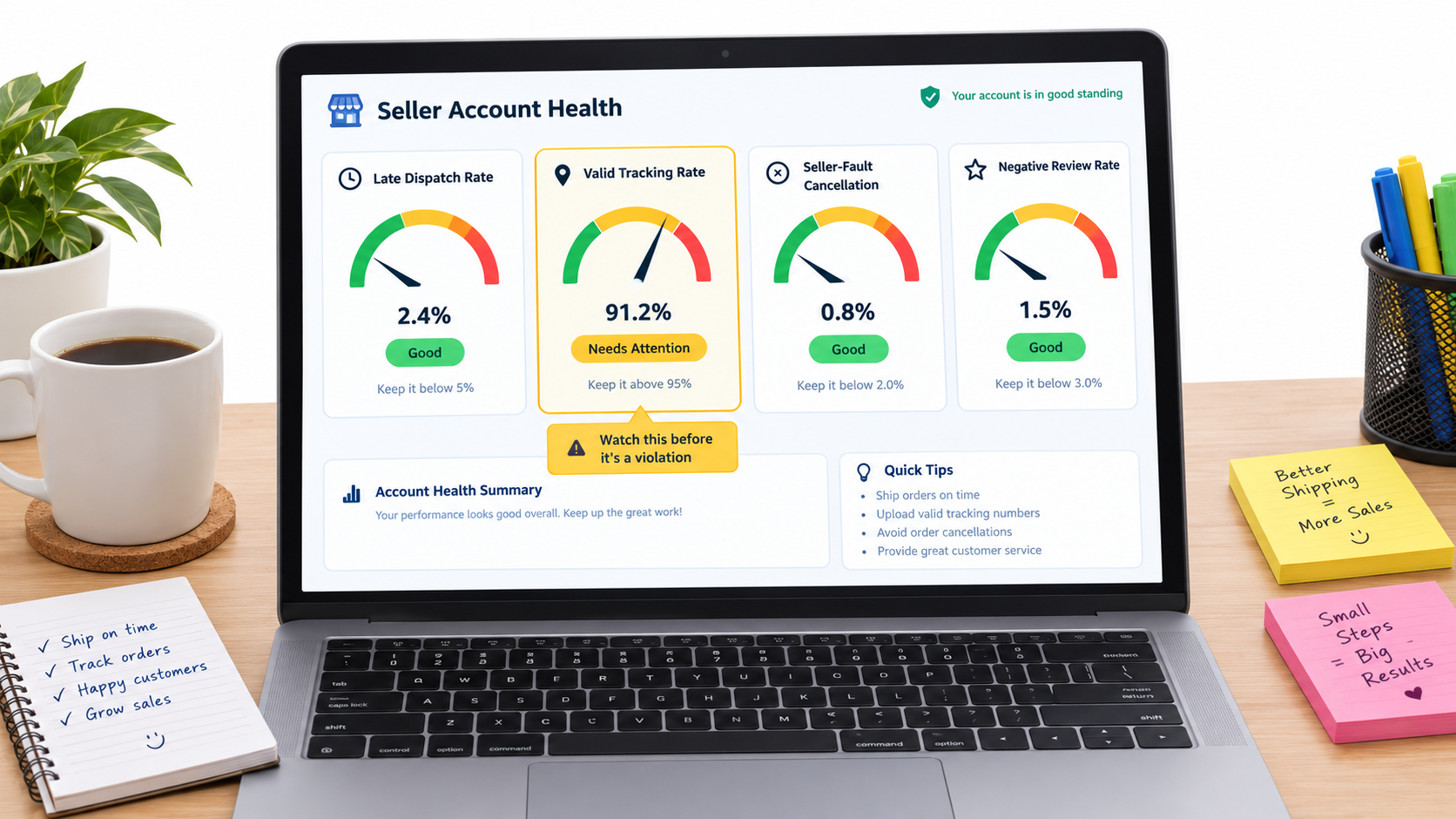
Two kinds of risk: performance and policy
Performance risk comes from operational metrics like shipping speed, cancellations, returns caused by product issues, and customer service responsiveness. These usually move gradually and reflect patterns over a rolling window.
Policy risk comes from specific violations: prohibited products, misleading listings, intellectual property problems, unapproved claims, or attempts to move transactions off the platform. These can trigger penalties quickly, sometimes from a single incident.
Why spikes are dangerous for account health
Rolling-window metrics are calculated on order volume. A spike adds many orders to the denominator, which might seem like it would dilute problems. But if your systems fail during the spike, the numerator grows even faster. A week of 1,000 orders a day with a 10% late rate creates far more late orders than months of normal trading.
Those late orders then sit in your performance window for weeks, affecting your visibility and eligibility for campaigns and programs long after the spike is gone.
Listings are an account health issue too
Viral moments also bring scrutiny. More buyers means more people reading your listing closely, more reports of inaccurate claims, and more reviews. Before scaling any product:
- Make sure images, sizes, materials, and quantities match exactly what ships.
- Remove or substantiate any health, safety, or performance claims, especially in beauty, supplements, and wellness.
- Check that creator scripts don’t make claims your listing can’t support. Affiliate content tied to your product can still affect your shop.
Appeals and documentation
When something goes wrong, documentation is your best defense. Keep records of carrier handoffs, supplier certifications, product testing, and customer communications. Sellers who can show evidence quickly tend to resolve disputes and appeals more successfully than those piecing together a story after the fact.
Returns, Refunds, and Customer Service at Volume
Customer service is the part of operations that most sellers under-plan. It doesn’t feel urgent during the spike, but it hits hard afterward.
Impulse buyers behave differently
Much of TikTok Shop buying is impulse-driven: someone sees a video, gets excited, and checks out in seconds. That works well for conversion, but it means some buyers didn’t fully read the listing. When the product arrives, any gap between what the video promised and what’s in the box shows up as returns, refund requests, and negative reviews.
The fix starts before the sale. Clear listings, honest creator briefs, and accurate sizing info prevent many returns that would otherwise land on your customer service team.
Response time is a metric too
Buyer messages usually have expected response windows, and slow replies can hurt your shop’s standing. During and after a spike, message volume can jump far past what one person can handle.
- Build saved replies for the 10 to 15 most common questions: shipping status, sizing, how to use the product, return process.
- Write a spike FAQ into your listing and storefront so buyers find answers before messaging you.
- Arrange backup coverage through a freelancer or virtual assistant you can bring in quickly, already trained on your products.
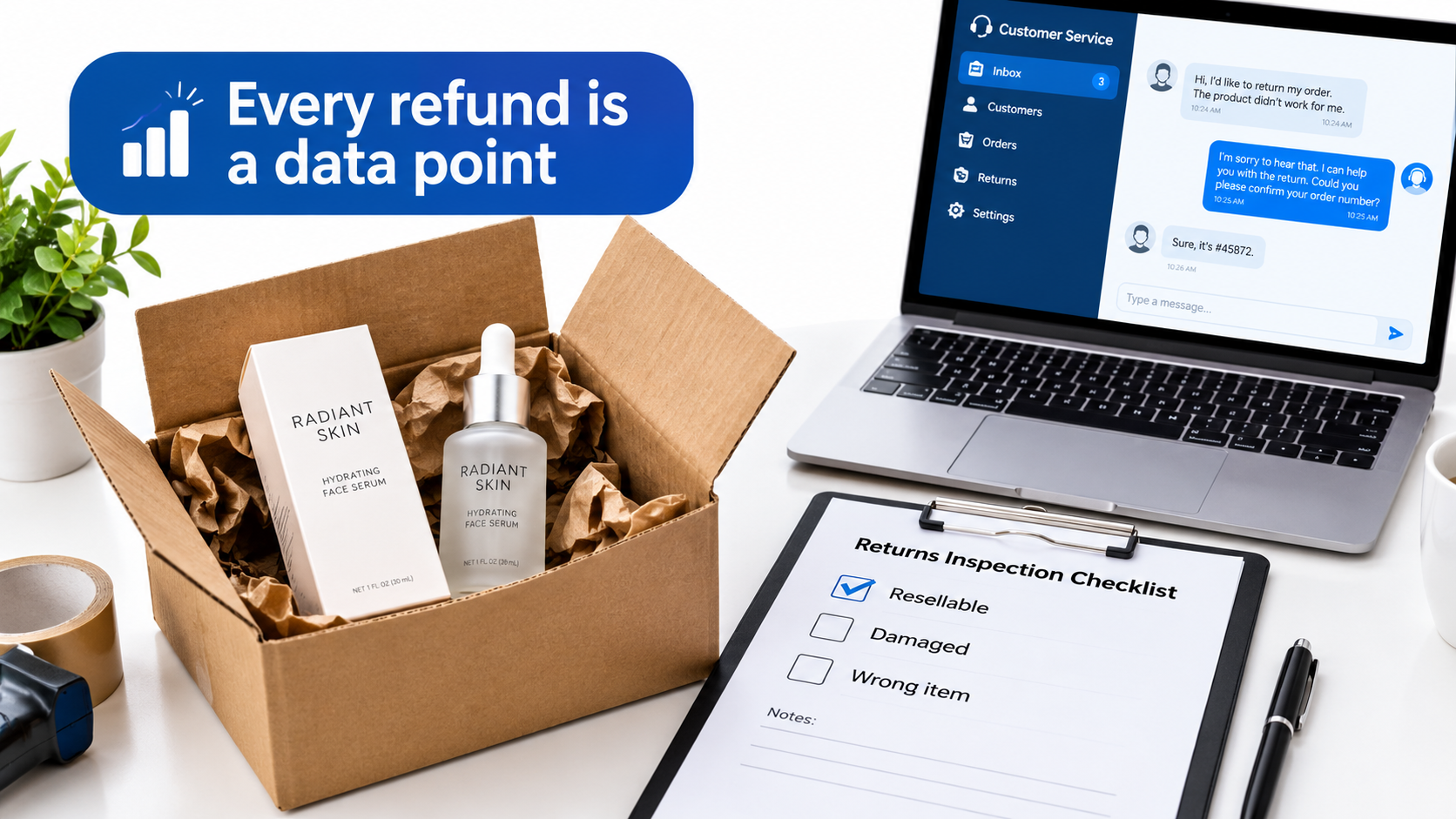
Treat refunds as product data
Every return and refund tells you something. Track reasons by SKU and look for patterns:
- “Not as described” often points to a listing or creator-script problem.
- “Damaged in transit” points to packaging or carrier issues.
- “Wrong size” points to unclear size charts.
- “Changed my mind” is partly unavoidable with impulse purchases, but high rates may mean the video oversold the product.
Sellers who review refund reasons weekly can fix problems while the product is still selling, instead of finding out after the fact that a defect affected thousands of orders.
Process returns quickly
Returned items that are resellable are inventory. If they sit in a pile for weeks, that’s stock you could have sold during the tail. Set up a simple inspection flow (resellable, damaged, wrong item) and get usable units back into available inventory fast.
Sample and Affiliate Logistics Are Operations Too
Most TikTok Shop guidance treats affiliates as a marketing topic. But sample fulfillment is an operational process with its own inventory, shipping, and tracking needs, and when it goes wrong, it quietly limits your growth.
Samples compete with paid orders
Samples come out of the same inventory as customer orders. During a stock squeeze, sellers often have to choose between shipping a creator sample and filling a paid order. Without a policy, people decide on the spot, and those decisions are often inconsistent.
Set aside a dedicated sample allocation per SKU. When inventory is tight, you’ll know exactly how many units are reserved for creators and how many can be sold.
Ship samples like they matter
A creator who gets a sample late, damaged, or poorly presented is less likely to post. Treat sample shipments with the same care as your best customer orders:
- Ship promptly after approval so the creator’s interest doesn’t fade.
- Include a short printed card with key product points and any claims to avoid.
- Track delivery and follow up a few days later.
Measure sample-to-content conversion
Track what percentage of samples turn into posted content and how much GMV each posted video drives. This is your return on sample spend, and it helps you decide which creator segments deserve more inventory. It also feeds directly into inventory planning: a creator pool with high posting rates means more predictable spikes.
Coordinate LIVE sessions with fulfillment
LIVE shopping is one of TikTok Shop’s defining features, and LIVE sessions can create very concentrated order bursts. If you or a creator partner is running a LIVE, tell your fulfillment team or 3PL ahead of time. Confirm inventory levels before going live, and set purchase limits if needed to avoid overselling during a fast-moving session.
Keeping Inventory Accurate Across Channels
Few serious sellers rely on TikTok Shop alone. Most also sell through Amazon, Shopify, or other channels, and that brings one of the most common causes of operational failure: inventory that doesn’t match between platforms.
The overselling trap
Say you have 200 units and list all 200 on TikTok Shop, Amazon, and your website. A spike on TikTok Shop sells 180 in a few hours. If your systems sync slowly, Amazon and your website keep showing 200 available. Orders keep coming across channels, and you end up canceling, which hurts your account health on more than one platform at once.
Choose a source of truth
Pick a single system as the authority on inventory: an inventory management platform, your ecommerce platform, or your 3PL’s system. All channels should pull from it, with sync intervals as short as possible.
Test sync speed under realistic conditions. Some integrations update every few minutes. Others take much longer or fail quietly when order volume spikes. You want to find out before a viral moment, not during one.
Use channel buffers
Even with good syncing, there’s lag. Many sellers keep a buffer, showing slightly fewer units than they actually have on each channel. If you hold 200 units, you might show 180 on each channel so a sync delay doesn’t produce cancellations.
Some sellers also allocate inventory by channel during high-risk periods. If a big creator campaign is about to launch on TikTok Shop, you might temporarily cut available stock on slower channels to protect the one most likely to spike.
Watch out for bundles and variants
Bundles, multipacks, and variants make syncing harder. A two-pack bundle uses two units of a base SKU, and inventory systems don’t always count that correctly. Check that your bundle logic works before running a creator promotion built around a bundle offer.
Cash Flow: Funding the Gap Between Viral and Paid
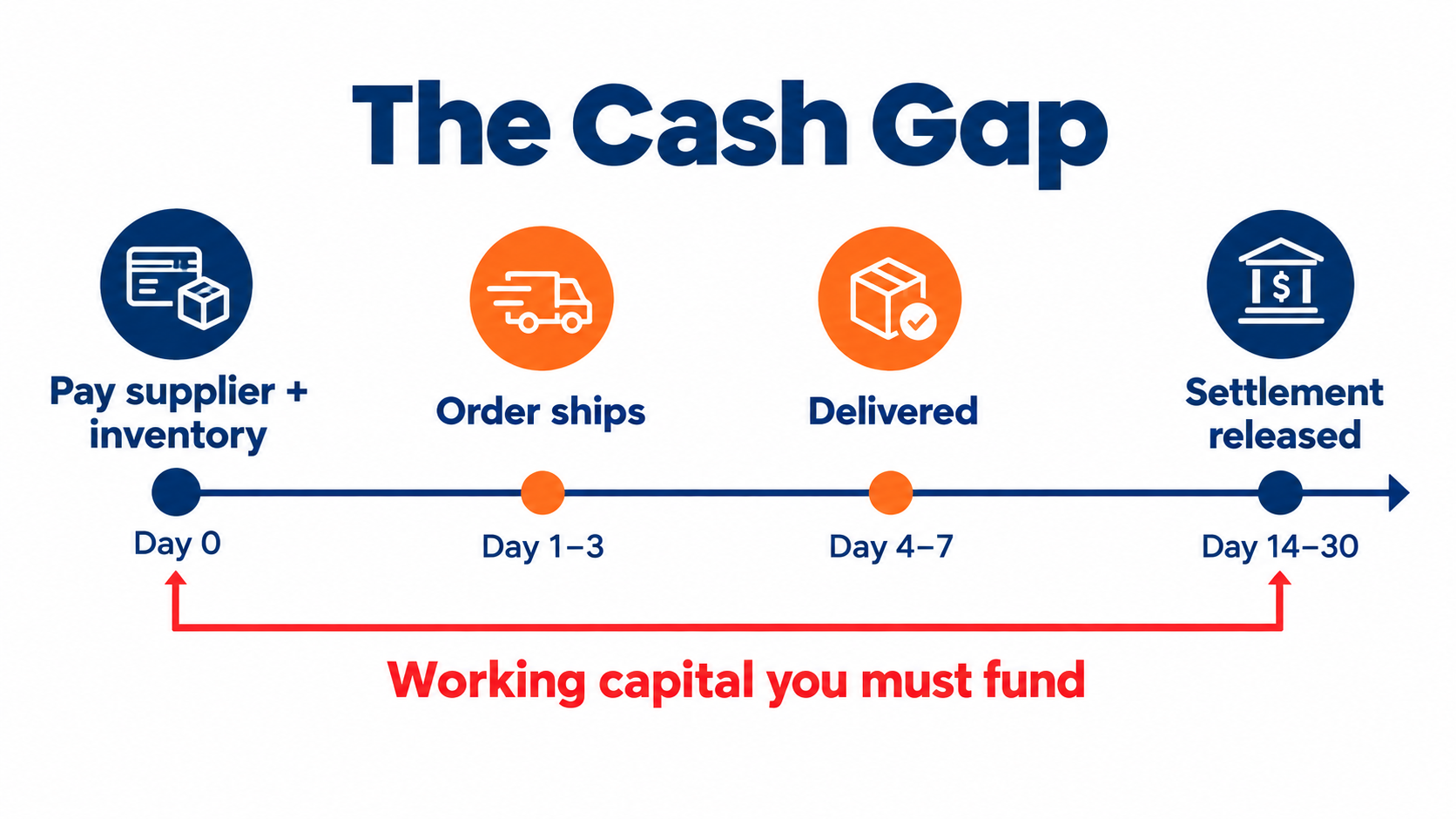
A spike looks great in your sales dashboard. Your bank account tells a different story. Growth uses up cash, and on any marketplace there’s a gap between paying for inventory and receiving settlement funds.
Understand your settlement timing
Marketplaces generally release funds after certain conditions are met, often tied to delivery confirmation and a holding period. New sellers or sellers with performance issues may face longer holds. Check your current settlement terms in Seller Center, since they can vary by account standing and region.
Meanwhile, you’ve already paid for inventory, packaging, shipping labels, affiliate commissions, and maybe ad spend. A spike multiplies those upfront costs before any money comes back.
The restock squeeze
This is where many growing sellers get stuck. A viral video sells through your inventory. You need to reorder right away to catch the tail, but the money from the spike hasn’t settled yet. If you can’t fund the restock, you miss the tail, and with it a large share of the opportunity.
Ways to close the gap
- Keep a cash reserve set aside for emergency restocks, separate from operating funds.
- Negotiate supplier terms such as deposits with balance on delivery, or net-30 terms once you’ve built a relationship.
- Set up a credit line in advance. Revenue-based financing or a business line of credit is much easier to get before you need it.
- Know your true unit margin after platform fees, affiliate commission, shipping, returns, and packaging, so you know how much each sale actually adds to your cash position.
Watch the full cost of a spike
Rush restocks at higher unit costs, expedited shipping, temporary labor, and higher return volumes all eat into the margin of a viral moment. Track these costs separately for each spike. Over time, you’ll learn which spikes were worth it and how to prepare more cheaply for the next one.
A 30-Day Operations Readiness Plan
The practices above can feel like a lot. Here’s a sequence that turns them into a manageable 30-day project for a store that’s selling but hasn’t yet built spike-ready operations.
Days 1 to 7: Measure your baseline
- Calculate your current daily ship capacity in orders per day, honestly.
- Review your shop performance metrics in Seller Center and note anything trending the wrong way.
- Audit 50 recent orders for valid tracking with real carrier scans.
- List your top five SKUs by GMV and confirm inventory, lead times, and supplier contacts for each.
- Document your current settlement timing and cash on hand.
Days 8 to 14: Build buffers
- Set a spike reserve for your top SKUs based on your active affiliate pipeline.
- Talk to suppliers about rush production terms and backup sourcing.
- Pick an inventory source of truth and set channel buffers.
- Set aside a sample allocation per SKU.
Days 15 to 21: Extend capacity
- Write a surge plan for fulfillment: extra staff, packing stations, additional carrier pickups.
- If you’re near your capacity ceiling, start evaluating 3PL options or the platform’s fulfillment program.
- Build saved replies and a buyer FAQ for customer service.
- Line up backup customer service coverage.
Days 22 to 30: Monitor and test
- Set up a daily early-warning dashboard: open orders vs. capacity, orders near deadline, unscanned tracking, days of inventory left.
- Set up alerts for unusual order velocity so you hear about spikes within the hour.
- Run a tabletop drill: “A creator video just drove 1,000 orders. What do we do in the next 24 hours?” Write down every gap you find.
- Apply for or confirm a credit facility for emergency restocks.
Ongoing habits
After the initial build, a few habits keep operations ready:
- Weekly: review refund reasons, check tracking validity, update the affiliate pipeline tracker.
- Monthly: review account health trends, update spike reserves, reconcile inventory across channels.
- After each spike: hold a short review covering what broke, what held up, and what it cost.
Conclusion: Build for the Spike Before It Arrives
TikTok Shop selling rewards content that catches on, but it keeps the businesses that can deliver. With US sales projected at around $23.4 billion in 2026 and global GMV estimated at $123.5 billion, the platform is past the stage where messy operations get ignored. Buyers expect fast, accurate delivery, and the platform’s performance systems exist to enforce that.
The sellers who last treat a viral moment as an operational event as well as a marketing win. They plan inventory in two layers, baseline and spike. They choose fulfillment models that can stretch. They watch their own leading indicators instead of waiting for platform warnings. They staff customer service for the aftermath, keep inventory accurate across channels, and set up financing before they need it.
Key takeaways
- Plan for spikes as normal. Creators drive roughly 42% of US TikTok Shop sales, and their timing is out of your hands.
- Separate baseline stock from spike reserve, and size the reserve from your affiliate pipeline, not historical averages.
- Your fulfillment capacity should handle several times normal volume without missing dispatch deadlines.
- Audit tracking validity weekly. Integration failures often look like shipping failures.
- Treat account health as an asset. Penalties from a bad week can outlast the sales.
- Plan customer service for the aftermath, which arrives one to three weeks after the peak.
- Use one inventory source of truth and channel buffers to prevent cross-platform overselling.
- Fund the cash gap in advance, because missing the restock window means missing the tail.
You can’t control when a creator’s video takes off. You can control whether your business is ready when it does. Building that readiness now, before the next spike, is what separates a store that has one good week from one that keeps growing.