


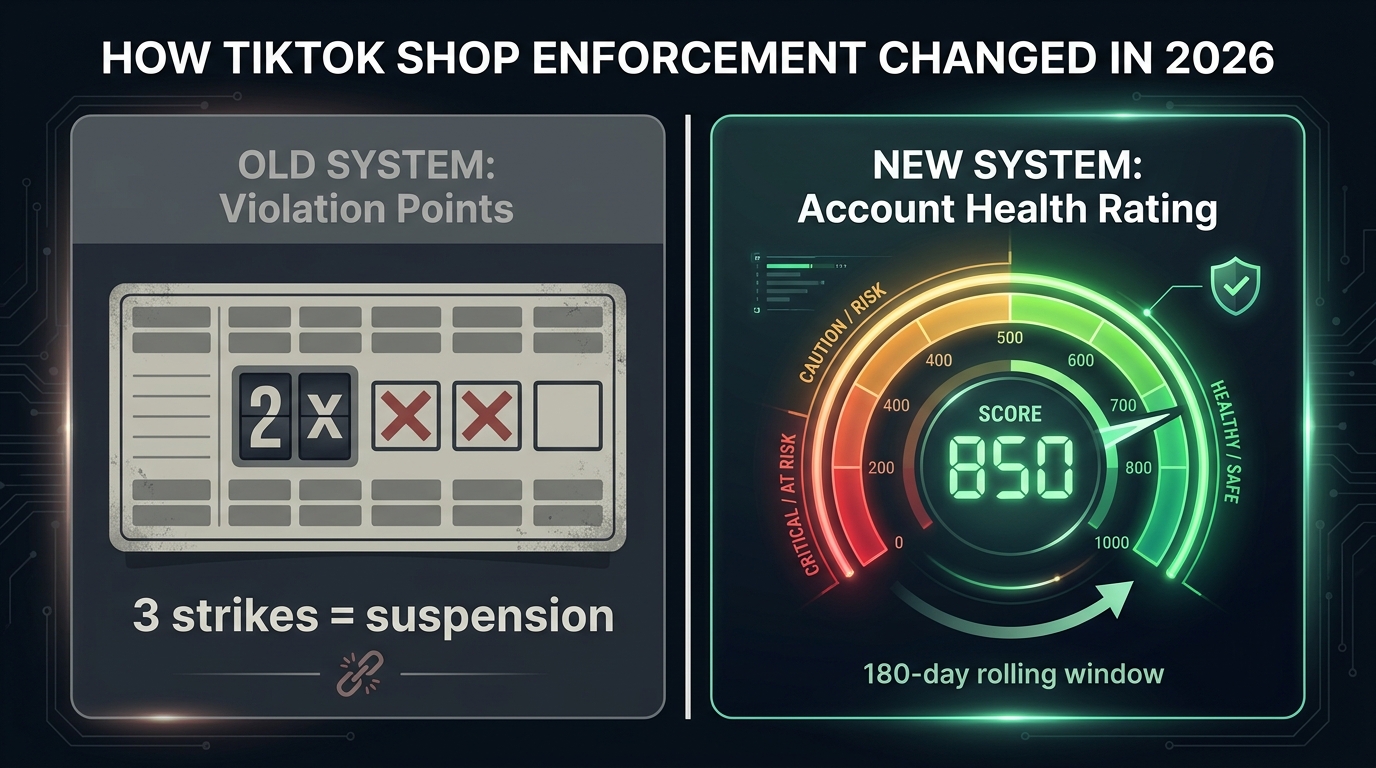
Something changed on TikTok Shop in the summer of 2026 that most sellers noticed too late. The old system — the one where you accumulated violation points and hoped they’d expire before you hit a suspension threshold — got replaced. Quietly. Without a dramatic announcement. And the new system it was replaced with operates on a fundamentally different logic that rewards different behaviors, punishes different mistakes, and moves on a completely different timeline.
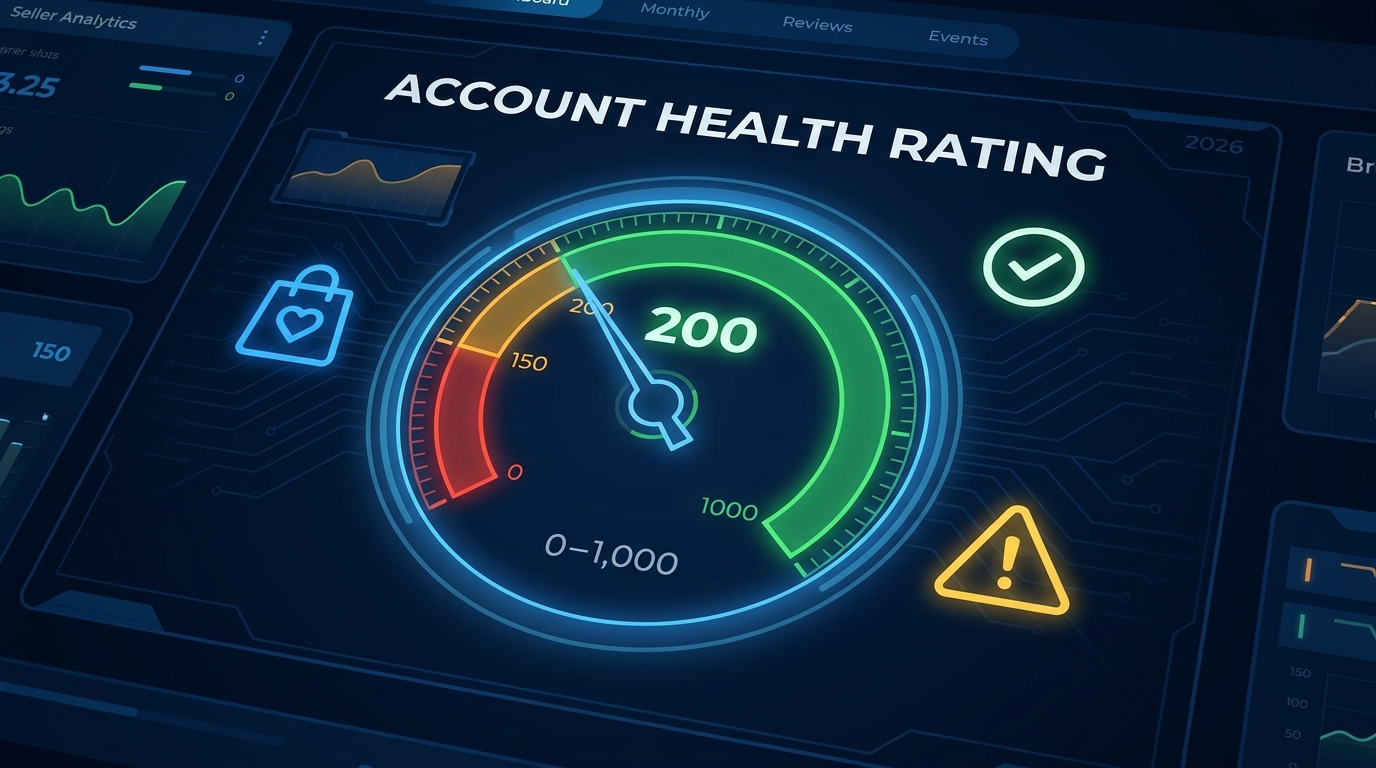
The Account Health Rating (AHR) launched its phased rollout on June 15, 2026, and reached all sellers by July 1. It is a 0–1,000 rolling score. You start at 200. And unlike the old violation-points model — which was essentially a strike counter — the AHR tracks your entire operation continuously across the previous 180 days. There is no clean slate. There is no “wait for the strikes to expire.” There is only the rolling average of how you’ve run your shop.
If that sounds like a more demanding system, it is. It’s also more predictable, more transparent, and — for sellers who understand how it actually works — significantly easier to manage proactively. The problem is that the majority of sellers are still operating with mental models built around the old system. They’re treating compliance as a reactive emergency response instead of an ongoing operational function. That misalignment is what’s putting accounts at risk in 2026.
This post covers exactly how the AHR system works, what each enforcement threshold actually triggers, where your score comes from (and goes), how fund withholding fits into the picture, and what a genuine compliance infrastructure looks like for sellers who want to stay protected long-term.
Why TikTok Replaced Violation Points — and What Was Wrong with the Old System
To understand why the AHR matters, you need to understand what it replaced and why that system created problems for both sellers and the platform.
The Strike Model’s Core Flaw
The old Violation Points system worked like a penalty ledger. You’d commit a violation, receive a certain number of penalty points, and those points would eventually expire after a set window. The problem was structural: the system created a perverse incentive to manage violations rather than prevent them. Sellers would receive a strike, wait it out, and continue operating with the same underlying practices. As long as you didn’t hit the suspension threshold, the points would age off and you’d be back to zero.
This is not the same as being compliant. It just meant you hadn’t been caught enough times in a given window. For TikTok, which was trying to build credibility as a shopping destination against Amazon and other established platforms, a seller ecosystem full of technically-not-suspended-but-frequently-violating shops was a real reputational and consumer trust problem.
What the New System is Actually Trying to Measure
The AHR is designed to measure the overall health of your shop’s operation on a continuous basis. Rather than asking “have you violated our policies this month?”, it asks “how consistently have you run a good shop over the last six months?” That’s a meaningfully different question, and it produces meaningfully different seller behavior when the incentives are aligned properly.
The shift is from event-based enforcement to pattern-based evaluation. A single bad week doesn’t destroy you. But a pattern of fulfillment failures, slow customer service response, and repeated policy missteps absolutely will — because all of those data points are accumulating inside that 180-day window simultaneously.
What This Means in Practice
For sellers who ran clean operations under the old system, very little changes. For sellers who relied on the “wait out the strikes” strategy, the new system is a significant adjustment. There’s no expiration cliff to wait for. The score changes continuously based on what you’re doing right now and what you did for the previous 179 days. The only path back to a healthy score is sustained good operational behavior — not patience.
This is actually a more equitable system for serious operators. Your score reflects your real performance history, not just whether you happened to trip a threshold last month. But it demands more operational consistency, more proactive policy awareness, and more structured internal processes than most small-to-mid sized sellers currently have in place.
How the Account Health Rating Actually Works: The 0–1,000 Score Breakdown
The mechanics of the AHR are worth understanding in precise detail, because the specifics matter for planning. Here’s how the scoring model operates.
Starting Point and Score Range
Every new TikTok Shop seller begins with 200 points. This is not the bottom of the scale — the scale runs from 0 to 1,000 — but it’s also not as comfortable a buffer as it might initially appear. With enforcement thresholds at 150, 100, 50, and 0, you’re starting just 50 points above the first consequence trigger. New sellers who make early operational mistakes can find themselves in restricted status faster than they expect.
The 200-to-1,000 range above the starting point represents health you earn through sustained compliant operation. Getting to 500, 600, or higher is meaningful because it creates real buffer against the score drops that come from inevitable minor issues. High-volume sellers who consistently fulfill orders and pass policy quizzes can build substantial score cushion over time — which is exactly what TikTok’s model is designed to incentivize.
The 180-Day Rolling Window
The most important mechanical detail of the AHR is its rolling window. The score is not a cumulative lifetime number. It’s a snapshot of your shop’s performance and compliance behavior over the preceding 180 days. This has two major implications.
First, positive behavior from six months ago contributes to your score today but will eventually age out of the calculation. If your business volume drops significantly — due to seasonality, inventory issues, or strategy shifts — the order-based points you earned during a high-volume period will decay as those orders move outside the 180-day window. You can’t coast indefinitely on past performance.
Second, the rolling window means a bad period doesn’t follow you permanently. If you had a rough stretch three months ago but have significantly cleaned up your operations since, that improvement will show up in your score as the problematic orders and violations roll out of the window. There’s a ceiling on how long past mistakes can hurt you — provided you’ve genuinely changed the underlying behaviors.
What the Score Reflects
The AHR pulls from multiple data streams inside your Seller Center account. It captures policy violations and their severity, fulfillment performance (including late dispatch and cancellation rates), after-sales handling speed, completed order volume, and quiz completion for policy training. These inputs are weighted and combined into the rolling score. TikTok has not published the exact weighting formula, but the practical hierarchy from available seller guidance suggests that serious policy violations carry the largest deductions, while operational metrics like late dispatch and poor after-sales response carry medium-weight deductions.
The Four Enforcement Thresholds: What Happens at 150, 100, 50, and 0
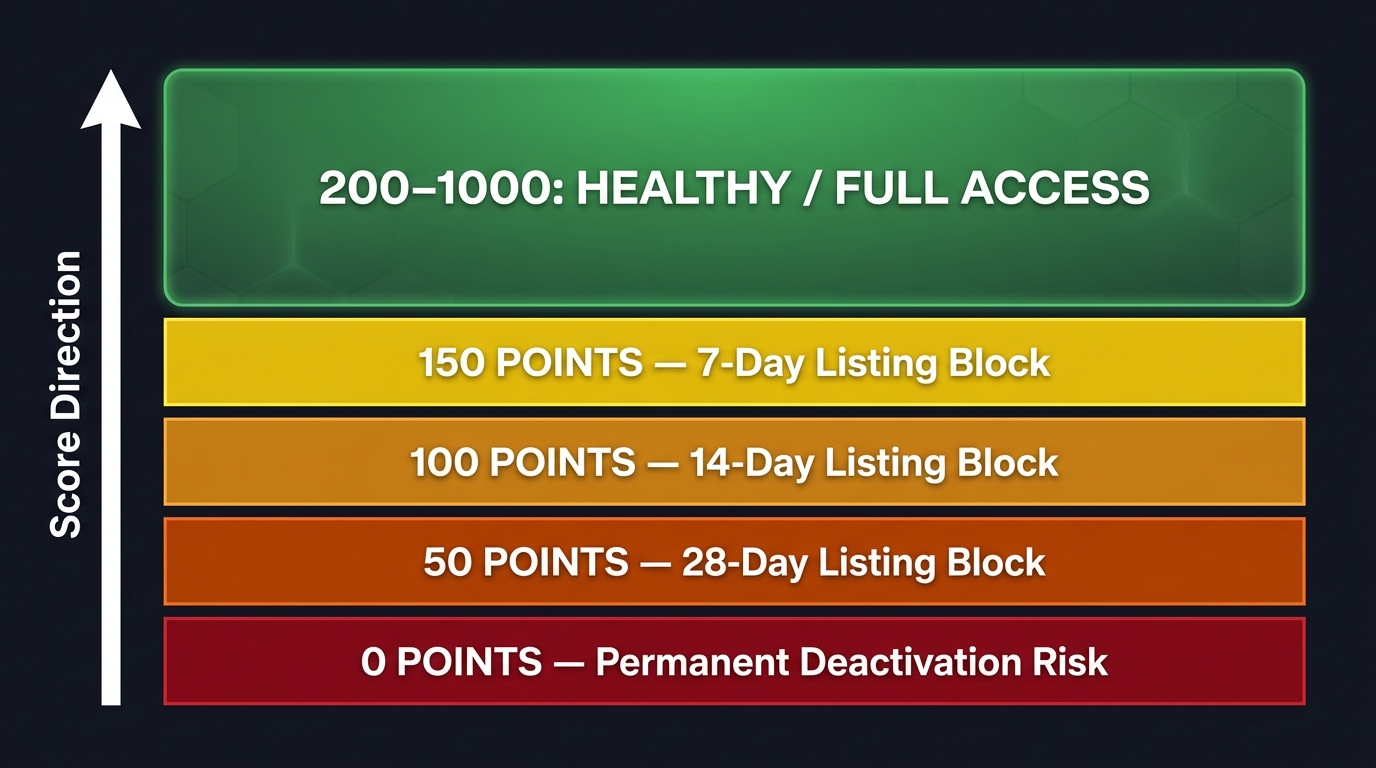
The enforcement architecture is tiered, and each tier adds restrictions to your account. Understanding exactly what triggers at each level is critical for operational planning.
150 Points: The First Warning Gate
When your AHR drops to 150 points, TikTok applies what it calls milestone restrictions. At this level: you cannot create new listings for seven days, and you cannot enroll in new mega campaigns for seven days. These restrictions layer on top of any existing penalties that may have already been applied for specific violations.
The 150-point threshold is designed to be a wake-up call before things get worse. It’s a temporary operational disruption — not a business-ending event — but it signals that your shop’s behavior has been trending in the wrong direction for long enough to register on the rolling window. Sellers who hit this level and don’t change their underlying practices will continue declining to 100.
Practically speaking, hitting 150 means you need to conduct an immediate audit. What violations have been recorded in Seller Center over the last 30-60 days? What’s your late dispatch rate trending? What’s your after-sales response time? The 150-point restriction gives you seven days of operational constraint, but it’s most useful as a forcing function for identifying systemic issues rather than just waiting out the clock.
100 Points: Restrictions Extend to 14 Days
At 100 points, the same restrictions apply — no new listings, no new mega campaign enrollment — but now the duration doubles to 14 days. This is a meaningful commercial impact. If your product strategy involves frequent new SKU launches, or if you rely on mega campaigns for volume events and promotions, a 14-day freeze on both significantly disrupts your business operations.
The 100-point level also signals that the initial 150-point intervention didn’t produce the behavioral change TikTok was looking for. At this stage, the account’s trajectory is clearly downward, and the platform’s automated systems are responding accordingly. It’s also worth noting that at this level, your shop’s visibility may already be degraded even beyond the formal restrictions — TikTok’s algorithm deprioritizes shops with poor health scores in organic discovery, so your listings are getting less surface area even when they’re technically live.
50 Points: 28-Day Restrictions — Approaching Critical
A score of 50 points triggers the same listing and campaign restrictions for 28 days. At this level, most sellers are experiencing serious commercial disruption. A month without new listing creation and without mega campaign access, combined with likely reduced organic visibility, is the kind of extended constraint that compounds quickly: no new products means no fresh content opportunities, no fresh affiliate activation on new SKUs, and no ability to pivot the catalog in response to market signals.
The 50-point threshold is also where TikTok begins scrutinizing accounts more actively for potential permanent enforcement action. While the platform’s stated position is that deactivation can occur at any point for sufficiently severe violations, the 50-point level puts your account in a zone where reviewers are actively assessing whether further enforcement is warranted.
0 Points: Permanent Deactivation Risk
A score of zero represents the most serious risk state: TikTok may deactivate your shop permanently at its discretion. The word “may” in TikTok’s own policy language is deliberate — it retains some reviewer flexibility for context — but practically speaking, most accounts that reach zero points and face deactivation are accounts where the underlying behavior was severe enough or repeated enough that discretionary leniency is unlikely.
It’s worth emphasizing that an account doesn’t only reach deactivation through gradual AHR decay. Sufficiently severe single violations — fraud, systematic deception, authenticated IP infringement, or deliberate manipulation of platform systems — can trigger immediate shop deactivation regardless of current AHR score. The thresholds described above are for the escalating restriction system; they’re not a guarantee that you get to progress through each level before facing the most serious consequences.
How You Earn Points: The Math Behind Score Recovery
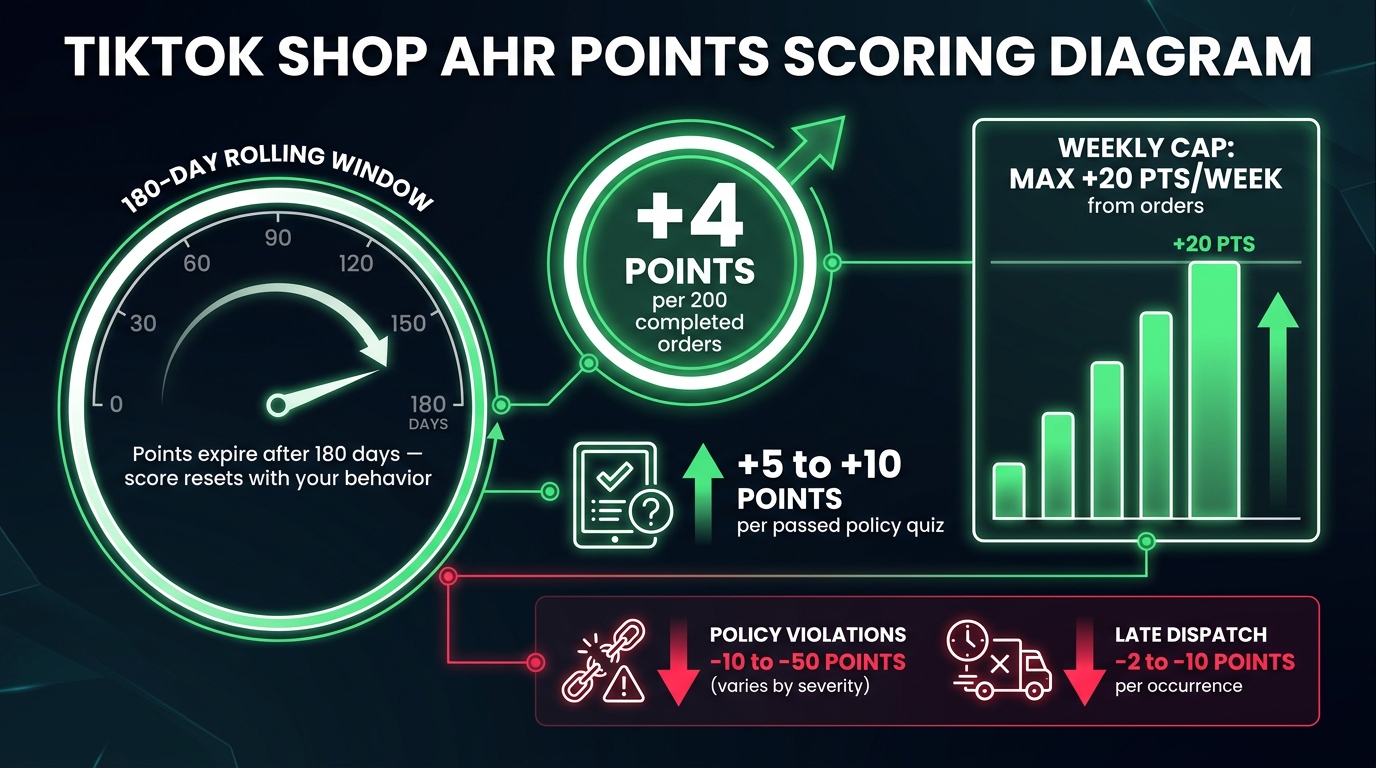
Understanding how points are lost is important. But understanding how they’re earned — and at what rate — is equally critical for anyone trying to actively manage or recover their AHR.
Completed Orders: The Primary Engine
The main source of positive AHR movement is completed orders. TikTok’s official Seller University documentation states the formula clearly: sellers earn 4 points for every 200 completed orders in the preceding 180-day window. Critically, the following order types are excluded from this count: sample orders, returned orders, refunded orders, cancelled orders, and orders flagged as defective.
There is also a weekly cap: you can earn a maximum of 20 points per week from the completed orders mechanism. This means that even very high-volume sellers can’t instantly rescue a declining AHR by processing thousands of orders — the system limits the rate of score recovery to prevent gaming and ensures the 180-day window genuinely reflects sustained behavior rather than short-term bursts.
The practical implication for score planning: if you’re sitting at 160 points (just above the first enforcement threshold), recovering to a comfortable 250 through completed orders alone would require sustained fulfillment volume over multiple weeks, with the 20-point weekly cap as your ceiling. This is not a quick fix. It’s a grind — which is why avoiding score erosion in the first place is so much more efficient than trying to recover from it.
Policy Quizzes: Faster Recovery, With Limits
The second mechanism for earning AHR points is completing policy quizzes. When violations occur, TikTok links relevant policy quizzes to the violation record in Seller Center. Passing these quizzes — with a perfect score — can add 5 to 10 points to your AHR, depending on region and program specifics. There are limits: you can typically claim one quiz bonus per violation type per 30 to 60 days, and repeated attempts at the same quiz don’t generate additional points after the first successful completion.
This mechanic serves a dual purpose. It creates a small, structured path toward score recovery for sellers who’ve had violations, and it ensures those sellers have at least engaged with the relevant policy content before returning to full operation. It’s not a fast path to rebuilding a badly damaged score, but it’s worth prioritizing for any seller in the 150-200 range who needs to build even modest upward momentum.
What Deducts Points (and By How Much)
TikTok has not published a comprehensive deduction table in the same way some marketplace platforms do. What the available policy documentation and seller guidance makes clear is that deductions are tiered by violation severity. A product listing that uses misleading imagery carries a different deduction weight than a verified intellectual property infringement. Fulfillment failures like consistent late dispatch or high cancellation rates contribute to score erosion, as does poor after-sales handling response time.
The critical operational insight here is that clusters of related violations within a short window are more damaging than isolated incidents. A fulfillment failure, combined with an active policy violation, combined with a spike in after-sales complaints in the same 30-day period, will show up in the rolling score as a compounding problem — not three separate, independent data points.
The Cash Flow Trap: Fund Withholding at 45, 90, and 365 Days
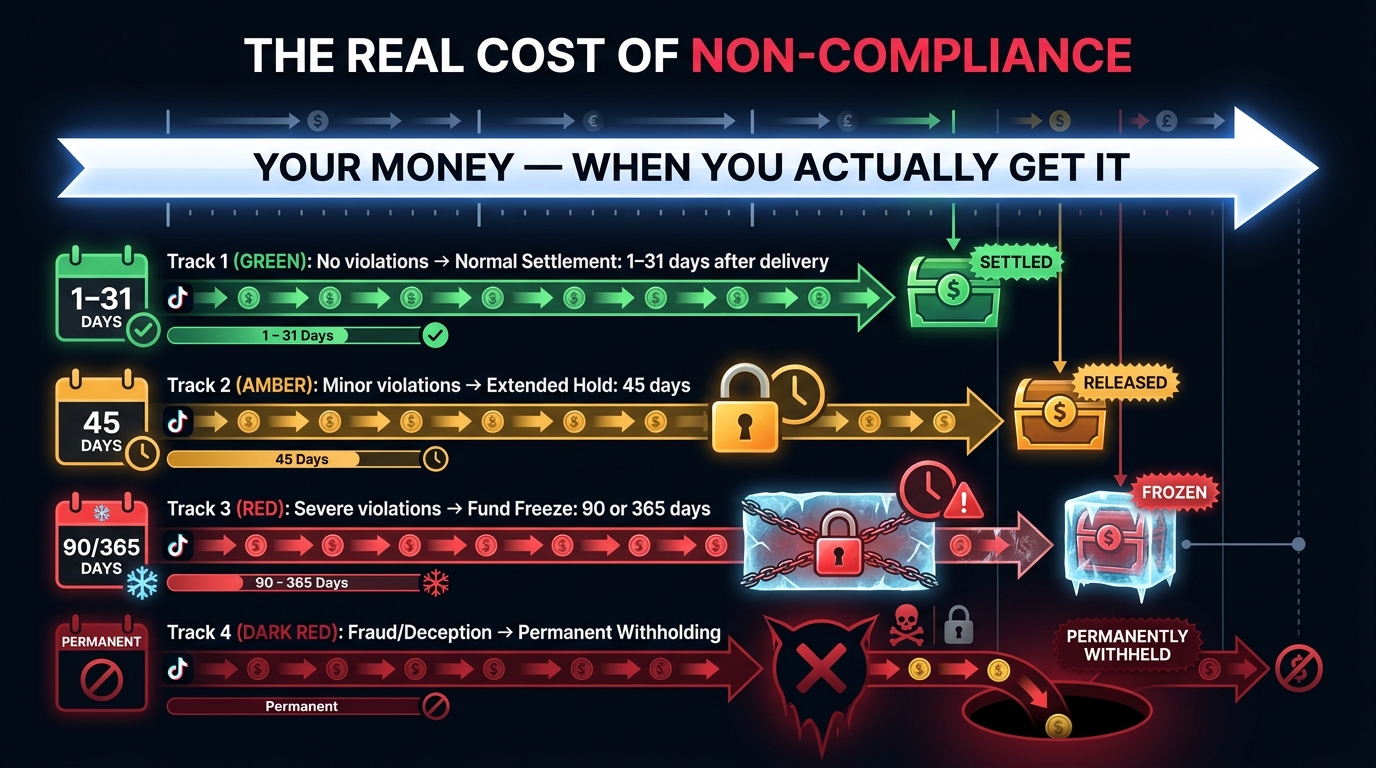
Most sellers focus on the operational restrictions — listing blocks, campaign limitations — when thinking about compliance risk. They underestimate the financial exposure. TikTok’s enforcement framework includes fund withholding provisions that can extend far beyond standard settlement timelines, and the cash flow implications for active sellers can be severe.
Normal Settlement vs. Enforcement Holds
Under normal operating conditions, TikTok Shop settles funds on a timeline of 1 to 31 days after successful delivery, depending on the seller’s account tier and performance standing. This is the baseline most sellers plan their cash flow around.
When enforcement actions are triggered, a separate mechanism applies: fund withholding. TikTok’s seller enforcement policy specifies that funds can be withheld for 45, 90, or 365 days depending on the nature and severity of the violation. In cases involving fraud or deliberate deception, funds may be permanently withheld and used to offset any outstanding financial losses TikTok or consumers have incurred.
Why This Creates a Liquidity Crisis for Mid-Sized Sellers
Consider the operational reality. A seller doing $50,000 per month in GMV has roughly $50,000–$100,000 in receivables sitting in TikTok’s settlement pipeline at any given time, depending on their payout cadence and settlement tier. If a significant violation triggers a 90-day hold on funds, that seller could have $150,000 or more effectively frozen — while still needing to pay suppliers, fund inventory replenishment, and cover advertising spend.
This is not a theoretical edge case. TikTok’s June 2026 Policy Pulse guidance noted that significant confirmed violations may trigger an extended settlement period as part of enforcement. For sellers operating on thin working capital margins — which describes a large proportion of the TikTok Shop seller base — a 90-day hold can be an existential liquidity event even if the shop itself ultimately survives.
Planning for the Financial Risk
The operational response to this risk is to maintain compliance reserve financing: a cash buffer sufficient to sustain at least 60 to 90 days of operating expenses without drawing on TikTok settlement funds. For sellers who can’t maintain that level of buffer, the alternative is ensuring that compliance is tight enough that the probability of a significant violation is very low.
Both approaches require treating compliance as a business continuity function, not a compliance team checkbox. The financial exposure from a 365-day fund hold is not the kind of risk most sellers have modeled into their business plan — but it’s the kind of risk that can end businesses that would otherwise survive the operational disruption of a listing block.
High-Risk Categories: Where TikTok Scrutinizes Most Closely
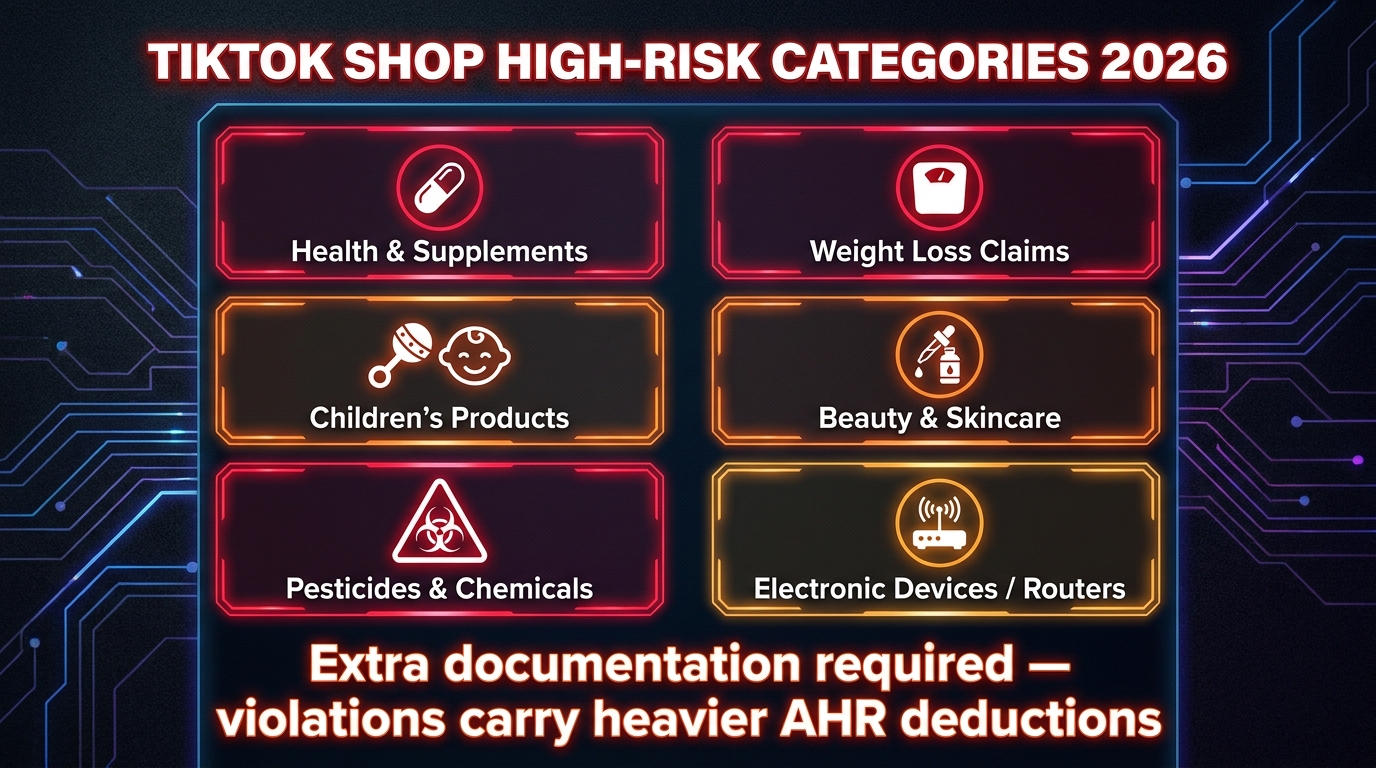
Not all violations carry equal weight in the AHR calculation, and not all product categories face the same level of automated scrutiny. TikTok’s enforcement has intensified in several specific verticals in 2026, and sellers in these categories face both higher documentation requirements and stronger consequences for non-compliance.
Health, Supplements, and Weight Loss Claims
This is the category that has generated the most enforcement activity in 2026, and it’s the one where listing content and live selling content are most likely to trigger automated flags. TikTok’s product listing policy is explicit: medical claims, body-change outcome claims, and weight-loss effectiveness claims that go beyond what the underlying product’s documentation can support are violations. The standard is not just “don’t lie” — it’s “don’t imply efficacy that you cannot substantiate with documentation.”
For supplements, this means every health-related claim in a listing, video, or live session needs to map to what’s on the product’s label and what the label’s supporting documentation actually says. “Supports immune function” is different from “boosts immunity.” The former has documentation backing; the latter is an efficacy claim that TikTok’s automated systems are actively trained to flag.
The enforcement risk here is compounded by the fact that affiliate creators promoting supplement and weight-loss products often make informal, unscripted claims in live sessions. If those claims violate TikTok’s content policy, the enforcement can touch the seller’s account — not just the creator’s. Managing what your affiliates say in live sessions is now a compliance function, not just a brand management function.
Children’s Products
Products intended for children under 12 face heightened documentation requirements around safety certification, age-appropriateness labeling, and compliance with relevant consumer product safety standards. TikTok has expanded its documentation review for children’s product categories in 2026, and listings that lack required safety certifications are more likely to be removed proactively rather than after a complaint is filed.
Electronic Devices and Network Equipment
Routers, wireless devices, and other electronics that require regulatory certification face specific compliance requirements. Listings in these categories that lack proper certification documentation — or that make performance claims not supported by those certifications — are in elevated violation risk territory. This is a category where many dropshippers run into trouble: sourcing products without verifying that the specific unit variant being sold has the required certifications for the market it’s being sold in.
Pesticides and Restricted Chemical Products
This category has some of the most prescriptive documentation requirements on the platform. Products that function as pesticides or contain restricted chemical compounds require specific regulatory documentation. The category’s definitions are also broader than many sellers expect — some “natural” pest-control products qualify as pesticides under TikTok’s policy framework and require the same documentation as conventional chemical products.
What TikTok’s Automated Enforcement Actually Triggers First
Understanding the sequence of automated enforcement actions helps sellers know what to expect and, more importantly, where early intervention is most effective.
Listing-Level Actions Come First
TikTok’s enforcement system operates at the listing level before it escalates to the account level. When a listing violates product listing policy, the typical first automated action is a listing removal or a listing freeze — the product becomes invisible in search and discovery, but the account itself remains active. This listing-level action also generates a violation record in the seller’s Account Health section of Seller Center, which is where AHR deductions originate.
This sequence matters because it creates an intervention window. If a seller responds quickly to a listing-level action — removing or correcting the problematic listing, addressing the underlying issue, and engaging with the violation record — the AHR impact can be contained before it compounds. Sellers who ignore listing removals and allow violations to accumulate are accelerating their AHR decline through inaction as much as through the original violation itself.
Performance Metrics Trigger Differently
Operational performance issues — late dispatch rates, cancellation rates, and after-sales response time — don’t generate the same discrete violation records as policy violations do. Instead, they contribute to the AHR through ongoing metric tracking. If your late dispatch rate spikes above threshold for a sustained period, the score impact is distributed across that period rather than triggered by a single event.
This makes performance-based score erosion harder to detect in real time. A seller who isn’t monitoring Seller Center’s performance dashboards regularly may not realize their late dispatch rate has been elevated for three weeks until the AHR dip makes it visible. By that point, the score has already absorbed the impact of the problematic period.
Campaign and Feature Restrictions as Early Signals
Before the formal enforcement thresholds at 150/100/50/0 trigger, sellers may notice subtler restrictions: reduced eligibility for certain promotional campaigns, reduced priority in affiliate matching systems, or reduced visibility in TikTok Shop’s promotional surfaces. These softer signals precede the formal milestone restrictions and serve as early warning indicators for sellers who are monitoring their account’s access carefully.
The Appeal Process: Your Two-Attempt Window and What Evidence Works
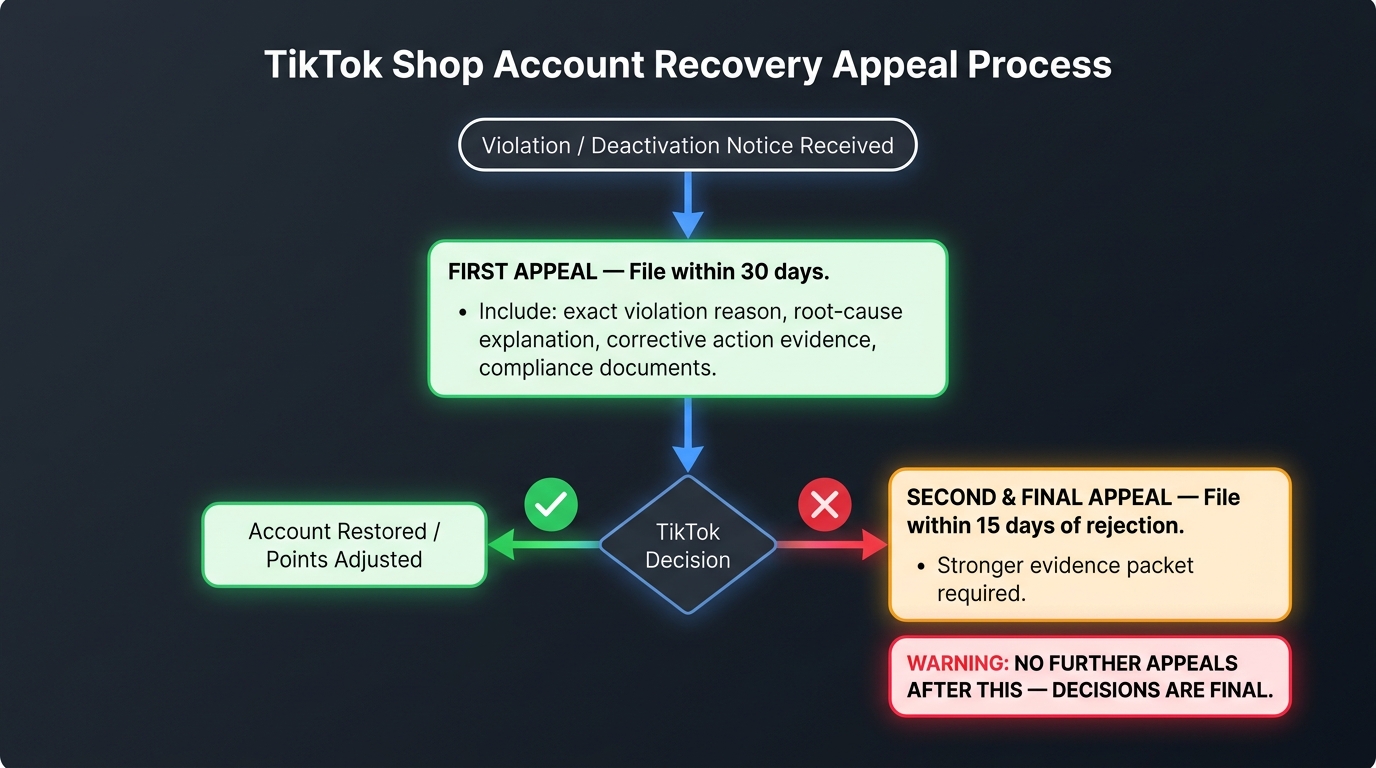
When enforcement actions result in listing removal, account restriction, or shop deactivation, sellers have a structured appeal process — but it has strict deadlines and a finite number of attempts. Understanding the process before you need it is significantly better than learning it under time pressure.
The First Appeal: 30-Day Deadline
The first appeal must be filed within 30 days of receiving the violation or deactivation notification. In Seller Center, this is done through the Account Health or Shop Health section, specifically under Violation Records. The 30-day window sounds generous, but sellers who spend the first two weeks in denial or confusion about what triggered the enforcement often end up rushing the appeal with insufficient evidence.
TikTok’s appeal review process treats appeals as structured evidence packages, not general explanations or complaints. The strongest first appeals include four components: the exact violation reason as cited in Seller Center (not the seller’s interpretation of it), a clear root-cause analysis of how the violation occurred, documented corrective action that’s already been taken, and supporting documentation that directly addresses the cited policy reason.
Vague appeals — “we weren’t aware of this policy” or “this was a mistake, please restore our account” — without supporting evidence rarely succeed. The review process is looking for proof that you’ve identified the specific problem and taken specific, verifiable steps to prevent recurrence.
The Second and Final Appeal: 15-Day Deadline
If the first appeal is rejected, sellers have 15 days from the rejection notification to file a second and final appeal. This is the last formal recourse within TikTok’s appeal framework — decisions made after the second appeal are final, with no further escalation path available through normal Seller Center channels.
The second appeal needs to be meaningfully different from the first, not just a resubmission of the same materials. If the first appeal failed because of insufficient documentation, the second needs that documentation. If it failed because the root-cause analysis didn’t address the specific policy concern, the second needs a more precise analysis. Simply restating the same case with different wording will produce the same outcome.
What “Evidence” Actually Means in This Context
For product-level violations, relevant evidence typically includes supplier invoices and authenticity documentation (for IP cases), laboratory testing reports or safety certification documents (for product compliance cases), and screenshots showing the corrected listing with policy-aligned claims. For fulfillment-based violations, relevant evidence includes carrier documentation, order management logs, and data showing improved metrics in the period following the violation.
The appeals process is designed for sellers who have a genuine case — either that the enforcement was applied in error, or that they’ve taken substantive corrective action. It is not designed to be gamed through procedural delays. Sellers who received enforcement for legitimate violations and haven’t changed the underlying behavior will find that even a technically strong-looking appeal is likely to fail on its merits.
Operational Systems That Keep Your AHR Above 200
The most effective compliance posture isn’t reactive — it’s structural. Sellers who consistently maintain healthy AHR scores have built systems that prevent violations from occurring in the first place, rather than systems designed to respond to them after the fact.
Listing Audit Before Publication
Every new listing should go through a structured compliance review before it goes live. This doesn’t need to be a legal team review for most products, but it does need to systematically check: claim accuracy against product documentation, category eligibility and required documentation, image content for prohibited elements (such as before/after imagery in certain categories), and keyword content for implicitly prohibited claim language.
Many violations that trigger AHR deductions originate at listing creation — a claim that felt fine when it was written, an image that seemed acceptable, a category selection that wasn’t checked against restricted-category requirements. A pre-publication checklist catches these before they become violation records.
Fulfillment Standard Operating Procedures
Late dispatch rate is one of the metrics TikTok tracks for operational health scoring. Maintaining a consistent, documented fulfillment process — with clear internal SLAs for order processing, dispatch confirmation, and exception handling — reduces the variance in your dispatch performance. Sellers whose dispatch processes depend on individual team member responsiveness rather than documented procedure will see their late dispatch rate spike during high-volume periods, staff absences, or inventory disruptions.
The simplest operational improvement many sellers can make is establishing a daily order processing window with a hard cutoff time for same-day dispatch, and a documented escalation path for orders that are at risk of missing that window.
After-Sales Response Management
TikTok replaced the Customer Complaint Rate metric with After-Sales Handling Time in its updated performance framework. This means the speed and quality of your response to customer issues — returns, refund requests, product complaints — is now a tracked metric that feeds into your account health score.
Sellers who treat after-sales as a back-office function handled whenever there’s spare capacity are building latent AHR risk. A systematic approach — clear response time targets, documented resolution procedures for common issue types, and regular monitoring of open after-sales cases — keeps this metric in a range that contributes positively to account health rather than degrading it.
Affiliate Content Compliance
As TikTok Shop’s affiliate model has grown, so has the enforcement risk associated with affiliate-generated content. Affiliates creating videos and live sessions promoting your products can make claims that violate TikTok’s content policy — and those violations can affect your account, not just theirs. Brands that are serious about AHR protection need to brief affiliates on compliant claim language, prohibited claim types, and the specific documentation boundaries for their products. This is especially critical for supplement, beauty, and health product brands.
Regular Seller Center Monitoring
The AHR system makes regular Seller Center monitoring a baseline operational necessity. Checking Account Health weekly — ideally daily for high-volume sellers — allows you to catch score movements before they become enforcement actions, identify new violation records before their appeal window starts running, and track performance metrics that are trending in the wrong direction with enough lead time to correct them.
What the 180-Day Rolling Window Means for Long-Term Sellers
For sellers who have been on TikTok Shop for more than six months, the rolling window creates strategic planning considerations that matter both for AHR management and for business continuity.
Seasonal Volume Fluctuations and Score Decay
If your business has strong seasonality — a holiday peak, a summer spike, a back-to-school moment — the order-based points you earn during peak periods will age out of the 180-day window approximately six months later. In a low-volume off-season, your score will naturally plateau or decline as peak-period order points expire, without any negative behavior on your part.
Sellers who understand this dynamic can plan accordingly. Maintaining some baseline fulfillment volume even during low seasons — even if it’s not commercially optimal — helps sustain AHR point accumulation through the rolling window. Alternatively, sellers who accept natural off-season score dips need to ensure they’re entering those periods with enough score buffer (ideally 300+ points) that normal decay doesn’t push them toward the enforcement thresholds.
Legacy Violations and the Fade Effect
For sellers who had significant violations under the old Violation Points system, or in the early months of AHR rollout, the 180-day window creates a real path to score recovery — but it requires genuine behavioral change. Violations that occurred more than 180 days ago no longer affect the current AHR score. This means sellers who had a compliance crisis six to twelve months ago and have genuinely corrected their operations are working with a cleaner scoring baseline than they might expect.
The practical advice here is not to assume the window has fully cleared old problems until you’ve verified it in Seller Center. The rolling calculation is updated continuously, so the transition from “past violation affects score” to “past violation out of window” happens gradually rather than as a discrete event.
Building Score Cushion as a Business Asset
A TikTok Shop AHR of 400 or 500 points is meaningfully different from an AHR of 205 points, even though both are technically “above the first threshold.” The higher score represents months of consistent compliant operation, and it provides genuine buffer against the score volatility that comes from market events: a bad week of shipment delays, a burst of customer complaints during a product quality issue, or a content flag during a live session.
Sellers who treat high AHR as a business asset — something worth investing operational resources in building and maintaining — are in a fundamentally different risk position than sellers who view 200+ as the finish line. The score isn’t a compliance certificate you achieve once; it’s an ongoing measure of how well your operation is running, and maintaining a high score is an ongoing organizational discipline.
Treating Compliance as Infrastructure: The Mindset Shift That Protects Your Account
The underlying message of TikTok Shop’s compliance reset in 2026 is not particularly subtle: the platform is shifting toward a seller ecosystem where only consistently well-operated shops thrive. The AHR system makes that preference structural rather than advisory.
The Operational vs. The Reactive Seller
There are essentially two types of sellers in the AHR era. The reactive seller treats compliance as a series of fires to put out: a violation notice arrives, the appeal gets filed, the listing gets corrected, and life returns to normal — until the next violation. This approach can technically keep an account alive, but it’s inherently expensive in time, in score impact, and in the cumulative risk of eventually running out of appeal attempts or crossing a threshold that triggers escalating restrictions.
The operational seller treats compliance as infrastructure — a systematic process that runs continuously, prevents violations from occurring, and monitors account health as a leading indicator of business risk. This approach requires upfront investment in process documentation, team training, and regular monitoring. But it delivers a structurally lower risk profile and a consistently higher AHR score as its output.
Compliance Documentation as Competitive Advantage
Sellers who maintain clean supplier documentation, product certifications, and content claim libraries have something that goes beyond just compliance protection: they have the ability to move faster. When a new product opportunity appears and you need to get a listing live quickly, having the compliance documentation already in place means you can move without waiting for a documentation backfill. When TikTok introduces a new category or policy requirement, having a documentation framework already in operation means you adapt faster than competitors who are building it from scratch.
The sellers who thrive on TikTok Shop over the next 18 to 24 months will be those who treated the 2026 compliance reset not as a threat to navigate around but as an infrastructure upgrade to implement early. The AHR system is designed to make sustained compliant operation the competitive advantage it should always have been.
Actionable Takeaways for Sellers Right Now
- Check your current AHR today. If you haven’t looked at your Account Health score in Seller Center recently, do it before anything else. Know exactly where you stand relative to the 150-point threshold.
- Audit every live listing for claim compliance. Especially in health, beauty, supplements, and children’s products. Identify listings that contain outcome claims, efficacy language, or before/after comparisons that aren’t supported by your product documentation.
- Build a pre-publication listing checklist. Even a one-page document that covers the seven to ten most common violation categories relevant to your product types will prevent the majority of listing-level violations.
- Establish a 30-day violation response protocol. Assign clear ownership for monitoring Seller Center violation records, document the appeal process, and make sure everyone who touches listings knows the 30-day first-appeal deadline.
- Brief your affiliates on claim boundaries. Especially for supplements, health products, and beauty. Their content affects your AHR.
- Build cash reserves to cover 90 days of operating expenses. The fund withholding provisions in TikTok’s enforcement policy make liquidity planning a non-negotiable for serious sellers.
- Complete all available policy quizzes in Seller Center. Every 5 to 10 points earned through quiz completion is score cushion against future operational variance.
- Set a weekly AHR review on your operational calendar. Score monitoring needs to be a routine function, not a crisis response.
The 2026 compliance reset is not a punishment aimed at disrupting well-run shops. It’s a platform architecture decision that rewards consistent, professional operation and creates escalating consequences for shops that don’t meet that standard. Sellers who internalize that distinction — and build their operations around it — will find that the new system is actually easier to thrive in than the old one. The rules are clearer, the scoring is more transparent, and the path to a healthy score is well-defined. The only question is whether you build the systems to walk it proactively or wait to be pushed.