


For years, Amazon’s insurance rule had a comfortable escape hatch for small sellers: stay under $10,000 in monthly gross proceeds and you could operate without a commercial liability policy. For a large slice of the catalog, that escape hatch is closing.
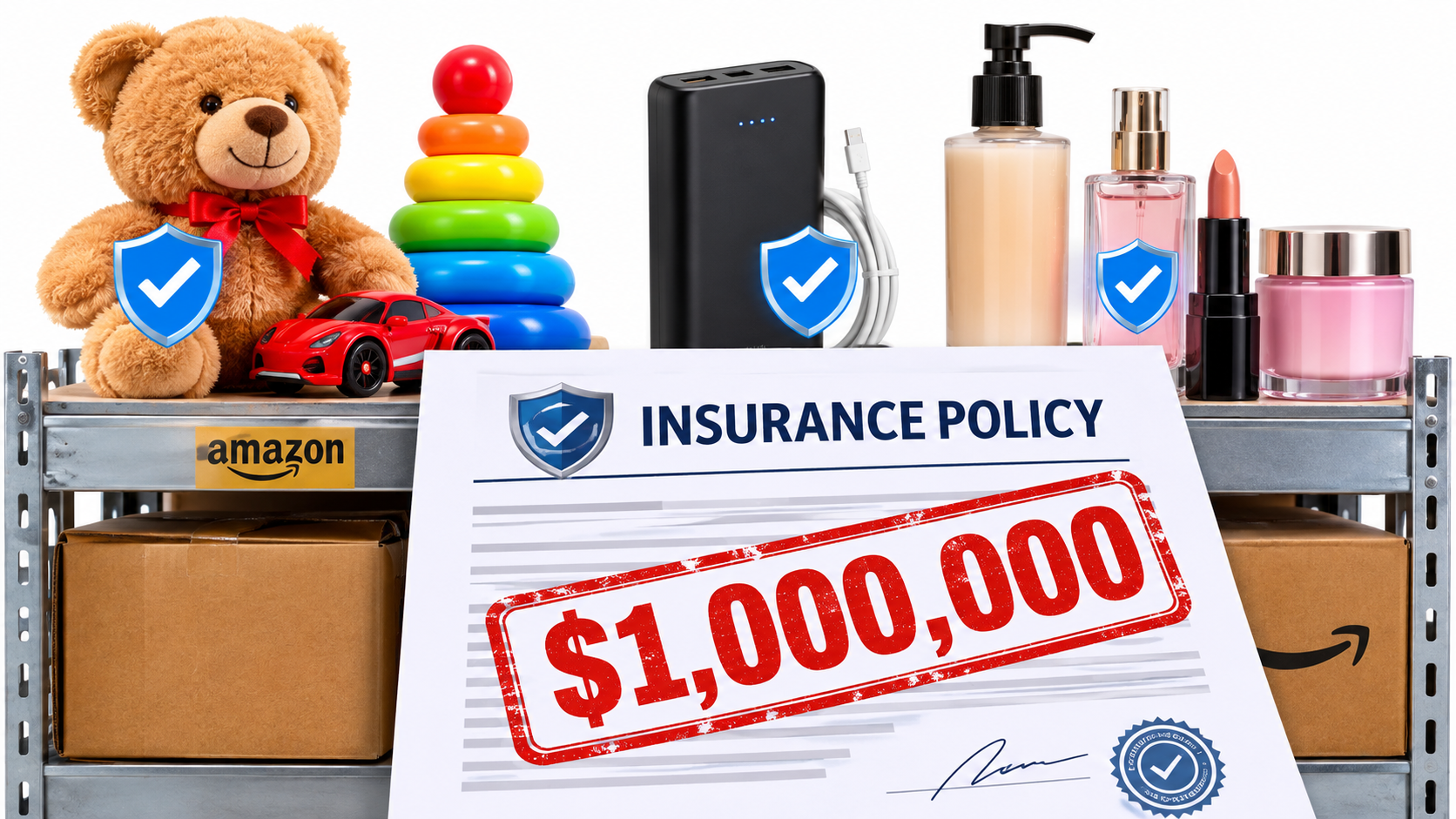
Amazon has updated its commercial liability insurance policy, with an effective date of November 2, 2026. Sellers listing products in “enhanced safety” categories must carry coverage regardless of monthly sales. This article covers what the rule says, what it leaves open, and how to prepare without overpaying or getting your listings suppressed.
A note on sources: the details below come from published summaries of Amazon’s policy. Amazon’s Seller Central pages are the controlling source, especially for the category list. Check them before you buy a policy.
What Actually Changed
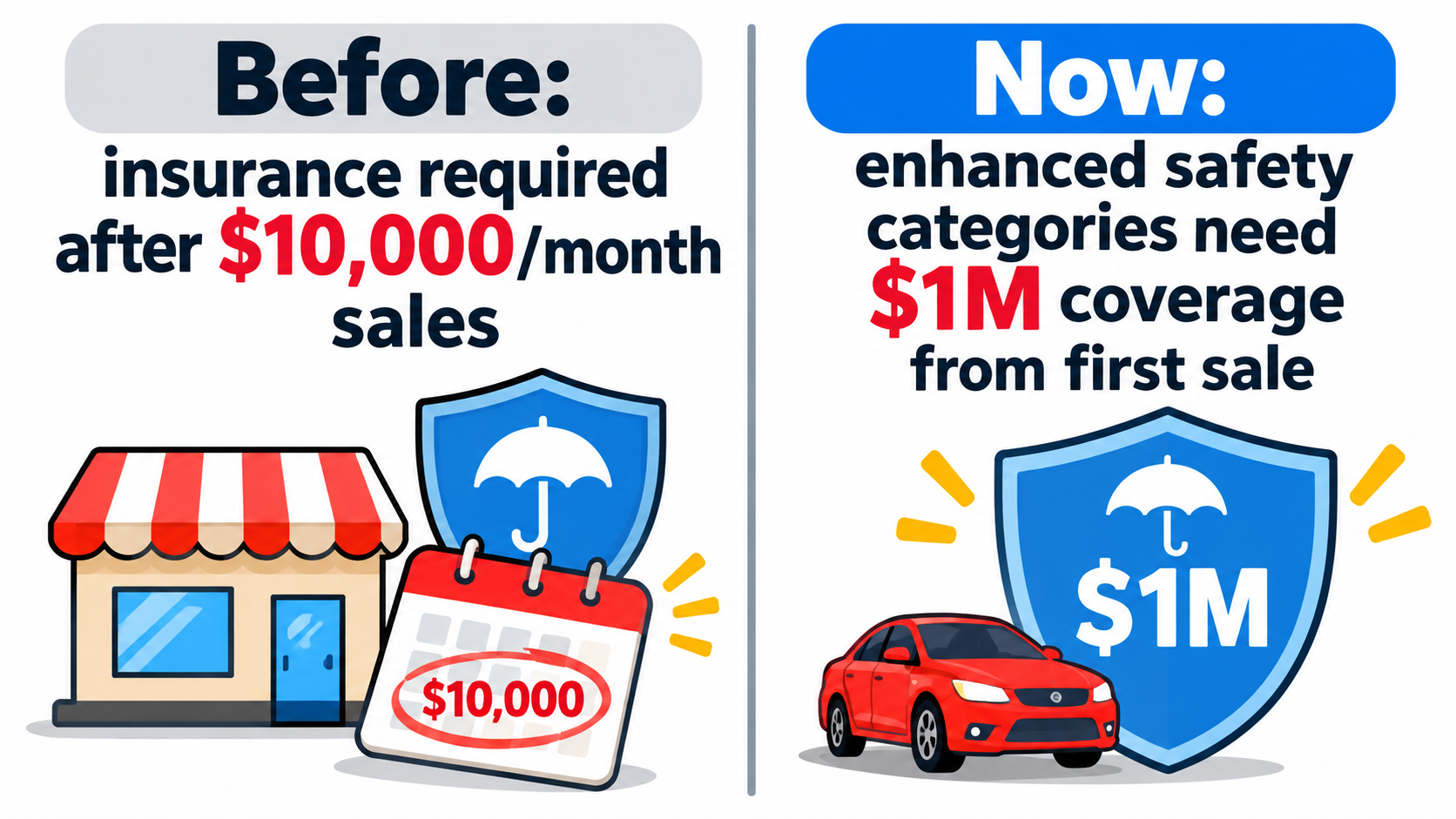
Under the older approach, insurance was tied to volume. Once you passed $10,000 in Amazon.com gross proceeds in a month, you had 30 days to get coverage. Below that line, you were generally exempt.
The new rule adds a second trigger based on what you sell, not how much. If your products sit in an enhanced-safety category, you need coverage from the start.
The key terms
- Effective date: November 2, 2026.
- Minimum coverage: $1 million per occurrence and $1 million in aggregate.
- Scope: new and existing listings, so current sellers are not grandfathered.
- Sales threshold: does not apply to enhanced-safety categories.
- Existing rule: the $10,000 monthly trigger and 30-day window remain for other sellers.
Why Category-Based Triggers Make Sense From Amazon’s Side
A volume threshold is a proxy for risk. It assumes that small sellers produce few incidents. That assumption fails in categories where a single unit can cause serious harm.
A lithium battery pack that overheats or an infant sleep product that fails does not care whether the seller made $800 or $80,000 that month. The injury claim is the same size. A category trigger targets the product risk directly.
It also protects Amazon. When a customer is hurt and the seller has no assets or coverage, claims tend to travel up the chain to the platform. Requiring insurance up front gives injured customers and Amazon a funded party to point to.
Which Categories Are Covered
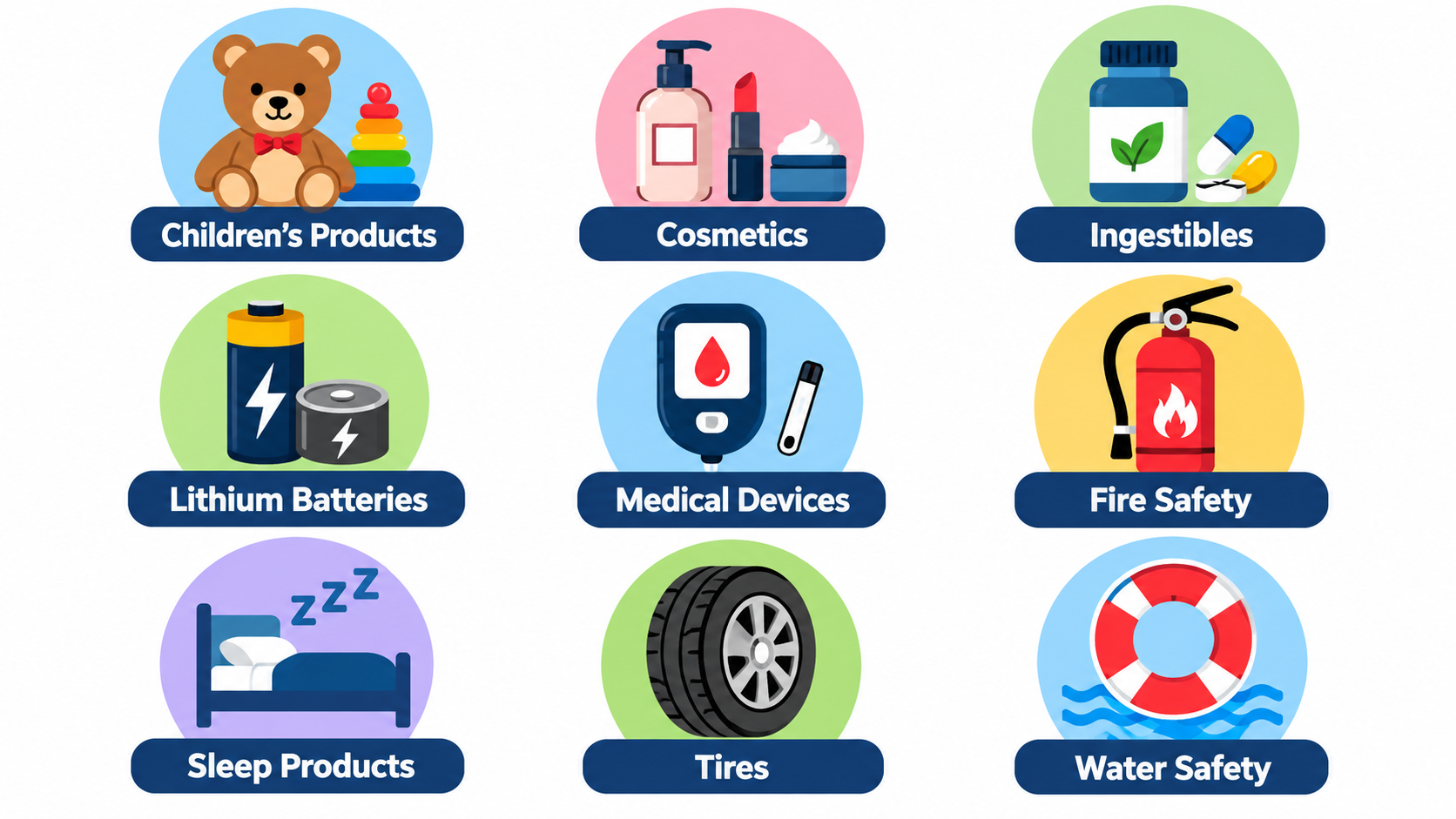
Amazon names children’s products, cosmetics and ingestibles, and lithium-battery products as examples. Reports describe the list as non-exhaustive and spanning roughly 11 categories. Others reported include fire-safety equipment, medical devices, personal-protection equipment, sleep products, outdoor power equipment, tires and other transport items, and water-safety products.
The gray areas
The tricky part is classification at the product level. A phone case with a built-in battery, a bath toy, a supplement-adjacent gummy, a skincare tool: each may or may not fall into an enhanced-safety bucket depending on how Amazon classifies the ASIN.
Do not guess. Pull your active listings, map each to its Amazon category and any safety-related compliance requirements, and treat Seller Central’s list as the final word. If an item is ambiguous, ask Seller Support and keep the written answer.
Per Occurrence vs. Aggregate: Reading the $1 Million Figure
Many new sellers see “$1 million” and assume it is one number. It is two.
- Per occurrence: the most the insurer pays for any single incident or claim.
- Aggregate: the most the insurer pays across all claims in the policy period.
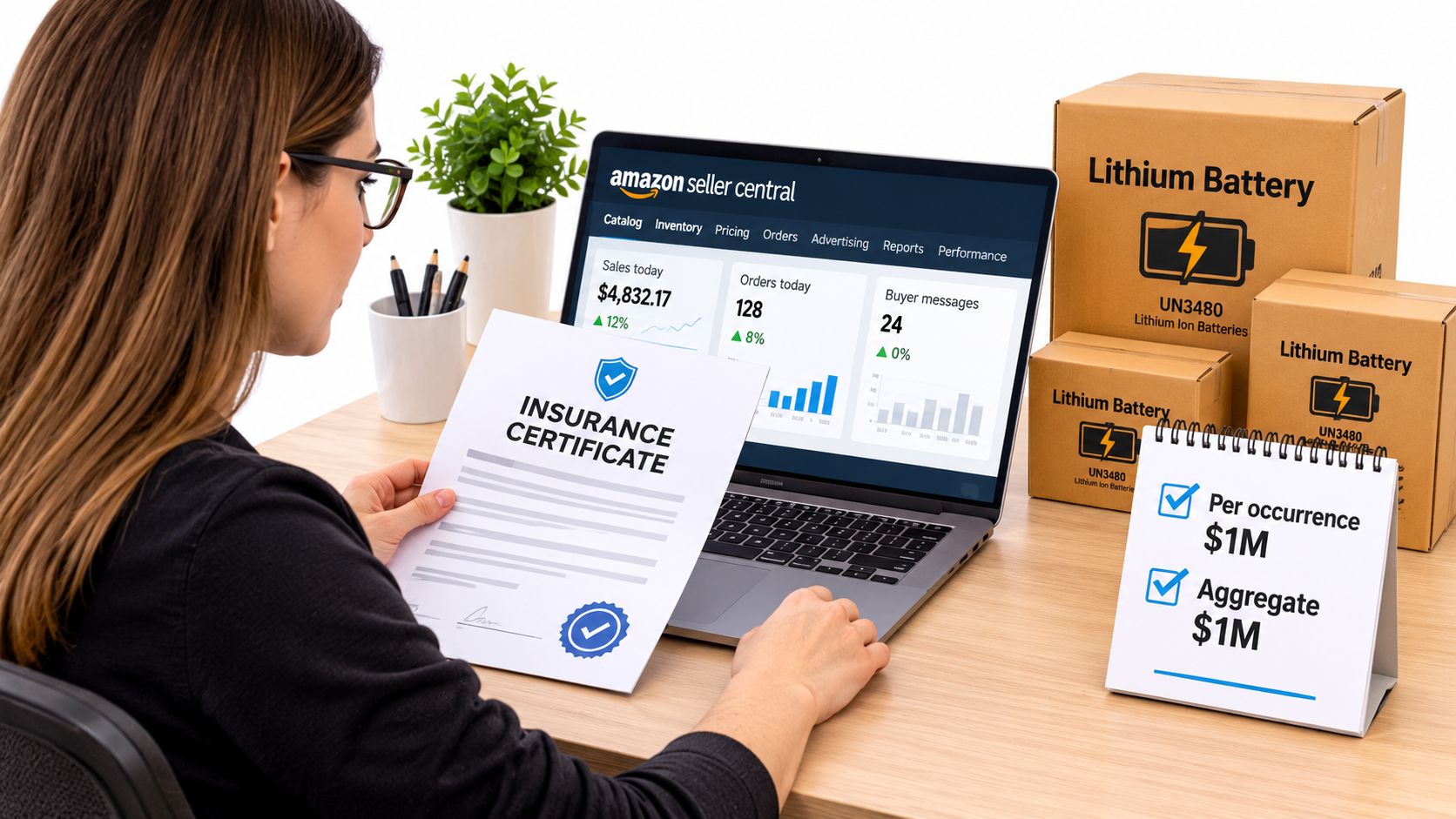
Amazon’s minimum is $1 million for each. A policy with a $1 million per-occurrence limit but a $500,000 aggregate would not qualify. Check both lines on the certificate of insurance before you submit.
Also confirm that the policy covers product liability and bodily injury for the products you actually sell. A general policy with exclusions for batteries, children’s goods, or ingestibles can look compliant and still leave you unprotected.
Who Feels This Most
Small and new sellers
The sellers hit hardest are the ones the old threshold protected: new brands testing a product, hobby-scale sellers, and anyone running low-volume SKUs in a safety category. Insurance is now a fixed cost from the first sale, which changes the math on thin-margin or low-volume launches.
Wholesalers and resellers
Resellers are not exempt just because they did not make the product. If you list it, the requirement applies to you. Some supplier policies can cover distributors as additional insureds, which is worth asking about before you buy separate coverage.
Established brands
Larger sellers usually have coverage already. Their work is checking that existing limits meet the per-occurrence and aggregate minimums and that the policy covers every category in their catalog.
The Real Cost Question
Premiums vary widely depending on product type, claims history, revenue, and the insurer. I have not found reliable published figures for this specific rule, so get several quotes rather than relying on a blog number, including this one.
Factors that tend to move pricing:
- The product category and its injury risk.
- Annual revenue and units sold.
- Where the product is manufactured and whether you hold test reports.
- Your claims history.
- Whether the policy is bundled with other coverage.
Build the premium into landed cost per unit. For a low-volume SKU, a fixed annual premium can erase the margin. For a high-volume SKU, it is a rounding error. That gap may push some sellers to prune the tail of their catalog.
How to Buy a Policy That Will Actually Pass
- Audit your catalog. List every ASIN, category, and whether it is in an enhanced-safety group.
- Request quotes from insurers that serve e-commerce sellers. Ask specifically about your categories and any exclusions.
- Confirm the limits. $1M per occurrence and $1M aggregate, with product liability included.
- Check Amazon’s additional-insured requirements. Amazon’s policy has asked for it to be named on the policy; verify the current wording in Seller Central.
- Upload the certificate in Seller Central before the effective date.
- Set a renewal reminder. A lapsed policy is the most common avoidable failure.
What Happens If You Do Not Comply
Amazon has historically enforced insurance requirements by restricting listings in affected categories. Expect the same pattern: affected ASINs may be removed from sale until you submit valid proof. Given the recent wave of catalog deactivations, an avoidable suspension is not worth risking.
The bigger risk is not the platform. An uninsured seller with a serious injury claim is personally exposed. The insurance requirement is annoying, but the coverage itself is protection you probably want anyway.
Beyond Insurance: Strengthen Your Safety File
Insurers price on evidence. Sellers who can show testing and documentation tend to be easier to underwrite. Gather these before requesting quotes:
- Test reports and certifications relevant to the category (for example, battery safety or children’s product testing).
- Supplier agreements and manufacturer details.
- Labeling, warnings, and instruction samples.
- Lot or batch tracking and a recall plan.
This documentation also helps with Amazon’s own compliance reviews, so the work pays twice.
A Pre-Deadline Checklist
- Identify all ASINs in enhanced-safety categories.
- Decide whether each SKU still earns its share of the premium.
- Collect at least three quotes.
- Verify per-occurrence and aggregate limits and exclusions.
- Upload your certificate in Seller Central ahead of November 2, 2026.
- Calendar your renewal date.
- Keep documentation in one shared folder.
The Bottom Line
Amazon has moved from “how much do you sell” to “what do you sell” as the insurance trigger for its riskiest categories. The $1 million per occurrence and aggregate minimum applies to new and existing listings, and the $10,000 rule stays in place for everyone else.
Sellers who act early can compare quotes calmly, trim weak SKUs, and avoid a last-minute listing suppression. Those who wait will pay rushed prices and risk downtime. Confirm the details in Seller Central, and start with your catalog audit this week.