

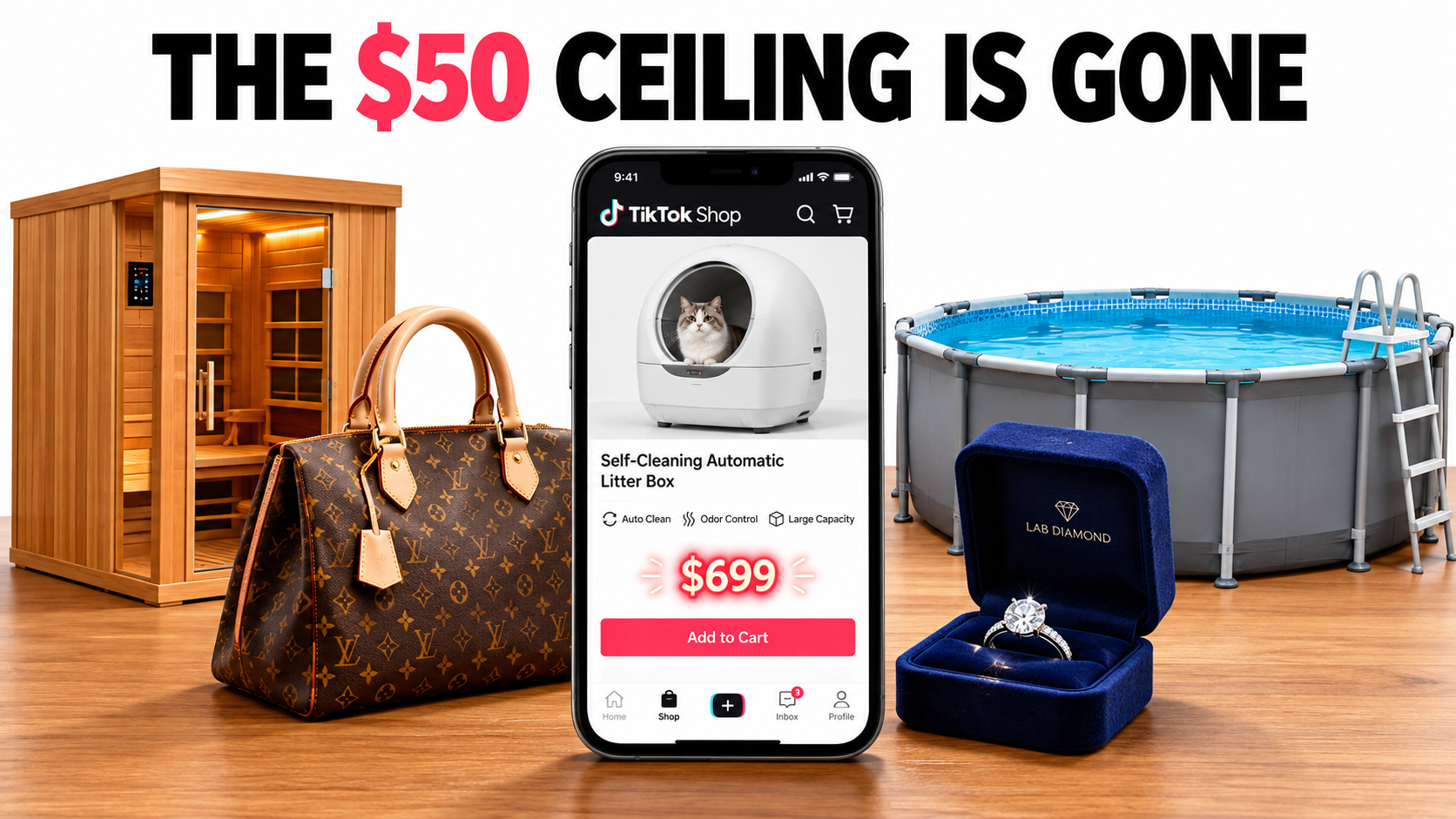
For most of its short life, TikTok Shop has carried one label above all: impulse buys. A $12 lip oil, a $19 phone grip, a $24 kitchen gadget somebody showed off in a 20-second video. The common advice followed from that. Keep prices low, discount hard, and let volume do the rest.
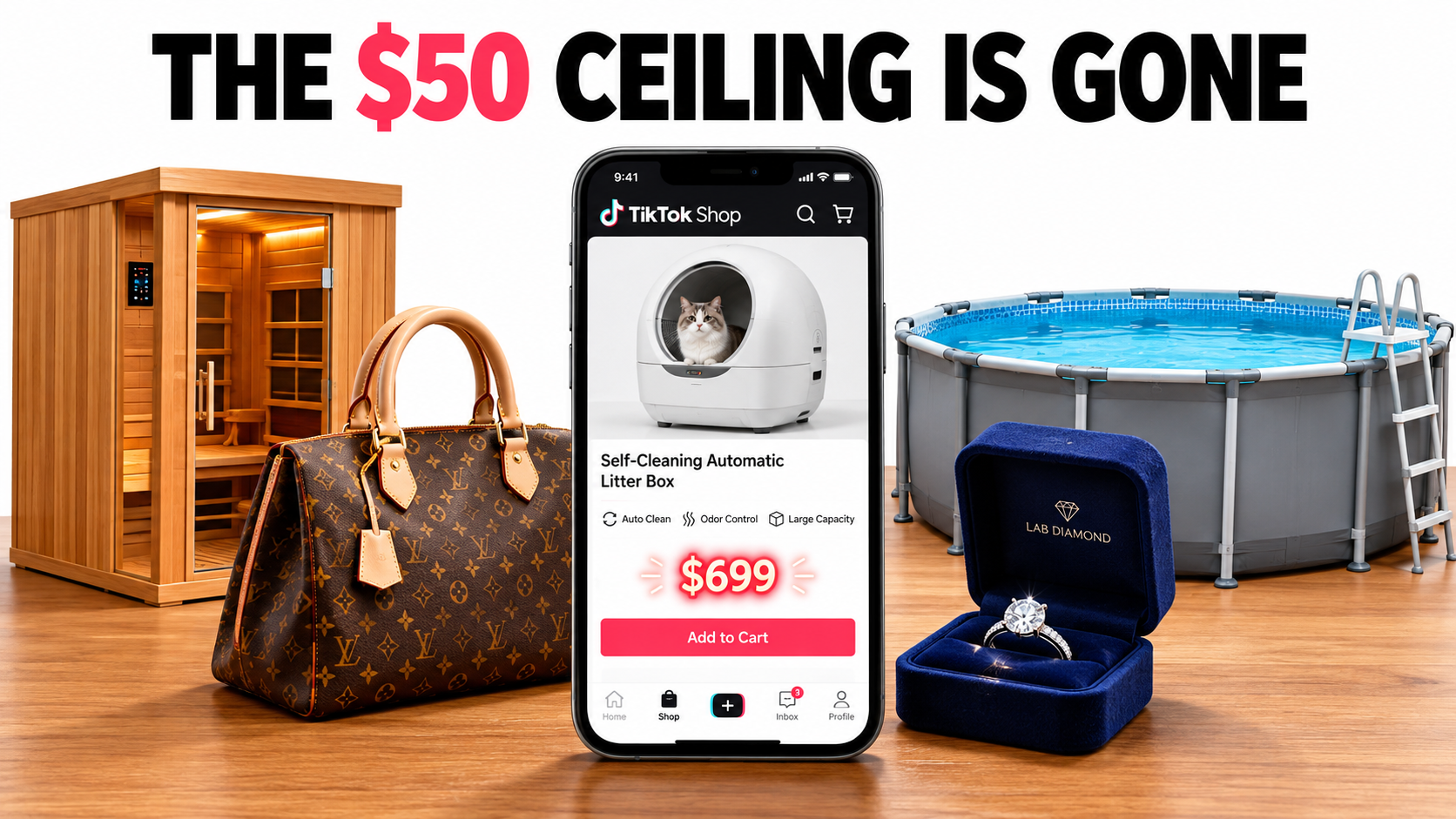
That advice is getting old. In 2026, shoppers on TikTok Shop are buying $699 self-cleaning litter boxes, saunas that start around $2,000, above-ground pools, outdoor furniture sets, certified lab diamonds and pre-owned Hermès bags. According to TikTok, the most expensive item bought on TikTok Shop in the U.S. this year was a pre-owned luxury bag that sold for $25,580.
This isn’t one lucky outlier. It’s a structural change in what the platform can sell, and it rewards a different playbook from the one most sellers learned. High-ticket products need trust, demonstration, patience on pricing, careful creator choice and fulfillment that can handle a 90-pound box. Low-price impulse items mostly need reach.
This guide is about selling considered purchases on TikTok Shop. You’ll see which categories are growing, why LIVE has become the trust engine for expensive goods, why some brands refuse to join the discount race, how affiliate strategies differ for big-ticket items, and what the November 11–30 holiday window means if your average order value is in the hundreds instead of the teens.
We drew on TikTok’s own 2026 disclosures, reporting from Modern Retail, and market data compiled from eMarketer and Statista. Where we give recommendations instead of reported facts, we say so.
Why the “Impulse-Buy Platform” Label No Longer Fits
The impulse-buy reputation made sense when TikTok Shop launched in the U.S. in September 2023. Back then, daily sales averaged roughly $7 million. Selection was thin, shoppers were wary, and the products that worked best were cheap enough that trying them felt low-risk.
Three years later, the scale is very different, and so is the mix of what sells.
The market has grown up fast
Global TikTok Shop GMV hit an estimated $64.3 billion in 2025, and projections put 2026 at around $123.5 billion, nearly double, according to Statista data compiled by DemandSage. U.S. sales reached about $15.8 billion in 2025, or 18.2% of all U.S. social commerce. U.S. GMV in the first half of 2026 alone came to $11.8 billion, more than twice the same period a year earlier.
Selection has grown even faster. TikTok says that since 2024 it has expanded selection across product categories by more than 1,200%. Brands that once ignored the channel, including Sephora, Michael Kors, Best Buy, Ulta Beauty and Victoria’s Secret, joined in 2026.
Trust is the real unlock for price
A shopper’s price ceiling on any marketplace depends on how much they trust it. If you think you might get a counterfeit, a broken item or no refund, you won’t spend $700. You might spend $15.
That’s where things have moved. GlobalData research cited by TikTok found that 67% of Americans on the platform trust a large brand the same or more when they see it on TikTok Shop compared with another platform. Among users aged 18–24, that number rises to 82%.
Amit Dodeja, CMO at multi-brand seller Spreetail, described the change to Modern Retail: “Consumers feel TikTok Shop is far more trustworthy given that the marketplace has matured over time. In the early days, there is always going to be a bit of skepticism.”
A different seller mix after de minimis
Policy has played a part too. When the U.S. ended the de minimis import exemption in May 2025, sales from foreign sellers dropped sharply and domestic businesses picked up more of the demand. The flood of ultra-cheap cross-border goods that defined the early marketplace shrank, which made room for established brands with higher price points.
Larger brands, those with at least $30 million in annual revenue, grew their TikTok Shop sales 97% year over year, according to figures TikTok shared with Modern Retail. Those brands tend to sell at higher prices than the long tail of small sellers, and their growth pulls the platform’s average order value up.
Takeaway: If you ruled out TikTok Shop because your product costs more than $50, check that assumption again. The platform’s buyers, selection and trust levels are very different from what they were in 2023.
Which High-Ticket Categories Are Actually Moving
“High-ticket” covers a lot of ground. A $85 comforter and a $25,000 handbag are both expensive by TikTok Shop standards, but they sell in very different ways. Here’s what the reported data shows about specific categories in 2026.
Home, outdoor and bulky goods
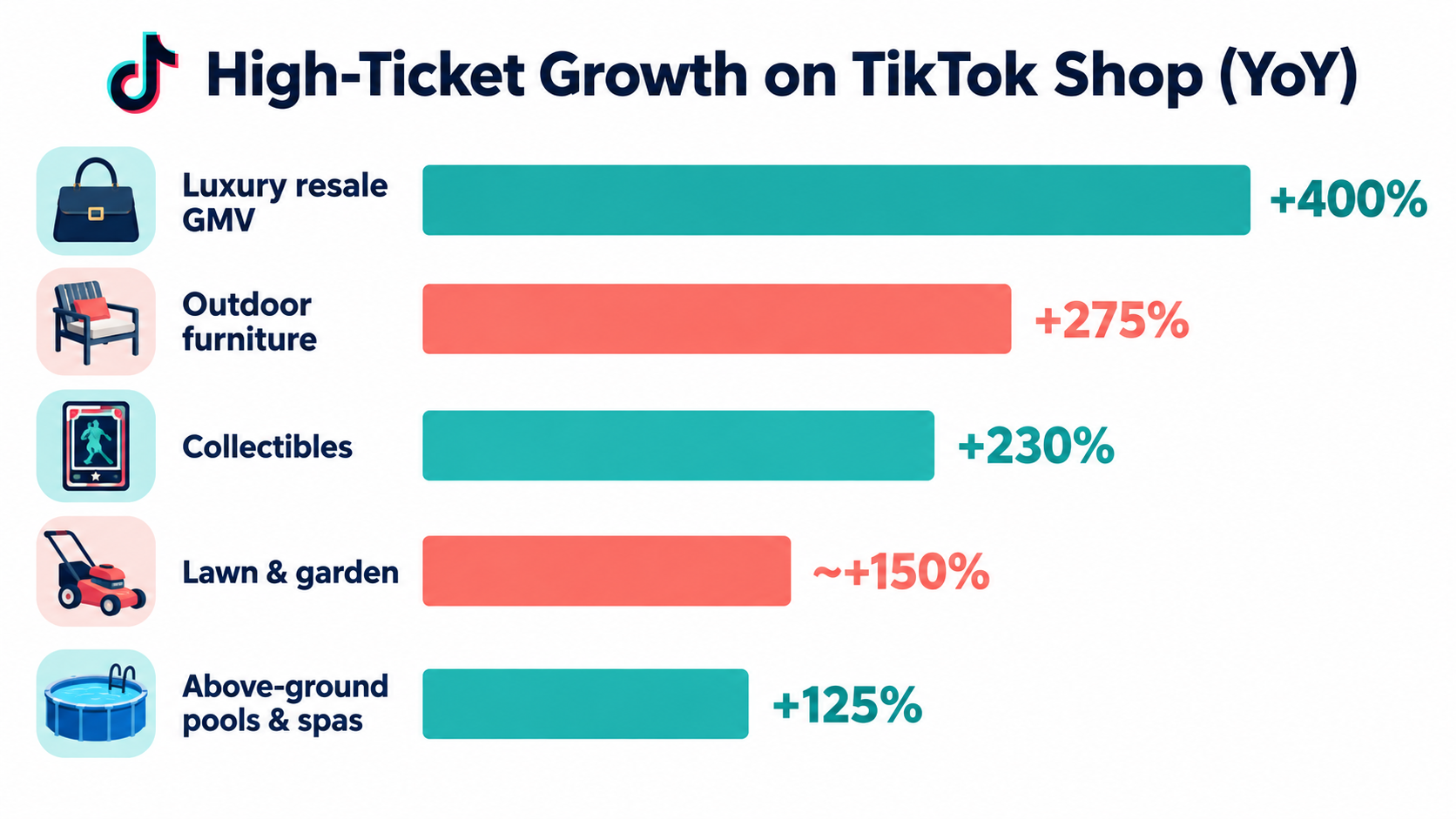
Spreetail, which sells home categories on TikTok Shop, told Modern Retail that its sales of above-ground pools and spas grew 125% year over year, which it put at five times the growth it sees on other marketplaces. The pools start around $150, and the saunas start around $2,000.
Other bulky, delivery-heavy categories are growing quickly as well. Spreetail reported outdoor furniture up about 275% and lawn and garden up nearly 150% year over year. “Our price points are probably four to five times higher than the average price point on TikTok Shop, and that continues to do well for us,” Dodeja said.
Sleep and bedding are following a similar path. DTC brand Mellow Sleep launched on TikTok Shop in fall 2025, selling a $50 pillow and comforters starting at $85. The company says both products have held the top spot in their TikTok Shop categories since launch.
Luxury resale
Luxury resale is the clearest example of high-ticket success on the platform. TikTok Shop reported a 400% year-over-year increase in GMV for luxury resale, driven mostly by handbags and watches. U.S. TikTok users are 2.5 times more likely to buy a luxury item as a gift this Black Friday and Cyber Monday, according to TikTok.
The category is invite-only, and sellers have to work with one of five approved authentication partners. That gatekeeping is part of why buyers trust it.
Jewelry and collectibles
TikTok reports that sales of single IGA-certified lab diamonds on TikTok Shop more than quadrupled from May to September 2026. In September, U.S. searches for “gold jewelry” rose 1,134% month over month, and searches for “opal rings” rose 825%.
Collectibles, which include sports trading cards, memorabilia, coins and figurines, grew 230% year over year in October, according to TikTok. Many collectibles are high-ticket items, and nearly all of them reward live, real-time viewing.
Premium pet and home tech
Whisker, maker of the $699 Litter Robot, joined TikTok Shop in the past year and saw early success even though the product is a high-consideration purchase. That’s a useful data point because it isn’t resale or luxury. It’s a standard consumer product sold at a premium price by a brand that refuses to discount heavily. More on that below.
What these categories have in common
Looking across the winners, a few patterns stand out:
- The product is easy to understand once you see it in motion. A pool filling up, a litter box cleaning itself, a bag being turned in someone’s hands.
- Condition, scale or quality is hard to judge from a photo. Video and LIVE close that gap.
- There’s a gifting or seasonal angle. Pools in spring, jewelry and luxury in Q4.
- Trust signals exist outside the seller. Authentication, insurance, large review counts.
The Thumb-Stopper Test: Choosing High-Ticket Products That Work on TikTok
Not every expensive product belongs on TikTok Shop. A $900 office chair that looks like every other office chair will have a hard time. The products that succeed at high prices tend to pass what Whisker’s team calls the “thumb stopper” test.
What Litter Robot got right
Whisker CMO Hew Loyd told the Modern Retail Podcast that the Litter Robot’s automated self-cleaning process acts as a “thumb stopper,” which gets curious users to stop scrolling and watch how it works. The product’s main benefit is visible on screen, so the video does the selling, not the caption.
Ask yourself one question: if someone watched your product for three seconds with the sound off, would they understand why it’s worth the price? If not, you’ll have to rely on persuasion, and persuasion costs more and converts worse at high price points.
Visual explanation replaces the research phase
High-ticket purchases normally come with a research phase. Buyers read reviews, compare specs and watch YouTube walkthroughs. On TikTok, creator content squeezes much of that research into the feed.
Dodeja noted that “the visual nature of TikTok is actually helping a lot of consumers understand what these products are,” especially in categories like furniture, décor, saunas and pools that normally need research. A 60-second video of someone assembling and using a backyard sauna answers dozens of questions a static product page can’t.
A practical product-selection checklist
Based on the categories that are working, here’s a set of questions to ask before listing a high-ticket SKU. This is our framework, not a TikTok requirement:
- Is there a visible transformation or action? Before/after, assembly, a mechanism that moves, a reveal.
- Can a regular person demonstrate it convincingly? If it only looks good with studio lighting, creator content will struggle.
- Does it solve a recurring annoyance? Scooping litter, a bad night’s sleep, a hot backyard. Repeated pain justifies higher spend.
- Is there an external trust anchor? Certification, authentication, warranty, strong brand recognition.
- Can you ship it within TikTok’s dispatch requirements? We cover this in the logistics section.
- Is there a seasonal or gifting hook? These concentrate demand into windows where high-ticket buyers are already looking.
Products that check four or more of these boxes are strong candidates. Products that check only one or two may still sell, but expect to spend more on content and ads to get there.
LIVE Is the Trust Engine for Expensive Goods
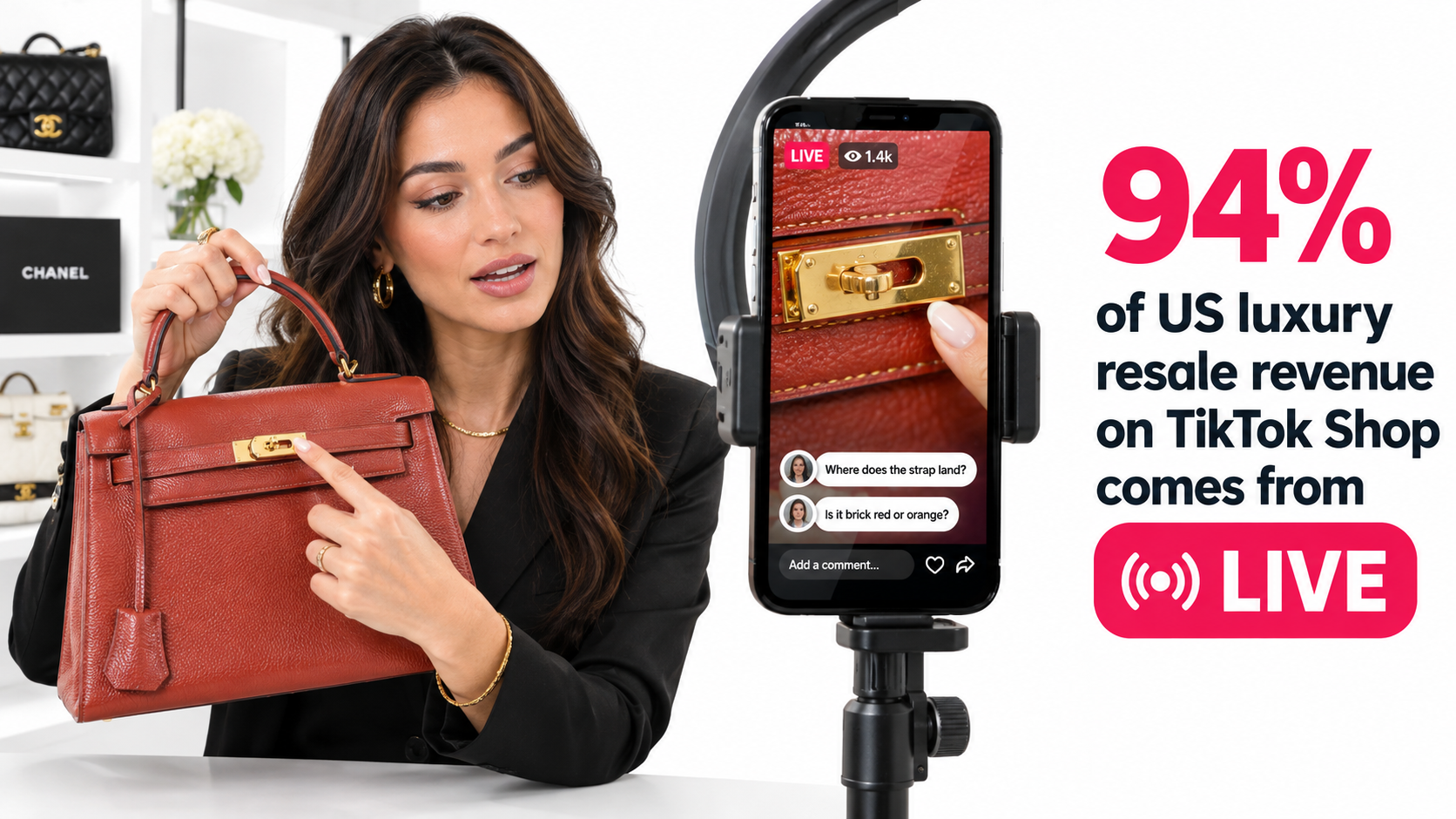
If one statistic sums up how high-ticket selling works on TikTok Shop, it’s this: year to date in 2026, 94% of U.S. luxury resale revenue on TikTok Shop came from LIVE, according to figures TikTok shared at its first Luxury Resale Summit in New York.
Why live works when the stakes are high
Rainee Walker, TikTok Shop’s U.S. head of category for luxury resale, explained the reasoning: “To convey trust, there needs to be a conversation. But where is that conversation happening? It’s happening on live.”
She gave a concrete example. At five-foot-ten, a crossbody bag fits her differently than it would fit someone at five-foot-three. On a livestream, she can ask the host to put the bag on and show where the strap lands, or ask whether a color is closer to brick red or orange. Those are the doubts that stop a $2,000 purchase, and a product description page can’t answer them in real time.
Walker also pointed out that live turns vague condition terms into something you can see. Phrases like “scratched hardware” or “stained lining” are subjective. Showing them on camera “helps remove some of that friction or that doubt,” she said.
Who’s doing it and how
The examples cover a range of business sizes:
- Fashionphile runs multiple daily lives through “Fashionphile TV.” TikTok Shop accounts for a little over 25% of its U.K. business.
- Rebag hosts livestreams showing dozens of bags per session, including items like a $2,210 heart-shaped patent leather Chanel bag.
- MyGemma, with around 31,000 followers, sells jewelry and bags through lives. Its CEO said TikTok and other livestream channels make up about 15–20% of revenue.
- Crocs went live on TikTok 24/7 for all of October last year.
- Stila Cosmetics built a livestream studio in its office for TikTok Shop sales.
Note that MyGemma’s follower count is modest. You don’t need a huge audience for LIVE to make a meaningful share of revenue, especially when each sale is worth hundreds or thousands of dollars.
Structuring a high-ticket live session
Lives for expensive goods look different from flash-sale lives for cheap goods. Based on the patterns above, here’s how we’d structure one:
- Lead with expertise, not urgency. Walker described luxury resale sellers as “providing storytelling to explain why this item is valued at what it is.” Explain why the item costs what it does.
- Show flaws on purpose. Point out wear before viewers ask. It builds credibility for everything else you say.
- Answer scale and fit questions physically. Wear it, hold it next to common objects, measure it on camera.
- Keep a deliberate pace. Fewer items per hour, more time per item. A $15 product can sell in 30 seconds. A $1,500 product may need five minutes of back-and-forth.
- Go live consistently. Fashionphile’s multiple daily sessions and Crocs’ month of 24/7 streaming both point to the same thing: regular programming builds a returning audience.
Takeaway: If your product is above roughly $200 and buyers would normally want to see it in person, treat LIVE as a core sales channel, not an experiment.
Holding Your Price: The Case Against the Discount Spiral
Much of TikTok Shop’s sales culture is built on discounts: flash deals, coupon stacks, platform-funded promotions, “only $9.99 today” hooks. For low-ticket items, that can work. For high-ticket products, it can do lasting damage.
Whisker’s firm-pricing approach
Whisker chose not to follow the aggressive discounting that many TikTok Shop merchants use. On the Modern Retail Podcast, Loyd described a firm pricing strategy for the $699 Litter Robot, and the brand still found early success on the platform.
The reasoning is simple. A premium product that’s always on sale on TikTok teaches buyers that the “real” price is lower. That hurts margin on TikTok, and it can also spill over onto your DTC site, Amazon and retail partners, where buyers start waiting for the TikTok deal.
Why discounting hits differently at high price points
A 20% discount on a $15 item is $3. Shoppers barely notice, and the item was already an impulse buy. A 20% discount on a $700 item is $140. That’s a real signal, and it changes how buyers think about the product’s value.
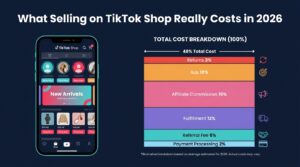
There’s also the platform cost structure to think about. TikTok Shop’s referral fees, affiliate commissions and fulfillment costs stack on top of each other. Cutting price deeply on a high-cost-of-goods product can leave very little margin after everything is paid.
Alternatives to straight price cuts
Brands that want to take part in promotional moments without cheapening their product have several options. These are general merchandising approaches, not TikTok-specific rules:
- Bundles. TikTok specifically highlights product bundles as part of its 2026 holiday offering. Adding refill supplies, accessories or a second item increases perceived value without lowering the headline price.
- Exclusive editions. TikTok also points to exclusive offerings and one-of-a-kind brand collaborations as holiday drivers. A TikTok-only colorway or set gives buyers a reason to buy now without a discount.
- Added protection. Extended warranties or insurance reduce perceived risk. TikTok notes that eligible jewelry purchases can include a year of third-party insurance protection.
- Gifts with purchase. A lower-cost add-on often feels more generous than its dollar value.
Capture the customer, not just the sale
Whisker also onboards TikTok Shop customers to the Litter Robot app, which gives the brand first-party data. This matters for high-ticket sellers in particular. Someone who bought a $699 device is a strong candidate for accessories, refills, upgrades and referrals. If the relationship ends at checkout, you’re paying acquisition costs over and over.
Portland Leather Goods’ CMO MacCoy Merkley named the same challenge: after early success, the next job is “figuring out how to turn those buyers into loyal customers.”
Takeaway: Decide your discount policy before the holiday season, not during it. If your product sells at a premium elsewhere, protect that price and compete on bundles, exclusives and risk reduction.
Affiliate Strategy for Big-Ticket Items: Depth or Blitz?
Creators drive around 42% of U.S. TikTok Shop sales overall, according to DemandSage’s compilation of industry data. For some brands, the share is far higher. Delaney Del Mundo, SVP of account strategy at agency PLTFRM, told Modern Retail that affiliates drive 75–85% of sales for some brands on the platform.
The number of creators earning commissions on TikTok Shop grew 146% year over year, according to the company. So there are plenty of creators to choose from. The real question is how to use them for expensive products. Two well-documented strategies sit at opposite ends.
The volume blitz: Portland Leather Goods
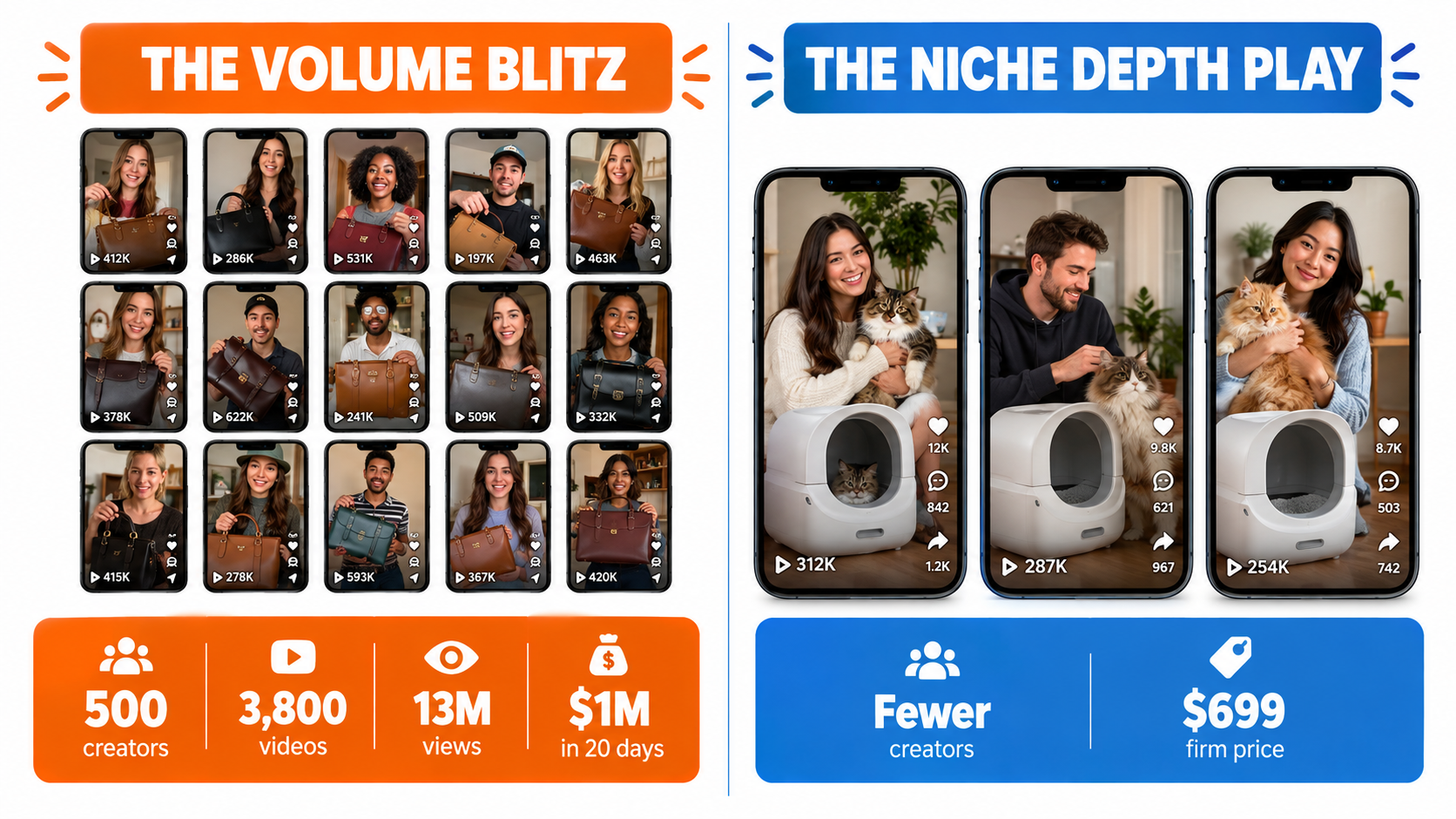
Portland Leather Goods sells leather bags and accessories, mid-to-high-ticket items. The company has passed $100 million in annual revenue for at least two years in a row. It quietly joined TikTok Shop in February and was selling about $1,200 a day there.
In late March, it ran a seven-day affiliate “blitz.” Here’s how it worked, as reported by Modern Retail:
- About 500 creators signed up as affiliates and received gifted product after approval.
- The first 20 creators to post 10 videos with at least 100 views each received $1,000.
- A GMV contest awarded $2,000–$10,000 to the top three creators by sales.
The results: nearly 13 million views across 3,800 videos, the brand’s first $100,000 day on the platform, and $1 million in total sales within 20 days of starting the blitz.
Merkley put the content style this way: “We have people in their living rooms holding up bags they’ve had for years and talking about why they love their bags. That’s the magic we’re after.”
The niche-depth approach: Whisker
Whisker went the other way. Loyd described carefully growing the affiliate program by prioritizing niche content creators over high-volume posting. For a $699 pet product, a smaller group of credible cat owners who understand the problem may convert better than thousands of general lifestyle creators.
How to choose between them
Neither approach is “right.” The better fit depends on your product and business:
- A blitz fits when you have an existing fan base that already owns the product, a price point where many creators can afford or be gifted inventory, and the budget for meaningful cash incentives. Portland Leather had all three.
- Niche depth fits when the product needs real expertise to explain, gifting costs are high, or a flood of low-quality content could hurt a premium position.
- A hybrid often makes sense. Start with a core group of specialist creators to set the tone, then widen the program once you know which messages convert.
Your best creators can outgrow your expectations
Mellow Sleep founder Chad Keller pointed to one creator who went from generating $80,000 a month in GMV to $1.5 million a month over 10 months. High-ticket sellers should find their top performers early and invest in those relationships.
Portland Leather does this through WhatsApp groups and one-on-one conversations, asking its best affiliates for feedback and what would “keep them happy.” Del Mundo noted that strong incentive programs can get very creative, saying she has seen brands offer down payments on homes and Teslas.
Takeaway: For products over $100, budget for affiliate incentives and gifting as a launch cost, not an ongoing discount. Decide in advance whether you’re aiming for reach (blitz) or credibility (depth).
Logistics: The Unglamorous Constraint on High-Ticket Growth
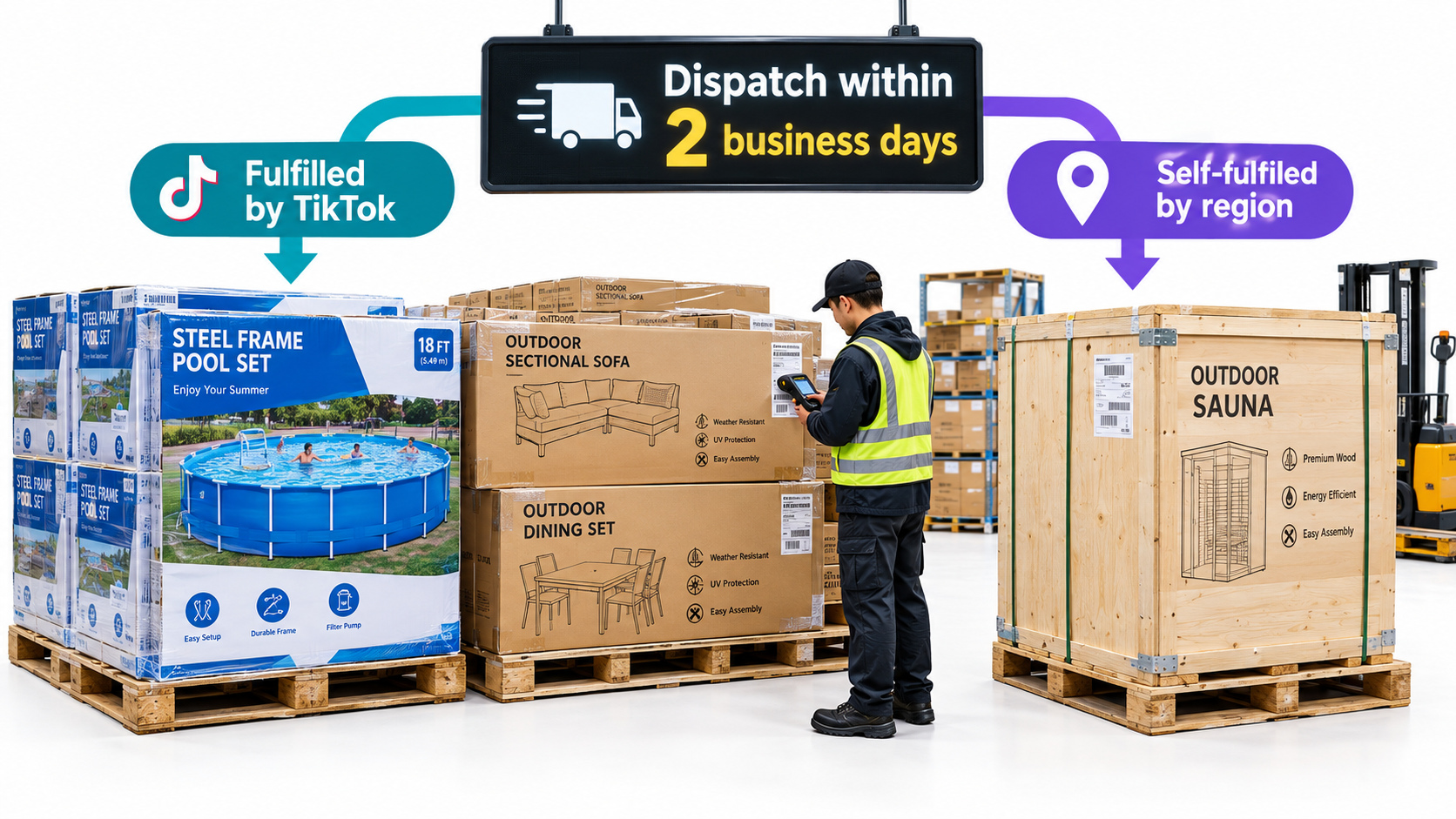
The thing most likely to stop a high-ticket seller on TikTok Shop isn’t content or ads. It’s fulfillment. Shipping a sauna is not like shipping a lip gloss, and TikTok’s service standards don’t change much based on what’s in the box.
The two-business-day dispatch window
TikTok Shop requires domestic orders to be dispatched within two business days. Mellow Sleep’s Keller told Modern Retail that this window isn’t always realistic for smaller brands shipping bulky products.
Missing dispatch targets affects shop performance, which in turn affects visibility and eligibility for campaigns. For a high-ticket seller, a single viral video that produces more orders than you can dispatch on time can cause more harm than good.
Fulfilled by TikTok vs. self-fulfillment
Fulfilled by TikTok (FBT) is the platform’s own fulfillment service. Keller described it as “still in its infancy,” with an experience that can be “somewhat choppy” while TikTok improves its logistics. He also said he’d like the fee structure to become simpler as brands rely more on FBT.
Mellow Sleep’s answer is a hybrid. The company fulfills some orders in-house and routes others through FBT depending on where the customer is. Spreetail, which has deep logistics experience, fulfills all of its own TikTok Shop orders.
Delivery speed is improving
The good news is that things are moving in the right direction. “The biggest thing we’ve seen change in the past year is delivery speeds,” Dodeja said. Faster delivery is part of why buyers now feel comfortable ordering bulky, expensive items through the platform at all.
A logistics readiness checklist for high-ticket sellers
Before you scale content or ads on an expensive or bulky SKU, we recommend confirming the following:
- Dispatch capacity: Can you handle a sudden spike, say 10x your normal daily orders, and still dispatch within two business days?
- Fulfillment routing: Have you decided which SKUs or regions go through FBT and which you ship yourself?
- Packaging durability: Expensive items that arrive damaged produce costly returns and negative reviews.
- Inventory buffers: Running out mid-campaign wastes the creator content you paid for. Merkley named “figuring out inventory needs” as one of the strategic requirements of the platform.
- Returns handling: A $15 return is an annoyance. A $700 return with freight costs needs a defined process.
Takeaway: Scale fulfillment before you scale content. On TikTok Shop, demand can show up faster than your warehouse can respond.
Building the Trust Stack: Authentication, Protection and Social Proof
For a shopper to spend serious money with a seller they found five minutes ago in a video feed, several layers of trust have to be in place. Some come from TikTok. Some you have to build yourself.
Platform-level trust
TikTok has added specific trust features in its higher-value categories:
- Luxury resale gating: Sellers must be invited, and they must use one of five authentication partners: Entrupy, Legitmark, CheckCheck, Legit App or Real Authentication.
- Jewelry insurance: Eligible jewelry purchases can include one year of third-party insurance protection.
- Safety playbooks: TikTok published a safety playbook for Black Friday and Cyber Monday in November 2025, as reported by Modern Retail, which shows it is actively positioning the shop as safe during peak periods.
If you sell in a gated category, getting approved is a competitive advantage. Fewer sellers qualify, and buyers know the guardrails are there.
Brand-level trust
The arrival of major brands has raised confidence across the marketplace. Keller said that big names like Pacsun and Skims joining TikTok Shop helped give the marketplace credibility. A smaller brand gains indirectly when shoppers see trusted retailers using the same checkout.
Seller-level trust: reviews and creator volume
At high prices, review volume matters a great deal. Nearly a year after launch, Mellow Sleep says it has more than 50,000 reviews from organic creators and over 20,000 five-star customer reviews. That kind of social proof makes an $85 comforter feel like a safe purchase.
Creator videos act as reviews too. When dozens of unrelated people show the same product in their own homes, as Portland Leather’s affiliates did with bags they had owned for years, buyers see long-term proof that a product page photo can’t provide.
Building your own trust layers
Here are steps any high-ticket seller can take. These are recommendations, not platform requirements:
- Make warranty and return terms clear in your listing, your videos and your lives.
- Show the product after months of use, not just out of the box.
- Answer common objections on camera. Noise level, size, setup time, durability.
- Pin a FAQ comment on top-performing videos to deal with recurring questions.
- Respond to negative reviews publicly and with specifics.
The November 11–30 Window: Holiday Strategy for High-Ticket Sellers
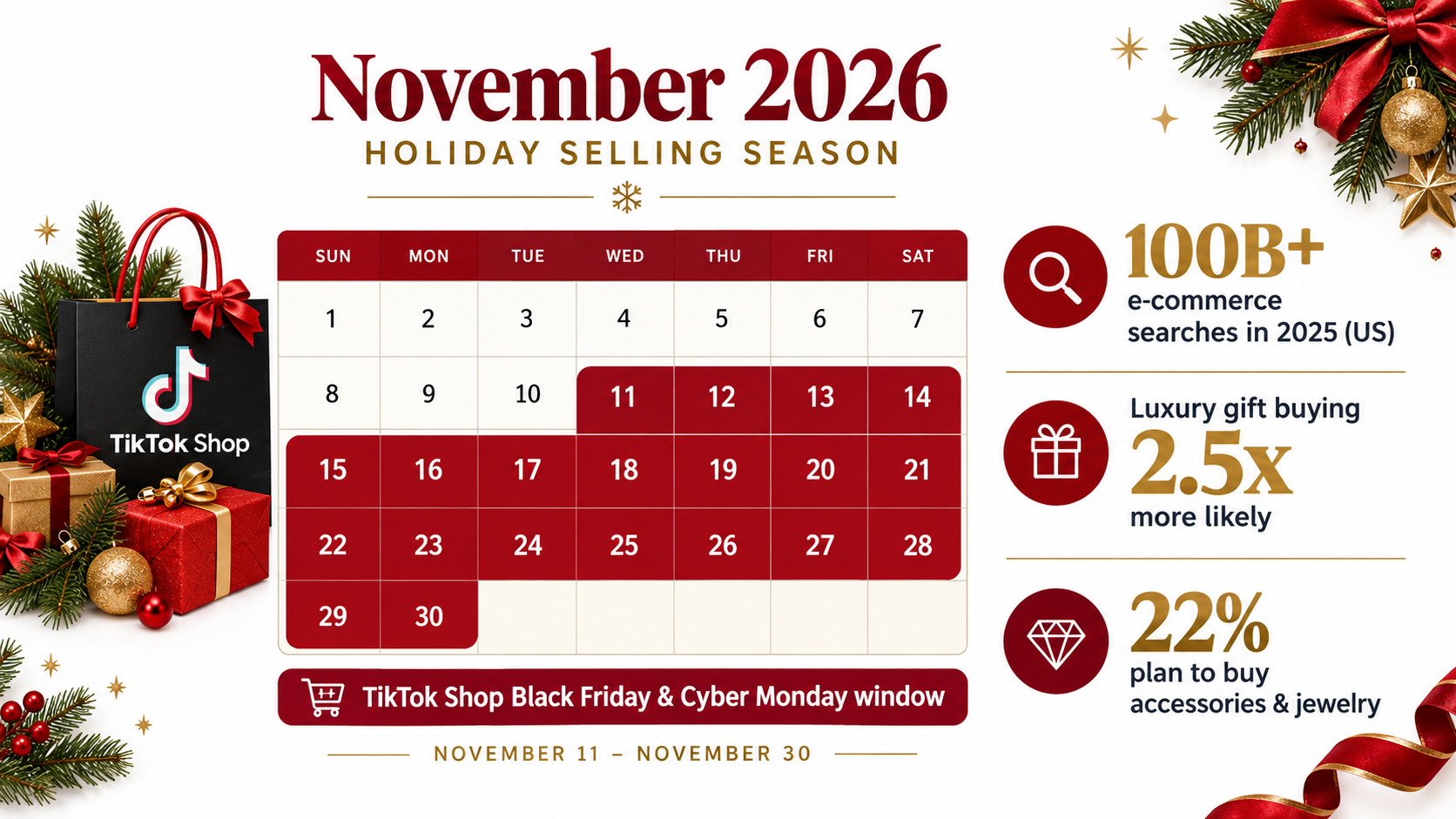
TikTok Shop’s Black Friday and Cyber Monday event runs from November 11 to November 30, 2026. For high-ticket sellers, this is the most important window of the year, and it calls for a different approach than the one low-ticket sellers use.
Demand signals heading into the season
TikTok’s October 2026 holiday update lays out what’s happening:
- #holidayshopping content rose 263% in September compared with August.
- September also showed big month-over-month gains in #giftsforwomen (440%), #fallwishlist (450%), #holidaygiftideas (248%) and #holidaydecor (97%).
- Nearly a third of U.S. TikTok users expect to buy a gift this Black Friday.
- 22% of U.S. TikTok users expect to buy accessories, including jewelry, during Black Friday and Cyber Monday.
- In 2025, there were more than 100 billion searches with e-commerce intent on TikTok Shop in the U.S.
That last number matters for high-ticket sellers. Searching is a sign of intent. Expensive purchases are more often searched for than stumbled upon, so your listings need to show up when gift shoppers start typing.
The longer runway for considered purchases
A buyer might see a $20 gadget and buy it on the spot. A buyer considering a $700 gift usually sees it several times, compares options and comes back later. In practice, that means high-ticket sellers should start building awareness before November 11.
Here’s a timeline we’d suggest for the rest of the season:
- Now through early November: Seed creator content, especially gift-angle videos (“what I’m getting my partner,” “the gift that’s actually worth it”). Line up affiliates and confirm inventory.
- November 11–20: Run regular lives focused on education and demos. Publish comparison content. Use bundles or exclusive editions instead of deep cuts.
- November 21–30 (peak): Increase LIVE frequency. Give clear shipping cutoffs for holiday delivery. Lean on social proof, such as review counts and creator testimonials.
- December: Highlight last-minute delivery guarantees if your fulfillment supports them, then shift to post-holiday follow-up and first-party data capture.
Gifting changes the message
Holiday buyers of expensive items are often buying for someone else. That changes what they need to hear. They want reassurance that the gift will be appreciated, that it will arrive on time and that it can be returned or exchanged.
Your content should speak to the giver, not only the end user. “My husband cried when he opened this” is a different pitch from “this is the best pillow I’ve used.”
Watch the category-specific trends
TikTok specifically pointed to pre-owned luxury, jewelry and collectibles as trends shaping the 2026 holiday season. If you sell in those categories, this is your moment. If you don’t, check whether there’s a gifting angle you can borrow, such as premium home goods presented as “the gift for the person who has everything.”
The Halo Effect: Measuring TikTok Shop Beyond TikTok Shop
One reason established brands are taking TikTok Shop more seriously in 2026 is that its effects don’t stay inside the app. High-ticket sellers in particular should measure success more broadly than in-app GMV.
Cross-channel lift
Whisker expects its TikTok Shop presence to create a halo that drives sales across other channels, including its DTC website and Amazon. That makes sense for expensive products. Many buyers discover the product on TikTok, then research or buy wherever they’re most comfortable, whether that’s the brand’s site, Amazon or a physical store.
Modern Retail reported in August 2026 that brands are turning to TikTok Shop specifically to grow sales on Amazon. Discovery happens on TikTok, and some of the conversion happens elsewhere.
New audiences
Whisker joined TikTok Shop partly to reach younger groups like Gen Z and Gen Alpha and to gain an early-adopter advantage. Portland Leather Goods saw it as a way to reach a new audience. Users aged 25 to 34 are the largest group of TikTok Shop shoppers, according to DemandSage’s compilation.
But the platform isn’t only for young buyers. Modern Retail reported in October 2026 that Shapermint is on track for $10 million in TikTok Shop sales by targeting women aged 35–65. High-ticket sellers whose customers skew older shouldn’t rule out the channel based on stereotypes.
Organizational commitment
The channel now matters enough that brands are hiring for it. Modern Retail has reported on companies creating dedicated “head of TikTok Shop” roles as they work out a social commerce strategy. For high-ticket brands, that kind of ownership is especially useful, because LIVE programming, creator relationships, fulfillment and pricing all need to be coordinated.
What to track
We recommend high-ticket sellers watch these metrics alongside in-app GMV:
- Branded search lift on Google and Amazon during and after TikTok campaigns.
- DTC traffic and conversion changes that line up with viral moments.
- First-party data capture rate, meaning how many TikTok Shop buyers join your app, email list or loyalty program.
- Repeat purchase and accessory attach rates among TikTok-acquired customers.
- Price integrity, meaning whether average selling price on other channels holds steady as TikTok volume grows.
Common Mistakes High-Ticket Sellers Make on TikTok Shop
Based on the patterns in this research, here are the mistakes we see most often when sellers bring expensive products to the platform.
Copying the low-ticket playbook
Fast-cut hooks, countdown timers and “only today” pricing work for $15 impulse items. Used on a $1,000 product, they can look cheap or even suspicious. High-ticket buyers want calm, detailed, honest content.
Treating LIVE as optional
With 94% of luxury resale revenue coming from lives, the format clearly matters for considered purchases. Sellers who only post short videos give up the real-time conversation that resolves expensive doubts.
Scaling content before fulfillment
A viral video on a bulky product you can’t ship in two business days is a liability. Fix logistics first.
Racing to the bottom on price
Whisker’s firm pricing and early success show that discounting isn’t required. Once a premium product is known as “always on sale on TikTok,” that perception is hard to undo.
Ignoring the post-purchase relationship
High-ticket buyers are valuable over time. Brands that don’t capture first-party data, as Whisker does through its app, leave repeat revenue and referrals on the table.
Choosing creators by follower count alone
For expensive products, credibility matters more than reach. A niche creator with a real connection to the problem your product solves may outperform a generalist with ten times the followers. Remember that MyGemma gets 15–20% of revenue from livestream channels with about 31,000 TikTok followers.
Conclusion: A Different Platform for a Different Kind of Product
TikTok Shop in 2026 is not the platform it was in 2023. With projected global GMV around $123.5 billion, selection up more than 1,200% since 2024, major retailers on board and trust levels that hold up against other platforms, it can now support purchases that would have been unthinkable a few years ago. A $25,580 handbag. A $2,000 sauna. A $699 litter box sold without deep discounts.
But high-ticket success on TikTok Shop takes its own discipline. The sellers doing well treat trust as the product, LIVE as the storefront, pricing as something to protect, and fulfillment as a hard limit.
Actionable takeaways
- Run the thumb-stopper test. If your product’s value isn’t visible in three seconds of silent video, rework your content angle before you scale.
- Make LIVE a core channel. Schedule regular sessions focused on education, condition, fit and scale, not urgency.
- Set your discount policy now. Protect premium pricing with bundles, exclusive editions, warranties and gifts with purchase.
- Pick an affiliate model on purpose. A volume blitz for broad reach, niche depth for credibility, or a hybrid. Budget incentives as launch costs.
- Stress-test fulfillment. Confirm you can meet the two-business-day dispatch window during a spike, and decide your FBT vs. self-fulfillment routing.
- Stack trust signals. Pursue category gating where it applies, build review volume and address objections openly.
- Start holiday awareness before November 11. Considered purchases need a longer runway than impulse buys.
- Measure the halo. Track branded search, DTC lift, Amazon sales, first-party data capture and price integrity alongside in-app GMV.
The low-price ceiling that defined TikTok Shop’s early years has lifted. The sellers who adjust their playbook to match, and stop treating every product like a $15 impulse buy, are the ones best placed to benefit from this holiday season and the year after it.