


There’s a moment most false lash veterans know well: the glue is on the band, the clock is ticking, you’re trying to line everything up using a bathroom mirror at arm’s length — and then it sticks to your finger, or worse, lands crooked across your lash line. For decades, that frustrating ritual was simply the price of fuller lashes.
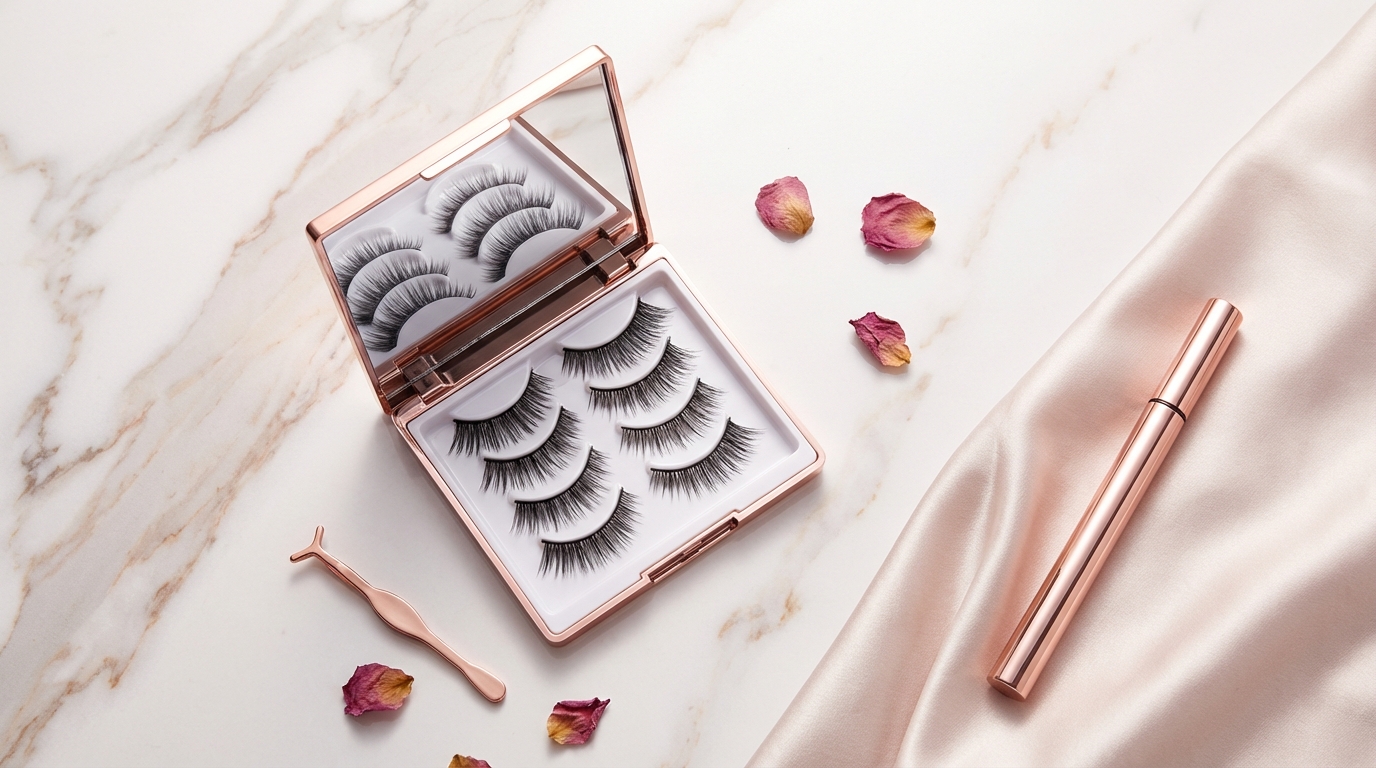
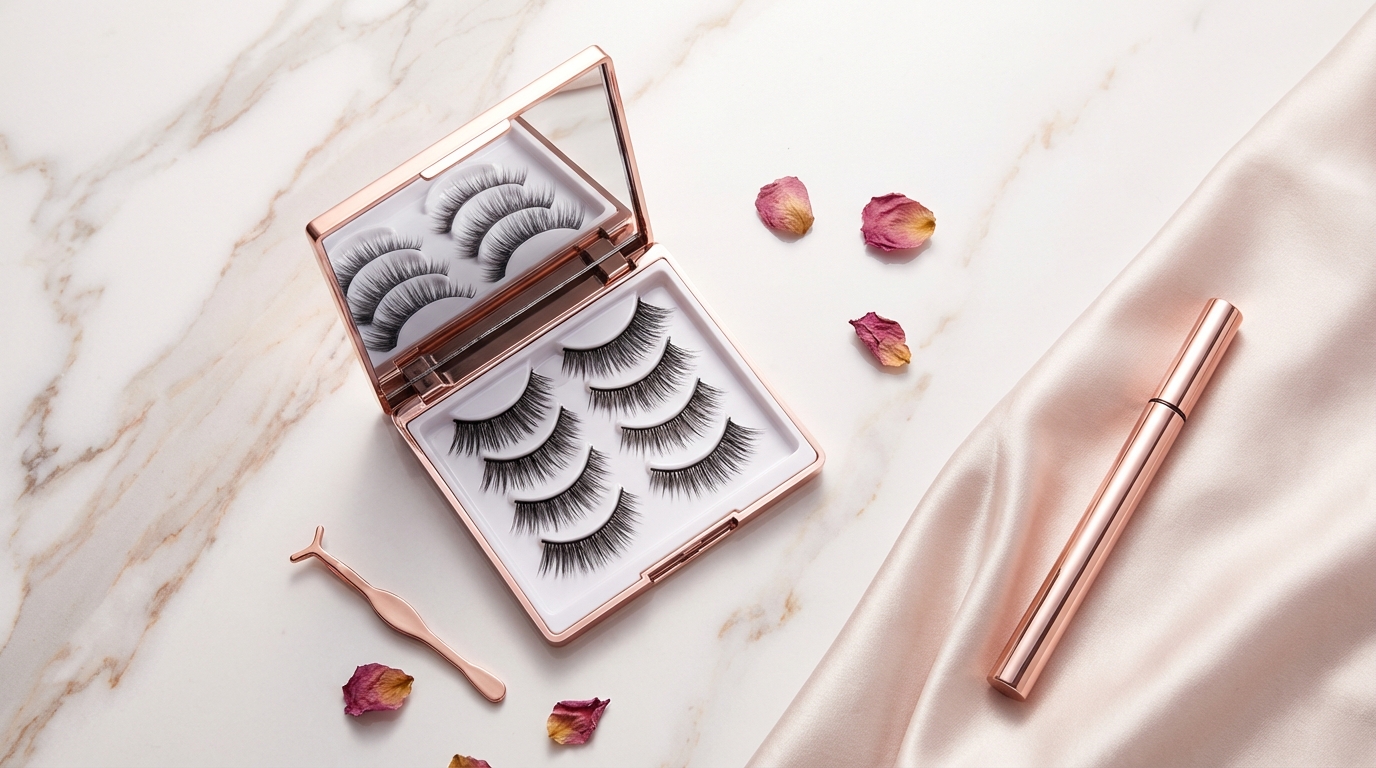
Magnetic eyelashes changed that equation. Instead of adhesive strips, tiny rare-earth magnets along the lash band snap onto a magnetized eyeliner line — or sandwich the natural lash between two magnetic strips — with a satisfying, near-instant click. No glue. No dry time. No ruined liner.
What started as a fringe beauty gadget around 2014 has grown into one of the most talked-about segments in the entire cosmetics industry. The global magnetic eyelashes market was valued at approximately $1.42 billion in 2025 and is projected to reach $3.18 billion by 2034, expanding at a compound annual growth rate of 9.4% — nearly double the pace of the broader false lash category. Online searches for magnetic lashes have surged 45% in two years. A single TikTok trend called “under-lash stacking” triggered a 180% sales spike on Amazon and Shopee alone.
This isn’t just a product success story. It’s a window into how modern beauty consumers think: they want convenience without sacrifice, aesthetics without irritation, and increasingly, products that align with their environmental values. This deep-dive unpacks how the magnetic lash boom really happened, who’s driving it, what the technology actually does, and what it means for the future of the beauty aisle.
From Novelty to Norm: The Origins and Evolution of Magnetic Lashes
The Invention Story
The first magnetic eyelash patent is widely credited to makeup artist Katy Stoka, who filed her invention in 2014. The concept was deceptively simple: embed tiny magnets into lash bands so that a top and bottom strip could clamp around the natural lash without any adhesive. She brought her One Two Lash product to market in 2015, and early adopters were intrigued — though the application took practice and the magnetic hold wasn’t always reliable by day’s end.
Early versions struggled with several limitations. The sandwich-style design required precise alignment of both strips around natural lashes, which proved awkward for beginners. Magnets were sometimes too weak, allowing corners to lift. And the strips weren’t always flexible enough to conform to varied eye shapes. Consumer feedback was mixed, but the underlying idea had captured the beauty industry’s imagination.
The Magnetic Liner Pivot
The real acceleration came around 2018–2019 when brands began introducing a fundamentally different approach: magnetic eyeliner. Instead of sandwiching, this method involved applying a special eyeliner containing iron oxide particles along the upper lash line, then attaching a single magnetic lash strip to it. The iron oxide in the liner acts as a receiver for the magnets embedded in the lash band.
This was a genuine turning point. Application time dropped dramatically. The look was cleaner. And the hold was significantly more reliable. Brands like Glamnetic and MoxieLash built entire product lines around this liner-based system, and it became the dominant format in the market. By 2020, magnetic liner kits were outselling the older sandwich-style systems in most major retail channels.
Technology Refinement Through the 2020s
Subsequent years brought increasingly refined engineering. Magnet counts per lash strip rose from a rough average of 3–5 to as many as 10–12 micro-magnets in premium products like Lilly Lashes and MoxieLash. More magnets mean more contact points, which translates to a smoother, more even hold with fewer gaps or liftoff at the corners — historically the weakest point in any false lash application.
Band materials evolved too. Early magnetic lashes used rigid synthetic bands that didn’t flex well against the natural curve of the eye. Brands shifted to cotton bands and ultrathin flexible alternatives that contour more naturally. Combined with improvements in magnetic eyeliner concentration — higher iron oxide particle density equals stronger hold — the technology in 2026 bears little resemblance to those first-generation products from a decade ago.
How Magnetic Eyelash Technology Actually Works
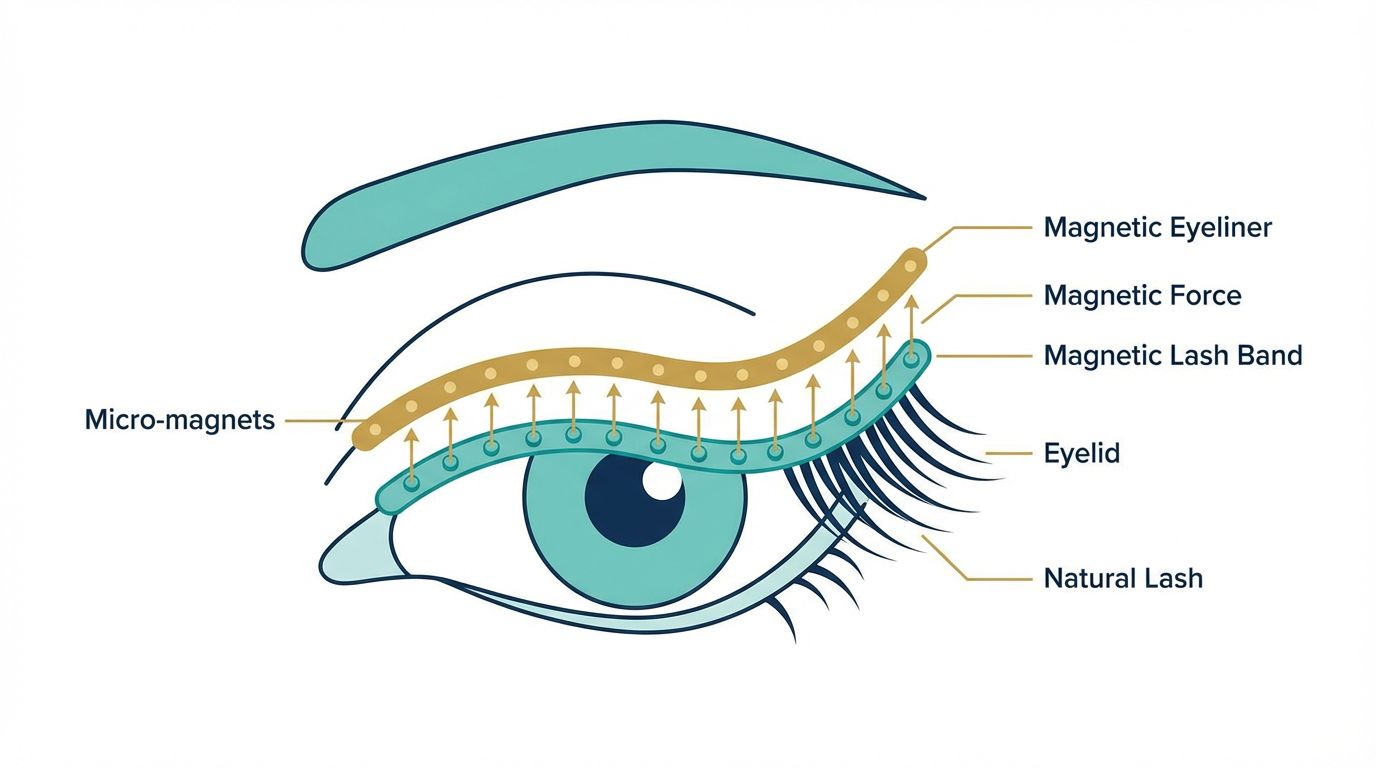
Understanding how these products work helps consumers make better purchasing decisions and sets realistic expectations for performance. There are two primary application systems in the current market, each with distinct advantages.
System One: Magnetic Eyeliner + Single Strip
This is the most widely sold format today. The magnetic eyeliner contains iron oxide particles suspended in a cosmetic-grade formula. When applied along the lash line and allowed to set briefly (usually 30–60 seconds), the liner creates a magnetized surface. The lash strip — which contains a row of small neodymium or ferrite magnets embedded in its band — snaps onto this surface when placed near it.
The number of magnets matters here. Entry-level strips carry 5 magnets, which provides adequate hold for calm conditions but may struggle with humidity, sweat, or windy environments. Higher-end strips with 10–12 micro-magnets distribute the magnetic force more evenly across the full length of the band, reducing the common problem of corner lift. Most high-quality magnetic liner systems claim 12 hours of wear under normal conditions.
Removal is similarly clean. A gentle downward peel — no oil-based remover required — releases the strip intact, ready for cleaning and reuse. The liner itself removes with standard makeup remover.
System Two: Sandwich / Dual-Clip Lashes
The original magnetic format still has loyal users, particularly those who prefer not to apply liner at all. In this system, two magnetic strips clamp around the natural lash — one applied above the natural lash line, one below. The opposing magnets attract each other through the natural lashes, holding the strips in position.
The appeal is clear: no makeup tool required, just the strips themselves. The drawback is that precision in placement is harder to achieve without visual guidance. Many users find the liner-and-strip system ultimately easier because the liner provides a visible target to snap onto. However, for sensitive eyes or users who want a completely liner-free look, the sandwich system remains a valid choice.
What Makes Some Lashes Outperform Others
Beyond magnet count, several engineering factors separate a good magnetic lash from a mediocre one:
- Band flexibility: A stiff band forces a straight strip onto a curved eye, causing corners to lift. Flexible or cotton bands contour naturally.
- Magnet placement: Evenly distributed magnets prevent the middle of the strip from sagging.
- Iron oxide concentration in the liner: Higher concentration means a stronger magnetic field at the lash line, improving hold. Brands like Luxillia and KISS are noted for particularly strong liner formulations.
- Lash fiber quality: Synthetic fibers vary widely. High-grade faux mink (vegan silk-like fibers) looks and moves more naturally than stiff plastic fibers.
The Market by the Numbers: What $1.4 Billion Really Means
The magnetic eyelashes market’s size can look deceptively simple when expressed as a single figure. The reality is more nuanced — and more interesting.
Growth Rates That Outpace the Category
The broader false eyelashes market (which includes traditional glue-based strips, individual flares, and semi-permanent extensions) is growing at roughly 6.2–6.9% annually. Magnetic lashes, as a segment within that space, are expanding at 9.4% CAGR — a meaningful premium over the overall category growth rate. That gap is widening as consumers who once used traditional lashes convert to magnetic alternatives.
To put this in context: market research firm Dataintelo projects the magnetic eyelashes market will grow from $1.42 billion in 2025 to $3.18 billion by 2034. A separate analysis by Intel Market Research places the 2026 figure at approximately $717 million using a more conservative scope definition (excluding the wider decorative lash enhancement category). The spread in estimates reflects different definitions of what counts as a “magnetic eyelash” product — some include the liner kits and accessories, others count only the lash strips themselves.
Who Is Actually Buying
The primary demographic is women aged 18–45, with particularly strong adoption among Millennials and older Gen Z consumers. This group is digitally native, comfortable purchasing beauty online, and highly responsive to peer recommendations and tutorial-style content. They also tend to have disposable income for mid-range beauty products ($20–$45 range) while remaining price-aware.
North America currently holds the largest share of the global market at approximately 39–45%, driven by high beauty spending per capita, strong influencer culture, and established retail infrastructure (Sephora, Ulta, Target, and Amazon all carry broad magnetic lash ranges). However, North America’s dominance is being steadily challenged from the east.
Offline vs. Online Channel Dynamics
E-commerce now accounts for more than 45% of total false eyelash revenue, with magnetic products growing even faster online than in physical stores. Amazon is the leading individual platform — it holds approximately 29% of beauty purchase completion rates for this category, meaning nearly a third of online magnetic lash shoppers who search and land on Amazon actually buy. Monthly online searches for magnetic eyelash products have risen 45% in two years.
Physical retail isn’t shrinking, though. Sephora, Ulta, and CVS have collectively expanded their magnetic lash shelf space by an estimated 27% globally. In-store placement matters for this product because tactile experience and shade/style matching remain important purchase drivers. The most successful brands — Glamnetic, Ardell, Kiss Products — maintain strong presences in both channels.
The Social Media Effect: Viral Trends, TikTok, and the 180% Sales Surge

If one factor explains why magnetic eyelashes crossed from niche curiosity to mainstream product faster than almost any category in recent beauty history, it’s the algorithm-driven rise of short-form video content. The visual format of magnetic lash application — dramatic before-and-after, satisfying snap, real-time result — is almost purpose-built for TikTok and Instagram Reels.
The Under-Lash Stacking Moment
In early 2025, a styling technique called “under-lash stacking” went viral on TikTok. The approach involves applying magnetic lashes beneath the natural lash line rather than on top, creating a subtle, doe-eyed lift that looked dramatically different from the heavy-glamour aesthetic most people associated with false lashes. The trend spread to Amazon and Shopee product searches almost immediately, triggering a 180% sales surge for under-lash kits on both platforms within weeks.
This wasn’t an isolated incident. It followed a pattern visible across multiple magnetic lash viral moments: a creator demonstrates an unexpected application technique, the method is perceived as accessible and achievable at home, and product demand spikes before brands have even adjusted their marketing. In several cases, brands reported running out of stock within days of a creator video achieving significant reach.
Micro-Influencer Effectiveness
Macro-influencers with millions of followers drove early magnetic lash awareness, but the category’s sustained growth has increasingly been powered by micro-influencers — creators with 10,000 to 100,000 followers. These creators tend to have higher engagement rates and audience trust. Their demonstrations of magnetic lashes for specific use cases — hooded eyes, monolid eyes, sensitive skin, post-surgical recovery — reach niche audiences who don’t see themselves in mainstream beauty marketing.
TikTok Shop has become particularly important here. Brands that integrated shoppable links directly into tutorial videos reported immediate conversion spikes. UK false-lash brand Tatti Lashes achieved a 13x return on ad spend (ROAS) with 1.64 million ad impressions on TikTok during a Black Friday campaign, with a 20% increase in conversions compared to the prior quarter. The lesson for brands: content that teaches beats content that simply promotes.
The “Real Demo” Trust Factor
One underappreciated dynamic in magnetic lash social media success is the format’s tolerance for imperfection. Unboxing videos, first-time application attempts (including failed ones), and honest reviews of what works and what doesn’t all perform well because they build credibility. A video of someone struggling to align their first magnetic lash strip and then getting it right generates more purchase intent than a polished ad, because it normalizes the learning curve while demonstrating eventual success.
This has created an unusual consumer information environment. Potential buyers arrive at purchase decisions having already watched 5–10 application videos, compared multiple product formats, and read comment sections discussing real-world wear. They are among the most informed beauty consumers in any product category — which raises the bar for both product quality and brand communication.
Brand Landscape: Who’s Winning the Magnetic Lash Race
The magnetic eyelash market has a recognizable tier structure: a handful of dominant brands that occupy premium shelf space and strong e-commerce positions, a growing mid-market layer of quality challengers, and a large low-cost segment primarily sourced through Asian manufacturing hubs.
The Established Leaders
Glamnetic is perhaps the most cited success story in the category. Founded in the US and built initially on Shopify DTC before expanding into retail, it reportedly grew from a $5,000 initial investment to approximately $50 million in first-year revenue — a figure that became a benchmark in direct-to-consumer beauty conversations. It now has a presence in over 2,000 retail doors including Kohl’s, Ulta, and Sephora.
Ardell, a legacy name in the false lash space for decades, successfully extended its brand equity into magnetic products, maintaining strong pharmacy and mass retail positioning (CVS, Walgreens, Walmart). Its established distribution and consumer trust gave it a significant advantage when magnetic lashes entered the mainstream.
KISS Products competes effectively in the budget and mid-range segments with its Lure Kit line, offering 5-magnet systems at drugstore price points around $11–$15. Accessibility and wide distribution (over 100,000 retail doors globally) make KISS one of the highest-volume players even if not the most premium.
Velour Lashes consistently tops independent reviewer lists for its Effortless line, which features lashes designed to fit multiple eye shapes without trimming — a significant convenience upgrade that resonates with first-time buyers intimidated by customization steps.
The Challengers and Specialists
MoxieLash and Lilly Lashes have carved out premium positions with high magnet-count engineering (up to 12 per strip) and strong influencer-first marketing. Both have cult followings among users who’ve tried cheaper options and decided to invest in performance.
Eylure‘s ProMagnetic system dominates the UK and European mass market, and the brand’s heritage (it’s been making false lashes since 1947) lends credibility in a category where consumer trust takes time to build.
Emerging players like Arvesa and Bysabrina have broken through in recent years primarily through Amazon and direct social media marketing. They compete on aggressive pricing (under $15), creative features like mirrored carrying cases with built-in applicators, and responsiveness to reviewer feedback in iterative product improvements.
The Price Spectrum: What You’re Actually Paying For
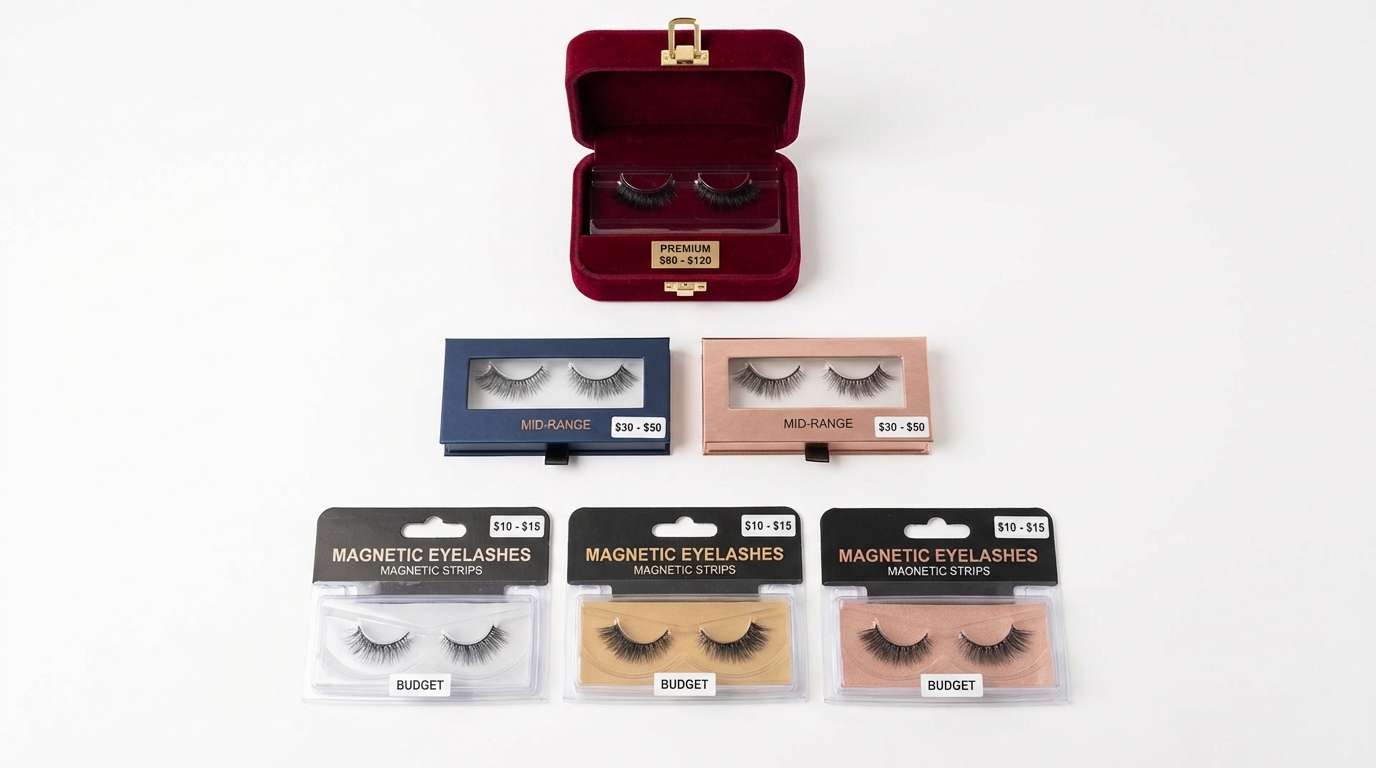
Magnetic eyelashes span a remarkably wide price range — from $7 on the low end to well over $70 for premium kits. Understanding what changes at each tier helps consumers buy more strategically.
Economy Segment: $7–$18
At the low end, most products use synthetic lash fibers (which account for approximately 60% of market share by material type), basic 5-magnet systems, and simple packaging. These products are often manufactured at scale and sold through Amazon, discount retailers, or unbranded marketplaces.
Performance in this tier is uneven. Some economy options provide acceptable hold for casual or occasional use. Others use weak magnets or rigid bands that cause repeated corner liftoff. The reuse count is typically lower — perhaps 10–20 wears with careful handling, versus 50+ for mid-range and premium products. For a first-time buyer who wants to test the format without significant commitment, economy lashes serve as a reasonable entry point.
Mid-Range Segment: $20–$45
This is where the largest consumer volume sits and where most brand competition occurs. Mid-range products typically feature 5–10 micro-magnets, higher-quality synthetic or faux mink fibers, more refined band flexibility, and better-formulated magnetic eyeliners. Reuse counts reach 30–60 wears when properly cared for.
Brands like KISS (upper tier of their range), Glamnetic, Eylure, and Arishine compete intensely here. The difference between a $22 and a $38 product in this range often comes down to lash fiber quality, magnet count, and whether the liner included in the kit holds for 12 hours without flaking. Consumers in this segment are typically experienced enough to know what they want and willing to pay modestly for it.
Premium Segment: $45–$70+
Premium magnetic lashes — primarily Velour Lashes, MoxieLash, Lilly Lashes, and Huda Beauty — differentiate on material quality, design sophistication, and wear performance. At this tier, faux mink fibers are finer, band construction is more precise, and magnet counts are higher. Premium brands also invest more in size and shape variety, often offering styles designed for specific eye shapes.
The case for spending more is straightforward: a $50 kit used 60 times costs less per wear than a $15 kit used 15 times. However, premium lashes do face price resistance in developing markets, which is one reason North America and Western Europe remain the dominant revenue regions while emerging markets like India and Southeast Asia are often served by economy and mid-range products.
The Safety Conversation: What Eye Doctors Actually Say
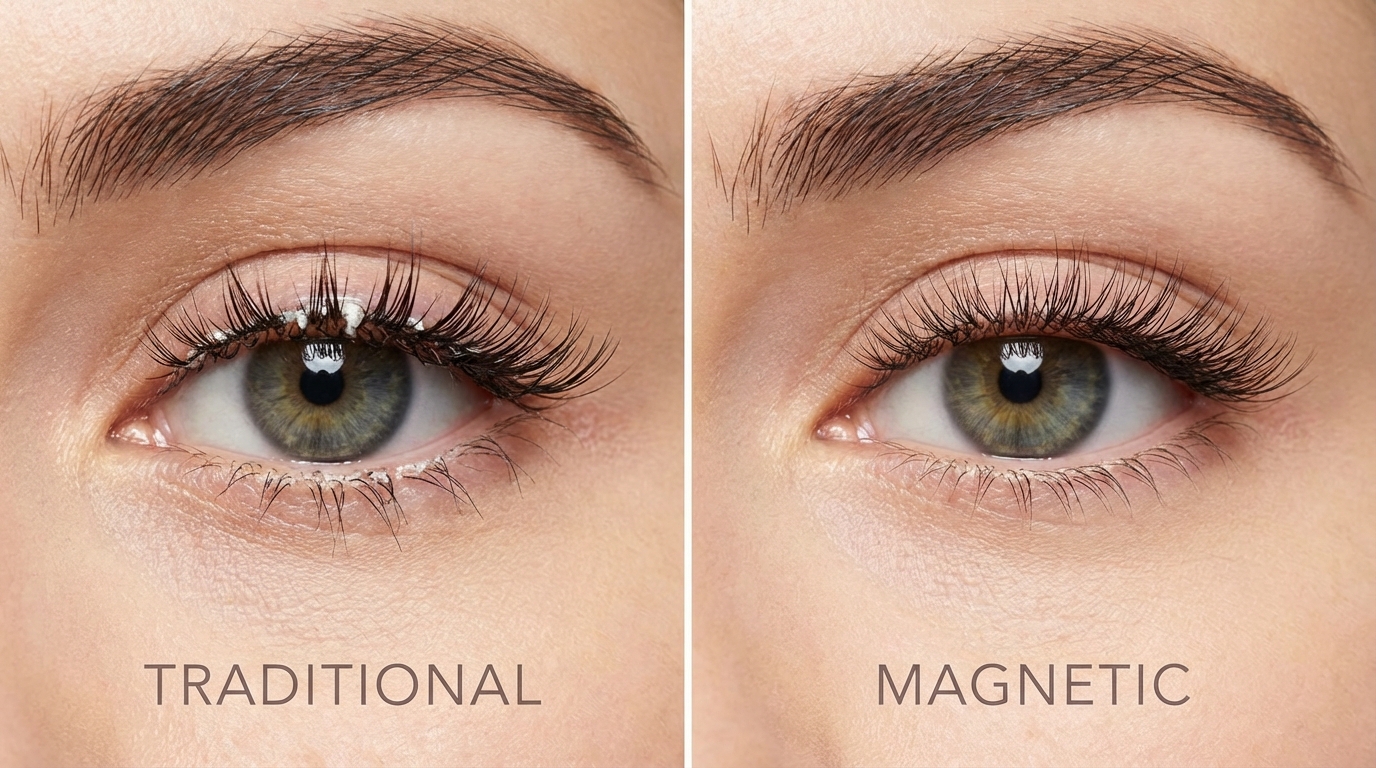
Any beauty product that goes near the eyes warrants serious safety scrutiny, and magnetic eyelashes are no exception. The good news is that ophthalmologists and dermatologists generally view them as safer than traditional glue-based alternatives. The nuances are worth understanding.
The Glue-Free Advantage
The primary safety argument for magnetic lashes is the elimination of lash adhesive. Traditional false lash glues commonly contain formaldehyde-releasing agents, latex, and other compounds that cause contact dermatitis in sensitive users. Allergic reactions to lash glue are a well-documented dermatological concern, and the skin around the eye is particularly thin and reactive.
Magnetic eyeliners don’t carry these risks. The FDA has approved iron oxide for cosmetic use on the face and eyes, provided it meets purity standards. Most reputable magnetic liner formulations fall well within those standards. For users with known adhesive sensitivities, magnetic lashes represent a meaningful improvement in comfort and safety.
Risks That Do Exist
Magnetic lashes are not risk-free. Eye care professionals flag several specific concerns:
- Corneal abrasion: A lash strip that slips during application can scratch the corneal surface, especially with higher-strength magnetic snapping action. This risk is reduced with practice and proper technique.
- Allergic reaction to iron oxide: Rare but possible. Patch testing the magnetic liner on the inner wrist before first use is recommended by most dermatologists.
- Natural lash damage: Repeated physical clamping in sandwich-style systems can cause mechanical stress on natural lash follicles over time. This risk is lower with liner-based systems that don’t contact the natural lashes.
- MRI incompatibility: Patients scheduled for an MRI scan should not wear magnetic lashes during the procedure. The magnet in an MRI machine operates at many thousands of times the strength of the magnets in lashes, and there is a theoretical (though rare) risk of the lash strip being affected. Most clinical guidelines recommend removing all magnetic products before scanning.
- Eye infections: Any false lash product worn over an existing eye infection can worsen the condition. Magnetic lashes should not be worn if the user has conjunctivitis or a stye.
Contact Lens Users
Ophthalmologists note that contact lens wearers can generally use magnetic lashes safely, but with some caveats. Inserting or removing lenses while wearing magnetic lashes requires extra care to avoid dislodging the strip or introducing debris into the eye. Many eye care professionals recommend inserting lenses before applying magnetic lashes and removing lashes before taking out lenses.
The overall clinical picture is that magnetic lashes are a reasonable choice for most healthy adults when used as directed. The key qualifier: product quality matters. The eye area is not the place to prioritize saving a few dollars on unknown brands with unverified ingredient lists.
The Sustainability Angle: Why Reusability Is More Than a Marketing Claim
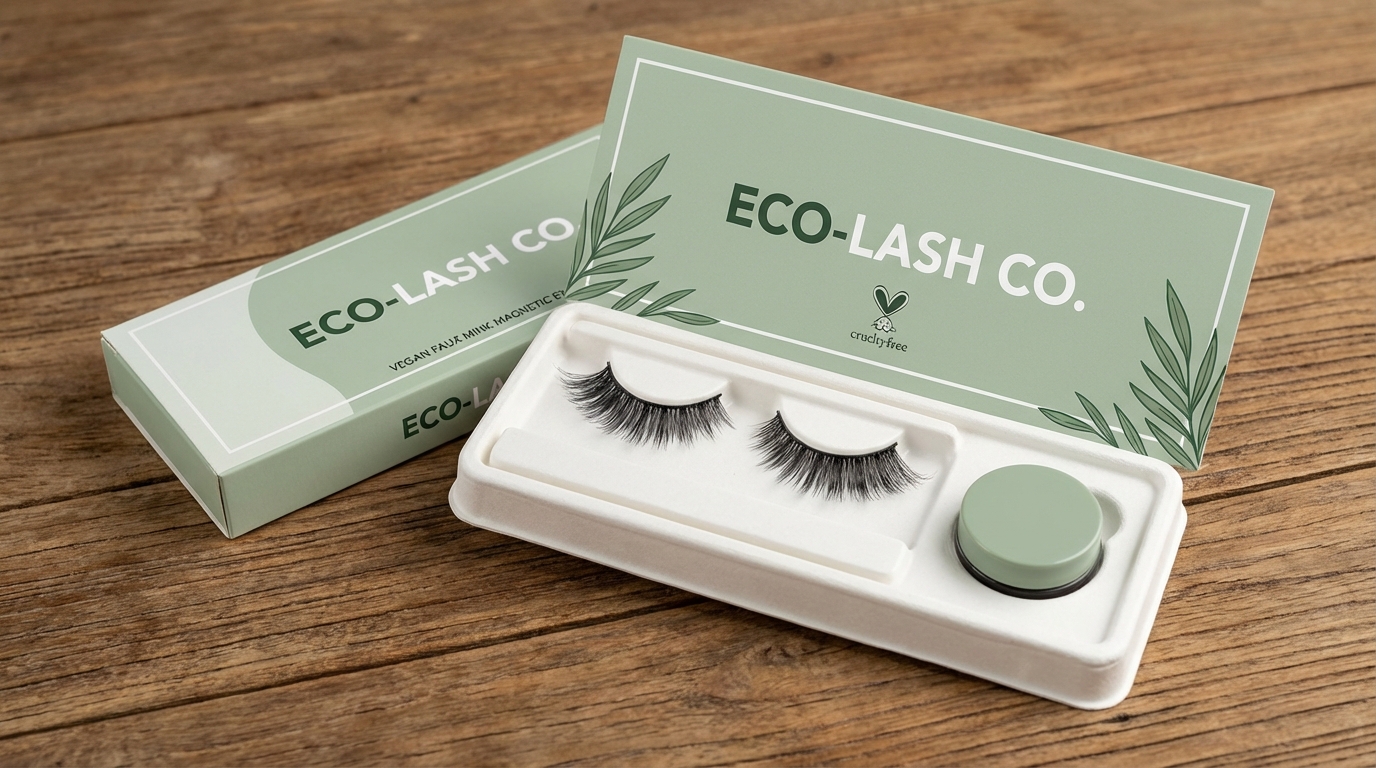
Sustainability has become a genuine purchase driver in beauty, not merely a label claim. And magnetic eyelashes have a real environmental story to tell — though it requires some interrogation to separate the substance from the marketing noise.
The Reusability Math
A traditional glue-based false lash strip typically survives 5–15 uses before adhesive buildup, fiber degradation, or band distortion renders it unusable. A mid-range magnetic lash pair, properly cleaned and stored, lasts 30–60 wears. Premium pairs are rated for 60–100+ wears, with some brands citing six months or longer of regular use.
Run the math: a consumer who wears lashes twice weekly would go through 100 traditional lash pairs in a year, versus 1–2 quality magnetic pairs that achieve the same wear count. At the unit level, that’s a dramatic reduction in material waste, packaging waste, and shipping emissions — assuming the higher-quality product is maintained correctly.
This environmental case is most compelling when consumers actually follow through on proper care: cleaning strips with a lint-free pad and gentle micellar water after each wear, storing them in their original case or a dedicated lash tray, and avoiding oil-based products that can degrade the magnetic liner coating. Brands increasingly include care instructions with their products, recognizing that a well-maintained pair is a walking advertisement for product quality.
Material Ethics: The End of Mink
Until relatively recently, “mink lashes” were a genuine luxury beauty category — strips made from the hair of farmed mink. The ethical objections from animal welfare advocates were significant, and the sustainability case was poor: mink farming is resource-intensive and mink fur products are not biodegradable in any meaningful timeframe.
The industry’s shift toward vegan faux mink — high-quality synthetic fibers engineered to mimic the appearance and lightness of real mink — has largely displaced animal-derived lash materials in the magnetic category. PETA-certified cruelty-free designations have become a standard marketing criterion for brands targeting millennial and Gen Z consumers. Brands like QM Beautique and Luxx Lash have gone further, using compostable packaging made from sugarcane bagasse — a byproduct of sugar production that composts in approximately 12 weeks.
What Brands Are Actually Doing vs. What They’re Claiming
The sustainability narrative around magnetic lashes is generally more credible than in many other beauty categories, but greenwashing remains a risk. Consumers should look for:
- Specific reuse count claims backed by testing, not vague “multi-use” language
- Verified cruelty-free certifications (PETA, Leaping Bunny) rather than self-declared claims
- Transparent packaging information — what materials, whether they’re recyclable or compostable
- Clear care and maintenance instructions that support the longevity claim
The brands that invest in genuine sustainability communication — specific numbers, certifications, honest guidance — tend to perform better in the premium and mid-premium segments where consumers do their research before buying.
Regional Hotspots: Where Global Growth Is Concentrating
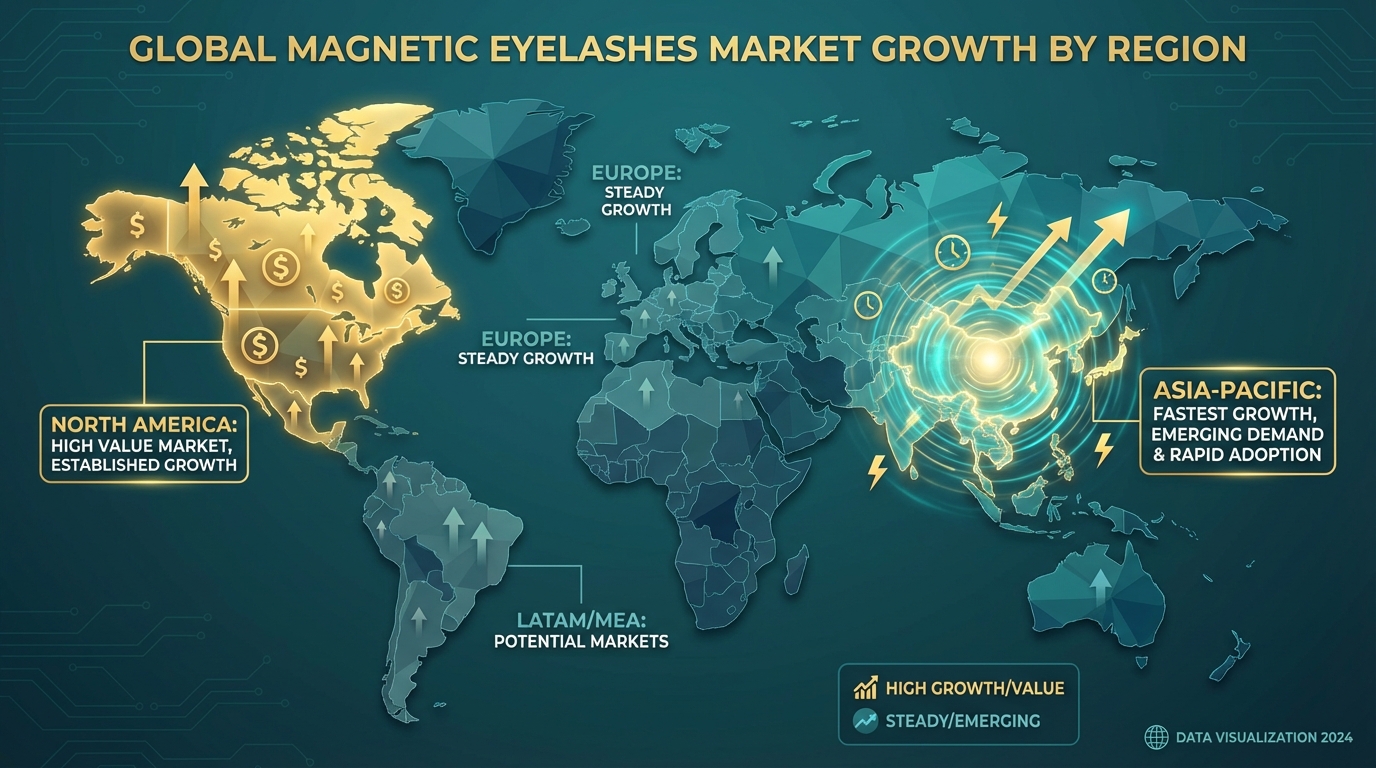
The geographic distribution of the magnetic eyelash market is shifting. While established Western markets dominate by current revenue, the most dynamic growth is happening across Asia-Pacific and is beginning to emerge in Latin America and the Middle East.
North America: The Premium Revenue Leader
North America commands approximately 39–45% of global magnetic eyelash market revenue, driven by high per-capita beauty spending, a mature influencer ecosystem, and deep retail infrastructure. US consumers have rapid access to new beauty products through both physical retail (Sephora, Ulta, Target) and e-commerce (Amazon, brand DTC). The US market also leads in premium segment spending — consumers here are more likely to invest $40–$60 on a quality kit backed by strong reviews.
Canada and Mexico are growing markets within the North American regional picture, with Mexico in particular showing increasing demand as beauty e-commerce infrastructure improves and social media beauty content reaches deeper into second and third-tier cities.
Asia-Pacific: The Fastest-Growing Region
Asia-Pacific currently holds around 20% of global market share but is growing at an estimated 11.5% CAGR — the highest of any region worldwide, and roughly 2 percentage points above the global average. This growth is driven by several converging factors.
China is the largest single market within APAC. Chinese cosmetics culture has long embraced eye enhancement, and the country’s robust domestic e-commerce infrastructure (Taobao, Tmall, Pinduoduo, Douyin — TikTok’s Chinese equivalent) provides the distribution rails for rapid product adoption. South Korea, with its globally influential beauty culture (K-beauty trends often reach Western markets 18–24 months later), has also been a meaningful driver of magnetic lash innovation and adoption.
Japan, India, and Southeast Asian markets like Indonesia, Thailand, and the Philippines represent the next wave. Rising disposable incomes, urbanization, and the massive growth of beauty-focused social media content in these markets are creating conditions similar to those that drove North American adoption 3–5 years earlier. Brands that establish presence in these markets now are positioning for the growth phase rather than the maturity phase.
Europe and the Middle East
Western Europe is a steady market, led by the UK (where brands like Eylure and Tatti Lashes have strong home-market positions), Germany, and France. European consumers trend slightly more conservative in lash styling preferences — natural enhancement over dramatic volume — which shapes the product mix that sells well in the region.
The Middle East is emerging as a particularly interesting market. Gulf consumers have a strong cultural affinity for eye makeup (often the primary visible cosmetic in markets where other face coverage is traditional), and magnetic lash technology’s ability to create striking eye looks aligns well with that preference. E-commerce penetration in markets like the UAE and Saudi Arabia has improved dramatically, removing barriers that previously limited specialty beauty product access.
A Practical Buying Guide: How to Choose the Right Magnetic Lashes
Given the range of products, technologies, and price points in this market, navigating a first (or upgraded) magnetic lash purchase benefits from a clear framework. Here is how to approach the decision systematically.
Step 1: Choose Your Application Method
Decide between the liner-and-strip system and the sandwich system before choosing a product. For most beginners, the magnetic liner system is easier to learn. The liner provides a visible line to snap the lash onto, reducing the guesswork of the sandwich method. Liner systems also tend to hold more securely through a full day’s wear because the magnetic surface area is continuous rather than point-to-point.
The sandwich system suits users who want to avoid adding another product (the liner) to their routine, or those whose eye shape makes the liner method awkward. It takes more practice but becomes intuitive with repetition.
Step 2: Match the Style to Your Eye Shape
Not all lash styles work equally well on all eye shapes. A few general principles:
- Hooded eyes: Look for lashes with extra length and curl in the outer corners to create lift that’s visible when the brow bone relaxes forward.
- Monolid eyes: Shorter, uniform-length lashes with a natural curl tend to look more balanced than dramatic, varied styles.
- Round eyes: Cat-eye styles with extra length at the outer edge elongate the eye. Avoid extremely full, even-length lashes that can make round eyes appear rounder.
- Almond eyes: Most styles work well. This eye shape has the most flexibility in magnetic lash styling.
Brands like Velour Lashes explicitly label their products by eye shape compatibility — worth looking for when buying, especially for first-time users.
Step 3: Set a Realistic Budget Based on Intended Use
Occasional users (once or twice a month) can do well with mid-range products in the $20–$35 range. Regular users (multiple times per week) should consider premium products that offer higher reuse counts and better hold consistency. The per-wear cost analysis often makes the premium option more economical for frequent use.
Step 4: Check the Technical Specs Before Buying
When reviewing product listings, look for:
- Magnet count per strip: A minimum of 5 for basic hold; 7–10 for reliable all-day performance; 10–12 for maximum security.
- Band material: Flexible or cotton bands are preferable to rigid synthetic bands.
- Kit inclusions: A quality magnetic liner and an applicator tool are useful additions that also signal the brand has thought about the application experience.
- Rated reuse count: Brands that specify a reuse count (30, 60, 100 times) are making a testable claim — look for reviews that confirm or challenge it.
Step 5: Read Reviews Critically
In the magnetic lash category, recent reviews (within 6–12 months) on retailers like Ulta, Sephora, or Amazon provide the most useful signal. Look for reviews that mention: wear duration in real conditions (not just “it worked at home”); how the liner held up through a full day; whether corner lift was an issue; and how easy the product was to reuse and maintain. Ignore reviews that don’t mention any of these specifics — they’re rarely useful for a purchase decision of this type.
What the Magnetic Lash Boom Reveals About Where Beauty Is Heading
Viewed from a distance, the magnetic eyelash story is bigger than any individual product or brand. It illustrates several durable shifts in how beauty consumers think and buy — patterns that will shape the industry well beyond the lash category.
Convenience Is Now Table Stakes
Consumer patience for difficult application has evaporated. Products that require skill, dry time, professional help, or significant practice are losing ground to formats that deliver good results more quickly. Magnetic lashes succeeded partly because they solved a real usability problem with glue-based alternatives. Every beauty category faces a version of this pressure: the product that does the job reliably, quickly, and without mess wins.
The Informed Consumer Has Changed the Marketing Game
The fact that a typical magnetic lash buyer has watched dozens of application tutorials before purchasing means that traditional advertising — showing a model with perfect results and minimal explanatory content — has diminishing effectiveness. Brands that succeed are those that lead with education, encourage creator content, and respond transparently to criticism. The information asymmetry that once allowed brands to hide product weaknesses has largely disappeared.
Sustainability Authenticity Is a Growing Differentiator
As the magnetic lash market matures, the brands that build lasting loyalty will likely be those that back sustainability claims with specifics. Reusability, vegan materials, and responsible packaging are all expected standards at this point. The differentiator is credibility: verified certifications, transparent supply chains, and honest communication about product life expectancy and care requirements.
The E-Commerce and Social Commerce Flywheel
Magnetic lashes have demonstrated, perhaps more clearly than most beauty categories, how social commerce can compress the traditional product awareness-to-purchase cycle. A viral tutorial can drive hundreds of thousands of product searches within 48 hours. Brands that are structured to respond to that demand — with inventory, affiliate infrastructure, and easy TikTok Shop integration — capture disproportionate revenue from these moments. Brands that aren’t ready lose the window.
The magnetic lash market’s trajectory through the rest of the decade will be shaped by which players build that operational agility at scale — not just which ones have the best product, but which ones are set up to reach consumers the moment those consumers are ready to buy.
Conclusion: Ten Things Worth Knowing About Magnetic Eyelashes in 2026
The magnetic eyelash boom is real, substantive, and still in relatively early stages globally. Here are the ten most important takeaways from this deep-dive:
- The market is growing faster than the category. At 9.4% CAGR, magnetic lashes are outpacing traditional false lash growth by roughly 3 percentage points — a trend that is accelerating, not stabilizing.
- Technology has genuinely improved. Today’s magnetic liner systems with 10–12 micro-magnets and flexible cotton bands are meaningfully more reliable than first-generation products. Early skepticism based on 2015–2018 experiences may no longer apply.
- TikTok is the primary discovery engine. More than any other channel, short-form video drives both product awareness and immediate purchase behavior. Brands without a credible TikTok presence are competing at a significant disadvantage.
- Asia-Pacific is the next major growth wave. With an 11.5% regional CAGR and China, South Korea, and Southeast Asia all showing strong adoption indicators, the market’s center of gravity is shifting east.
- The mid-range $20–$45 segment is where most competition happens. This is where brand loyalty is won or lost — quality is distinguishable from cheap alternatives but premium pricing hasn’t yet filtered most buyers out.
- Safety is generally good, but product quality matters. Eye care professionals broadly support magnetic lashes as safer than adhesive alternatives, with specific caveats around MRI procedures, eye infections, and patch-testing the liner formula.
- Reusability is a genuine economic and environmental advantage — if maintained. The per-wear cost math strongly favors quality magnetic lashes over disposable traditional ones for anyone who wears lashes regularly.
- Mink fur lashes are functionally obsolete in this category. Vegan faux mink has achieved quality parity (and arguably superiority in durability) while eliminating the ethical concerns that increasingly alienate younger consumers.
- E-commerce accounts for over 45% of category revenue — and rising. Brand DTC sites, Amazon, and specialty beauty e-retailers are the primary growth channels. Physical retail remains important for discovery and tactile evaluation, but conversion increasingly happens online.
- The brands best positioned for the next decade are those combining product quality with social commerce agility. The winner’s profile is a brand with reliable performance at a defensible price point, genuine sustainability credibility, and the operational infrastructure to capture viral demand moments before they pass.
The magnetic eyelash market isn’t simply a beauty trend. It’s a case study in what happens when a product meaningfully solves a consumer problem, gets discovered through the right content channels, and benefits from a global infrastructure that can move goods from manufacturing to doorstep in two days. The next ten years will reveal which brands built for that world — and which ones just happened to be in the right place at the right time.