


Most TikTok Shop sellers start with the same story: a viral video, a flood of orders, a few weeks of excitement — and then the plateau. The product that “blew up” stops converting. The creator who delivered results disappears. Margins that looked healthy on paper turn out to be 8% once you account for fees, returns, and affiliate commissions. The initial rush fades and what’s left is a store that never quite became a business.
This is what happens when sellers build for virality instead of building for systems. TikTok Shop is one of the most powerful sales channels available in 2026, but it rewards sellers who treat it like an engineered business model — not a content lottery. With the platform projected to generate $23.4 billion in US GMV in 2026 and conversion rates running 3–6x higher than traditional e-commerce, the opportunity is real and substantial. But so is the competition.
This guide is not about quick wins or trending hacks. It’s about architecture: the structured, interconnected systems that let sellers move from their first sale to a genuinely scalable brand. We’ll cover how the platform’s commerce algorithm actually works, how to calculate your true cost of selling, how to build a listing that ranks in TikTok’s search engine, how to run LIVE sessions as a dedicated revenue channel, how to orchestrate an affiliate network that creates content at scale, how to navigate the paid ads ecosystem, what fulfillment decisions actually cost you, how to protect your account health, and how to position TikTok Shop inside a broader multi-platform strategy.
This is the blueprint for sellers who are done chasing virality and ready to build something that lasts.
How TikTok’s Commerce Graph Actually Works (And Why Most Sellers Misread It)
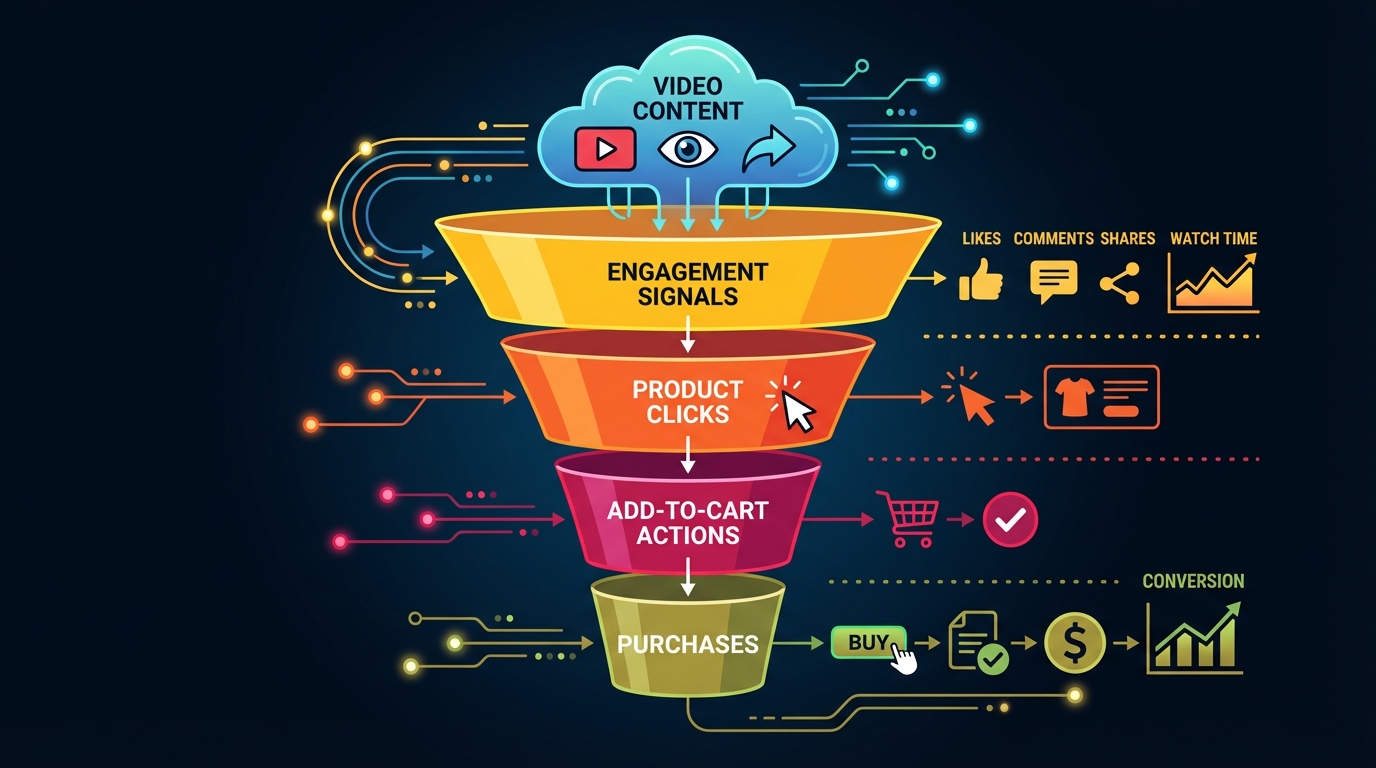
The single biggest misconception sellers bring to TikTok Shop is that it operates like a social media platform. It doesn’t — or at least, not anymore. In 2026, TikTok’s algorithm has fully evolved into what the company internally calls a “content-commerce graph”: a system that connects users, creators, and products based on a layered set of behavioral signals far more complex than likes and views.
From For You Page to For Your Purchase Page
The For You Page (FYP) originally optimized for entertainment retention — it wanted users to keep watching. The commerce graph still cares about watch time and completion rates, but it now weights commerce intent signals just as heavily. These include: product page clicks, add-to-cart actions, wishlist saves, in-app checkout initiations, and — critically — completed purchases. A video that drives a lot of purchases gets a second, third, and fourth distribution push. A video that gets thousands of likes but zero product clicks gets deprioritized for commerce placements.
This distinction matters enormously for how you brief creators and how you structure your own content. Entertaining content that doesn’t convert is a cost. Slightly less entertaining content that consistently converts is an asset.
The Three Distribution Surfaces
TikTok Shop products get exposure across three distinct surfaces, and sellers who understand all three can engineer discovery more deliberately:
- For You Page (Video Discovery): Products embedded in shoppable videos are surfaced to users based on viewing history, past purchase behavior, and content affinity. This is the widest-funnel surface — great for cold discovery but lowest intent.
- TikTok Shop Tab (Browse Discovery): Users actively browsing the Shop Tab are showing higher commercial intent. Products here are ranked by a combination of sales velocity, conversion rate, review score, and fulfillment performance.
- TikTok Search (Demand Capture): This is the fastest-growing surface. Research shows 49% of US consumers now use TikTok as a search engine, a figure that climbs to 65% among Gen Z. Products that rank in TikTok search are capturing high-intent buyers who have already decided they want the product category.
What the Algorithm Rewards in 2026
Based on available data from early 2026, the commerce graph’s ranking signals can be grouped into three tiers:
- Durable attention signals: Video completion rate, dwell time on product pages, rewatch/loop rate, saves, and shares. These tell the algorithm your content is genuinely interesting.
- Commerce conversion signals: Click-through rate from video to product page, add-to-cart rate, and purchase conversion rate. These tell the algorithm your product is genuinely desirable.
- Trust and reliability signals: Review score, on-time delivery rate, seller fault cancellation rate, and return rate. These tell the algorithm your business is safe to promote.
Sellers who only optimize for the first tier wonder why their viral videos don’t convert. Sellers who only optimize for the third tier wonder why they have no visibility. The sellers building durable businesses in 2026 are engineering all three simultaneously.
The True Cost of Selling on TikTok Shop in 2026
Before you can build a profitable architecture, you need an accurate picture of your cost structure. TikTok Shop’s fee model is deceptively simple on the surface — no monthly subscription, no listing fees — but the full picture is considerably more complex.
Core Platform Fees
TikTok Shop’s base fee structure in the United States for 2026 looks like this:
- Platform Commission: 2–8% of order value, with the standard US rate sitting at approximately 6%. New sellers after January 8, 2026 may qualify for a reduced 3–4% introductory rate for the first 30–60 days.
- Payment Processing Fee: 1.5–2.2% per transaction, typically closer to 2.2% in practice.
- UK/EU Rates: Significantly higher at approximately 9% commission in the UK, making European expansion a different financial calculation entirely.
On a $30 order in the US, you’re looking at approximately $1.80 in commission and $0.66 in processing — roughly $2.46 before any other costs. That’s 8.2% of gross revenue off the top before you’ve fulfilled a single order.
The Hidden Cost Stack
Here’s where sellers consistently underestimate their total cost of selling:
- Affiliate Commissions: Running an effective affiliate program typically means offering 10–20% commission to creators. Top-performing creators with proven track records command the higher end. On that same $30 order, you’re looking at $3–$6 in creator commissions.
- Fulfilled by TikTok (FBT): If using TikTok’s own fulfillment service, base rates start at approximately $4.28 per unit and scale with size and weight. This competes with, but doesn’t always beat, established 3PL pricing.
- TikTok Shop Ads: Sellers running Shop Ads or Spark Ads campaigns to supplement organic reach typically allocate 15–30% of target revenue to paid media depending on their category and competitive density.
- Platform Discount Funding: When you participate in TikTok’s promotional campaigns (Flash Deals, platform-wide sales events), you may be required to co-fund discounts of 10–30% off your list price.
- Returns and Customer Service: Category-dependent, but beauty and apparel sellers often see return rates of 8–15%, each carrying a reverse logistics cost.
Building Your Real Margin Model
When you stack all these costs honestly, the picture looks like this for a typical $30 product with a 50% gross margin (i.e., $15 COGS):
- Revenue: $30.00
- COGS: -$15.00
- Platform commission (6%): -$1.80
- Payment processing (2.2%): -$0.66
- Affiliate commission (15%): -$4.50
- Shipping (self-fulfill, est.): -$3.50
- Returns provision (8%): -$2.40
- Estimated net per order: $2.14 (7.1% net margin)
That’s before any paid advertising spend. This calculation isn’t meant to discourage — it’s meant to illustrate why product selection, pricing strategy, and cost management are foundational, not afterthoughts. Sellers who build in a 60–65% gross margin (lower COGS or higher pricing) can achieve net margins of 20–30% on TikTok Shop even with aggressive affiliate programs. The math works — but only if you do it honestly before launch.
Product Selection and Listing SEO That Actually Ranks
With 49% of US consumers now using TikTok as a primary search tool, product discoverability on the platform has a significant search engine optimization component that most sellers treat as an afterthought. Building a listing that ranks in TikTok search is a distinct skill set from Amazon SEO or Google SEO — and it has unique rules.
Product Selection Criteria for the TikTok Commerce Environment
Not every product is equally suited to TikTok Shop’s commerce mechanics. The platform’s strengths cluster around certain product characteristics:
- Visual demonstrability: Products that show an obvious, visible transformation or result in 15–30 seconds perform dramatically better. Skincare, kitchen gadgets, cleaning tools, hair tools, and fitness accessories dominate for this reason.
- Price point positioning: The TikTok Shop sweet spot in 2026 remains the $15–$60 range for impulse purchase categories. Products above $100 can work but require longer trust-building via LIVE sessions and reviews. Products below $10 struggle to support the margin structure outlined above.
- Consumable or repeat purchase potential: One-time purchases on TikTok Shop rarely justify the customer acquisition cost. Products with refills, companion items, or natural replenishment cycles (skincare, supplements, cleaning supplies) allow you to build customer lifetime value on a platform not naturally built for retention.
- Multi-creator angle: The best TikTok Shop products can be demonstrated from multiple angles by multiple creator types. A product that only one type of creator can credibly promote has a built-in ceiling on its affiliate reach.
Listing Title Optimization
TikTok’s search algorithm in 2026 applies heavy weighting to the first 3–5 words of a product title. The recommended structure is:
[Primary Keyword] + [Product Type] + [Key Benefit or Differentiator]
For example, instead of “Our Premium Vitamin C Serum for Glowing Skin by BrandName,” you’d write: “Vitamin C Serum Brightening Anti-Aging Glass Skin Formula – 30ml”
Keep titles under 80 characters. Use the TikTok search bar’s autocomplete feature to identify exactly what buyers are typing — these phrases, verbatim, are high-intent signals. Incorporate 2–3 long-tail variations in your title where natural language allows.
Description and Backend Keyword Strategy
TikTok’s product description field processes text through an NLP (Natural Language Processing) layer that identifies topical clusters, not just keywords. This means your description should read naturally while covering all the semantic territory around your product category. A skincare product description should naturally include: skin type language, ingredient names, application instructions, comparative results language (“before and after,” “visible results”), and social proof cues (“as seen on”).
Product images and video also feed the algorithm. Listings with at least one embedded product video — even a simple 15-second demo — rank demonstrably higher in both search and the Shop Tab, because they provide richer engagement signals for the algorithm to process.
The Affiliate Flywheel: Scaling Creator Partnerships Systematically
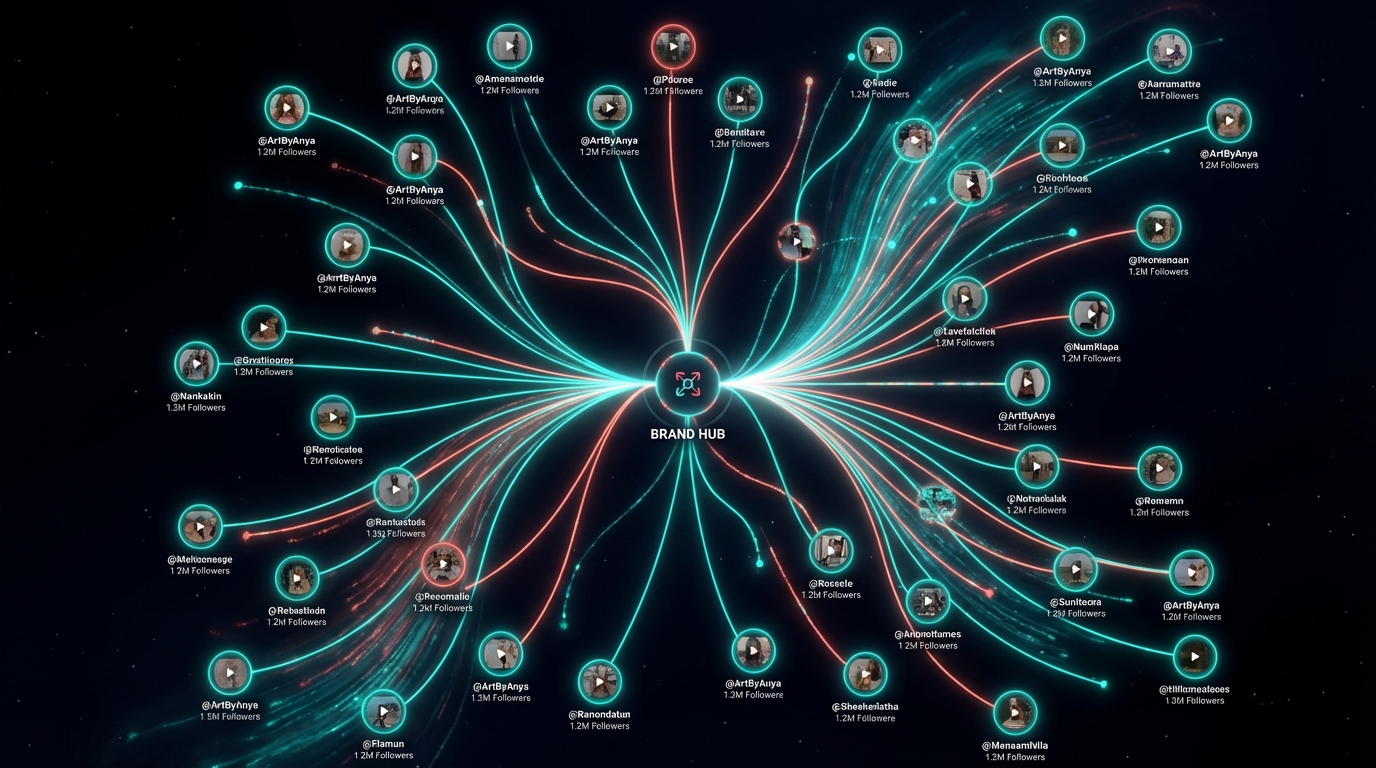
The TikTok Shop Affiliate Program is one of the most powerful creator commerce mechanisms available to sellers in 2026 — but most brands use it reactively rather than architecturally. Reacting means waiting for creators to find your product, approving applications as they trickle in, and measuring success by whether a given creator happened to go viral. Architecture means building a systematic, self-reinforcing creator ecosystem that generates a consistent volume of converting content week over week.
Open Collaboration vs. Targeted Collaboration
TikTok Shop Affiliate offers two core collaboration modes:
- Open Collaboration: You set a base commission (typically 10–15%) and automatically approve any creator with 5,000+ followers who applies. This generates volume — potentially 50–100 new creator videos per week for an established product — but with variable quality and brand alignment.
- Targeted Collaboration: You personally invite specific creators, set custom commission rates (often 20–30% or higher for top performers), and can include product sample provision, content briefs, and performance bonuses. This generates quality and strategic alignment.
The most effective affiliate architectures run both simultaneously: Open Collaboration fills the pipeline with volume content for algorithm signals, while Targeted Collaboration builds a stable of 10–20 high-performing creator relationships that drive disproportionate revenue.
The Creator Tiering Framework
Rather than treating all creators equally, build a tiered structure:
- Tier 1 — Nano and Micro Creators (5K–100K followers): These creators have the highest engagement rates and the most niche audience trust. Conversion rates from micro-creator content often outperform macro-influencer posts because the audience perceives the recommendation as authentic. Commission rates of 12–18% work well here. Send free product.
- Tier 2 — Mid-Tier Creators (100K–500K followers): These creators bring meaningful volume. Commission rates of 15–20%, plus potential performance bonuses for hitting GMV milestones. Provide content kits — not just scripts, but visual references, key talking points, and usage tips.
- Tier 3 — Macro Creators (500K+): Reserved for proven brand fit. Negotiate fixed fees plus commission, or higher commission rates (25–35%) in lieu of upfront payment. Ensure brand guidelines are clear. These partnerships have higher risk but can generate significant single-video GMV.
Content Volume as a Moat
One of the most underappreciated dynamics of TikTok Shop affiliate programs is that content volume itself becomes a competitive advantage. Brands running 60–100+ active creator videos per month create a “content moat” — the algorithm consistently encounters their products across multiple creator contexts, building category authority. A competitor launching the same product with three creator partnerships simply cannot match that breadth of social proof. Top-performing brands in competitive categories are targeting 50–100 affiliate videos per week, which requires systematic outreach and onboarding processes, not ad-hoc creator relationships.
LIVE Shopping as a Dedicated Revenue Channel
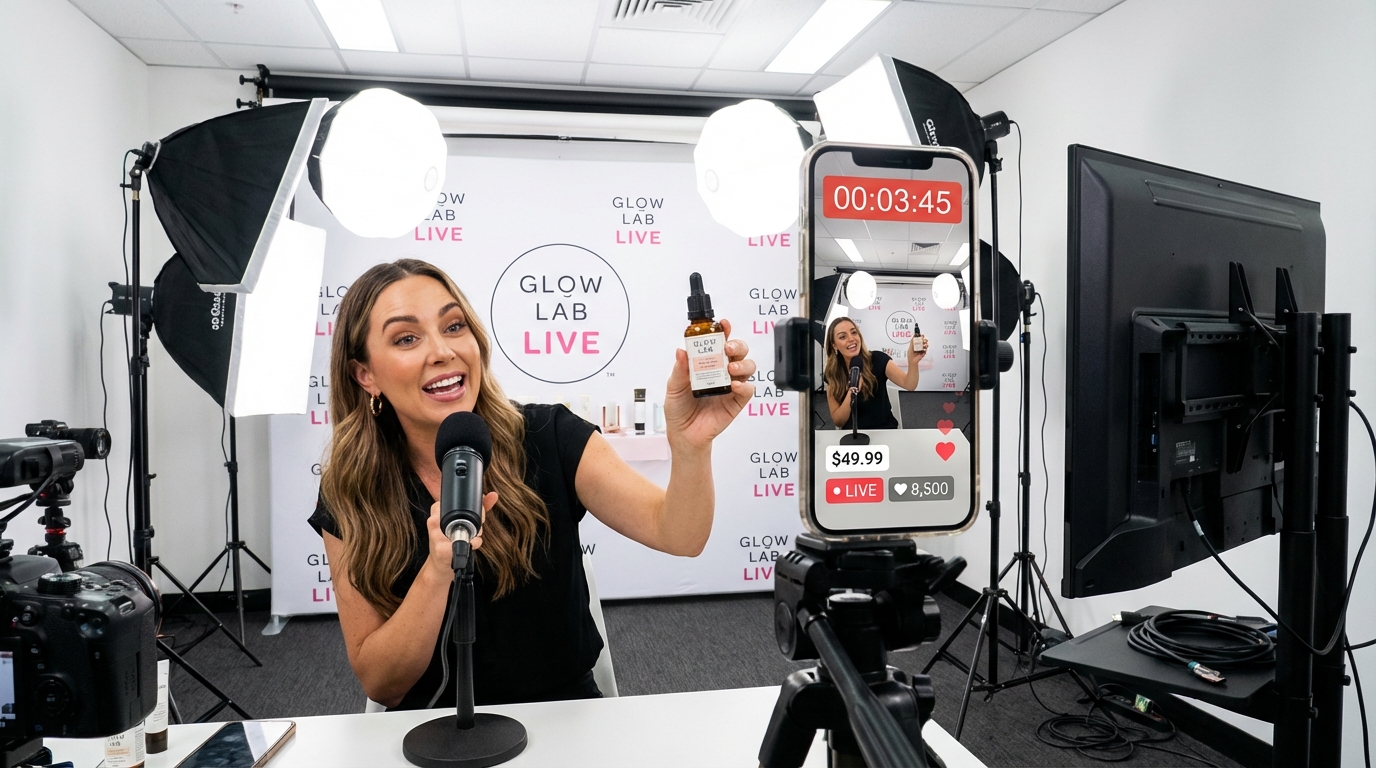
TikTok LIVE shopping is the most misunderstood channel in the platform’s commerce ecosystem. Most brands treat it as a marketing activation — something you do for the launch of a new product or a seasonal campaign. The brands generating serious, sustained revenue from LIVE treat it entirely differently: as a scheduled, structured, repeatable sales channel with its own dedicated talent, production process, and performance metrics.
The Conversion Rate Gap
The performance data makes a compelling case for investing in LIVE as a core channel. In 2026:
- TikTok LIVE sessions achieve 8–12% conversion rates on average
- This is 22% higher than shoppable video content (which averages 2–4%)
- And approximately 10x higher than traditional e-commerce landing pages
- Viewers who register for a LIVE event in advance are 1.7x more likely to purchase than viewers who stumble on the stream
BK Beauty, a makeup brush brand, set a target of $20,000 GMV for their first LIVE session and achieved $100,000 — a 5x result. Willow Boutique, an apparel brand, generated over $250,000 in GMV within 90 days of consistently combining LIVE sessions with TikTok ads. These aren’t outliers; they’re examples of what a structured approach to LIVE can produce.
Structuring a High-Converting LIVE Session
High-performing LIVE sessions in 2026 follow a consistent structural format rather than improvising:
- Warm-Up Phase (0–10 minutes): Build the room. Acknowledge viewers by name, run a poll or trivia question, share a preview of what’s coming. Do not open with hard selling. The goal is to get enough viewers in the room that the algorithm recognizes momentum and begins distributing the stream more broadly.
- Product Spotlight (10–40 minutes): Demonstrate your 3–5 hero products in depth. Show results, tell origin stories, answer live questions about each product. Display real-time stock numbers to create natural urgency without manufactured pressure.
- Bundle Moment (40–55 minutes): Introduce an exclusive LIVE-only bundle deal. Bundle pricing exists only in this stream, only tonight. This is when conversion rates typically peak.
- CTA and Countdown (55–80 minutes): Use a countdown timer for a flash discount. Keep urgency authentic — only apply it if the discount is genuinely time-limited.
- Recap and Next Session Tease (80–90 minutes): Thank buyers, encourage those who haven’t purchased to act, and announce your next LIVE date to prime event registrations.
The Post-LIVE Content Strategy
Many sellers treat the LIVE session as the end of the event. High-performing sellers treat it as content raw material. Clip the most engaging 30–60 second moments from each stream — product demonstrations, unexpected reactions, compelling testimonials — and republish them as standard short-form videos with Shop product tags attached. These clips often outperform scripted content because they carry authentic, unedited energy. Boost the best-performing clips with Spark Ads. This creates a content recycling loop where each LIVE session generates 5–10 additional pieces of distributable content.
Spark Ads vs. Shop Ads: The Paid Amplification Playbook
TikTok Shop’s advertising ecosystem in 2026 has two primary mechanisms for paid amplification, and understanding when to use each — and how to combine them — is essential for controlling your customer acquisition cost.
Spark Ads: Amplifying What Already Works
Spark Ads allow you to pay to distribute existing organic content — either your own posts or creator affiliate posts — to a broader audience. The critical difference from standard ads is that Spark Ads retain all existing social proof: the likes, comments, shares, and saves that have already accumulated on the organic post travel with the paid distribution.
2026 benchmarks show Spark Ads delivering:
- 142% higher video completion rates than standard In-Feed ads
- 64% higher CTR (1.8% vs. 1.1% for non-Spark)
- 15–49% lower CPM, CPC, and CPA than non-Spark alternatives
- 28–35% lower cost per acquisition on average
The strategic implication: before spending on Shop Ads or non-Spark In-Feed ads, identify which organic videos or creator posts are already converting and put paid budget behind those. You’re not creating new demand — you’re amplifying proven demand. This is dramatically more efficient than trying to build ad creative from scratch.
Shop Ads: Demand Capture at Scale
TikTok Shop Ads (formerly Video Shopping Ads) are the platform’s native commerce ad format. They appear in the For You feed as full-screen short-form videos with a direct shop checkout button. Unlike Spark Ads, they can be created independently of any existing organic content, giving you full creative control.
Shop Ads work best for:
- Retargeting users who visited your product page but didn’t convert
- Scaling proven products where organic creator content has already validated the message
- Promoting limited-time offers and flash deals to cold audiences
- Building awareness in competitive categories where your organic reach is still developing
The Paid Architecture Most Sellers Miss
The most effective paid strategy in 2026 is a sequential one: let organic content identify your winners first. Run open affiliate collaborations to generate 20–40 creator videos per month. After two weeks, identify which videos have the highest product click-through rates and conversion rates. Take the top 3–5 performers and run Spark Ads on them with modest daily budgets ($30–$80/day). Monitor which Spark Ads campaigns are hitting below-average CPA. Scale those. Use the insights from Spark Ad performance to brief your next round of Shop Ad creative. This sequence — organic validation → Spark amplification → Shop Ad scaling — is how sellers build a paid media program that compounds rather than bleeds.
Fulfillment Decisions in 2026: FBT, 3PL, and Self-Ship
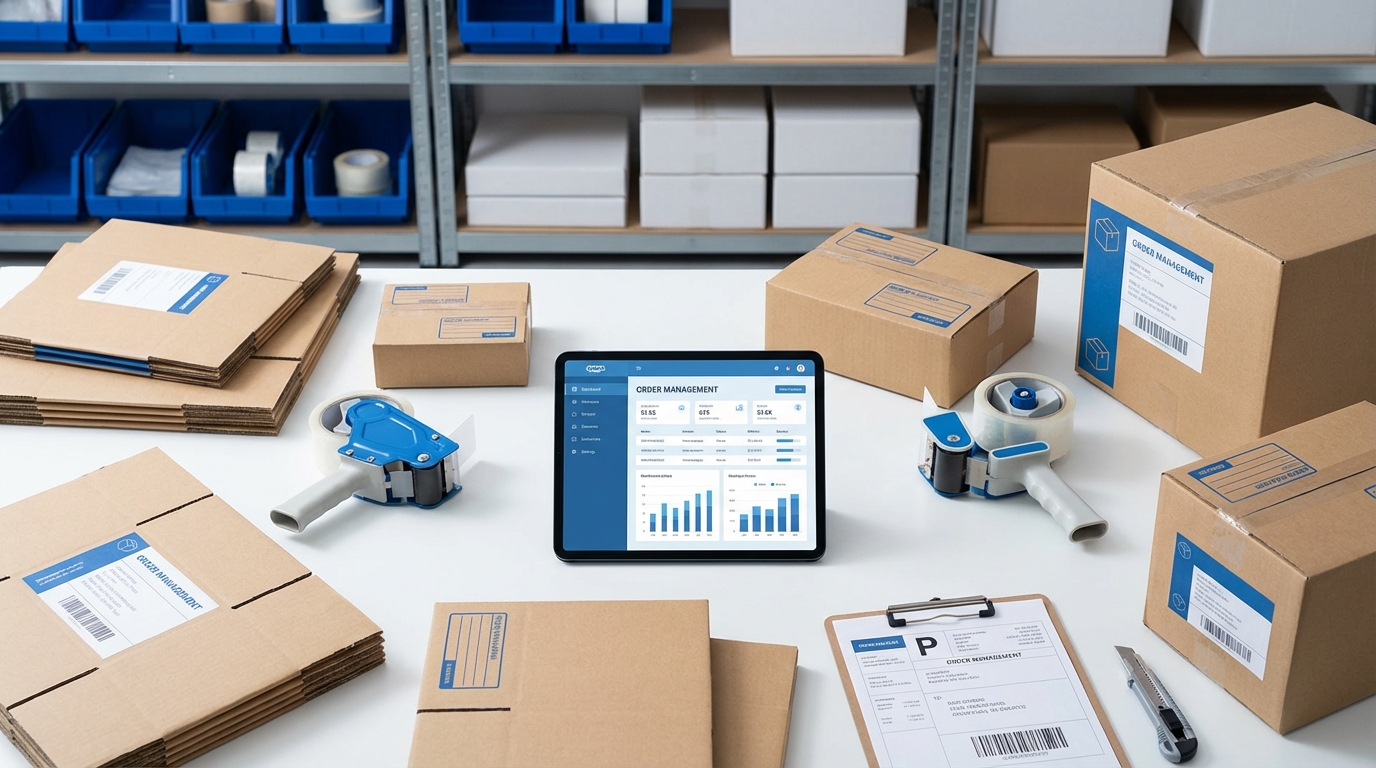
Fulfillment is one of the most consequential operational decisions a TikTok Shop seller makes — and it became considerably more complicated in early 2026 when TikTok attempted to mandate centralized fulfillment through its Fulfilled by TikTok (FBT) service, then reversed the policy under seller pressure on February 17, 2026.
What Actually Happened with the FBT Mandate
TikTok’s original plan required all US sellers to use TikTok Logistics Services — either FBT, Upgraded TikTok Shipping, or Cross-Border Trade (CBT) — by February 25–March 31, 2026. The plan included a ban on USPS self-ship labels and required API integrations for all order routing. After significant seller backlash, TikTok reversed the mandate on February 17, 2026, restoring independent shipping as a permitted option indefinitely. No confirmed timeline exists for reintroduction.
The practical implication: self-ship remains viable for now, but sellers building a long-term infrastructure should assume some form of logistics integration requirement is coming and should plan accordingly.
Comparing Your Three Options
Fulfilled by TikTok (FBT):
- TikTok handles storage, picking, packing, and shipping from 14+ US locations
- Delivers 15–20% higher conversion rates on FBT-tagged listings due to the “fast delivery” badge
- 82.7% on-time delivery rate within 3 days for high-usage SKUs
- Base cost starting at approximately $4.28/unit, scaling with size and weight
- Best for: high-velocity, standardized SKUs where the conversion lift justifies the per-unit cost
Third-Party Logistics (3PL):
- Gives you fulfillment infrastructure without platform dependency
- Can service multiple sales channels (TikTok, Amazon, Shopify) from a single inventory pool
- Requires API integration with TikTok Shop for automated order routing
- Typical cost range: $2.50–$5.00 per unit for standard e-commerce SKUs, varying by 3PL provider and volume
- Best for: multi-channel sellers, sellers with fragile or complex items, brands planning to scale across platforms
Self-Ship:
- Maximum operational control, lowest per-unit cost at early stage
- Requires maintaining an On-Time Delivery Rate (OTDR) of ≥80% to protect Account Health Rating
- 48-hour dispatch SLA effectively required to meet platform performance standards
- Best for: low-volume sellers testing products, sellers with highly specialized or customized items, sellers with existing warehouse infrastructure
The Hybrid Fulfillment Strategy
The most sophisticated sellers in 2026 are running hybrid models: their top 20% of SKUs by volume go into FBT to capture the conversion badge and prioritize those products in the Shop Tab algorithm, while the remaining SKUs are fulfilled by a 3PL with TikTok Shop API integration. This approach gets the listing visibility benefits of FBT on proven winners without the inventory risk of putting every SKU into a single-platform fulfillment system.
Account Health: The Seller Scorecard You Cannot Ignore
TikTok Shop’s account health system in 2026 has been substantially rebuilt. The platform now runs two interconnected scoring systems that directly control what you can and cannot do as a seller — including whether you can run affiliate programs, participate in promotional campaigns, or access faster settlement.
The Account Health Rating (AHR)
The Account Health Rating is TikTok Shop’s primary enforcement mechanism. Sellers start at a default point balance, and violations deduct points. Enforcement thresholds are set at:
- ≤150 points: Restricts Shop Tab eligibility and organic visibility
- ≤100 points: Additional campaign and promotional feature restrictions
- ≤50 points: Listing freezes and search suppression
- 0 points: Account suspension
Points are deducted for policy violations including: duplicate listings, misleading product images or pricing, exaggerated claims in descriptions, intellectual property violations, and compliance failures (selling restricted products). Points reset after 90 days if no new violations occur.
The Shop Performance Score (SPS)
Introduced in 2026, the Shop Performance Score (SPS) is now the primary metric governing settlement tier, cash reserves, and program access. Targets and corresponding privileges:
- SPS ≥ 2.5: Access to Flash Deals, TikTok-Funded Promotions, Shop Ads
- SPS ≥ 3.5: Access to Affiliate Marketing program, Campaigns, Short Settlements (faster cash flow)
- SPS ≥ 4.0: Priority customer service, reduced reserve requirements
The SPS is calculated from a combination of your fulfillment metrics (OTDR, SFCR), customer service metrics (response rate, dispute resolution), and product quality signals (return rate, review score).
The Three Operational Metrics That Move Your SPS
- On-Time Delivery Rate (OTDR): Must stay ≥80% over the trailing 30 days. Drops below this threshold trigger algorithmic suppression before any manual review occurs. Monitor this weekly, not monthly.
- Seller Fault Cancellation Rate (SFCR): Must stay ≤5%. Order cancellations caused by out-of-stock situations, incorrect listings, or fulfillment failures all count against this metric. Maintain a buffer stock for your top sellers at all times.
- Shop Rating: Maintain a minimum 4.0-star average. Proactively follow up with buyers who received their orders to encourage honest reviews. Address negative reviews quickly and professionally — TikTok’s resolution center can mark certain negative reviews as resolved, partially mitigating their scoring impact.
Building Your Cross-Platform Integration Strategy
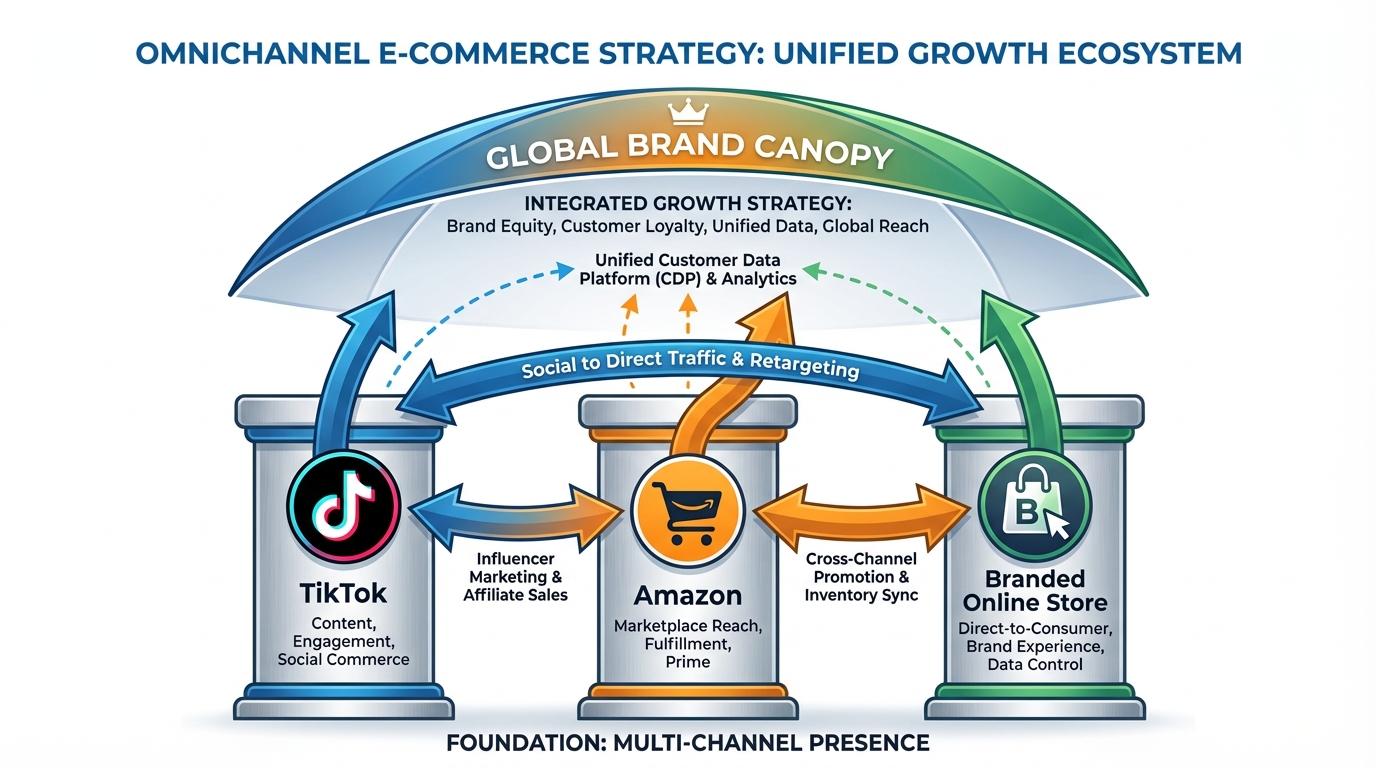
TikTok Shop is an extraordinary discovery and conversion engine. But it was not designed to be an entire business. Building a brand that can sustain itself and be valued as a real asset requires integrating TikTok Shop into a broader multi-platform architecture where each channel does the job it does best.
The Three-Platform Model
The structure that most serious sellers are converging on in 2026 assigns each platform a specific function:
- TikTok Shop: Discovery and Impulse Conversion. TikTok is where cold audiences encounter your product for the first time, where visual demonstrations create desire, and where the low-friction checkout converts impulse into purchase. It excels for products priced under $60, products with strong visual demonstrations, and categories with active creator ecosystems.
- Amazon: Search-Driven Volume and Credibility. Amazon captures buyers who already know they want your product category and are searching by keyword. The TikTok–Amazon integration, which allows TikTok Shop sellers to display Amazon Prime delivery badges on their listings, has created a meaningful bridge between discovery and credibility for US sellers. Amazon’s search volume is predictable in a way TikTok’s algorithm-driven distribution is not.
- Shopify (or equivalent DTC): Owned Customer Relationships. TikTok Shop provides no direct customer contact data to sellers. You know someone bought something; you don’t know their email address. Shopify is where you build the owned channel — email lists, SMS subscribers, loyalty programs — that allows you to re-market, upsell, and retain customers without paying the platform for the privilege every time.
The Traffic Flow Architecture
These three platforms aren’t silos — they’re nodes in a traffic system you consciously design. The most effective architecture in 2026 flows like this:
- TikTok creator content introduces the brand to cold audiences and converts impulse buyers directly via TikTok Shop checkout
- Spark Ads retarget product page visitors who didn’t convert, driving them back to TikTok Shop or to a Shopify landing page
- Product inserts in TikTok Shop shipments invite buyers to register their product on your Shopify site (for warranty, exclusive content, or loyalty points) — capturing the email without violating platform rules
- Email and SMS nurture sequences on Shopify drive repeat purchases through your owned channel, where customer acquisition cost is near zero
- Amazon captures search demand from buyers who discovered the brand on TikTok but wanted the security of Prime delivery
Inventory Synchronization
Running across three platforms creates an inventory management challenge. Stockouts on TikTok Shop while inventory sits on Amazon shelves is a real problem that damages your SFCR and account health. The operational solution is a centralized inventory management system — whether purpose-built (Linnworks, Skubana/Extensiv, Brightpearl) or custom-built on a 3PL’s WMS — that syncs available stock across all channels in real time and applies channel-specific safety stock rules based on each platform’s order velocity and fulfillment speed.
Customer Retention on a Platform Not Built for It
Here is the honest challenge that every thoughtful TikTok Shop seller eventually confronts: the platform was architected for discovery, not loyalty. TikTok does not give you your customers’ contact information. There’s no native email capture, no CRM integration, no way to directly message buyers outside of the platform’s order communication system. Customer lifetime value — the metric that separates sustainable businesses from perpetual acquisition machines — is genuinely difficult to build on TikTok Shop alone.
Working Within the Platform’s Constraints
TikTok Shop does provide some retention tools, and using them aggressively is better than ignoring the problem:
- Follow prompts during LIVE: Encourage buyers to follow your TikTok account. Followers receive notification of your future LIVE sessions and can be re-engaged through organic content without any additional acquisition cost.
- Shop followers: Buyers who follow your TikTok Shop see your new listings and promotions in their Shop Tab. This is a free re-engagement surface that most sellers never optimize for.
- Post-purchase message sequences: TikTok Shop allows order-related messages to buyers. Use these to send genuinely useful follow-up content (product usage tips, care instructions) and a subtle invitation to engage further — without violating platform rules against off-platform solicitation.
- Product inserts: Physical cards in shipments can invite buyers to follow your TikTok account, leave a review, or register their product on your website. This bridges the platform gap between TikTok Shop and your owned channels.
The Subscription and Bundle Strategy
For consumable products, TikTok Shop’s subscription feature (where available) allows buyers to set up recurring orders at a discount. This is one of the few native mechanisms on the platform that creates reliable repeat purchase behavior without requiring re-acquisition. Sellers with consumable products (supplements, skincare, cleaning supplies, pet food) should treat the subscription offer not as a discount tool but as a CLV construction mechanism — the upfront margin reduction is justified by the elimination of re-acquisition cost for subsequent orders.
Bundle pricing serves a similar retention function. When a buyer purchases a starter kit that includes both your hero product and a companion item they’ll naturally exhaust, you’ve created a logical reason for them to return. Design your product lineup with logical bundle companions in mind from the start, not as an afterthought.
Building Benchmark CLV Despite the Constraints
Top TikTok Shop brands are achieving customer lifetime values of $127–$245 through systematic post-purchase engagement, even within the platform’s limited CRM functionality. The mechanism is a combination of: follow-based re-engagement through organic content, LIVE session repeat attendance, bundle cross-selling, and off-platform capture through product inserts and Shopify registration flows. None of these are magic; all of them require deliberate system design.
Building Your TikTok Shop Growth Architecture: An Actionable Checklist
Every section of this guide represents a system. The sellers who build durable TikTok Shop businesses aren’t better at any one of these systems — they’re better at building all of them simultaneously and making them reinforce each other. Here’s how to sequence the build:
Phase 1: Foundation (Weeks 1–4)
- Complete your true margin calculation before launching any product — know your floor price
- Set up your listing structure with front-loaded title keywords, NLP-optimized descriptions, and at least one demo video per listing
- Configure open affiliate collaboration with a 12–15% base commission
- Establish your Account Health Rating baseline and set up weekly monitoring of OTDR and SFCR
- Choose your fulfillment model and test it with your initial SKU set before scaling
Phase 2: Channel Build (Weeks 5–12)
- Host your first three LIVE sessions using the structured format outlined above — treat these as rehearsals, not performances
- Identify which open affiliate content is converting and begin Targeted Collaboration outreach to the top performers
- Run your first Spark Ads campaign on the top-converting organic video in your library
- Launch your Shopify product registration flow and begin building your owned email list
- If on Amazon, integrate the TikTok–Amazon partnership and test Prime badge display on TikTok Shop listings
Phase 3: Scale and Systemize (Months 4–12)
- Build your creator tiering framework — formalize your Tier 1, 2, and 3 creator relationships with documented commission structures and onboarding processes
- Move your highest-velocity SKUs into FBT to capture the conversion badge while 3PL handles the broader catalog
- Implement centralized inventory management across TikTok Shop, Amazon, and Shopify
- Build a post-LIVE clip repurposing workflow into your content calendar
- Introduce subscription offers or bundle kits for your top consumable products
- Establish SPS tracking and set internal benchmarks: target SPS ≥ 3.5 for full program access
Conclusion: Architecture Is the Competitive Advantage
The single most predictive factor for long-term TikTok Shop success in 2026 is not the product, not the creator relationship, and not the algorithm. It’s whether the seller has built interconnected systems or just strung together tactics. Tactics get you to your first $10,000 month. Systems get you to your first $1,000,000 year.
The TikTok Shop opportunity is real — $23.4 billion in projected US GMV in 2026, conversion rates that genuinely outperform every other major e-commerce surface, and a creator ecosystem that can generate trust-based product endorsements at a scale no paid advertising budget can replicate. The sellers positioned to capture a meaningful share of that opportunity are the ones treating it with the seriousness of a business architecture project: mapping costs honestly, building listing infrastructure deliberately, running creator programs systematically, using paid amplification as a multiplier of proven organic performance, protecting account health proactively, and integrating TikTok Shop into a multi-platform model that builds owned customer relationships over time.
The platform will continue to evolve. Policy changes — like the FBT mandate reversal of early 2026 — will keep coming. Algorithm updates will shift the weights on various ranking signals. Creator economics will fluctuate. But sellers who have built the architecture described in this guide will adapt faster than their competitors, because they understand the underlying systems rather than just following surface-level tactics.
Build the architecture. The results will follow.