

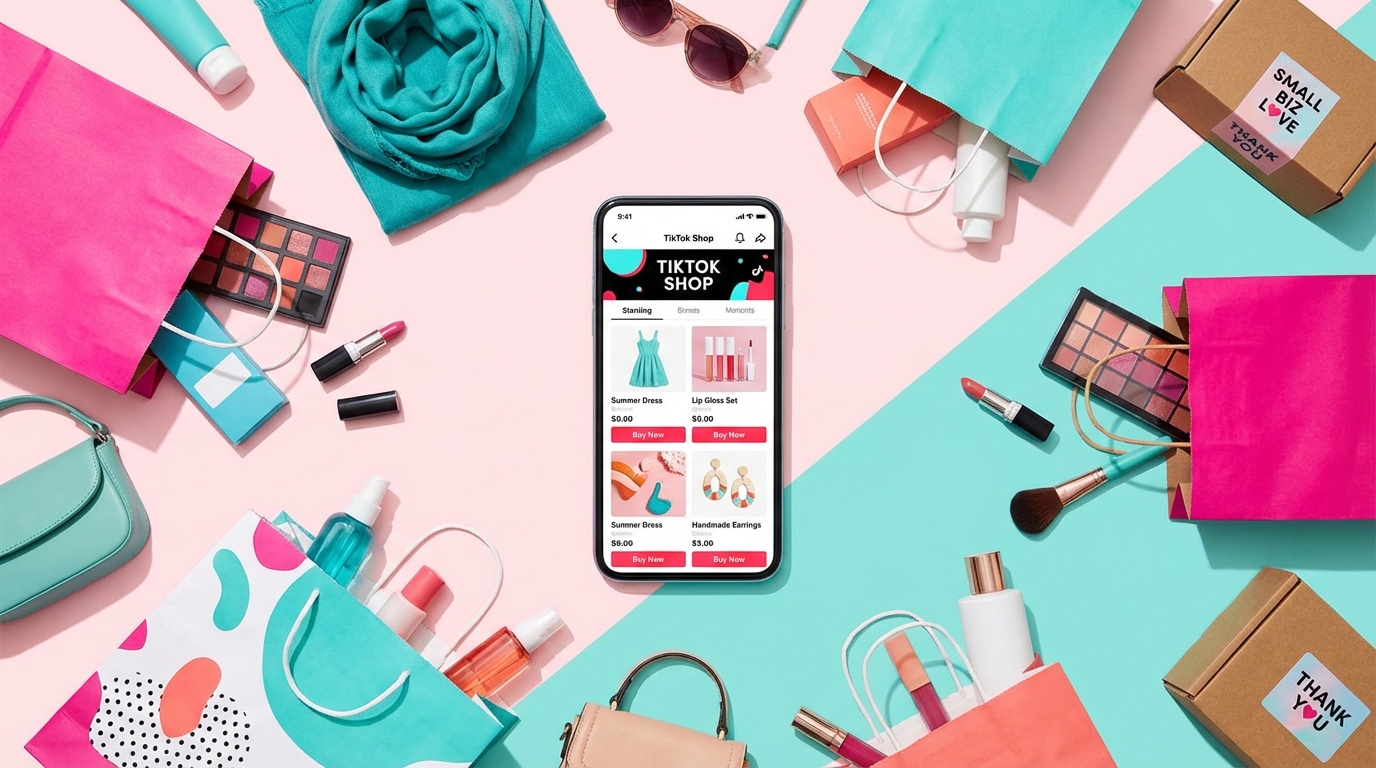

There’s a moment every online seller knows well — the one where you realize your product has found its audience. On TikTok Shop, that moment can happen faster than almost anywhere else on the internet. The platform’s signature hashtag, #TikTokMadeMeBuyIt, appears in more than 150,000 videos every single week, signaling a cultural shift in how people discover and purchase products.
TikTok has grown from a short-form video entertainment app into one of the most commercially powerful platforms on the planet. With $33.2 billion in global gross merchandise value (GMV) in 2024 alone — more than doubling from the year before — TikTok Shop is no longer a side experiment for e-commerce brands. It’s a primary sales channel.
Yet for all its momentum, TikTok Shop remains misunderstood by many sellers. Some treat it like Instagram Shopping. Others approach it like Amazon. In reality, it’s something entirely different: a content-first commerce ecosystem where entertainment, community, and purchasing decisions collide in real time. Getting it right requires understanding not just the mechanics of setting up a shop, but the nuances of how TikTok’s audience actually buys.
This guide covers everything you need to know — from registering your store and pricing your products correctly, to creating videos that convert, running effective live shopping sessions, partnering with affiliates, and managing paid advertising. Whether you’re starting from scratch or refining an existing TikTok Shop strategy, you’ll find practical, data-backed guidance here to help you compete and grow.
What Is TikTok Shop? A Seller’s Overview
TikTok Shop is a native e-commerce feature built directly into the TikTok app. It allows brands, businesses, and creators to list products and sell them to users without those buyers ever needing to leave the platform. From discovery to checkout, the entire purchase journey happens inside TikTok.
This is a significant distinction. Unlike traditional social media advertising — where a brand posts content and hopes users click through to an external website — TikTok Shop eliminates that friction entirely. The product is embedded in the content itself, and purchasing takes only a few taps.
The Core Features of TikTok Shop
TikTok Shop is best understood as a suite of interconnected selling tools rather than a single feature. As a seller, you get access to:
- A Seller Center dashboard — your central hub for managing listings, orders, inventory, promotions, and analytics.
- Shoppable videos — short-form video posts where products are tagged directly in the content, so viewers can tap a product card and buy immediately.
- LIVE Shopping — real-time livestreams where sellers demonstrate products, interact with viewers, and complete sales during the broadcast.
- A Product Showcase tab — a dedicated storefront tab on your TikTok profile where visitors can browse and purchase your full product catalog.
- Affiliate Center — a marketplace for connecting with creators who will promote your products in exchange for a commission on sales.
- TikTok Shop Ads — paid advertising formats including Video Shopping Ads (VSAs) and LIVE Shopping Ads designed specifically for in-app conversions.
How the Buying Experience Works
From a shopper’s perspective, the experience is designed around seamlessness. A user scrolling through their For You Page (FYP) sees a video featuring a product they like. A small product card appears at the bottom of the screen. They tap it, view the product details, and complete the purchase with a saved payment method — all without leaving TikTok.
This frictionless path from discovery to purchase is what makes TikTok Shop particularly powerful for impulse-driven categories like beauty, fashion, and lifestyle accessories. Roughly three in four TikTok users are likely to buy something while using the app, according to TikTok’s own platform data. That’s a buying intent rate that most social platforms can only dream of matching.
TikTok Shop is currently available in the United States, the United Kingdom, and multiple Southeast Asian markets including Indonesia, Thailand, Vietnam, Malaysia, the Philippines, and Singapore.
TikTok Shop by the Numbers: Market Size and Growth
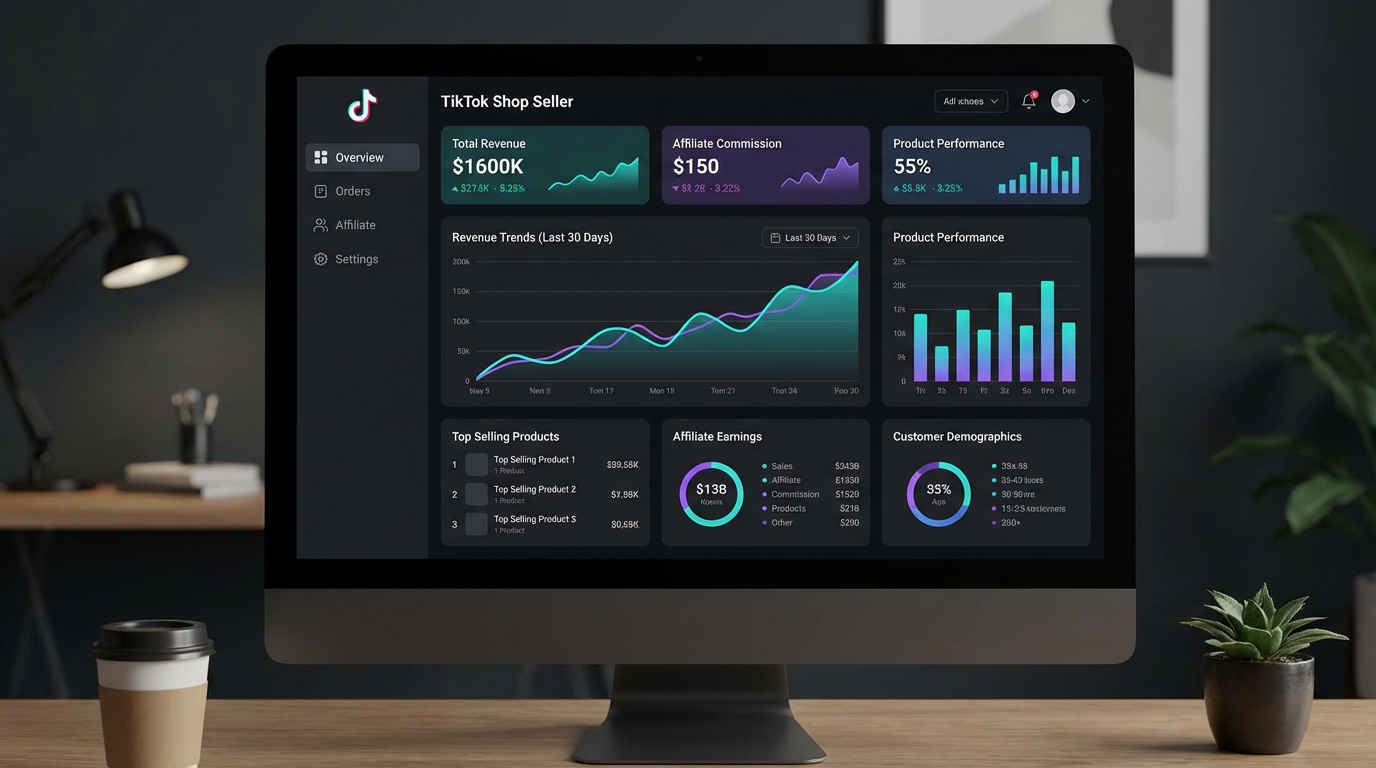
To understand why TikTok Shop deserves serious attention, you have to look at the numbers. The platform’s growth trajectory over the past three years is one of the most striking in modern e-commerce history.
Global GMV Growth
TikTok Shop’s global GMV has grown from an estimated $1 billion in 2021 to $4.4 billion in 2022, and then to a staggering $33.2 billion in 2024 — representing more than 200% year-over-year growth in its most recent full-year figures. For context, that growth rate outpaces most established e-commerce platforms in their early scaling phases.
The US Market
The United States has quickly become TikTok Shop’s most valuable single market by sales value. The US contributed $9 billion to global GMV in 2024, representing a 650% increase since the platform’s US launch in September 2023. Monthly US sales consistently exceeded $1 billion throughout mid-to-late 2024.
Perhaps more telling is TikTok Shop’s share of the broader US social commerce landscape: the platform drove 68.1% of total US social shopping GMV in February 2024, making it the undisputed dominant player in the space — ahead of Instagram Shopping, Pinterest, and Facebook Shops combined.
Seller and Buyer Statistics
By mid-2025, over 231,000 TikTok Shops were active in the United States, up from just 4,450 in July 2023. More than 171,000 of those were local and independent merchants, with their sales climbing roughly 70% year over year.
On the buyer side, 47.2 million Americans shopped on TikTok Shop in 2024, a 34.2% year-over-year increase. Demographically, the platform skews toward 18–24 year-olds and households earning between $55,000 and $90,000 annually — a valuable, purchase-ready consumer segment. Crucially, over 80% of sales came from repeat buyers, which speaks to the platform’s growing ability to retain customers beyond initial impulse purchases.
What These Numbers Mean for Sellers
It’s worth tempering this with an honest caveat: nearly half of the approximately 398,000 US TikTok Shops had zero sales in 2024, while just over 1,000 exceeded $1 million in annual GMV. The gap between top-performing sellers and inactive ones is substantial. Success on TikTok Shop is not automatic — it requires deliberate content strategy, consistent posting, and a product that resonates with TikTok’s audience. But for those who get it right, the upside is real.
How to Set Up Your TikTok Shop: Step-by-Step
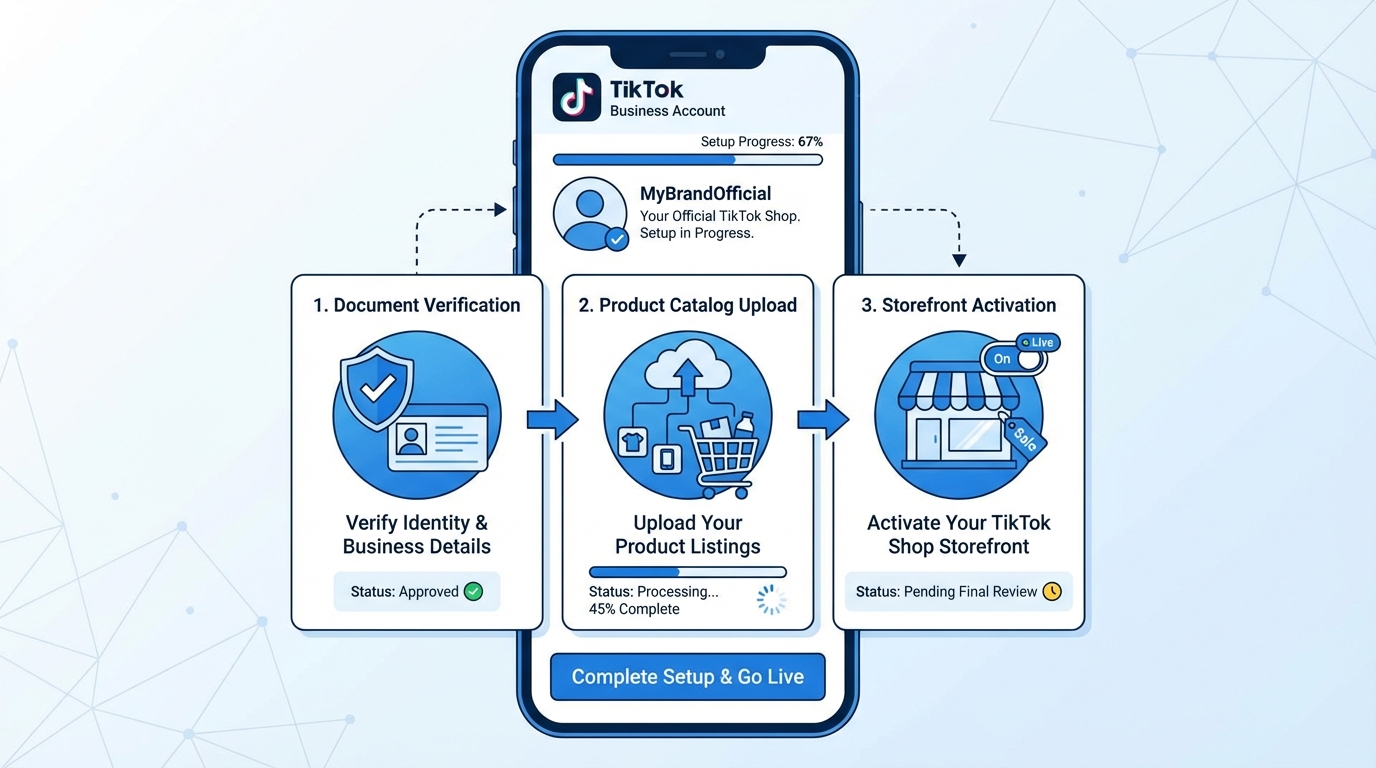
Getting your TikTok Shop up and running involves several distinct steps. The process is more involved than setting up a social media profile, but less complex than launching a full independent e-commerce store. Here’s a clear breakdown of how to do it.
Step 1: Check Your Eligibility
Before applying, confirm that you meet TikTok Shop’s basic eligibility requirements:
- You must be at least 18 years old.
- You need a TikTok account in good standing — either a personal account converted to a Business account, or a new Business account.
- You must have valid business documentation (for business accounts) or personal identification (for individual sellers).
- Your account should have at least 1,000 followers, although some regions allow registration via a TikTok Business account regardless of follower count.
- Your products must comply with TikTok’s commerce policies and not fall into prohibited categories.
Step 2: Register at the TikTok Shop Seller Center
Navigate to seller.tiktok.com (or the equivalent for your region) and begin your application. You’ll be asked to provide:
- Your business name, type (individual or corporate), and contact information.
- Verification documents — a government-issued ID for individual sellers, or a business registration certificate and relevant tax documents for corporate applicants.
- Bank account details for receiving payouts.
TikTok’s review process typically takes one to two business days, though it can occasionally take longer during peak periods. You’ll receive an email notification once your application has been approved or if additional documentation is required.
Step 3: Link Your TikTok Account
Once approved, connect your TikTok Shop Seller Center account to your TikTok profile. This enables the product showcase tab to appear on your profile and allows you to tag products in your videos and lives. You can link one TikTok account per shop (and vice versa).
Step 4: Upload Your Product Catalog
This is where the real work begins. Adding products to your TikTok Shop requires thoughtful attention to several elements:
- Product titles: Keep these clear, descriptive, and keyword-rich. Include the product type, key feature, and relevant attribute (e.g., color, size, or material).
- Descriptions: Go beyond basic specs. Explain the benefits, materials, use cases, and any relevant instructions. Include a call to action where appropriate.
- Images and video: Upload multiple high-quality photos showing the product from different angles. A product demonstration video significantly improves conversion rates.
- Pricing and variants: Set competitive prices and configure all available variants (sizes, colors, styles) correctly.
- Inventory and shipping: Accurate stock levels and clear shipping timelines are essential for maintaining your seller rating.
Step 5: Configure Shipping and Fulfillment
TikTok Shop offers several fulfillment options depending on your region. In the US, you can choose between self-fulfillment (shipping orders yourself) or Fulfilled by TikTok (FBT), the platform’s managed logistics service. FBT handles warehousing, packing, and shipping on your behalf, similar to Amazon’s FBA program. For new sellers, FBT can simplify operations significantly, though it comes with additional costs.
Step 6: Integrate with Your Existing E-Commerce Platform
If you already sell on Shopify, WooCommerce, or another platform, TikTok offers native integration apps that sync your existing product catalog, inventory levels, and orders. This prevents you from managing two separate systems and reduces the risk of overselling. Shopify’s TikTok app, for example, allows you to manage TikTok Shop orders directly from your Shopify dashboard.
Understanding TikTok Shop Fees and Seller Costs
One of the first questions sellers ask is: how much does TikTok Shop cost? The answer involves several fee types, and understanding them is essential for accurate margin calculation before you start listing products.
Referral (Commission) Fees
TikTok Shop charges a referral fee on each completed transaction — the platform’s cut of every sale you make. These rates have evolved significantly since the platform launched:
- Early 2023 (launch): 2% referral fee, designed to attract sellers with an extremely low barrier to entry.
- April 1, 2024: Increased to 6% on most categories.
- July 1, 2024: Increased again to 8% on most categories.
Category-specific rates may differ. For example, phones and electronics typically carry a 6% fee, while pre-owned items sit at around 5% (dropping to 3% for sales over $10,000). High-volume sellers may qualify for reduced rates on transactions above certain thresholds.
For comparison, Amazon’s referral fees range from 8% to 20% depending on category — which means TikTok Shop remains competitively priced for most product types, even after its 2024 increases.
Transaction Fee
In addition to the referral fee, TikTok Shop charges a flat $0.30 transaction fee per order. This fee covers payment processing. For lower-priced items, this can represent a meaningful percentage of revenue, so it’s important to factor it into your pricing, particularly for products under $15.
Affiliate Commission Costs
If you choose to work with TikTok’s affiliate creator network (which most competitive sellers do), you’ll also be paying creator commissions on any sales they generate. These commissions are set by you as the seller, typically ranging from 10% to 20% of the sale price for consumer goods, though the platform technically allows commissions anywhere from 1% to 80%. Setting a competitive commission rate is important for attracting high-quality creators to your products.
Advertising Costs
Running paid ads through TikTok Ads Manager is an additional discretionary cost. Budgets vary widely by seller — some spend a few hundred dollars per month testing Video Shopping Ads, while established brands allocate tens of thousands. Ad spend is separate from platform fees and is entirely optional, though it becomes increasingly important as organic reach on TikTok becomes more competitive.
Fulfillment Costs (FBT)
If you use TikTok’s Fulfilled by TikTok service, you’ll incur warehousing, picking, packing, and shipping fees based on your product dimensions, weight, and storage duration. Sellers who self-fulfill avoid these fees but take on the operational burden of shipping management themselves.
Optimizing Your Product Listings for Maximum Discovery
Getting your products listed is just the starting point. On TikTok Shop, discoverability depends heavily on how well your listings are structured — both for TikTok’s internal search algorithm and for shopper psychology.
Writing Product Titles That Work
TikTok Shop’s search function works similarly to other e-commerce platforms: keywords in your product title carry significant weight. A well-optimized title should include the product category, primary descriptor, key benefit or attribute, and any relevant variations. For example, instead of “Lip Gloss Set,” use “Hydrating Lip Gloss Set — 8 Shades, Long-Lasting, Non-Sticky.” Be specific, be descriptive, but avoid keyword stuffing that makes the title feel unnatural.
Product Descriptions That Convert
Many sellers underinvest in product descriptions, treating them as a formality. On TikTok Shop, a strong description serves two purposes: it helps your listing appear in search results, and it converts hesitant browsers into buyers. Structure your descriptions to cover:
- Key features and benefits — what the product does and why it matters to the buyer.
- Materials and specifications — dimensions, weight, ingredients, or technical details as relevant.
- Use cases and scenarios — help shoppers visualize the product in their life.
- Social proof hooks — reference reviews, bestseller status, or notable features.
- Clear calls to action — encourage the shopper to purchase, bundle, or explore related products.
Photography and Visual Standards
Your product images need to meet a higher visual standard than you might be used to from marketplace selling. TikTok’s audience is accustomed to polished, visually appealing content. Each listing should include at minimum:
- A clean, white or neutral background hero shot showing the product clearly.
- Lifestyle images showing the product in use.
- Detail or close-up shots highlighting key features or quality.
- Size or scale reference where relevant.
- A short product video (even a simple 15-second demonstration clip can meaningfully improve conversion rates).
Pricing Strategy
TikTok’s audience skews toward value-conscious shoppers, particularly in the 18–35 demographic. While premium products can and do sell on the platform, pricing that appears competitive relative to other channels performs best. Offering limited-time discounts, bundle deals, or “flash sale” pricing during LIVE sessions can significantly increase order volume. TikTok’s algorithm also reportedly favors listings with active promotions, giving discounted products additional visibility in search results and the For You Page.
Creating Shoppable Video Content That Drives Sales
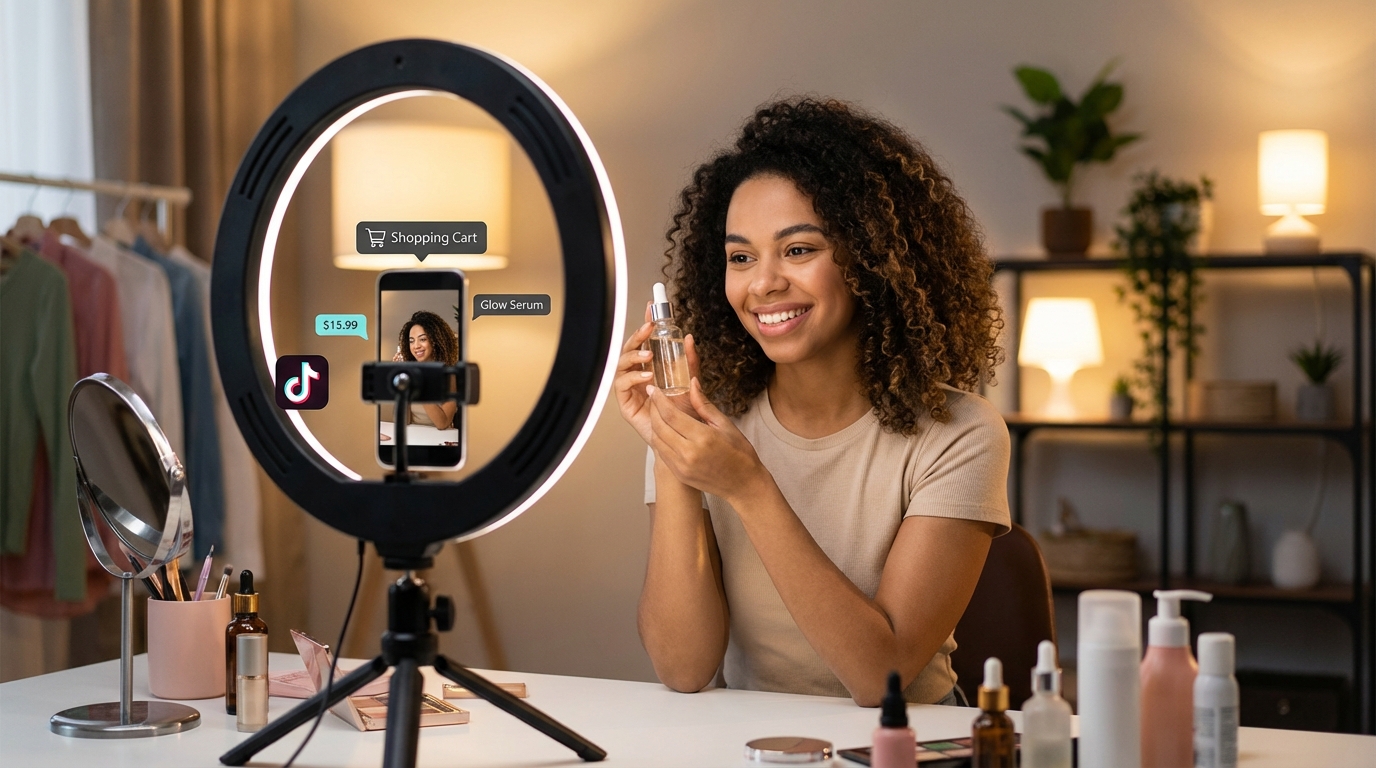
Short-form video content accounts for 58% of US TikTok Shop GMV, making it the single most important sales channel within the platform. But not all videos perform equally. The ones that drive consistent sales share a set of identifiable characteristics — and understanding those patterns can dramatically improve your content output.
The Content-First Mindset
The fundamental principle of TikTok content — for sellers and creators alike — is that entertainment comes before selling. Users who feel like they’re being advertised to will scroll past. Users who feel like they’re being entertained, informed, or inspired will stay — and often buy. This means your product videos should not look like traditional advertisements. They should look like content.
The most effective seller videos on TikTok typically follow one of several proven formats:
- Problem-solution videos: Open by identifying a relatable pain point, then demonstrate how your product resolves it. This format performs exceptionally well for practical products like organizational tools, skincare, kitchen gadgets, and cleaning products.
- Before-and-after demonstrations: Visual transformations are intrinsically compelling. Show the state before your product is used, then the result after. Beauty, fitness, and home improvement products are particularly well-suited to this format.
- “I tried this so you don’t have to” reviews: First-person product trials feel authentic and trustworthy, especially when they include genuine observations — both positive and qualified.
- Unboxing and haul videos: Simple, high-energy unboxings generate significant engagement, particularly for fashion, beauty, and gadget categories.
- Tutorial and how-to content: Teaching someone how to use a product is one of the most effective ways to sell it. When viewers learn something, they’re more likely to want the tool that enables it.
Technical Best Practices for Shoppable Videos
Beyond content format, several technical practices consistently improve performance:
- Hook viewers in the first 1–2 seconds. TikTok’s scroll rate is fast. Start with your most visually or emotionally compelling moment — not a logo, not a greeting. Open mid-action.
- Keep videos between 15 and 60 seconds for optimal completion rates. Longer videos (up to 3 minutes) work for detailed tutorials but require strong pacing throughout.
- Tag products directly in the video using TikTok’s product tagging feature. The shopping cart or product card icon that appears at the bottom of the screen significantly increases tap-through rates compared to bio links.
- Use trending sounds and music where appropriate. TikTok’s algorithm favors content using popular audio, which can substantially increase organic reach.
- Include on-screen text for key selling points, especially for viewers watching without sound (a significant portion of TikTok’s audience).
- Post consistently — sellers who post 3–5 times per week see significantly greater cumulative reach than those posting once or twice. Volume matters on TikTok’s algorithm.
Authenticity Over Polish
One of the more counterintuitive findings from successful TikTok sellers is that overly produced, high-budget video content often performs worse than raw, authentic creator-style content. TikTok users have developed a strong sense for when they’re watching an ad versus genuine user-generated content. Videos that feel natural, slightly imperfect, and personally narrated tend to generate more engagement and higher conversion rates than slick commercial productions. This is especially true when the product is being demonstrated rather than just displayed.
TikTok LIVE Shopping: How to Run Sessions That Sell
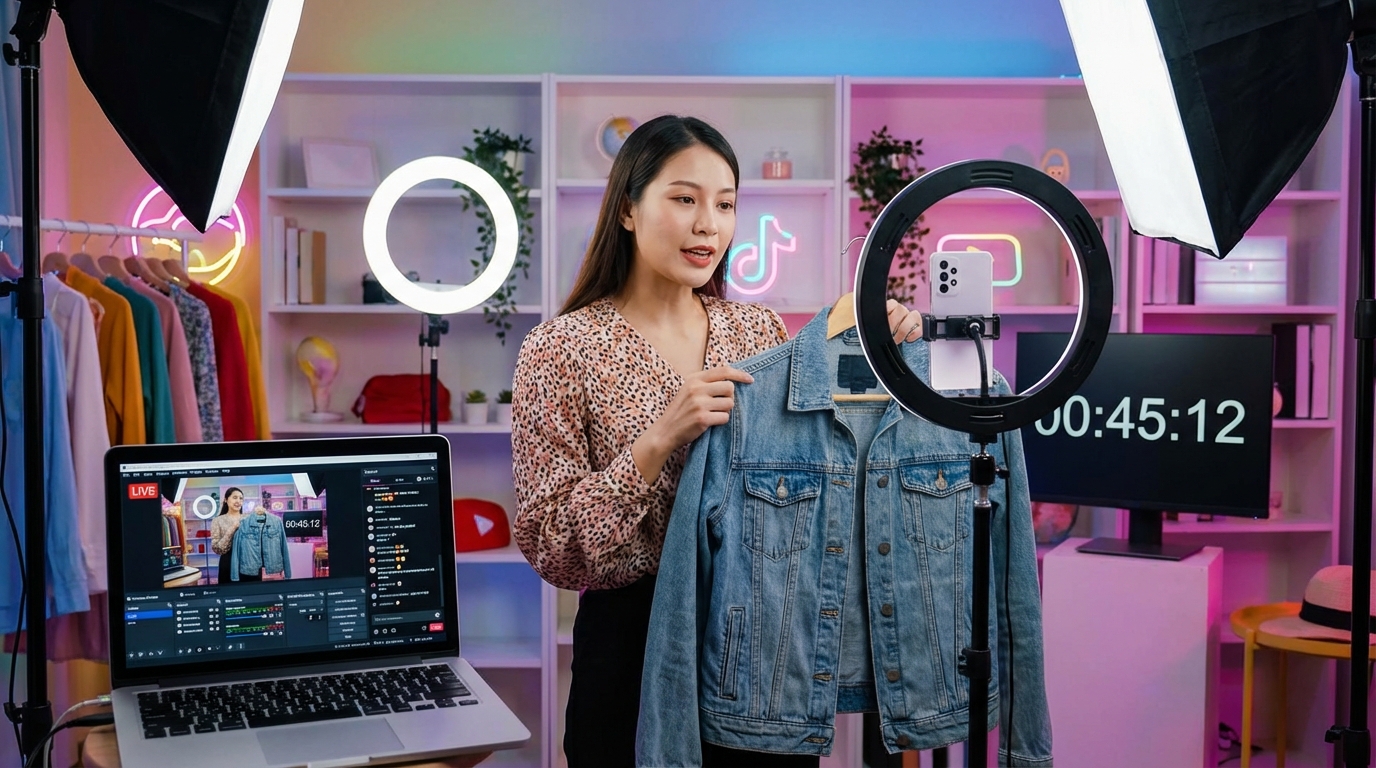
TikTok LIVE Shopping is the platform’s most interactive sales format, and for many sellers, it becomes their highest-revenue channel. Live commerce combines real-time product demonstration, audience interaction, and limited-time urgency in a format that’s proven to drive conversions far above standard video content.
Data from TikTok’s own platform research shows that users are 1.7 times more likely to purchase via LIVE than through standard video content. Skincare brand goPure, for example, generated $1 million in revenue from 483 hours of live content. Pop Mart generated 85% of its TikTok Shop sales through livestreams in June 2024.
Structuring Your LIVE Shopping Basket
Experienced live sellers recommend organizing your product lineup into three strategic tiers for each session:
- Follower Gift (Entry Product): A low-cost item priced under $15 designed to encourage first purchases and new follows. The goal here is to reduce the purchase threshold for viewers who are on the fence. Once someone has bought once, the psychological barrier to buying again drops significantly.
- Top Seller (Retention Product): Your proven bestseller, demonstrated repeatedly throughout the session. This product should be familiar, have strong social proof (reviews, repeat purchases), and be compelling enough to hold viewers’ attention across the broadcast.
- Profit Driver (High-Margin Product): A higher-priced, higher-margin item introduced every 1–2 minutes throughout the stream. While fewer viewers will buy this, its margin contribution can make it your most valuable product per session.
Engagement Tactics That Work During LIVE
The interactive nature of LIVE Shopping means your performance depends heavily on how well you manage audience engagement throughout the session. Proven tactics include:
- Real-time Q&A: Answer questions about products, sizing, ingredients, shipping, and anything else viewers ask. This builds trust and directly addresses purchase objections.
- Flash sales and countdown timers: Announce limited-time discounts during the stream — “We’re dropping 40% off for the next five minutes only.” Urgency is one of the most powerful levers in live commerce.
- Demonstrations and comparisons: Show the product in use, compare it with alternatives, apply it on camera, or walk through setup steps. The more visceral the demonstration, the higher the conversion rate tends to be.
- Shout-outs and personalization: Call out usernames from the chat. This simple act dramatically increases viewer retention and makes the audience feel personally engaged rather than like passive spectators.
- Bundle deals: Offer exclusive session-only bundles that combine multiple products at a reduced total price. Bundle exclusivity is a compelling reason for viewers to buy now rather than later.
Session Length and Scheduling
Longer LIVE sessions consistently outperform shorter ones in terms of total revenue — both because TikTok’s algorithm rewards sessions with more cumulative engagement, and because sustained broadcasts attract new viewers throughout. Many successful TikTok Shop sellers run sessions lasting two to four hours, while some high-volume brands host marathon streams of eight to twelve hours during peak sales periods like Black Friday or major platform promotions.
Scheduling matters too. Evening sessions (6–9 PM local time) and weekend afternoons tend to attract the largest audiences. Consistency — going live at the same time each week — helps build a loyal following that returns for each session.
The TikTok Shop Affiliate Program: Working with Creators
One of TikTok Shop’s most powerful selling tools isn’t in your own hands — it’s in the hands of thousands of creators who can promote your products to their audiences in exchange for a commission on sales. The TikTok Shop Affiliate Program is a built-in influencer marketing marketplace, and for many brands, it becomes their most cost-effective acquisition channel.
How the Affiliate Program Works
Sellers configure their affiliate program through the Affiliate Center within the Seller Center dashboard. You set which products are available for affiliate promotion and define the commission rate creators will earn on each sale they generate. TikTok tracks sales through affiliate links and product showcase tabs, attributing each purchase to the responsible creator automatically.
There are over 100,000 active affiliate creators globally participating in the program. Creators need a minimum of 1,000 followers to join as affiliates (in most markets), though some higher-tier programs require 5,000. Commission rates typically range from 10% to 20% for most consumer product categories, though sellers in competitive niches may offer higher rates to attract creators with large or highly engaged audiences.
Open Collaboration vs. Targeted Collaboration
Sellers can structure their affiliate program through two main models:
- Open Collaboration: Your products are available to any qualified affiliate creator on the platform. Creators can browse your catalog through the Affiliate Center, add products to their showcase, and begin promoting without requiring your direct approval (unless you enable an approval requirement). This maximizes your exposure across a wide range of creators and content styles.
- Targeted Collaboration: An invitation-only model where you proactively identify and invite specific creators to promote your products. You can search for creators by follower count, engagement rate, content category, and audience demographics. You can invite up to 50 creators simultaneously, set custom commission rates for specific creators, and provide detailed briefs including what type of video or LIVE content you want them to create.
Sampling and Seeding
A critical part of running a successful affiliate program is getting your products into creators’ hands. TikTok Shop includes a built-in product sampling feature that lets you send free samples to creators as part of a collaboration agreement. This is important because creators who have physically used a product can provide authentic, specific testimonials — and authentic content consistently outperforms scripted or vague endorsements.
When selecting creators for product samples, prioritize engagement rate over follower count. A creator with 20,000 highly engaged followers in your product’s niche will typically generate more sales than a creator with 200,000 passive followers in an unrelated category. Micro-influencers (10,000–100,000 followers) often deliver the best return on investment for affiliate partnerships on TikTok Shop.
Tracking and Optimizing Affiliate Performance
Your Affiliate Center dashboard shows real-time data on GMV generated, commissions earned, individual creator performance, and conversion rates by product. Use this data to identify which creators and which product-creator pairings generate the highest returns, then invest more heavily in those relationships — either by offering higher commissions, providing exclusive early access to new products, or collaborating on dedicated content campaigns.
Running TikTok Shop Ads: VSA, LIVE Ads, and GMV Max
Organic reach on TikTok is genuinely more attainable than on most social platforms, but as the seller base grows and competition intensifies, paid advertising has become an increasingly important component of a comprehensive TikTok Shop strategy. TikTok offers several ad formats specifically designed for in-app commerce.
Video Shopping Ads (VSA)
Video Shopping Ads are in-feed video advertisements that include a shoppable product card at the bottom of the screen — the same product card that appears on organic shoppable videos. When a viewer taps the card, they’re taken directly to the product page within TikTok Shop.
VSAs are particularly effective for product discovery — reaching users who haven’t yet encountered your brand through organic content or creator partnerships. They perform best when the video creative feels native to the For You Page rather than obviously promotional. Best practices for VSAs include:
- Using the same content formats that perform well organically — problem-solution, demonstrations, before-and-after.
- Keeping the opening frame visually arresting to stop the scroll.
- Testing multiple creative variations and letting TikTok’s algorithm allocate spend toward the best-performing versions.
- Targeting audiences based on behavioral signals (users who have engaged with similar content) rather than relying solely on demographic targeting.
LIVE Shopping Ads
LIVE Shopping Ads promote an active livestream to users who aren’t already following the account. They drive viewers into an ongoing LIVE session, increasing the audience size in real time. These ads work best when the livestream itself is already performing well — high engagement, active chat, and compelling product demonstrations — since new viewers arriving via ads will stay longer if the energy in the stream is high.
Catalog Listing Ads
Catalog Listing Ads (also called Product Shopping Ads) appear within TikTok’s search results and “Explore” tabs rather than the For You Page. They function similarly to Google Shopping ads, showing product listings to users who are actively searching for relevant keywords. This format is particularly effective for capturing high-intent buyers who already know what they’re looking for.
GMV Max: TikTok’s AI-Driven Campaign Tool
In 2025, TikTok introduced GMV Max as its primary advertising tool for TikTok Shop sellers. GMV Max is an AI-driven campaign type that automates product selection, budget allocation, ad placement, and bidding strategies with the goal of maximizing gross merchandise value from your ad spend. Rather than manually configuring individual campaigns, sellers set a budget and let the algorithm determine the optimal allocation across all available formats and placements.
For sellers without extensive paid media expertise, GMV Max significantly lowers the barrier to effective advertising. For more experienced advertisers who prefer granular control, the transition from manual campaign management has been a point of adjustment. The key with GMV Max is ensuring your product catalog is well-optimized — since the algorithm draws heavily on listing quality, pricing, and existing sales velocity when making decisions.
Best-Selling Categories and Products on TikTok Shop
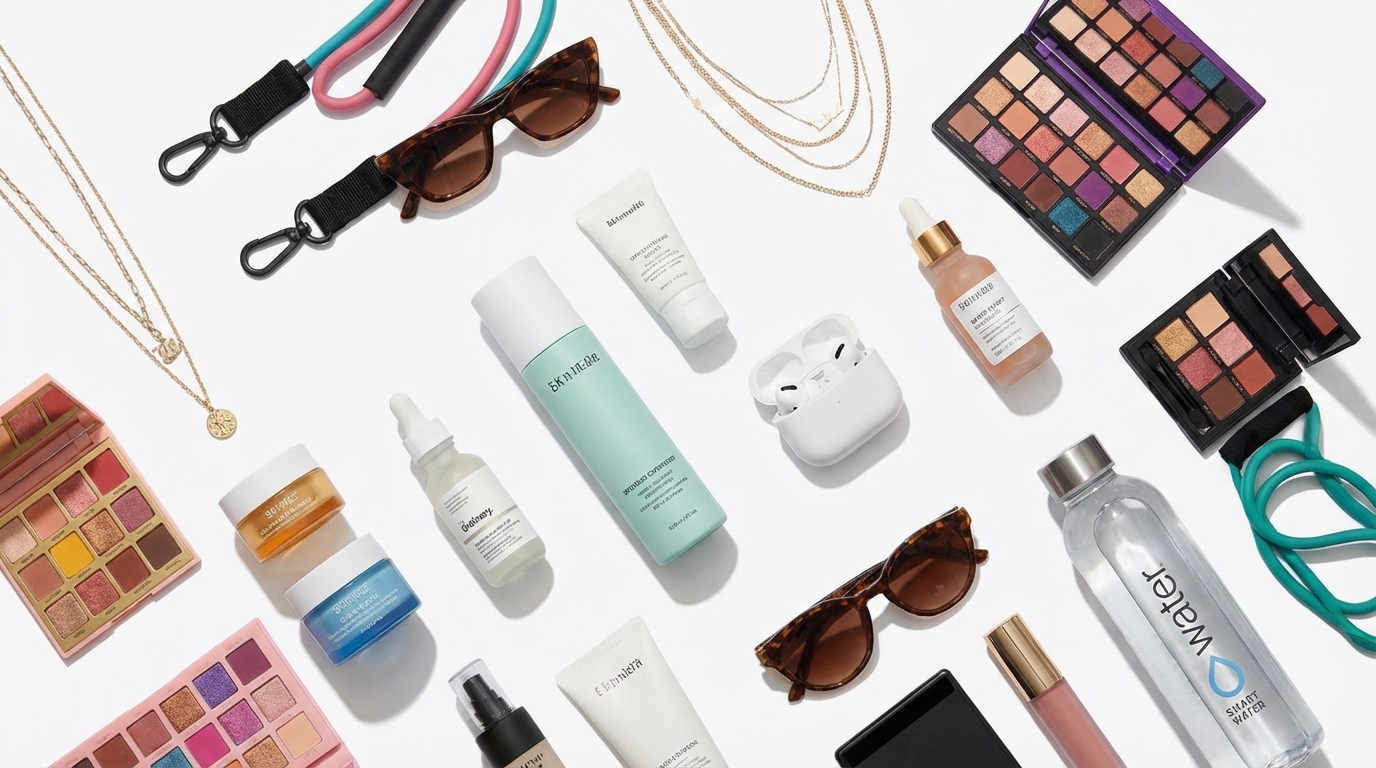
Knowing which product categories generate the most sales on TikTok Shop is valuable context for any seller — whether you’re deciding which products to launch first, how to position an existing catalog, or whether TikTok Shop is the right channel for your particular business.
Beauty and Personal Care
This is TikTok Shop’s dominant category by a significant margin. Globally, beauty and personal care products accounted for approximately 370 million items sold in 2024. In the US alone, health and beauty sales reached approximately $1.34 billion. The category’s dominance reflects TikTok’s broader culture — the platform has long been a primary source of beauty discovery, from viral skincare routines to makeup trends that originate on TikTok and spread globally.
Top-performing beauty subcategories include skincare (serums, moisturizers, SPF products), makeup (foundations, lip products, eyeshadow palettes), hair and scalp care, fragrance, beauty tools (jade rollers, gua sha, LED devices), and personal hygiene products.
Fashion and Apparel
Womenswear and apparel/accessories represent TikTok Shop’s second-largest category, with US sales reaching approximately $1.01 billion in 2024. Fashion content is inherently visual and emotional — exactly the kind of content that performs well on TikTok. Best-sellers in this category include casual dresses, jeans, sweatshirts, bodysuits, sunglasses, and jewelry.
Electronics and Accessories
Electronics and phone accessories generated approximately $430 million in US GMV in 2024. This category includes wireless earbuds, phone cases, charging accessories, and smart home gadgets. The demo-friendly nature of tech products makes them well-suited to both short-form video and LIVE Shopping formats.
Baby and Maternity Products
Baby and maternity products reached approximately $413 million in US GMV — a category that might surprise those who associate TikTok primarily with a younger, childless demographic. Parenting content communities (#MomTok, #BabyTikTok) are large and highly engaged on the platform, making this a surprisingly strong channel for brands in this space.
Shoes and Footwear
Footwear generated around $404 million in US GMV in 2024, driven by fashion-forward styles, athletic shoes, and trending seasonal releases. Shoes perform particularly well through creator affiliate content, where a creator’s authentic styling video can drive concentrated purchase spikes.
General Principles for Product Selection
Regardless of category, products that perform best on TikTok Shop tend to share several characteristics:
- Visually demonstrable — the product’s value can be shown, not just described.
- Emotionally resonant — they connect to a specific desire, problem, or lifestyle aspiration.
- Price-accessible for impulse purchase — products under $50 tend to see higher conversion rates from video content; higher-priced items require more consideration and often do better through LIVE demonstrations and Q&A.
- Aligned with trending content — products that naturally fit into popular TikTok content formats, challenges, or aesthetics have a built-in viral potential that pure “utility” products lack.
Common Mistakes TikTok Shop Sellers Make (and How to Avoid Them)
Understanding what works on TikTok Shop is only half the equation. Equally important is understanding the common pitfalls that cause sellers — even those with great products — to underperform or fail to gain traction on the platform.
Treating TikTok Like a Traditional Ad Platform
Sellers who approach TikTok Shop with a traditional paid advertising mindset — producing high-gloss commercial content and simply targeting it to a demographic — frequently see poor results and conclude the platform “doesn’t work.” In reality, they’ve missed the platform’s core mechanic. TikTok rewards content that earns attention, not content that buys it. Even with paid Video Shopping Ads, the creative needs to feel organic to the platform in order to stop the scroll.
Uploading Too Few Products
Many new sellers list only their bestselling products, assuming this minimizes risk. But TikTok Shop’s algorithm rewards catalog depth — a larger, well-organized product catalog increases your chances of appearing in search results, being picked up by affiliate creators, and matching the diverse tastes of TikTok’s vast audience. Upload your full catalog, not just your top sellers.
Setting Commissions Too Low
Commission rates that are uncompetitive for your category will result in creators overlooking your products in favor of higher-paying alternatives. Research the going commission rate in your niche before setting yours, and consider starting with a slightly above-average rate to attract early adopters. Once you have strong sales data and reviews, you can calibrate from there.
Neglecting Customer Service and Reviews
TikTok Shop factors seller ratings, response times, and review scores into your listing’s visibility. Sellers who respond slowly to customer inquiries, handle disputes poorly, or accumulate negative reviews will see their products deprioritized by the algorithm over time. Treat your TikTok Shop customer service with the same care you’d give any primary sales channel.
Inconsistent Posting
Consistency is the most underrated factor in TikTok success. Sellers who post sporadically — flooding the account for a week then going quiet — tend to see erratic, unsustainable results. TikTok’s algorithm rewards accounts that publish regularly and generate sustained engagement. Commit to a posting schedule of at least three to five times per week, and stick to it even when individual videos don’t perform as expected.
Ignoring Analytics
TikTok Shop’s Seller Center provides detailed analytics on your videos, LIVE sessions, affiliate performance, and product-level sales data. Sellers who don’t regularly review these metrics miss crucial feedback signals about what’s working and what isn’t. Make weekly analytics reviews part of your TikTok Shop operating routine — identify your highest-converting products, your best-performing content formats, and your most valuable creator partnerships, then do more of those things.
Building a Long-Term TikTok Shop Strategy
Short-term tactics can generate initial sales on TikTok Shop, but sustainable revenue growth requires a more deliberate, systems-oriented approach. The sellers who build durable businesses on the platform combine several elements that compound over time.
Building a Content Engine, Not Just a Content Calendar
The most successful TikTok Shop sellers don’t just schedule posts — they build a repeatable content production process. This might involve batching video shoots for a full week of content in a single session, developing a set of go-to content templates that can be adapted quickly for new products, and establishing a feedback loop where content performance data directly informs the next production cycle.
Diversifying Your Sales Channels Within TikTok
Don’t rely on a single TikTok Shop selling mechanism. The sellers with the most resilient revenue streams use all available channels in concert: organic shoppable videos, regular LIVE Shopping sessions, a strong affiliate creator network, and paid advertising. When one channel underperforms — perhaps organic reach dips during an algorithm update, or a creator partnership ends — the others provide continuity.
Leveraging TikTok Data Across Channels
TikTok Shop generates rich behavioral data about your customers — what content they engaged with before purchasing, which products they viewed together, what demographics are buying most, and what price points convert best. This data has value beyond TikTok itself. Use it to inform your product development, your pricing strategy, and your marketing approach on other channels. What you learn about your audience on TikTok can make you a better seller everywhere.
Staying Current with Platform Changes
TikTok Shop is a fast-moving platform. Fee structures, algorithm priorities, ad products, and platform policies have all changed substantially within just the first two years of the program’s US existence. Sellers who stay informed — following TikTok’s official Seller Center updates, engaging with seller communities, and attending platform-hosted educational sessions — will consistently be better positioned than those who set their strategy once and leave it unchanged.
Conclusion: Is TikTok Shop Right for Your Business?
TikTok Shop has grown from a novel experiment into a legitimate, large-scale e-commerce channel in a remarkably short period of time. With $33.2 billion in global GMV, 47 million US buyers, and a creator affiliate ecosystem that allows virtually any brand to access word-of-mouth marketing at scale, the platform offers genuine commercial opportunity for sellers who approach it with the right strategy.
But it’s not a universal fit. Products that are highly visual, emotionally compelling, and priced for accessible purchase decisions will thrive here. Products that require extensive research, lengthy consideration cycles, or detailed technical explanations may find TikTok Shop a more challenging environment — at least for driving initial conversions.
The sellers who consistently win on TikTok Shop share several traits: they create authentic, engaging content regularly; they build genuine relationships with creators and customers; they use data to improve rather than guess; and they treat TikTok Shop as a long-term investment rather than a quick-win channel.
Key Actionable Takeaways
- Register your shop today. The application process takes only a few days, and getting your catalog listed early gives you a head start on building sales history and reviews.
- Upload your full product catalog, not just your best sellers — breadth increases discoverability and affiliate pickup rates.
- Set competitive affiliate commissions (typically 10–20% for most consumer categories) to attract quality creators from day one.
- Commit to a consistent posting schedule of at least three to five short-form videos per week, prioritizing authentic demonstrations over polished commercials.
- Launch your first LIVE Shopping session within the first month — even if it’s imperfect. LIVE is a skill that improves rapidly with practice, and the data you gather from early sessions is invaluable.
- Factor all fees into your pricing before you launch — 8% referral fee plus $0.30 per transaction plus affiliate commissions need to work within your margins.
- Review your analytics weekly and let the data guide your next moves rather than gut instinct alone.
- Stay informed about platform changes. TikTok Shop is evolving quickly, and sellers who adapt early consistently outperform those who don’t.
The window for first-mover advantage on TikTok Shop is not closed — but it is narrowing. With competition growing rapidly and the platform’s algorithm increasingly rewarding sellers with strong track records, the best time to start building your TikTok Shop presence was six months ago. The second-best time is now.