


Most of the conversation about TikTok Shop selling covers the front end: which hooks stop the scroll, which creators convert, how the algorithm decides what goes in the feed. That makes sense. The front end is visible, it gets filmed, and it’s where the screenshots of big GMV days come from.
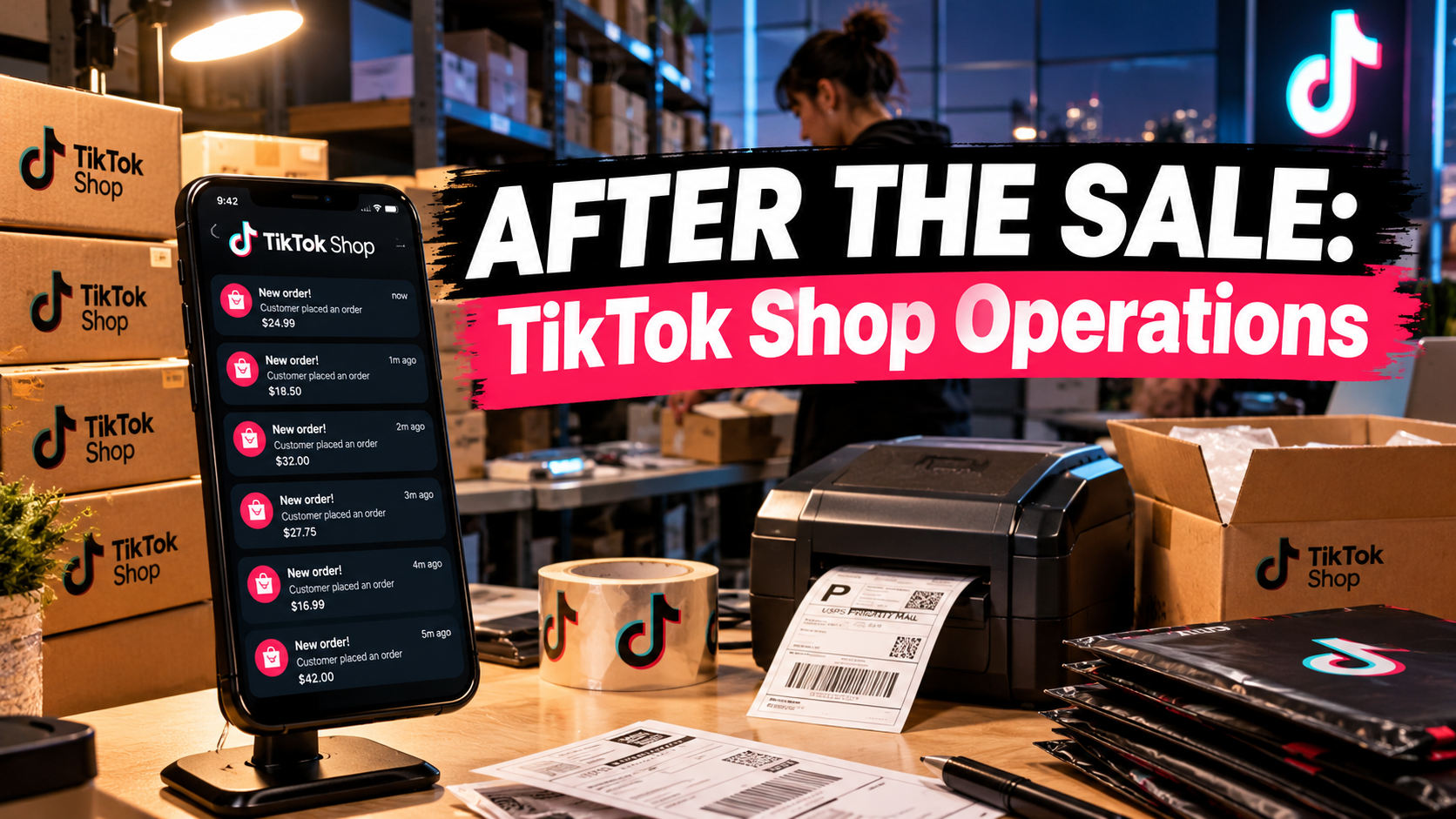
But a TikTok Shop order doesn’t finish when someone taps “Buy.” It finishes when a package shows up on time, matches what the video promised, and doesn’t come back. Everything between the tap and the doorstep is operations. On TikTok Shop, operations has a habit of quietly deciding which shops survive their own success.
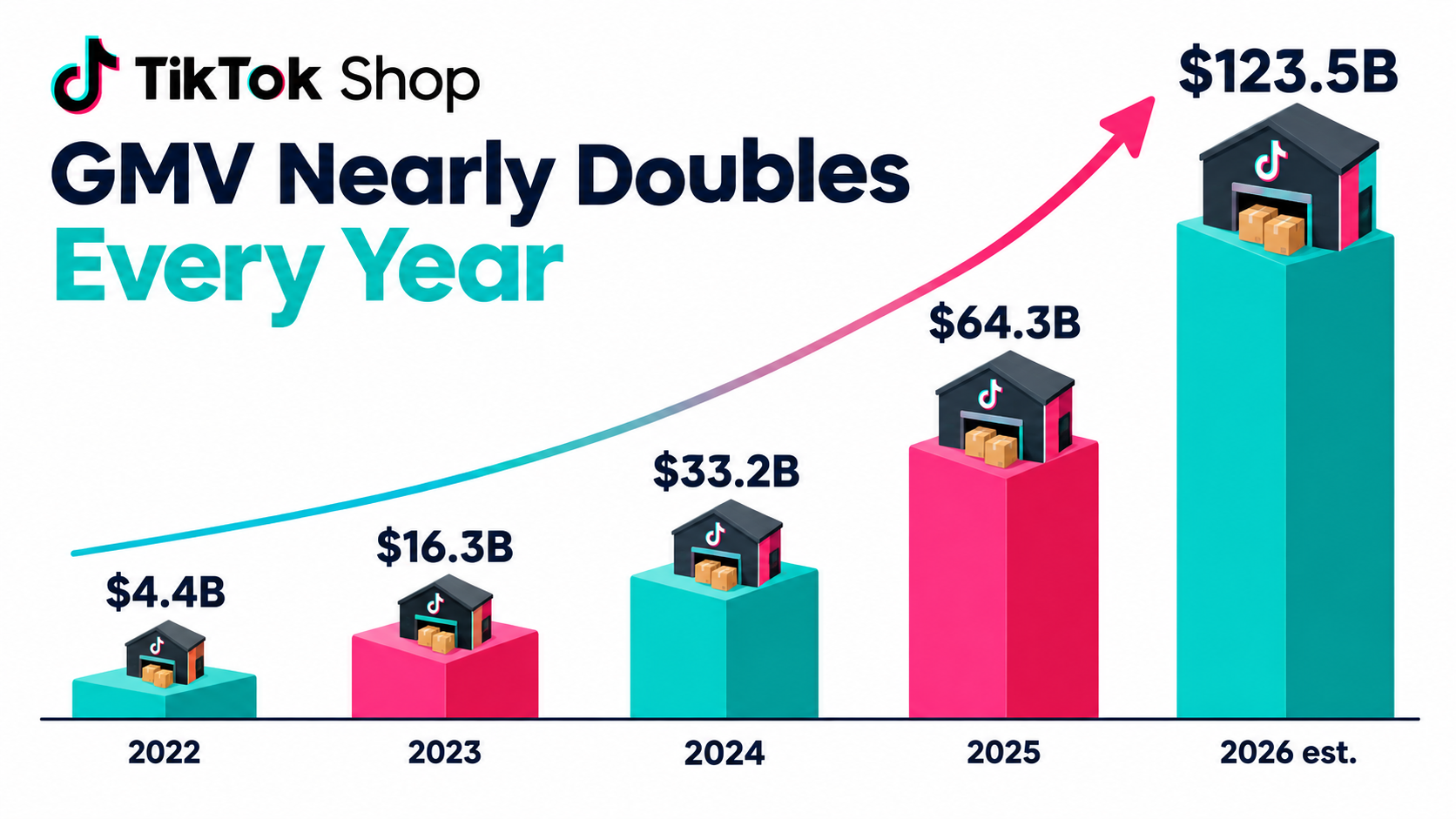
The stakes keep rising. Global TikTok Shop GMV reached an estimated $64.3 billion in 2025 and is projected to hit about $123.5 billion in 2026, according to figures compiled by DemandSage from Statista and Momentum. In the US alone, TikTok Shop sales reached roughly $15.8 billion in 2025. First-half 2026 US GMV was reported at $11.8 billion, more than double the same period a year earlier.
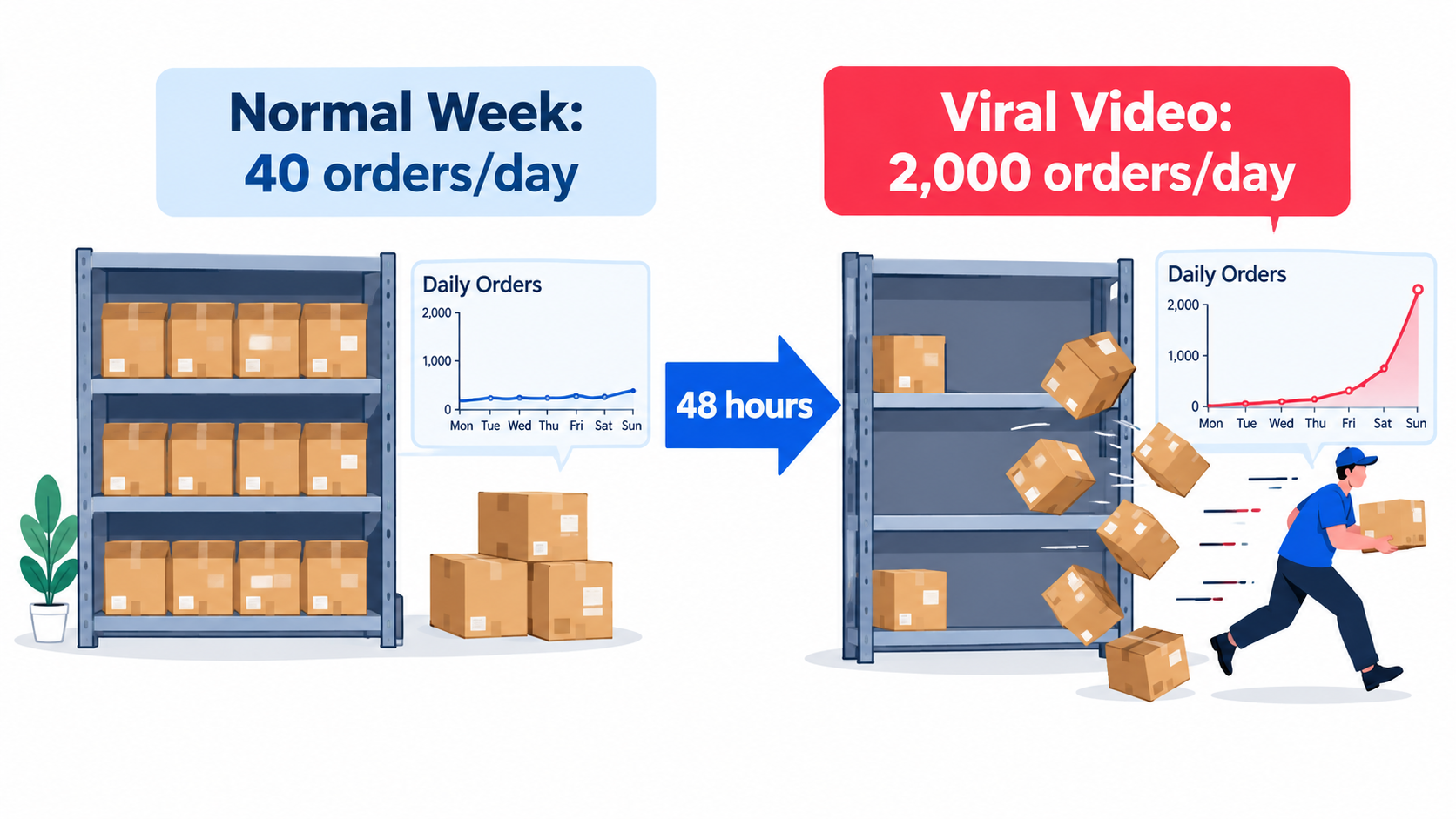
That kind of growth puts heavy pressure on the back end. Demand on TikTok doesn’t climb steadily. It arrives in spikes set off by one video, one creator, or one LIVE session. A shop that can’t absorb those spikes doesn’t just miss sales. It can pick up late shipments, cancellations, bad reviews, and policy strikes that hold it back for months.
This guide is about that back end. It skips hooks and algorithm theory and looks at the unglamorous systems behind a durable TikTok Shop business: inventory planning for viral demand, fulfillment model choices, handling time, returns, customer service, shop health, creator sample logistics, cash flow, LIVE operations, and peak season readiness. It ends with a 30-day operations audit you can run on your own shop.
Why Operations Became the Real Bottleneck on TikTok Shop
In TikTok Shop’s early days, the hard part was getting attention. Few sellers knew how to make shoppable content, few creators were doing affiliate work, and the platform was still teaching US shoppers to buy inside the app. A seller who could produce decent video had a real advantage.
That advantage has shrunk. Creators now drive about 42% of US TikTok Shop sales, according to DemandSage’s 2026 statistics roundup. Affiliate programs, sample requests, and creator outreach tools are standard. When everyone can generate demand, the gap between shops shows up in how well they fulfill it.
The de minimis shift changed who’s competing
One policy change reshaped the field. When the US ended the de minimis import exemption in May 2025, sales from foreign sellers dropped sharply, and domestic businesses picked up more of the demand, according to reporting compiled from CNBC and eMarketer. For years, many cross-border sellers had shipped low-value parcels straight to US buyers without import duties.
For domestic sellers, this was a real opening. It also raised expectations. A domestic shop competes on speed and reliability in a way a cross-border seller often couldn’t. Shoppers who buy from a US-based shop expect US-style delivery times, and the platform’s performance standards reflect that.
Seller count isn’t the same as active sellers
TikTok Shop reports more than 15 million sellers worldwide and more than 215,000 small businesses selling in the US. DemandSage points out something worth remembering: a store count isn’t the same as a selling-store count. Many registered shops have never made a sale.
The real competition is a much smaller group of shops that both generate orders and ship them well. Getting into that group depends less on finding a viral product and more on handling the volume a viral product brings.
Operations problems compound
A creative misfire costs you one video. An operations failure lingers. A late shipment becomes a cancellation request, which becomes a negative review, which lowers conversion on the next video, which wastes the creator’s effort and makes them less likely to promote you again. On top of that, the platform tracks fulfillment metrics and can limit shops that fall below its standards.
That’s why the most useful question for a growing seller usually isn’t “how do I get more orders?” It’s “what breaks first if orders triple next week?”
Forecasting Inventory When Demand Comes in Spikes
Traditional e-commerce forecasting assumes demand is fairly smooth. You look at trailing sales, adjust for seasonality, add safety stock, and reorder on a schedule. That model works poorly on TikTok Shop, where one creator’s video can multiply daily orders in a few hours and then fade within a week.
Think in scenarios, not single forecasts
Instead of one forecast number, plan around three demand states for each hero SKU:
- Baseline: organic and steady affiliate sales with no breakout content. This is your floor.
- Elevated: one or two mid-sized creators posting, or a paid push running. Demand rises noticeably for one to two weeks.
- Breakout: a video goes viral or a large creator posts. Demand jumps far beyond normal, often for a few days.
For each state, write down how much stock you have on hand, how many days it would last, and how long a replenishment takes. The breakout scenario usually exposes the problem. If restocking takes six weeks and a breakout clears your inventory in four days, you’ll spend over a month out of stock right when the algorithm and creators are paying attention to your product.
Watch leading indicators, not just sales
Sales data shows a spike after it has started. Earlier signals include:
- Rising sample requests from affiliates for a particular SKU
- Creators with large audiences adding your product to their showcase
- Videos featuring your product that pick up unusual view velocity in the first hours
- Higher add-to-cart rates on your product detail page
Treat these as early warnings. When several move together, it’s time to check stock levels, alert your supplier, and get your fulfillment partner ready, before the orders arrive.
Safety stock vs. working capital
The obvious answer to spike risk is to hold more inventory. But inventory ties up cash, and many TikTok Shop sellers are small businesses without much room. Spikes are also unpredictable. You could stock up for a viral moment that never comes.
A practical middle ground is to tier your catalog. Hold deeper safety stock only on the SKUs that already show breakout signs: strong conversion, repeat creator interest, solid reviews. Keep long-tail SKUs lean. Ask suppliers about priority production slots or partial pre-built components that shorten restocking during a surge.
Decide in advance what you’ll do when you run out
Stockouts will happen. What matters is whether you’ve already decided how to respond. Options include pausing affiliate promotion of the SKU, pointing creators to a substitute product, lowering visible inventory to avoid overselling, or switching to pre-order messaging where platform policy permits. The worst outcome is accepting orders you can’t ship on time, because that’s how operational metrics get damaged.
Choosing a Fulfillment Model That Survives a Viral Week
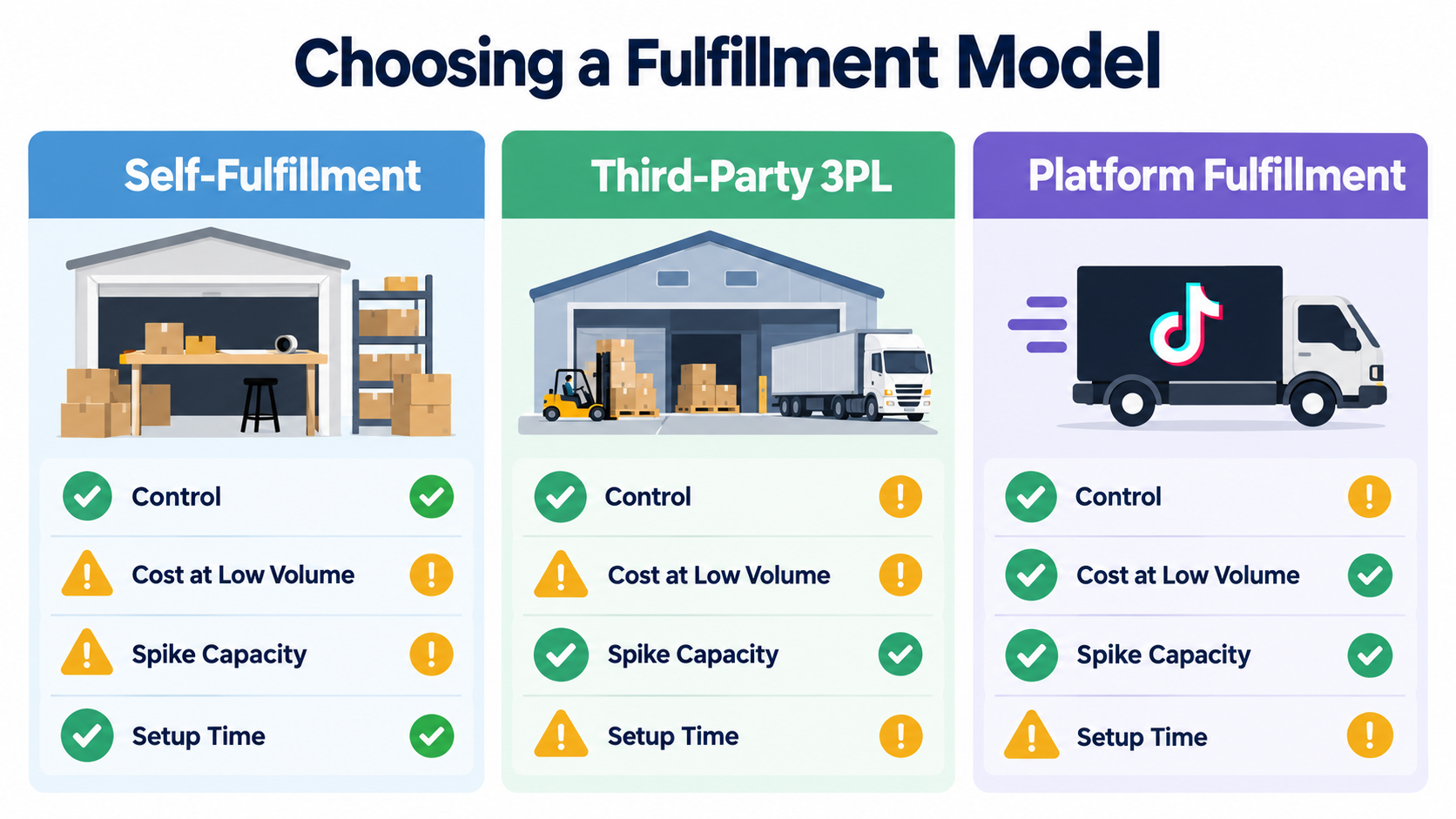
Every TikTok Shop seller fulfills orders in one of three ways or some mix of them: doing it yourself, hiring a third-party logistics provider (3PL), or using the platform’s own fulfillment program where it’s available. Each one involves trade-offs in control, cost, and spike capacity.
Self-fulfillment
Most shops start here: a spare room, a garage, or a small warehouse with the owner and maybe a few helpers packing orders. The upside is full control over packaging, inserts, quality checks, and the unboxing experience, which matters on a platform where customers often film their own unboxings.
The downside is capacity. A team that packs 100 orders a day comfortably can’t suddenly pack 2,000 without temporary staff, more space, and more supplies. Self-fulfillment works best at low and steady volume, and it tends to fail at exactly the moment TikTok rewards you.
Third-party logistics (3PL)
A 3PL stores your inventory and picks, packs, and ships orders for you, usually charging receiving, storage, and per-order fees. Good 3PLs have labor and space to absorb spikes, and many integrate with TikTok Shop so orders flow in automatically.
The questions to ask a 3PL before signing go beyond price:
- Do they have a native, tested integration with TikTok Shop, or does it go through a middleware connector?
- What’s their order cutoff time for same-day shipping?
- How do they handle a sudden multiple of normal volume? Do they have references from social commerce clients?
- How do they handle returns, and how fast do restocked units go back into sellable inventory?
- Can they do custom packaging and inserts?
Platform fulfillment
TikTok runs its own fulfillment program in some markets, where sellers send inventory to TikTok-operated or partner warehouses. The appeal is tight integration with the platform’s logistics and, in many cases, eligibility for faster delivery badges or other perks. Program terms, fees, and eligibility change, so read the current Seller Center documentation for your market instead of relying on second-hand summaries.
The main trade-offs are less control over packaging and branding, and putting more of your business inside one platform. If TikTok Shop is one of several channels, keeping inventory split across platform fulfillment and a channel-neutral 3PL takes more coordination.
Hybrid setups are common
Many established sellers mix models. Hero SKUs might sit in a 3PL or platform fulfillment for spike capacity while low-volume or bundled items ship in-house. A hybrid setup is more complex, but it means one fulfillment failure doesn’t stop the whole shop.
Handling Time and Delivery Speed: Your Quietest Ranking Factor
On most marketplaces, shipping performance feeds into seller standards, and TikTok Shop is no exception. The platform measures how fast sellers ship after an order is placed, how often orders ship late, and how often orders get canceled. These numbers feed into shop health scores and can affect eligibility for promotions, campaigns, and in some cases visibility.
Handling time vs. transit time
Separate the two parts of delivery speed:
- Handling time is the gap between an order coming in and the carrier scanning the package. You control this completely.
- Transit time is how long the carrier takes to deliver. You influence it through carrier choice, service level, and warehouse location.
Most operational trouble shows up in handling time. A shop that normally ships within a day can slip to three or four days during a spike if it doesn’t have the labor, and that’s where late-shipment rates rise.
The scan matters more than the pack
A common mistake is buying a label and treating the order as shipped. Platforms generally measure shipping from the carrier’s first scan, not label creation. If packages wait at your facility or a carrier’s pickup is delayed, your metrics suffer even though the label was printed on time. Set up regular carrier pickups or drop-offs, and check that first scans actually happen when you expect.
Warehouse location changes the equation
Where your inventory sits determines how fast it can reach buyers. A single warehouse on one coast means longer transit to the other. As volume grows, many sellers split inventory between two locations to cut average transit time. That adds inventory complexity, so it usually makes sense only once volume is steady enough to justify it.
Set realistic handling times in Seller Center
If you can’t reliably ship within your stated handling window during busy periods, extending the window is often better than missing it over and over. A slightly longer promise you keep is safer than a short one you break. Check current Seller Center policy for the allowed ranges and how they affect product display.
Returns in an Impulse-Buy Environment
TikTok Shop purchases are often impulsive. Someone is scrolling, sees a convincing demo, and buys within seconds. That’s the platform’s strength, and it shapes returns too. A buyer who bought on impulse is more likely to reconsider when the package arrives, especially if the product doesn’t match the energy of the video.
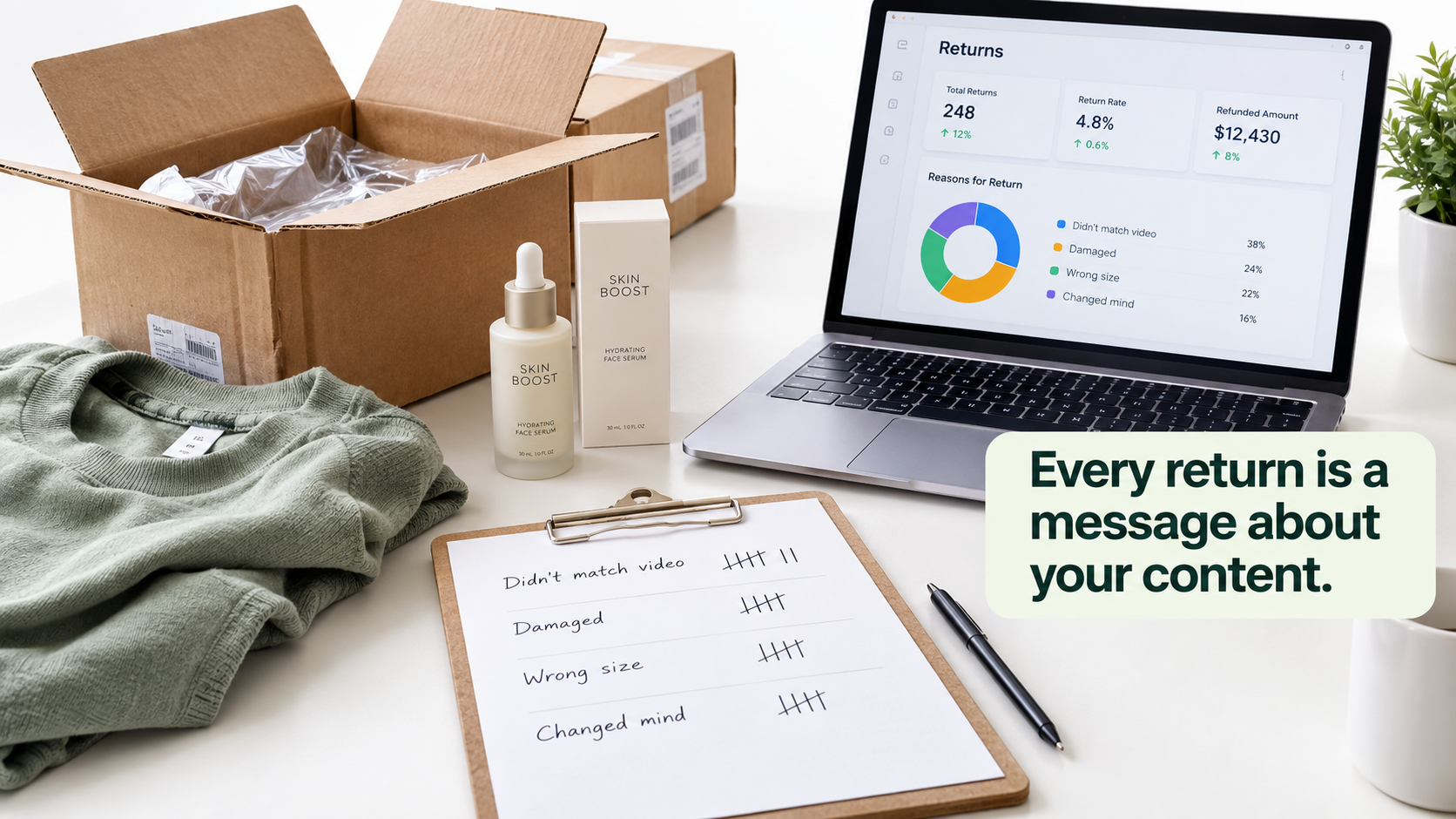
Sort returns by reason, then by source
Every return carries information. Group return reasons into categories that lead to action:
- Didn’t match the video: the content overpromised. Look at which creator videos drove these orders.
- Damaged in transit: a packaging problem. Review materials and box sizes.
- Wrong size or fit: a listing information problem. Improve size charts and add fit notes.
- Defective: a supplier quality problem. Escalate with your manufacturer and track by batch.
- Changed mind: partly unavoidable with impulse buying, but a high rate can point to price-value mismatch.
Then add a second dimension: which video, creator, or LIVE session produced the returned order. If one affiliate’s orders come back at twice the shop average, that creator’s content is probably setting the wrong expectations, even if their raw GMV looks great.
Creator briefs are a returns tool
Many sellers write creator briefs to maximize conversion. Fewer write them to minimize returns. Add clear guidance on what the product doesn’t do, accurate sizing and dimension notes, and honest results timelines for products like skincare. A slightly lower conversion rate with much lower returns usually means more profit.
Returns processing speed
How quickly returned items are inspected, graded, and put back into stock affects both cash flow and customer satisfaction. Slow refunds create disputes, and inventory sitting in a returns bin can’t be sold during the next spike. Set a target for how long it takes from a return arriving to the refund being issued and the unit restocked, and track it weekly.
Returnless refunds
For low-cost items, shipping a return back can cost more than the product is worth. Many sellers issue refunds without requiring the item back when the economics justify it. Set a clear internal threshold and watch for abuse patterns, such as repeat refund requests from the same accounts.
Customer Service and Reviews: Closing the Loop
On TikTok Shop, reviews and ratings show up next to the content that sells the product. A shopper who sees a convincing video and then a pile of complaints below it will hesitate. Customer service is part of how conversion works on this platform.
Response time as an operating metric
Buyer messages often arrive in bursts that line up with order spikes. A shop that handles 20 messages a day can suddenly get hundreds. Most of them repeat a few questions: Where’s my order? When will it ship? How do I use this? Can I change my address?
Prepare for this with:
- Saved replies for the ten most common questions
- Proactive shipping notifications that answer “where’s my order” before buyers ask
- Product-use guides included in the package and linked in replies
- A clear escalation path for damaged or missing orders so they’re fixed in one contact
The platform tracks seller response rates and times. Read current Seller Center standards for your market and treat them as minimums, not goals.
Fix problems before they become reviews
The best moment to prevent a negative review is before the customer writes it. A buyer who gets a quick, fair fix for a damaged item often leaves a neutral or positive review anyway. A buyer who gets ignored nearly always leaves a negative one.
Look out for buyers whose orders are late or flagged as delivery exceptions, and contact them before they reach out. A short message saying “we noticed your package is delayed, here’s what we’re doing” heads off a lot of complaints.
Feed reviews back into the product and content
Recurring complaints in reviews are free product research. If several buyers mention the same flaw, fix it with the supplier. If several praise a feature the videos never mention, put it in the next creator brief. A shop that reads its reviews every week improves faster than one that only looks at its star rating.
Shop Health, Violations, and Staying Off the Penalty List
TikTok Shop runs a performance and policy system that scores shops on fulfillment, customer service, product quality, and policy compliance. Shops that fall below thresholds or rack up violations can face listing removals, restricted features, payout holds, or suspension. The exact metrics, point systems, and thresholds change over time and vary by market, so the Seller Center policy pages are the only reliable source.
The common violation categories
Exact rules differ, but violations usually fall into a few groups:
- Fulfillment failures: late shipments, high cancellation rates, invalid tracking
- Product and listing issues: misleading claims, prohibited or restricted items, inaccurate descriptions
- Intellectual property: unauthorized use of brands, trademarks, or copyrighted material
- Content claims: creators or sellers making unsupported health, medical, or performance claims
- Customer experience: poor response rates, high negative feedback, unresolved disputes
Affiliate content is your responsibility too
Many sellers miss this: content made by affiliates promoting your products can still affect your shop. If a creator makes an exaggerated health claim about your supplement, the fallout can land on you. Include compliance rules in creator briefs. List claims that are off-limits, explain disclosure requirements, and keep an eye on high-volume affiliates’ content.
Build a weekly health check
Set aside fifteen minutes each week to review your shop’s health dashboard. Look for:
- Late shipment and cancellation trends over the past 7 and 30 days
- New policy notices or warnings
- Products flagged or removed
- Response rate and time
- Negative review rate by product
Problems caught early can usually be fixed before they become penalties. Problems found after a restriction take much longer to undo.
Appeals and documentation
When you think a violation is a mistake, appeal it with evidence. Keep records: supplier invoices proving authenticity, carrier scan data proving on-time shipment, ingredient certificates backing up product claims. Sellers who keep tidy documentation win appeals more often than those who scramble to gather it later.
Creator Sample Logistics: The Hidden Fulfillment Channel
Since creators drive such a large share of TikTok Shop sales, sending samples to affiliates is a fulfillment stream of its own. Many sellers treat it as an afterthought. That’s a mistake, because sample logistics decide how quickly new content gets made and how much inventory quietly disappears.
Samples are inventory with a marketing cost
Every sample is a unit you can’t sell, plus shipping. At small scale it hardly matters. When you’re sending hundreds of samples a month, it adds up to a real expense that belongs in your unit economics. Track sample units separately from sellable inventory so forecasts don’t get thrown off by units going out for free.
Qualify before you ship
Not every sample request deserves approval. Set simple criteria: audience fit, past content quality, past sales performance if there is any, and whether the creator has posted about earlier samples. Many sellers find a small share of creators produce most of their affiliate GMV, so concentrating samples on proven or promising creators lowers waste.
Shorten time-to-content
The gap between approving a sample and the creator posting is time when the product could already be selling. Ship samples fast, include a short brief inside the package, and follow up a set number of days after delivery. Some sellers keep a separate sample inventory pool so samples never compete with customer orders during a spike.
Track sample ROI
For each creator, track samples sent, videos posted, and GMV attributed. Creators who repeatedly take samples and never post should be dropped from future sends. Creators who post reliably and convert deserve faster approvals, early access to new products, and better commission terms.
Cash Flow and Payouts: Surviving Your Own Growth
Rapid growth can put a seller out of business, and TikTok Shop’s spiky demand makes that risk worse. Cash goes out before it comes in: you pay for inventory, fulfillment, shipping, samples, and ads up front, while platform payouts arrive on a schedule after delivery and any hold periods.
The gap during a spike
Picture a viral week. Orders jump. You rush a reorder from your supplier, often with a deposit or full prepayment. Your 3PL bills more fulfillment fees. You might add ad spend to push the moment further. Meanwhile, payouts from that week’s orders won’t arrive until after delivery and the applicable settlement period.
For a few weeks you could be running far more volume and holding far less cash than before. Sellers without a buffer or financing can end up unable to fund the restock their own success demands.
Know your payout timing
Read your market’s settlement terms in Seller Center: when funds become available, which holds apply to new or flagged shops, and how returns and disputes affect payouts. Build a simple cash flow model that maps expected payouts against upcoming supplier, fulfillment, and ad payments for the next eight to twelve weeks.
Plan financing before you need it
Arrange working capital options while things are calm: a business line of credit, revenue-based financing, or negotiated supplier payment terms. Asking for credit in the middle of a viral spike, when you need it urgently, rarely gets you good terms.
Watch contribution margin per order
After commissions, platform fees, fulfillment, shipping, returns, and samples, many TikTok Shop products have thinner margins than sellers expect. Calculate contribution margin per order at the SKU level and update it whenever commission rates, fees, or carrier prices change. A product that looks profitable on GMV can lose money once every cost is counted.
Running LIVE Selling Like an Operation, Not a Show
Live shopping is a core part of TikTok Shop, with sellers and creators demonstrating products in real time while viewers buy without leaving the stream. A good LIVE session can produce a burst of orders within a few hours. That concentrated demand creates operational problems of its own.
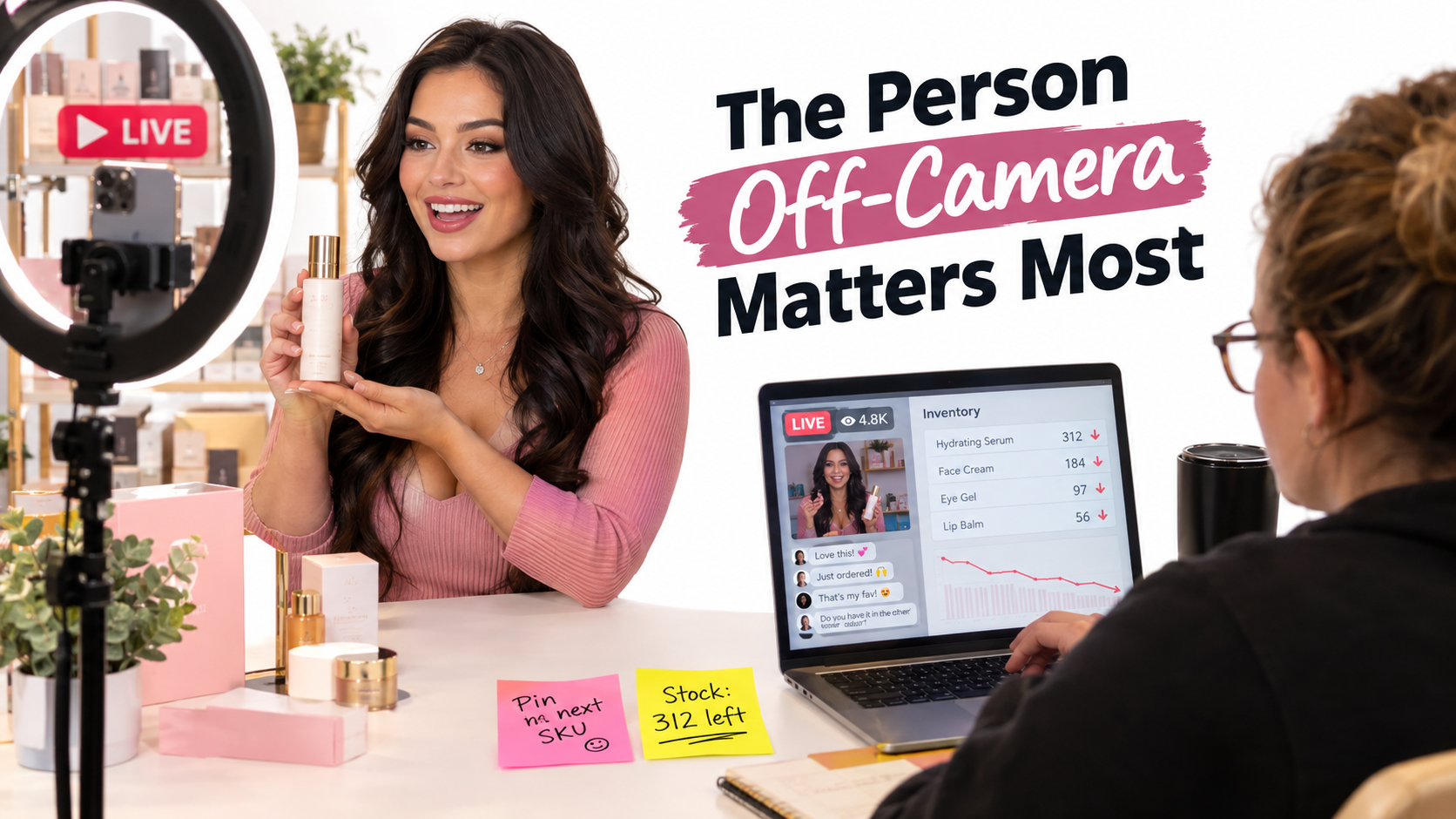
The off-camera role
The host gets the attention, but well-run LIVE sessions usually have at least one person off camera handling operations. This person:
- Watches inventory in real time and tells the host when a SKU is running low
- Pins and unpins products in the right order
- Activates and ends flash deals or LIVE-only pricing on schedule
- Answers product questions in chat that the host can’t get to
- Flags compliance risks, like a host drifting toward claims they shouldn’t make
Inventory allocation for LIVE
Decide ahead of time how much inventory each LIVE session can sell. If the same stock serves regular orders, affiliate traffic, and LIVE, a strong session can drain the units meant for everything else. Some sellers set a LIVE allocation per SKU and stop promoting the item once it’s used up, instead of risking oversells.
Post-LIVE fulfillment surge
A LIVE session moves your order spike to a known time. That’s an advantage. Unlike a surprise viral video, you can schedule extra packing labor, warn your 3PL, and prepare packaging before the session starts. Treat each LIVE as a planned fulfillment event with staffing to match.
Measure what matters
Beyond GMV per session, track conversion rate from viewers to buyers, average order value, return rate on LIVE orders compared with other channels, and on-time shipping for LIVE-generated orders. A session that brings big GMV but heavy returns or late shipments may be costing more than it earns.
Peak Season Readiness: Preparing for Q4 and Mega-Sales
Big shopping events concentrate demand on TikTok Shop the same way they do across retail. The platform has reported strong sales on events like Black Friday. Wikipedia notes TikTok Shop generated more than $100 million during Black Friday in 2024. For operations teams, peak season is a known spike, which means you can prepare for it in a way you can’t for viral moments.
Work backward from the event
Peak preparation starts months ahead. A rough timeline:
- 12–16 weeks out: pick the SKUs you’ll push, confirm production capacity with suppliers, and place inventory orders with enough lead time for shipping and receiving.
- 8–10 weeks out: confirm 3PL or platform fulfillment capacity, inbound appointment windows, and peak surcharges. Lock carrier pickup schedules.
- 6–8 weeks out: brief creators, ship samples, and line up LIVE sessions. Content needs time to be made and posted.
- 2–4 weeks out: stock up on packaging, hire or schedule temporary labor, update saved customer service replies, and run a test day at higher volume.
- Event week: watch inventory and shop health daily, stick to your stockout plan, and keep stock in reserve for post-event demand.
Carrier and warehouse congestion
Peak season strains every part of the logistics chain. Carriers slow down, warehouses fill up, and inbound receiving windows get tight. Sellers who send inventory to fulfillment centers late often find it stuck in receiving while demand peaks. Build in buffer time at each step.
Post-peak returns
Returns rise after major shopping events, especially gift purchases. Plan returns processing capacity for the weeks after peak, and keep an eye on how quickly returned units get back into sellable stock for January demand.
A 30-Day Operations Audit for Your TikTok Shop
The sections above cover many systems. The practical step is to find which ones would break first in your shop. This 30-day audit is designed to show that.
Week 1: Baseline your metrics
- Pull your last 30 and 90 days of late shipment, cancellation, and return rates from Seller Center.
- Calculate average handling time and compare it with your peak-day handling time.
- List every active policy notice or warning on your account.
- Note your current customer service response rate and time.
Week 2: Stress-test inventory and fulfillment
- For each top-five SKU, calculate days of cover at baseline, elevated, and breakout demand.
- Write down supplier lead time for each one and identify which SKUs would stock out longest during a breakout.
- Ask your fulfillment setup, whether that’s your own team, a 3PL, or platform fulfillment, what volume it can handle in a single day and how fast it can scale.
- Write a one-page stockout response plan.
Week 3: Analyze returns and reviews
- Sort the past 90 days of returns by reason and by source (creator, LIVE, organic, ads).
- Find any creator or content source whose return rate is well above your average.
- Read every negative review from the past 60 days and tag recurring themes.
- Update creator briefs and listings to fix the top two causes.
Week 4: Cash flow and readiness
- Build an eight-to-twelve-week cash flow model matching payouts against expected outflows.
- Run a breakout scenario through the model to see whether you could fund a rush restock.
- Check that your financing options are in place.
- Set up a weekly fifteen-minute shop health review on your calendar.
At the end of the 30 days you should have a ranked list of operational weak points, each with a specific fix. Work through them in order, starting with whatever would hurt shop health most if it failed during a spike.
Conclusion: The Shops That Last Are the Ones That Ship
TikTok Shop is still growing quickly, with global GMV projected around $123.5 billion in 2026 and US sales continuing to climb. The domestic seller base has gained ground since the end of de minimis, and creator-driven selling is now routine. Generating demand has become the cost of entry.
What separates shops now is less visible: how fast orders ship, how few come back, how quickly customer problems get fixed, and whether the business can pay for its own growth. These systems don’t go viral, but they decide whether a viral moment builds a business or damages one.
Key takeaways:
- Plan inventory around scenarios. Baseline, elevated, and breakout demand each need their own plan, along with a stockout response decided in advance.
- Choose fulfillment for spike capacity. Low-volume cost matters less than whether your setup can handle a viral week.
- Treat handling time as a ranking input. Ship from first scan, set realistic windows, and protect your fulfillment metrics.
- Read returns as content feedback. Track returns by creator and video, and write briefs that set accurate expectations.
- Run a weekly shop health check. Catching problems early costs far less than undoing a restriction.
- Manage samples like inventory. Qualify creators, track sample ROI, and keep sample stock separate.
- Model cash flow before the spike. Know your payout timing and arrange financing while things are calm.
- Staff LIVE sessions for operations. The person off camera protects inventory, compliance, and fulfillment.
The front end of TikTok Shop gets attention, and the back end keeps customers. Start with the 30-day audit, fix whatever would break first, and your next viral moment is much more likely to work in your favor.