



There’s a running narrative in e-commerce circles that TikTok Shop is either a gold rush or a graveyard — that it’s either printing money for a lucky few or quietly burning budgets for everyone else. The truth, backed by data, lands somewhere more useful: TikTok Shop rewards sellers who build deliberately, and it punishes those who wing it.
In 2024, TikTok Shop generated $33.2 billion in global gross merchandise value (GMV), representing 201% year-over-year growth from $11 billion in 2023. The US market alone hit $9 billion in its first 16 months — a 650% jump. By mid-2025, the global platform was already tracking toward $66 billion in full-year GMV, with the US on pace to clear $15.8 billion for the year. Projections place US sales north of $20 billion by 2026.
Those aren’t hypothetical numbers. They’re the result of 900 million shoppers, 15 million active merchants, and a discovery algorithm that connects buyers to products they didn’t know they needed — until the video started playing. The #TikTokMadeMeBuyIt hashtag appears on more than 150,000 videos every single week. Three in four TikTok users report being likely to purchase something while using the app.
This is not a platform in decline. It is a platform still being figured out by sellers. The ones who get it right are clearing over $14 million per month. The ones who get it wrong are listing products the same way they would on Amazon and wondering why nothing moves. This guide lays out exactly how to be in the first group — from product selection and listing quality to creator partnerships, live shopping, and paid amplification.
The Numbers Behind the Opportunity
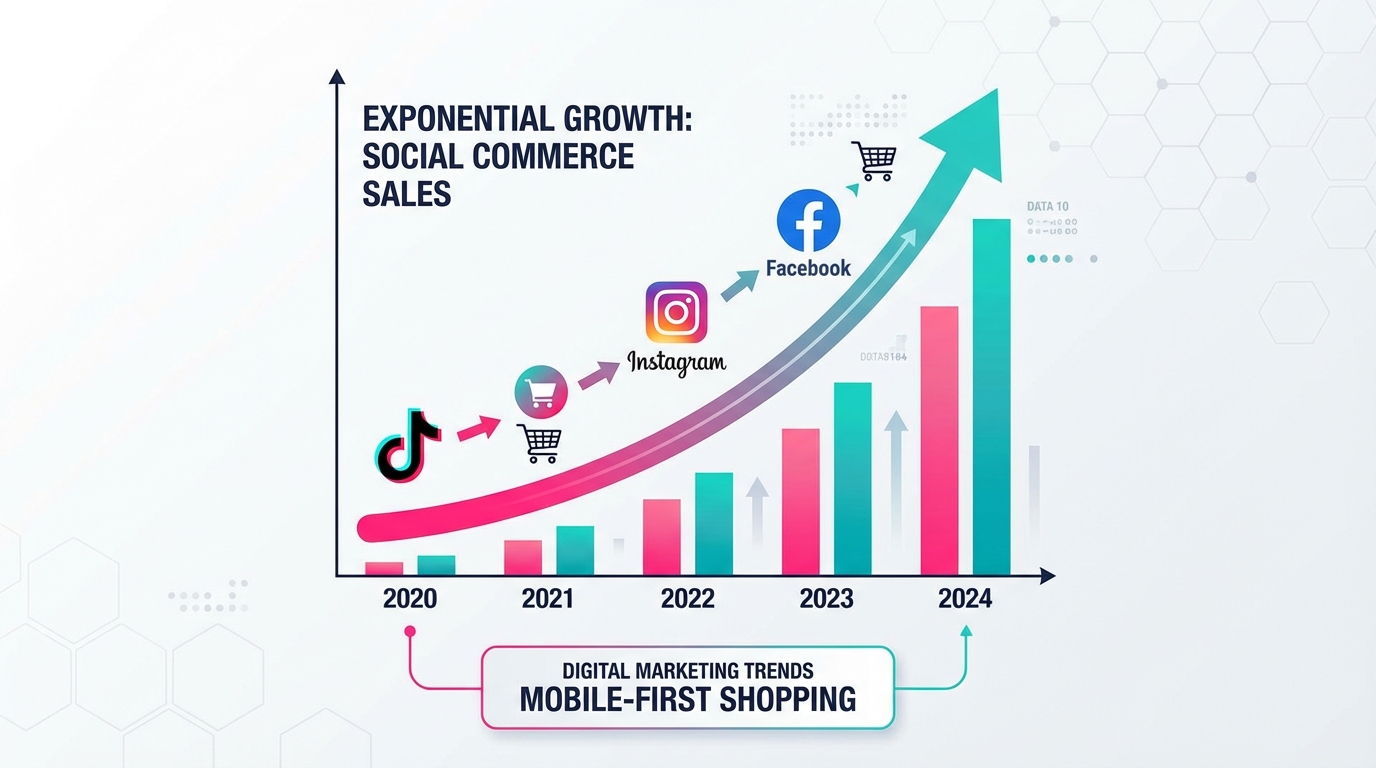
Understanding just how quickly TikTok Shop has scaled matters because it shapes the strategic decisions sellers need to make right now. This isn’t a saturated market — it’s an expanding one.
A Growth Curve Unlike Any Other Platform
TikTok Shop’s GMV trajectory is genuinely rare in e-commerce history. The platform went from essentially zero to $33.2 billion in just a few years. For context, it took Amazon over a decade to reach comparable GMV milestones. More importantly for US sellers, the American market didn’t even launch until mid-2023 — meaning the $9 billion US GMV figure for 2024 represents just 15 months of operation with a 650% growth rate attached to it.
The H1 2025 numbers reinforce that trajectory. The US contributed $5.8 billion in the first half of 2025 alone — a 91% year-over-year increase. At that pace, the US market will comfortably eclipse $15 billion for the full year 2025, with analysts projecting it to cross the $20 billion threshold by 2026.
A Seller Base That’s Still Growing
Between July 2023 and mid-2025, the number of active US TikTok Shops grew from just 4,450 to over 231,000. That’s a massive expansion — but relative to the 900 million global shoppers on the platform, supply still doesn’t meet the scale of demand. More than 171,000 of those US sellers are local and independent merchants, and their sales grew 70% year-over-year as of mid-2025.
The ceiling keeps rising because the audience keeps spending. The platform reports that 83% of TikTok Shop users discovered a new product on the app, and 70% discovered a new brand. That’s discovery-driven commerce at a scale no other social platform currently matches. The top shops in February 2026 each cleared over $14 million in monthly revenue — setting a benchmark that, while aspirational for most, signals that the platform’s earning potential is real, not theoretical.
What the Demographics Tell You
TikTok’s 136 million US users (roughly 40% of the population as of 2025) skew young but are broadening. Gen Z and Millennials still lead purchasing activity, with an average spend of $63.70 per transaction in the beauty and personal care category. But the health and wellness category — dominated by 35–54 year-olds — is one of the fastest-growing segments, showing that the platform’s buyer base is maturing alongside its product catalog.
The implication for sellers: TikTok Shop is no longer a niche playground for trendy skincare drops. It is a multi-demographic marketplace with deep intent to buy, provided you show up in front of the right audience with the right product.
Top-Selling Categories: Where the Real Money Lives
Not every product category thrives on TikTok Shop equally. The algorithm, the audience, and the video-first format heavily favor specific product types. Understanding where demand is concentrated lets you make smarter sourcing and positioning decisions.
Beauty & Personal Care: The Dominant Force
Beauty and personal care products account for approximately 79% of US TikTok Shop sales — a staggering category concentration that underlines how well visual, results-driven products perform on a video platform. In the UK, beauty commands 42% of total GMV. Individual product success stories here are extraordinary: GOPURE Neck Cream crossed $32 million in US sales, and Wonderskin Lip Stain was reportedly selling one unit every five seconds at its peak.
The sub-niches within beauty that consistently perform include anti-aging skincare, oral beauty, hair growth treatments, and skincare tools. Products that show visible, before-and-after results are naturally suited to short-form video demonstration. Price points in the $20–$50 range move fastest, though bundles can push average order values higher without sacrificing impulse-buy momentum.
Health & Wellness: The Fast-Rising Challenger
Health and wellness is the second major growth engine, and it’s accelerating quickly. MaryRuth’s Liquid Multivitamin crossed $29.9 million in sales, and Merach Vibration Plates hit $20.5 million. The category benefits from a core audience of 35–54 year-olds who have disposable income and high purchase intent around health outcomes. Biohacking supplements, high-protein snacks, and functional foods have seen 265% year-over-year growth in some markets.
The challenge in this category is regulatory compliance. Supplements and health products carry stricter listing requirements, and TikTok’s content policies around health claims are actively enforced. Sellers who do the compliance work upfront — verifying claims, getting proper certifications, and keeping product descriptions accurate — gain a structural advantage over those who cut corners and face listing removals.
Home Goods & Gadgets: High-Volume Virality
The home goods and gadgets category punches well above its weight in viral potential. Homeika’s Cordless Vacuum generated $25.6 million in sales. The Wyze Cam cleared $25.4 million. In the UK, Ninja Blender orders surged 1,800% after a viral period. These products win because utility is easy to demonstrate on video — showing a vacuum picking up debris or a blender making a recipe is compelling content that doubles as a product demo.
For sellers entering this category, the strategic advantage lies in finding gadgets with a strong visual “reveal” — the kind of product where seeing it in action creates immediate desire. Avoid items that require lengthy explanation or look identical to ten other products on the shelf.
Fashion, Food, and the Long Tail
Fashion accounts for roughly 12% of US TikTok Shop volume, with event-driven spikes (a CoolTowel product saw 640% order growth during a heat event) showing the power of seasonal and trend alignment. Food and beverage, particularly snacks and functional drinks, are emerging as strong performers as the platform’s audience broadens and the “TikTok food trend” pipeline keeps generating viral eating moments.
For sellers looking to enter lower-competition niches, pets and kids’ products consistently show high viral potential with less competition than beauty or supplements. The algorithm rewards novelty, so first-mover advantage in emerging sub-niches is real and exploitable.
Building a Product Listing That Actually Converts
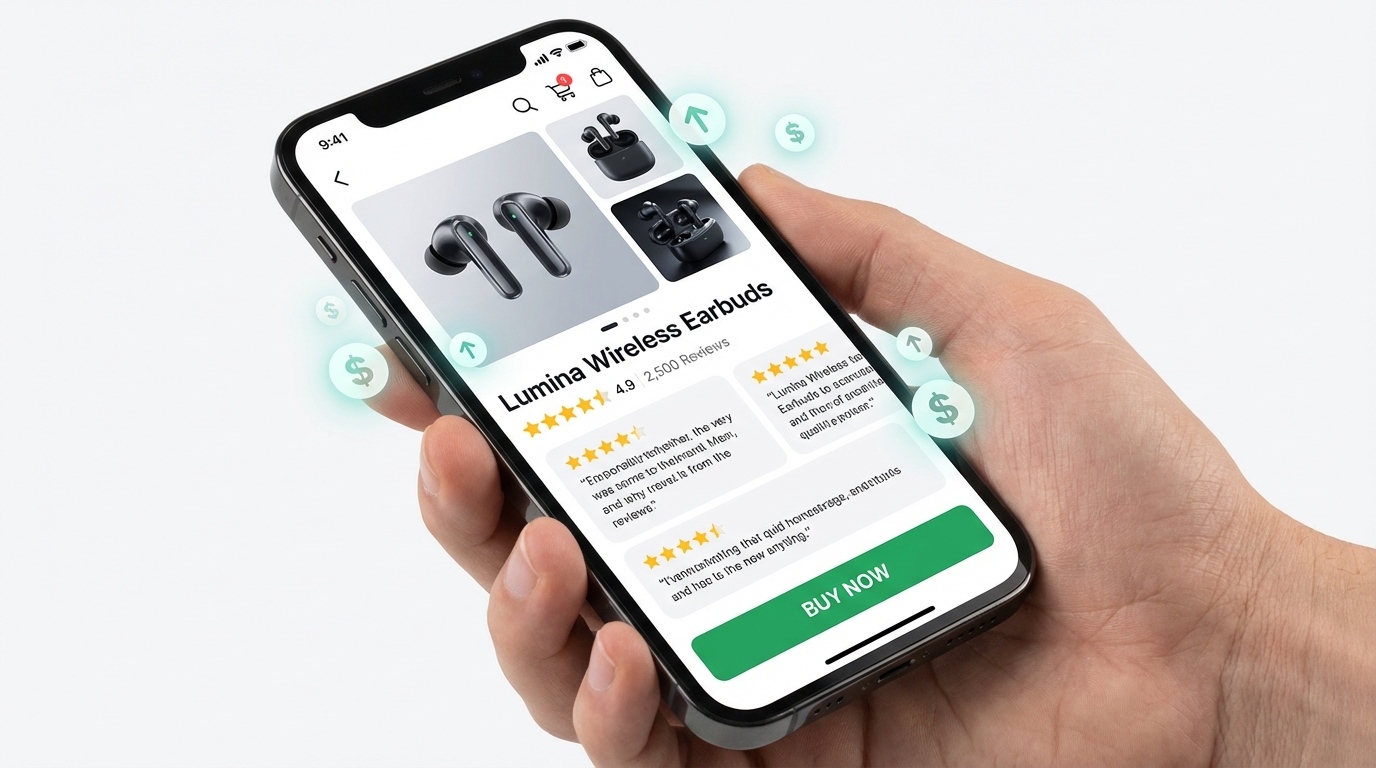
A TikTok Shop listing is not simply a product page. It is the landing zone for every video impression, creator post, live stream mention, and paid ad that touches your product. If the listing fails to convert, every dollar and hour spent on content and promotion is wasted. Listing quality is where many sellers leave serious money on the table.
Titles and Descriptions: Keyword Meets Benefit
TikTok’s search functionality has matured significantly. Users now actively search for products using specific terms, and TikTok Shop’s algorithm uses listing metadata to determine relevance and discoverability. That means your product title needs to work on two levels simultaneously: it must include the specific, niche search terms your buyer uses (not generic category names), and it must communicate a clear benefit within the first few words.
The difference between “Water Bottle” and “Leakproof Insulated Sports Water Bottle — 32oz, Keeps Drinks Cold 24 Hours” is enormous from a discoverability standpoint. Use TikTok’s Seller Center analytics and keyword research tools to identify what your target buyers are actually searching for. Incorporate those exact terms into your title, bullet points, and description copy.
Descriptions should be conversational, not clinical. TikTok buyers respond to language that mirrors how creators talk about products — benefit-forward, relatable, and specific. “Clinically formulated for visible results in 14 days” outperforms a generic spec sheet. Include relevant keywords naturally throughout the description without forcing them into awkward constructions.
Images and Video: Your First Three Seconds
Upload a minimum of five images per listing, ideally up to the nine-image maximum. Lead with a lifestyle image that shows the product in use, not a plain white background shot. Show the product from multiple angles, demonstrate its primary benefit visually, and include at least one image that shows scale or context (a person holding it, for instance, to give size reference).
Listings that include a short video preview see 40–60% higher creator selection rates — meaning affiliates are more likely to promote products that already have video content attached. A 15–30 second clip showing the product in action, even a simple unboxing or demo, is worth the production effort. TikTok’s Seller Center now includes an Image-to-Video tool that can help sellers without video production resources create basic clips from existing product photos.
Ratings, Reviews, and Trust Signals
Aim for a minimum 4.5-star rating before pushing significant traffic to any listing. Listings below 4 stars experience dramatically lower conversion rates, and creators specifically avoid promoting low-rated products because their own audience trust is at stake. Early in a product’s life, focus on fulfillment speed and customer service to generate positive reviews organically. Consider running a small initial promotion to build review velocity before scaling creator partnerships.
Your listing quality score in TikTok’s Seller Center directly affects algorithm visibility. Factors that contribute to the score include stock availability, competitive pricing, complete product attributes (including manufacturer details, warranty information, and accurate categorization), and customer satisfaction metrics. A complete, accurate, well-maintained listing will outrank a sparse one even when other factors are equal.
Pricing for the Platform
TikTok Shop buyers skew toward impulse purchasing. The sweet spot for most categories sits between $20 and $50 for entry-level products, with premium items in the $100–$200 range becoming increasingly viable as the buyer demographic broadens. Products priced above $200 face a significantly steeper conversion challenge and require more trust-building content. Bundle pricing — combining a hero product with complementary items — is one of the most effective ways to push average order values higher while keeping the per-unit price point accessible.
The Creator Affiliate Engine: Your Best Distribution Channel
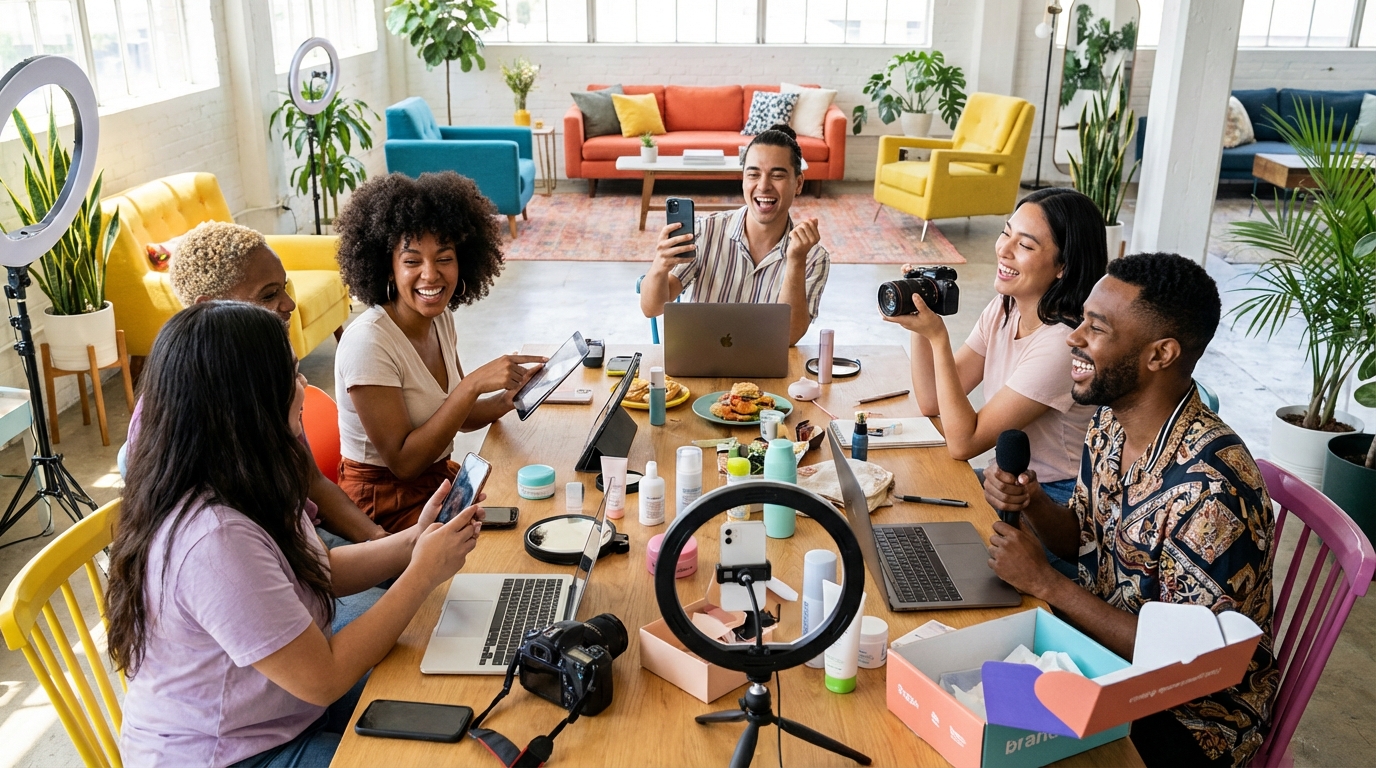
If you take one single strategic insight from this article, let it be this: the TikTok Shop affiliate program is the most capital-efficient distribution channel available to e-commerce sellers today. Video affiliates drove an estimated $5.4 billion in TikTok Shop GMV in the first half of 2025 alone. The math is straightforward — you pay commissions on completed sales, not on impressions or clicks. No conversion, no cost.
Open Collaboration vs. Target Collaboration
TikTok’s affiliate program currently operates on two tiers. Open Collaboration places your products in a public marketplace where any eligible creator (minimum 1,000 followers) can browse and choose to promote them. You set a commission rate, and creators self-select based on earning potential and product fit. This is your always-on distribution network — a passive pipeline that works while you sleep.
Target Collaboration is the premium tier. You invite specific creators directly, offer higher commission rates (typically 20–30%+), and can negotiate hybrid arrangements that combine a flat fee with a performance commission. This is where your best results will come from. Prioritize building Target Collaboration relationships with creators who have already organically engaged with your category, rather than reaching out cold to anyone with a large following.
How to Choose the Right Creators
Following count is the least important metric when evaluating creator partnerships. What matters is the Creator Conversion Ratio — a metric that tells you how effectively a creator’s content actually drives purchases, not just views. A creator with 40,000 followers and a 12% conversion ratio is worth substantially more than an influencer with 400,000 followers and a 0.8% ratio.
Use analytics platforms like Kalodata to research creator performance data before reaching out. Look for creators whose content is genuinely aligned with your product category — not just creators in your genre, but creators whose audience has demonstrated purchasing behavior in your price range. Micro-influencers (under 50,000 followers) consistently show engagement rates of 30%+ on TikTok Shop content, significantly outperforming larger accounts. Engagement rates average 5.2% platform-wide, roughly 160% higher than Instagram — meaning even modest creator partnerships generate real audience interaction.
Commission Rates That Get You Promoted
Commission rates vary significantly by category. Health and wellness products average around 16.38% commission; supplements typically land in the 10–15% range; fashion averages 8–12%; and electronics sit lower at 3–5%. The key principle is that creators evaluate earnings in absolute dollar terms, not percentage terms. A 10% commission on a $100 product is far more attractive to a creator than a 20% commission on a $10 product.
Set your initial commission rate competitively within your category. Once you’ve identified top-performing affiliates, move them into Target Collaboration arrangements and increase their rate in exchange for exclusivity, consistent posting schedules, or live stream participation. Tiered automated commission ladders — where the rate increases at volume milestones — give creators an additional incentive to push volume and reward your best performers automatically.
Supporting Your Affiliates for Better Results
Creators who have strong raw material produce better content. Send product samples to your Target Collaboration creators. Provide clear talking points — not a script, but a fact sheet with the key benefits, the target customer, and any claims that should or shouldn’t be made. Flag your top-performing SKUs so they’re promoting your highest-converting products. Listings with 4.5+ star ratings and video previews already attached see 40–60% higher selection rates from creators browsing the Open Collaboration marketplace.
Update your affiliate marketplace listing regularly based on performance data. Retire underperforming products, promote new hero products with competitive commissions, and communicate directly with your top affiliates about upcoming promotions or seasonal campaigns. Treat your creator relationships like business partnerships, not transactional arrangements — creators who genuinely like your product produce authentic content that converts far better than anyone reading off a spec sheet.
Live Shopping: TikTok’s Most Powerful Conversion Tool
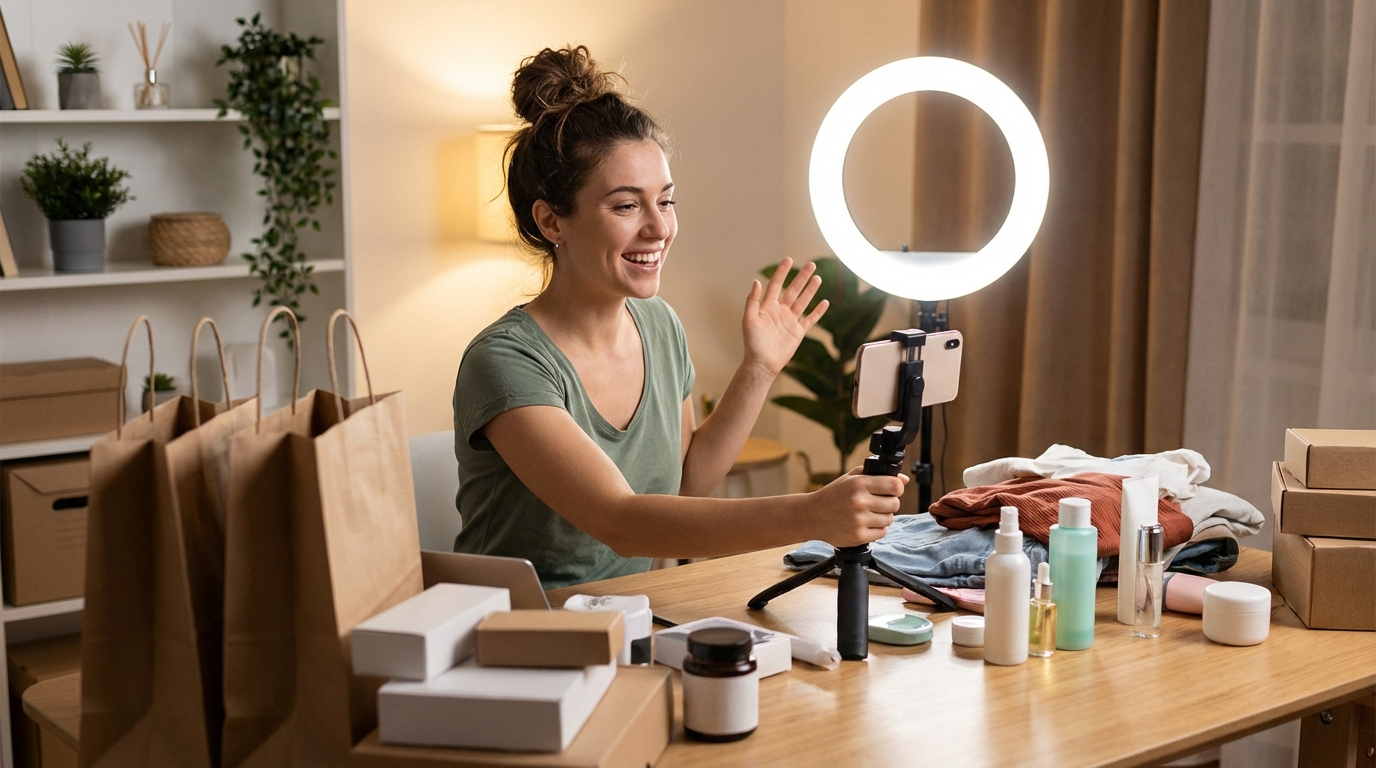
Live shopping events convert at rates 22% higher than standard product videos — and when you look at the broader data on TikTok Live commerce, that figure actually understates the impact. Platform-wide, TikTok Shop live streams achieve conversion rates in the 8–12% range, compared to traditional e-commerce’s 2–4%. In peak sessions, up to 50% of live viewers make a purchase. A reported 76% of TikTok users who actively engage with live shopping content purchased via live stream in the past year.
Live commerce is not a new concept — China’s e-commerce market has been driven by live streaming for years, with TikTok’s parent company ByteDance deeply embedded in that ecosystem. What’s new is that it’s scaling in Western markets at a pace that’s surprising even industry observers.
The Psychology Behind Live Conversion
Several psychological drivers make live shopping outperform recorded content. Real-time scarcity (“Only 23 units left at this price”) creates urgency that static listings can’t replicate. Social proof is instantaneous — viewers can see comments from other buyers in real time, normalizing the purchase decision. The host’s credibility and energy functions as a live infomercial with authentic reactions, handling the product naturally rather than in a staged way. And the interactive Q&A format addresses objections instantly — if twenty viewers ask the same question, the host answers it on air, removing friction for the entire remaining audience.
Building a Live Shopping Strategy
Frequency matters significantly in live commerce. Shops that go live multiple times per week build a returning audience of regular viewers who treat the stream like a scheduled event. Start with a minimum of two live sessions per week and track which time slots generate the most concurrent viewers and the highest conversion rates. The algorithm rewards consistent live activity with broader organic reach over time.
Structure each session with a defined arc. Open with high-energy engagement to build concurrent viewer count — the algorithm measures peak live viewers. Introduce your hero products in the first 15 minutes when attention is highest. Use time-limited flash prices (30 minutes or less) rather than all-session discounts to maintain urgency throughout. Pin product tags strategically, verbalize product names and calls to action (“tap the link in the corner to grab this before it sells out”), and respond directly to comments by name to boost engagement metrics.
Creator-Led Lives vs. Brand Lives
You have two options for executing live commerce: running your own brand live streams, or partnering with creators who go live promoting your products. Both have merit, and the best-performing shops use both in parallel. Brand-led lives give you full control over messaging, promotions, and product sequencing. Creator-led lives tap into an existing, trusted audience and leverage the creator’s established relationship with their followers.
For brands new to live shopping, starting with creator-led lives reduces the learning curve significantly. Identify three to five creators in your Target Collaboration network who have live commerce experience and propose a structured live promotion arrangement. Provide them with product samples, promotional codes to share with their audience, and clear product talking points. Compensate them with a higher commission rate for live sessions compared to standard video content, reflecting the higher conversion value.
Product Selection for Live Events
Not every product in your catalog is right for live promotion. Select products that have strong visual demonstration value, clear before-and-after potential, or a compelling unboxing moment. Bundle products specifically for live events — a “live exclusive bundle” creates a purchase moment that can’t be replicated in standard listings. Introduce new products first via live stream before they go live on your general shop page to reward your most engaged viewers and generate early review momentum.
Spark Ads and GMV Max: Paid Traffic That Actually Works

Organic content and creator affiliates can take you far on TikTok Shop, but paid amplification is the accelerant that separates shops doing good numbers from shops doing great numbers. TikTok’s ad ecosystem for shop sellers has evolved significantly, and understanding the current toolset is essential for anyone planning to scale.
Spark Ads: Amplifying What Already Works
Spark Ads are TikTok’s most effective format for shop sellers, and the data backs this up clearly. They outperform standard in-feed ads with 20–40% lower CPC and CPM, 40–60% better cost-per-acquisition, and 132% higher video completion rates. The reason is structural: Spark Ads promote existing organic posts — either your own or creator content you’ve obtained authorization for — rather than creating separate ad units. They maintain the original post’s engagement metrics (likes, comments, shares), preserving the social proof that makes TikTok content trustworthy.
The practical workflow for Spark Ads is to identify your top-performing organic posts (the ones that are already driving shop clicks and conversions), request a 60-day authorization code from the creator if it’s not your own content, and then amplify those posts to broader audiences through Ads Manager. The top 10% of Spark Ads advertisers achieve 8.4x ROAS, compared to a median of 3.2x and TikTok’s reported average of 1.8x. The difference between those outcomes comes down almost entirely to the quality of the underlying creative — you’re amplifying content that already converts, not testing whether it will.
GMV Max: Automated Scale
Since July 2025, GMV Max has become the primary automated campaign type for TikTok Shop sellers. It removes manual targeting and bidding decisions, automatically selecting the best creative from your available content library, identifying the optimal audience, and adjusting bids in real time. For sellers with a sufficient content library (the platform recommends a minimum of 15–20 videos as source material), GMV Max can significantly accelerate scale without requiring daily campaign management.
One important caveat: GMV Max attributes organic traffic to paid performance, which inflates reported ROAS figures by approximately 2.5x compared to true incremental impact. Use GMV Max for broad scale objectives and monitor your actual order volume and revenue rather than relying solely on platform-reported ROAS. Pair GMV Max campaigns with manual Spark Ads for your proven best-performing creators, so you maintain both scale and control over your highest-converting content.
TikTok Search Ads: Capturing High Intent
TikTok has quietly developed a sophisticated search ad product that deserves serious attention from shop sellers. As TikTok increasingly functions as a product search engine — particularly for younger buyers who use it in place of Google — Search Ads allow you to capture high-intent buyers who are actively looking for products in your category. These placements complement Spark Ads by covering both the discovery (feed) and intent (search) phases of the purchase journey.
Target both your own product-specific keywords and broader category terms. A brand selling anti-aging neck cream, for example, should bid on both their brand name and category terms like “neck firming cream,” “anti-aging skincare,” and “neck wrinkle treatment” — the same terms real buyers use when searching. Average CTR on TikTok ads sits around 1.5–3%, meaningfully higher than on most other social platforms, indicating strong engagement with relevant placements.
Budget Allocation and Testing
A practical paid media framework for TikTok Shop sellers: allocate roughly 60% of your ad budget to Spark Ads amplifying proven creator content, 30% to GMV Max for broad reach and scale, and 10% to Search Ads for high-intent keyword capture. Start with a minimum meaningful daily budget — the platform recommends at least $50/day for Spark Ads to generate statistically useful data — and resist the urge to pause campaigns after 24–48 hours. TikTok’s algorithm typically needs 5–7 days and 50+ conversions to exit the learning phase and optimize effectively.
Fulfillment, Fees, and Protecting Your Margins
Selling on TikTok Shop is not just a marketing and content exercise. The back-end operational decisions you make around fulfillment, fees, and inventory management directly affect your profitability and your algorithmic standing. Sellers who treat this as an afterthought often find that a surge in orders exposes operational weaknesses that undo all of their content success.
Understanding TikTok Shop’s Fee Structure
TikTok Shop’s commission structure varies by category, but sellers should budget for the platform taking a percentage of each sale (typically in the 5–8% range for most US categories), plus any affiliate commissions you’ve set for creator partners (often 10–20% depending on category and collaboration tier). When you layer in fulfillment costs, returns, and ad spend, your true margin on each unit can be significantly lower than the gross sale price suggests.
Before launching on TikTok Shop, build a full unit economics model that accounts for product cost, platform commission, affiliate commission, fulfillment cost, packaging, return rate, and allocated ad spend. Products with thin gross margins (under 50%) will struggle to generate meaningful profit after all of these deductions. The strongest TikTok Shop businesses operate in categories where landed product costs represent 20–35% of the retail price — leaving enough room to fund marketing, commissions, and still generate profit.
Fulfillment Options: FBT, Seller Shipping, and Hybrids
TikTok Shop offers sellers several fulfillment pathways. Fulfilled by TikTok (FBT) is the platform’s own warehousing and shipping service, similar in concept to Amazon FBA. Products fulfilled through FBT receive priority placement in certain algorithm contexts and meet platform shipping speed standards automatically. Seller Shipping gives you direct control over your fulfillment process and costs, which many established brands prefer for margin management.
In early 2026, TikTok briefly moved toward mandating platform logistics for US sellers before pausing that requirement following seller pushback. The current landscape allows sellers to choose from Seller Shipping, Upgraded TikTok Shipping, Collections by TikTok (CBT), or FBT. Regardless of which option you use, TikTok holds sellers to strict service-level standards: 95% valid tracking rate and less than 4% late dispatch rate. Falling below these thresholds affects your listing visibility and algorithmic rank.
Inventory Management: The Silent Conversion Killer
Stockouts on TikTok Shop are particularly damaging because the platform’s algorithm reduces visibility for listings that go out of stock, and recovering that position after restocking takes time. The viral nature of TikTok content means demand spikes can be sudden and extreme — a creator post or live stream mention can drive hundreds of orders in hours. Build safety stock for any product you’re actively promoting, and monitor inventory levels daily when running paid campaigns or major creator partnerships.
For Amazon sellers already managing FBA inventory, Helium 10’s TikTok Shop integration allows you to sync your Amazon inventory with TikTok Shop listings and fulfill TikTok orders through FBA — giving you the speed and reliability of Amazon’s fulfillment network for a new sales channel without duplicating your inventory investment.
Returns and Customer Satisfaction
TikTok Shop has a customer-friendly returns policy by design — the platform prioritizes buyer experience as part of its growth strategy. Seller-initiated disputes or slow returns processing generate negative ratings that compound over time. Set clear, accurate product expectations in your listings (inaccurate descriptions are the primary driver of avoidable returns), process return requests promptly, and monitor your customer satisfaction score in Seller Center as a leading indicator of listing health.
Mistakes That Kill New TikTok Shop Sellers
For every seller clearing seven figures on TikTok Shop, there are many who tried, spent money, and quietly abandoned the platform. Almost every failure story traces back to a small number of identifiable, avoidable mistakes.
Treating TikTok Shop Like Amazon or Shopify
This is the most prevalent and most costly mistake in the ecosystem. TikTok Shop is a discovery-commerce platform. Buyers are not arriving with specific purchase intent after a Google search. They are scrolling, being entertained, and encountering products through content. An Amazon-style listing — plain background product photos, bullet-point descriptions, heavy keyword density in the title — will not move product on TikTok. You are not optimizing for a search results page. You are optimizing for a content ecosystem where entertainment and commerce are the same thing.
Every element of your TikTok Shop strategy — your listing visuals, your creator brief, your live shopping energy — needs to be native to TikTok’s scroll environment. Products should be introduced in the context of someone’s life, not in the context of a product catalog. The question to ask when evaluating any piece of content: would someone stop scrolling for this?
Ignoring Product-Market Fit for the Platform
Not all products are suited to TikTok Shop, regardless of how well they sell elsewhere. Products that require extensive explanation before the purchase decision is made, products that look identical to dozens of others in the same category, and products without a visual demonstration angle are hard to drive through a video-first platform. Mundane, commodity products (generic phone cases, basic kitchen utensils without a unique angle) struggle significantly even when the seller invests in creator partnerships and ads.
Before committing to TikTok Shop for a product, ask whether the product can tell a compelling visual story in 15–30 seconds. If the answer requires significant imagination to construct, the product may not be the right fit — or at minimum, you need a genuinely creative content angle before you invest in the listing.
Setting Commissions Too Low
Creators have a large portfolio of products available to promote. When two similar products are available on the affiliate marketplace, the one with the higher commission rate wins creator attention — full stop. Setting commissions below category norms to protect margins is a false economy: you may save a few margin points on creator costs, but you lose the volume that makes the channel profitable in the first place. Research the going commission rates in your category before listing on the affiliate marketplace, and set a rate that puts you in the top tier of your category competition.
Neglecting Listing Quality in Favor of Content Volume
Sending high volumes of traffic to a weak listing is a fast way to burn through budget and creator goodwill. Before running any paid amplification or launching major creator partnerships, confirm that your listing has a strong visual set, an accurate and compelling description, competitive pricing, clean inventory availability, and at least several positive reviews. A listing with a 3.8-star rating, three poor-quality images, and a one-paragraph description will not convert even excellent creator traffic. Fix the foundation before you build the roof.
Scaling: What Top TikTok Shop Sellers Do Differently
The shops clearing $14 million-plus in monthly revenue are not operating fundamentally different channels — they’re executing the same fundamentals at a significantly higher level of consistency and sophistication. The gap between a $10,000/month shop and a $1 million/month shop is largely a gap in systems, not luck.
Building a Creator Roster, Not a Creator List
Top shops treat their affiliate creator network as a managed roster, similar to how an agency manages talent. They have a tiered structure: a broad Open Collaboration tier that generates consistent volume from dozens or hundreds of micro-creators, a mid-tier of reliable producers who get product samples and priority access to new products, and a top tier of star performers who receive dedicated Target Collaboration arrangements, exclusivity bonuses, and co-branded live stream opportunities.
This roster is actively managed. Performance data is reviewed weekly. Underperforming creators are phased out. New creators are onboarded from the pipeline continuously. The hero products promoted by the top tier are rotated to stay fresh and prevent audience fatigue. Creator relationships are nurtured through direct communication, fast sample fulfillment, and competitive commission structures that make promoting your brand the financially logical choice.
Content Velocity and Testing
High-performing shops maintain extraordinary content velocity — dozens of pieces of creator content going live every week across their affiliate network, supplemented by their own brand-produced content. The volume serves a critical function: it generates a constant stream of data about what messaging, format, and angle converts best for their specific products. The top-performing pieces get immediately amplified via Spark Ads. The underperformers are studied for what to avoid, not wept over.
Testing is systematic, not random. A/B testing different thumbnail styles, opening hooks, creator demographics, and product angles generates actionable insight at scale. Sellers who run 20 creator posts per week learn more in a month than sellers who run two posts per week learn in a year. Speed of learning is a genuine competitive advantage in a platform that rewards proven content with algorithmic amplification.
Live Commerce as a Consistent Revenue Engine
The most successful TikTok Shop brands have built live commerce into their weekly operations as a structured, predictable revenue channel — not an occasional experiment. They have dedicated live hosts (either in-house or contracted creators) who go live on a consistent schedule, building a recurring viewer base that treats each session as a scheduled shopping event.
These brands invest in production quality for their live streams: proper lighting, clean backgrounds, organized product displays, and hosts who have been trained specifically in live commerce techniques — scarcity framing, real-time Q&A, engagement prompting, and product sequencing. The combination of a loyal returning audience and a skilled live host produces conversion rates that far exceed cold traffic, and the repeat purchase rate from live stream buyers is typically higher than from any other acquisition channel.
Cross-Platform Amplification
The strongest TikTok Shop sellers don’t treat the platform as a siloed channel. They use TikTok as the discovery engine and then capture those buyers across other touchpoints — email lists built from post-purchase flows, retargeting ads across Instagram and YouTube, and Shopify or DTC stores that benefit from the awareness TikTok generates. A buyer who discovers a brand through TikTok and purchases through TikTok Shop, then receives excellent post-purchase communication, is a significantly higher lifetime value customer than the initial transaction suggests.
TikTok’s own Shopify integration simplifies the operational side of this cross-platform approach — sellers can manage TikTok Shop inventory, orders, and returns directly from the Shopify dashboard, and run TikTok ads from within the Shopify admin. For brands already on Shopify, TikTok Shop becomes an additional storefront within an existing operational framework rather than an entirely separate infrastructure.
Putting It All Together: Your TikTok Shop Action Plan
TikTok Shop is not passive income. It is not a set-it-and-forget-it channel. It is a high-activity, content-driven commerce platform that rewards sellers who put in structured, consistent work across product quality, creator relationships, live commerce, and paid amplification. The $33 billion in 2024 GMV, the $20 billion projected US sales for 2026, and the top shops clearing $14 million monthly are all real outcomes — but they belong to the sellers who built deliberately.
Here’s what that looks like in practice:
Phase 1: Foundation (Weeks 1–4)
Select 3–5 hero products that meet TikTok’s product-market fit criteria: strong visual demonstration angle, $20–$150 price point, minimum 50% gross margin before platform fees, and genuine product quality that can sustain positive reviews. Build listings to the highest standard: 5–9 professional images, short video preview, keyword-optimized title and description, accurate categorization, and complete product attributes. Set Open Collaboration commissions at the top of your category range. Get your first 20–30 reviews through careful early promotion before sending creator traffic.
Phase 2: Creator Distribution (Weeks 4–12)
Identify 20–30 micro and mid-tier creators in your category using TikTok’s Affiliate Marketplace and third-party tools. Reach out with product samples to your top 10–15 targets for Target Collaboration arrangements. Set up a consistent live stream schedule — minimum twice weekly, with a dedicated host or creator partner. Use the early weeks to generate content performance data that identifies your best-converting angles, hooks, and products.
Phase 3: Paid Amplification (Weeks 8 onward)
Once you have 10–15 pieces of creator content with measurable performance data, launch Spark Ads on your top performers. Build a GMV Max campaign with your full content library as source material. Layer in Search Ads targeting your highest-intent keywords. Monitor ROAS, cost per order, and actual unit economics weekly — not just platform-reported attribution. Reinvest ad budget into the creators and formats generating the strongest real results.
Phase 4: Scaling Systems (Month 4+)
Tier your creator roster, formalize your live commerce program, and systematize your content testing process. Expand into new products based on category trend data and the insights your existing creator network generates. Optimize your fulfillment operation to maintain 95%+ valid tracking and under 4% late dispatch. Build post-purchase communication flows to increase repeat purchase rates and customer lifetime value.
The sellers who build TikTok Shop right treat it like a media company that happens to sell products — not a store that occasionally makes videos. The content is the distribution. The distribution is the business.
The platform’s growth numbers are not an invitation to rush. They are context for how much opportunity exists for sellers who take the time to build correctly. TikTok Shop was projected to exceed $20 billion in US GMV by 2026. The sellers who start building their operational foundations today — the listings, the creator relationships, the live commerce capability, and the paid media systems — are the ones who will be positioned to capture a meaningful share of that number.
The ceiling keeps rising. The question is whether your shop has what it takes to meet it.