


For most brands, the short answer is a resounding yes, selling on Amazon is still absolutely worth it. But it's not a golden ticket.
Think of Amazon as the world's biggest, most crowded shopping mall. You get instant access to millions of people ready to buy, but just setting up a shop isn't enough to get noticed.
Unlocking Profit in the World’s Largest Marketplace
Figuring out if Amazon is right for your business means taking a hard, honest look at both the massive potential and the real-world complexities. The platform gives you unparalleled access to a global customer base actively hunting for products, but success is never a given.
It’s a pay-to-play world. The brands that thrive are the ones who master visibility, nail their operations, and plan every move strategically. Those who don't often struggle just to break even.
The sheer scale of the opportunity is staggering. In 2024 alone, third-party sellers—people like you and me—generated an incredible $389.2 billion in sales. That figure makes up a massive 61% of Amazon’s total net sales, proving that independent businesses are the true engine of the marketplace.
With roughly 8,600 products changing hands every single minute, the potential for high-volume sales is off the charts. You can explore more of these marketplace statistics to get a sense of the scale we're talking about.
Before we go any further, here's a quick look at the key data points and what they mean for you.
Selling on Amazon at a Glance: A Decision-Making Matrix
This table offers a quick snapshot of the core pros, cons, and key statistics, giving you a scannable overview before we dive into the details.
| Metric | Key Data / Insight | Implication for Your Brand |
|---|---|---|
| Market Size | $389.2 billion in 3P sales (2024) | Unmatched access to a massive, ready-to-buy customer base. |
| Market Share | 61% of Amazon's total sales come from 3P sellers. | You are the core of the marketplace, not just a side-show. |
| Sales Velocity | ~8,600 products sold per minute. | High potential for rapid sales growth if your product gains traction. |
| Competition | ~2 million active third-party sellers worldwide. | The marketplace is crowded. A strong brand and strategy are essential. |
| Cost Structure | Fees can range from 15% to 40% of your revenue. | Profitability hinges on meticulous cost management and pricing. |
| Fulfillment | Amazon FBA handles logistics for a fee. | You can offload shipping, but you trade control and margin for convenience. |
This matrix boils it down, but the real devil is in the details. Your success won't come from just one of these metrics, but from how you manage all of them together.
The Core Trade-Off for Sellers
At its heart, the decision comes down to a simple trade-off: you give Amazon a cut of your profits in exchange for access to its gigantic infrastructure and army of loyal shoppers.
Your success boils down to how well you can manage three key battlegrounds:
- Your Storefront: This is your product listing. Think of it as your digital shelf space. High-quality images, persuasive copy, and a steady stream of positive reviews are non-negotiable. For example, a listing for a yoga mat should have at least 7 high-resolution images showing the mat in use, its texture, and its thickness, plus a video.
- Competitive Pricing: You're in a constant balancing act. Your price has to be attractive enough to win the sale but high enough to protect your profit margins after all the fees are paid. A practical example is using repricing software to automatically adjust your price within a set range (e.g., $19.99 to $24.99) to stay competitive without manual effort.
- Flawless Fulfillment: Whether you use Fulfillment by Amazon (FBA) or handle shipping yourself (FBM), customers expect fast, reliable delivery. Anything less is a quick way to tank your account health and reviews.
This guide is designed to cut through the noise and give you a realistic framework. We're going to break down the real costs, the potential profits, and the specific strategies top sellers use to build sustainable, money-making businesses on Amazon.
Understanding the Real Cost of Selling on Amazon
So, is selling on Amazon actually worth it? Before you jump in, you have to look way past the sticker price of your product. Real profitability starts with getting a brutally honest look at your total costs, which are almost always more complex than they first appear.
Think of it like an iceberg. What you see above the water is just a tiny fraction of the whole picture.
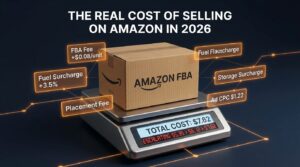
The most obvious cost everyone talks about is the referral fee. This is Amazon's cut on every sale, typically ranging from 8% to 15% depending on what you're selling. But lurking just below the surface is a whole ecosystem of other essential expenses that will make or break your profit margin.
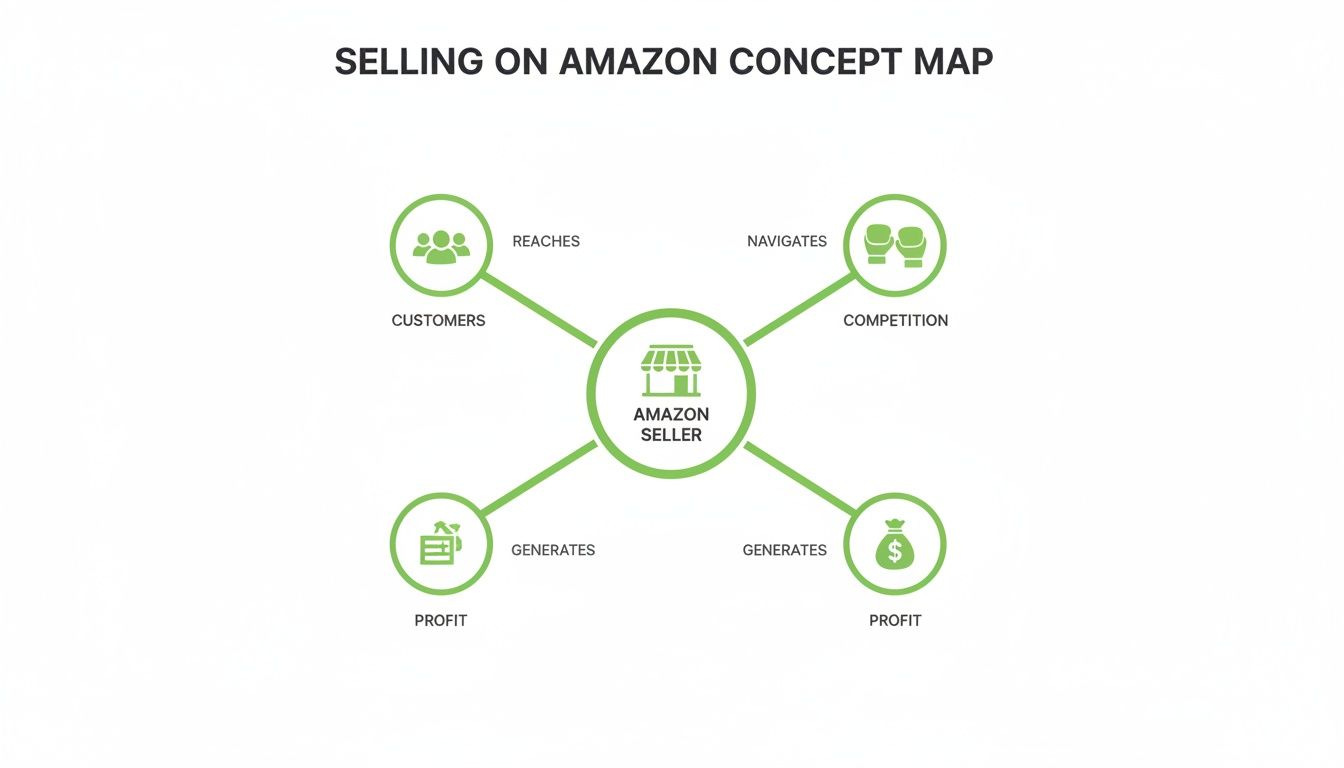
As you can see, success isn't just about having a great product. It’s a constant balancing act between finding customers, outmaneuvering competitors, and actually making money. If one of those pillars crumbles, the whole thing can come crashing down.
Deconstructing Amazon FBA Fees
For most sellers, using Fulfillment by Amazon (FBA) is a no-brainer. It lets you tap into Amazon’s colossal logistics network for storing, packing, and shipping your products. It's a huge operational advantage, but that convenience comes with a price tag, broken down into a few key fees.
- Fulfillment Fees: These are the per-unit charges for the pick, pack, and ship process. The cost hinges entirely on your product's size and weight—bigger and heavier means a bigger fee. For example, a small, lightweight item like a phone case might have a fulfillment fee of around $3.22, while a heavier item like a small dumbbell could cost over $7.00 per unit.
- Monthly Inventory Storage Fees: Amazon charges you for the physical space your inventory takes up in their warehouses, calculated by the cubic foot. This fee is higher from October to December. A standard-size shoebox might cost about $0.26 per month in storage.
- Long-Term Storage Fees: This one is a killer if you're not careful. If your products sit around for too long (usually over 180 days), Amazon will hit you with extra fees to encourage you to move that slow-selling stock.
Getting a handle on these FBA fees is ground zero for building a profitable Amazon business. They aren't the only costs, but they are the foundation.
Uncovering the Hidden Costs
Beyond the standard FBA fees, a bunch of other expenses can quietly bleed your margins dry if you aren’t paying attention. These "hidden" costs are often what separates the sellers who make it from those who don't.
First up, advertising costs. Let's be real, they're practically unavoidable. You have to run Pay-Per-Click (PPC) campaigns to get eyeballs on your listings, especially when you're launching a new product. Then you have return processing fees, as Amazon can charge you for handling customer returns in some categories.
On top of that, most serious sellers use third-party software for keyword research, inventory planning, and tracking analytics. Those monthly subscriptions add up. You also have all the other day-to-day business expenses. Learning how to reduce operational costs isn't just a good idea; it's essential for protecting your bottom line.
A successful Amazon seller doesn't just focus on revenue. They obsessively track every single cost—from referral fees and FBA charges to ad spend and software subscriptions—to protect their net profit margin.
A Practical Example of Calculating Profit
Let's walk through a real-world example to see how quickly these costs stack up.
Imagine you're selling a premium coffee grinder for $40.
- Cost of Goods Sold (COGS): The actual cost to manufacture and ship the product to Amazon's warehouse is $10.
- Amazon Referral Fee: At 15%, that’s $6 right off the top ($40 * 0.15).
- FBA Fulfillment Fee: Based on its size and weight, let's say it costs $5.50 to ship one unit.
- Storage & Other Fees: We'll average this out to $1.00 per unit per month.
- Advertising (PPC): You spend an average of $4.50 in ads to make a single sale.
Okay, let's do the math:
- Total Revenue: $40.00
- Total Costs: $27.00 ($10 + $6 + $5.50 + $1 + $4.50)
- Net Profit: $13.00 ($40.00 – $27.00)
- Net Profit Margin: 32.5% ($13 / $40)
In this scenario, a 32.5% margin is pretty healthy. But look how fragile it is. A small jump in your ad spend or a surprise increase in storage fees could shrink that number in a hurry. This is exactly why you have to know every single expense, down to the penny.
Choosing the Right Amazon Business Model for You
Figuring out if selling on Amazon is truly worth it hinges on one massive decision: your business model. This isn't a one-size-fits-all game. The right play depends entirely on your budget, your goals, and frankly, how much risk you're willing to stomach.
Choosing the wrong path is like showing up to a car race on a bicycle. You'll pedal hard, sweat a lot, but you'll never keep up. This is the exact spot where so many would-be sellers get stuck. They see the finish line but have no idea which vehicle can get them there.
Let's break down the four main roads you can take on Amazon. By the end, you'll have a much clearer picture of which one lines up with your own strengths and resources.

The Creator Model: Private Label
Think of Private Label as building your own brand from the ground up. You find a product you like, maybe tweak it a bit, then work with a manufacturer to put your own logo and branding on it. You're the architect of your own mini-empire.
This is where the highest profit margins live. You control everything from the product's design to its price tag. But that control comes at a cost—it requires the most upfront cash for inventory, branding, and a powerful marketing launch. Don't expect instant results; a successful private label product can take months of prep before you make your first sale.
A practical example is creating "Apex Fitness," a brand of high-end yoga mats. You work with a manufacturer to create a mat with a unique non-slip texture, package it in eco-friendly material, and build a brand identity around sustainable fitness.
Who's It For?
- Creative types with a great product idea and a vision.
- Long-term thinkers who have the patience to build a real brand.
- Sellers with the capital to invest (typically $5,000+) in a solid inventory run and launch campaign.
The Reseller Model: Wholesale
The wholesale model is less about creating and more about connecting. You buy products in bulk directly from established brands—think names you already know and trust—and then resell them on Amazon. You're not building a new brand; you're tapping into the demand that already exists.
Your main job is building relationships with suppliers and getting approved to be one of their official retailers. For example, you might contact a regional pet food company and become an authorized online reseller for their popular dog treats. It’s generally a faster and less risky way to start than private label, but the trade-off is much thinner profit margins, often in the 8-15% range. Your success really boils down to how good you are at landing profitable supply deals.
Who's It For?
- Natural negotiators who enjoy building business-to-business relationships.
- People looking for a quicker, lower-risk on-ramp to selling on Amazon.
- Anyone with enough capital to place bulk inventory orders.
The Hunter Model: Retail & Online Arbitrage
Arbitrage is the ultimate hustle. You’re basically a treasure hunter, scouring clearance aisles at retail stores (Retail Arbitrage) or finding deals on other websites (Online Arbitrage) to flip for a profit on Amazon. It's all about spotting price gaps in the market and moving fast.
A real-world example is buying a popular board game from Walmart's clearance section for $5 and reselling it on Amazon for $20. This model has the lowest barrier to entry, period. You can get started with a few hundred bucks and a smartphone. The big catch? It’s incredibly time-consuming and almost impossible to scale into a large business. You are constantly on the hunt, and a profitable product you find today could vanish tomorrow.
Key Insight: Arbitrage is a fantastic way to learn the Amazon ecosystem with very little financial risk. However, it rarely grows into a sellable, long-term business asset because you don't own a brand or have stable supplier relationships.
If you're curious about the nuts and bolts of getting products into Amazon's warehouses, our guide on how to sell on Amazon FBA is a great next step. It covers the fulfillment process that's vital to every single one of these models.
The Scaler Model: Established Brand Expansion
This path is for businesses that are already winning. If you have a successful Direct-to-Consumer (DTC) brand with a loyal following, this model is about opening up a powerful new sales channel: Amazon. You’re not starting from scratch; you’re expanding your existing footprint onto the world's biggest marketplace.
The main challenge here isn't product-market fit—you already have that. It's about adapting your winning formula to Amazon's unique set of rules, algorithms, and customer behaviors. For example, a successful skincare brand on Shopify would need to learn how to optimize its product listings for Amazon’s search engine and manage FBA logistics. You'll need to master Amazon SEO, PPC advertising, and inventory logistics to translate your off-Amazon success onto the platform.
The numbers show a promising but varied picture for sellers: while 58% hit profitability in their first year, revenues differ wildly. A significant 45% of sellers make between $1,000 and $25,000 per month. However, breaking into the elite $25k-$250k monthly bracket is reserved for a select 10% of top-tier sellers. The potential is huge, with over 100,000 sellers worldwide now clearing $1 million in annual sales.
The Key Metrics That Drive Amazon Profitability
If you want to know if selling on Amazon is truly worth it, you have to look past the flashy sales numbers on your dashboard. The most successful sellers I know operate like financial analysts, obsessively tracking a handful of key performance indicators (KPIs) that reveal the real health of their business.
Just tracking revenue is like driving a car while only looking at the speedometer. Sure, you know how fast you're going, but you have no clue how much fuel is left in the tank. These metrics are your fuel gauge, engine temperature, and GPS all rolled into one.
ACoS vs. TACoS: Understanding Your Ad Spend
One of the first hurdles every new seller faces is getting a handle on Amazon's advertising platform. This is where two critical, and often confused, acronyms come into play: ACoS (Advertising Cost of Sale) and TACoS (Total Advertising Cost of Sale).
ACoS is the more straightforward of the two. It measures the direct efficiency of your ad campaigns by showing what you spent on ads to generate sales from those specific ads. The formula is simple:
ACoS = (Total Ad Spend / Total Ad Sales) x 100
For instance, if you spend $20 on a PPC campaign and it brings in $100 in sales directly from those ad clicks, your ACoS is a clean 20%. While a low ACoS sounds great, it doesn't paint the full picture.
That's where TACoS comes in, giving you a much more holistic view. It measures your ad spend against your total sales—both from ads and organic discovery. This metric shows how effectively your advertising is lifting your overall sales and brand presence, not just driving paid clicks.
TACoS = (Total Ad Spend / Total Sales) x 100
Seeing your TACoS decrease over time is a fantastic sign. It means your ads are successfully boosting your organic rank and sales, making your business more profitable and less dependent on paid traffic. For a deeper dive, check out our guide on how to optimize PPC campaigns for better results.
Calculating Your True Net Profit Margin
Your net profit margin is the ultimate bottom line. It’s the percentage of revenue you actually get to keep after paying for absolutely everything—the product itself, Amazon fees, shipping, advertising, and returns.
Here’s a simple way to break it down:
- Start with the product's retail price. (e.g., $50.00)
- Subtract your Cost of Goods Sold (COGS). (e.g., -$15.00)
- Subtract all Amazon fees (Referral + FBA). (e.g., -$12.50)
- Subtract your average advertising cost per sale. (e.g., -$7.50)
- The remaining amount is your net profit. (e.g., $15.00)
In this case, your net profit margin is ($15.00 / $50.00) x 100 = 30%. Consistently tracking this for every single product isn't just good practice; it's non-negotiable for long-term survival and success.
Below is a quick table illustrating how small optimizations can have a massive impact on your take-home profit.
Profitability Scenarios for a $50 Product
| Expense/Metric | Scenario A: Unoptimized | Scenario B: Optimized |
|---|---|---|
| Retail Price | $50.00 | $50.00 |
| Cost of Goods Sold | -$15.00 | -$15.00 |
| Amazon Fees | -$12.50 | -$12.50 |
| Ad Cost Per Unit | -$10.00 (Inefficient PPC) | -$5.00 (Optimized PPC) |
| Net Profit Per Unit | $12.50 | $17.50 |
| Net Profit Margin | 25% | 35% |
As you can see, simply cutting the ad cost in half through expert management in Scenario B added a full 10% to the profit margin. That's a 40% increase in profit per unit, all from smarter advertising.
CAC and LTV: The Bigger Picture for Brand Builders
Finally, let's zoom out and look at two metrics that are absolutely crucial for anyone building a real brand: Customer Acquisition Cost (CAC) and Lifetime Value (LTV).
- CAC: This is simply how much it costs you, on average, to get a new customer. On Amazon, a good estimate is to divide your total ad spend by the number of new customers you gained in that period.
- LTV: This is an estimate of the total revenue a single customer will generate for your brand over the entire time they buy from you. For example, if a customer buys your $20 coffee beans every month for a year, their LTV is $240.
A healthy, scalable business model is one where your LTV is significantly higher than your CAC. Amazon is a phenomenal engine for acquiring new customers, often at a very reasonable CAC. Your job is to then turn those first-time buyers into loyal, repeat customers.
This is where your off-Amazon efforts really matter. A strong focus on e-commerce customer service that builds loyalty can dramatically increase your LTV, which in turn boosts your overall profitability by making every dollar you spent on acquisition work harder for you.
Managing the Risks of the Amazon Marketplace
Look, the rewards for selling on Amazon can be massive, but let's be real—it's not all sunshine and sales notifications. Before you can answer the question "is selling on Amazon worth it?" you have to get honest about the risks that can sink your business practically overnight. These aren't just little bumps in the road; they're potholes that can stop your sales cold, lock up your cash, and tarnish the brand you’ve poured everything into.
Think of the Amazon marketplace like a jungle. It’s teeming with opportunity, but there are predators and sudden storms you need to be ready for. The sellers who truly crush it aren't just marketing geniuses; they're masters of risk management.

The Threat of Sudden Account Suspension
One of the scariest things for any seller is getting that dreaded account suspension email. It can pop up out of the blue, instantly freezing your listings, your revenue, and your inventory. These suspensions usually come from violating Amazon's constantly changing Terms of Service, like making an accidental claim about your product or getting flagged for review manipulation.
Here's how it plays out: A seller gets blindsided by a suspension after a shady competitor falsely reports their product as counterfeit. Just like that, their sales plummet to zero and their money is frozen.
To avoid this nightmare, you have to play defense. Start with a solid compliance checklist:
- Keep Meticulous Invoices: Always have detailed invoices from reputable suppliers on hand. These are your golden ticket to proving your products are the real deal.
- Audit Your Listings Regularly: Go through your product titles, bullet points, and descriptions with a fine-tooth comb. Make sure everything is 100% accurate and you aren't making any claims you can't back up.
- Live in Your Account Health Dashboard: Check it every single day. Jump on any performance notifications or policy warnings immediately before they snowball into a real problem.
Defending Against Listing Hijackers and Counterfeiters
Another huge headache is listing hijacking. This is where a scammer latches onto your product listing and starts selling a cheap knockoff under your brand name. They steal your hard-earned sales, trash your reputation with shoddy products, and might even mess with your listing's content.
Your single most powerful weapon against this is Amazon Brand Registry. Yes, you need a registered trademark to get in, but the protection it gives you is priceless.
Once you're in Brand Registry, you get a whole new set of tools. You have more control over your listings and, most importantly, you can report and kick counterfeit sellers off your page way more effectively. For any serious private label seller, this isn't optional—it's essential.
The process is pretty straightforward:
- Get a Trademark: File for a trademark for your brand name with the USPTO (or your country's equivalent).
- Apply for Brand Registry: Once your trademark is officially registered, head over to the Amazon Brand Registry portal and submit your application.
- Use the Protection Tools: After you’re approved, get familiar with tools like "Report a Violation." This lets you quickly remove any unauthorized sellers who pop up on your listings. For many sellers, this peace of mind alone makes selling on Amazon worth it.
Mitigating Negative Review Attacks
Imagine waking up to a flood of one-star reviews. It’s a gut punch that can absolutely wreck your product's reputation and search ranking. These attacks are often launched by competitors trying to sabotage your business. While Amazon has systems to catch this, some attacks will inevitably slip through.
If you think you're under attack, you need to act fast. Document everything. Screenshot the suspicious reviews, noting any weird language patterns or if they all appeared at the same time. Report them to Amazon Seller Support right away using the "Report Abuse" feature. Give them a clear, simple summary of why you believe the reviews are fake. Working with an agency that knows how to navigate compliance-minded support can be a lifesaver here.
By the way, ensuring you have flawless inventory handling can prevent legitimate negative feedback from piling up. Our guide on Amazon FBA prep services touches on how critical this is for maintaining a healthy seller account.
Final Gut-Check: Are You Ready to Sell on Amazon?
So, you've made it this far. You've seen the numbers, weighed the different business models, and stared the risks right in the face. Now it's time for the final, honest gut-check before you dive in. Answering "is selling on Amazon worth it?" isn't just about spotting the opportunity; it's about taking a hard look at your own resources, goals, and what you're willing to put on the line.
Think of this checklist as your last checkpoint. Working through these questions will take you from a vague "maybe" to a solid "yes" or a strategic "not yet."
The Financial Readiness Check
Let's start with the most important pillar: capital. Running out of cash is the number one killer for new sellers, so getting real about your finances is non-negotiable.
- Have I Calculated My True Net Margin? Don't just subtract the product cost from the retail price. You have to factor in Amazon's 15% referral fee, FBA fulfillment and storage costs, a buffer for returns, and a realistic budget for advertising. If you're not landing in the 15-25% net margin range, you're in a danger zone.
- Do I Have Enough Starting Capital? To launch a private label product properly, you're realistically looking at $5,000 to $10,000. That covers your first big inventory order, professional product photos, branding, and—critically—the ad spend you'll need in that first month to get the ball rolling.
The Operational and Time Commitment Check
Next up is your most precious non-financial resource: your time. Let's be clear, Amazon is not a set-it-and-forget-it passive income machine, especially when you're just starting out.
Selling on Amazon is a hands-on business. Success demands daily attention to inventory levels, customer questions, advertising campaign performance, and account health metrics. Underestimating the time required is a common and costly mistake.
- Can I Dedicate 10-15 Hours Per Week? This is a realistic minimum for getting a new store off the ground. You'll be checking sales data, tweaking ad bids, answering customer questions, and watching your inventory like a hawk to avoid stocking out.
- Do I Have the Skills or the Drive to Learn Them? You'll need to get good at keyword research, writing compelling listings, and making sense of performance data. Are you ready to become a student of the game, or does it make more sense to budget for an expert to handle it for you?
The Strategic Decision: When to Partner with an Agency
Finally, think about your long-term goal. If you're trying to build a scalable asset instead of just creating another job for yourself, bringing in an expert partner like ZonFlip isn't an expense—it's a strategic investment. It's time to call in the pros when:
- Your Growth Has Stalled: You know you have a great product, but you've hit a sales ceiling and can't seem to push past it.
- You're Out of Time: Your business needs you focused on the big picture, not buried in the day-to-day grind of managing Amazon operations.
- You're Burning Cash on Ads: Your advertising costs are climbing, but your sales aren't keeping pace. You need an expert to get your ACoS under control and drive profitable growth.
The good news? The Amazon marketplace is rewarding serious, well-run brands more than ever. While the total number of sellers has tightened up, the traffic per seller has shot up an incredible 31% since 2021. That means less noise and a bigger slice of the pie for brands that know what they're doing. In fact, over 100,000 sellers are now pulling in $1 million or more each year.
As you can discover more insights about this competition paradox on Marketplace Pulse, it's proof that a sharp, expert-led strategy is the key to claiming your share of this massive market.
Frequently Asked Questions About Selling on Amazon
We've walked through the costs, business models, key metrics, and even the potential pitfalls. Now, let's tackle some of the questions that are probably still rattling around in your head.
Think of this as the final check-in to clear up any lingering doubts before you decide if selling on Amazon is the right move for you.
How Much Money Do I Really Need to Start on Amazon?
Look, while you could technically get your feet wet with a few hundred bucks doing retail arbitrage, a serious private label launch is a different beast altogether. To give yourself a real shot at success, you should be planning for a starting budget somewhere between $3,500 and $10,000.
Why so much? That capital isn't just for buying your products. It has to cover the whole launch operation:
- Your First Inventory Order: This is usually the biggest check you'll write, covering manufacturing and shipping.
- Branding & Photography: In a sea of products, professional photos and sharp packaging are your life raft. This is non-negotiable.
- Amazon Fees: You'll need to cover your professional seller plan and the initial FBA fees to get your products into Amazon's warehouses.
- Ad Budget: You absolutely need a dedicated war chest for PPC campaigns. It’s the only way to get eyeballs on your product and build that crucial early sales momentum.
Trying to launch on a shoestring budget is one of the fastest ways to fail. It's far better to wait and save up than to jump in under-capitalized with no room to market your product or handle unexpected costs.
What’s a Realistic Profit Margin for an Amazon Seller?
After all is said and done, most successful Amazon sellers land in the 10% to 25% net profit margin range. This is the money you actually put in your pocket after paying for the product itself, all of Amazon's fees, your ad spend, and any other business expenses.
A net margin dipping below 10% is a serious red flag. You're operating on razor-thin profits, leaving zero room for error. A sudden spike in ad costs or a new competitor slashing prices could wipe you out.
On the other hand, margins above 25% are fantastic. They’re usually found with unique products that have strong branding, a loyal following, or very little direct competition. The only way to know where you stand is to obsessively track your margins for every single product. It’s the true health-check for your business.
Is Amazon Too Saturated to Make Good Money Anymore?
Absolutely not. But the game has changed. The gold rush days of listing any old gadget and watching the money roll in are long gone. The opportunity is still massive, but success now demands a more strategic approach.
It’s no longer about just showing up; it's about standing out.
Today, winning on Amazon comes down to smart differentiation. You have to be better than the competition in key areas:
- Killer Branding: Tell a story that people actually connect with.
- Polished Listings: Use stunning images, video, and copy that convinces people to click "Add to Cart."
- Strategic Advertising: Run PPC campaigns that bring in customers without breaking the bank.
- Top-Notch Service: Earn those 5-star reviews and build a base of loyal, repeat buyers.
Sellers who treat Amazon like a real business—not a get-rich-quick lottery ticket—are still building incredibly profitable enterprises.
What's the Hardest Part of Selling on Amazon?
If you ask most new sellers, they'll point to two things: mastering Amazon PPC (their ad platform) and juggling inventory management. These two are deeply connected and can make or break your profitability.
Running out of stock is a momentum killer. It tanks your sales rank and basically tells Amazon's algorithm to forget about you. But the opposite is just as dangerous—over-ordering leaves you with cash tied up in slow-moving inventory and punishing long-term storage fees that chew through your profits.
Getting it right requires sharp forecasting and constant attention.
Ready to stop guessing and start growing? The complexities of fees, advertising, and inventory are where expert management makes all the difference. ZonFlip provides end-to-end account management to protect your margins and scale your sales, turning potential into profit. Learn how we can help you succeed on Amazon.