


Picture this: your customer just got their package. Are they grabbing scissors, fighting with those awful plastic clamshells and a web of wire ties? Or are they sliding open a simple, recyclable box in a matter of seconds?
That's the entire idea behind Amazon’s Frustration-Free Packaging (FFP). It’s a full-blown certification program aimed at slashing waste, keeping products safe, and making that first moment—the unboxing—a great experience for the customer.
Deconstructing Frustration-Free Packaging at Amazon
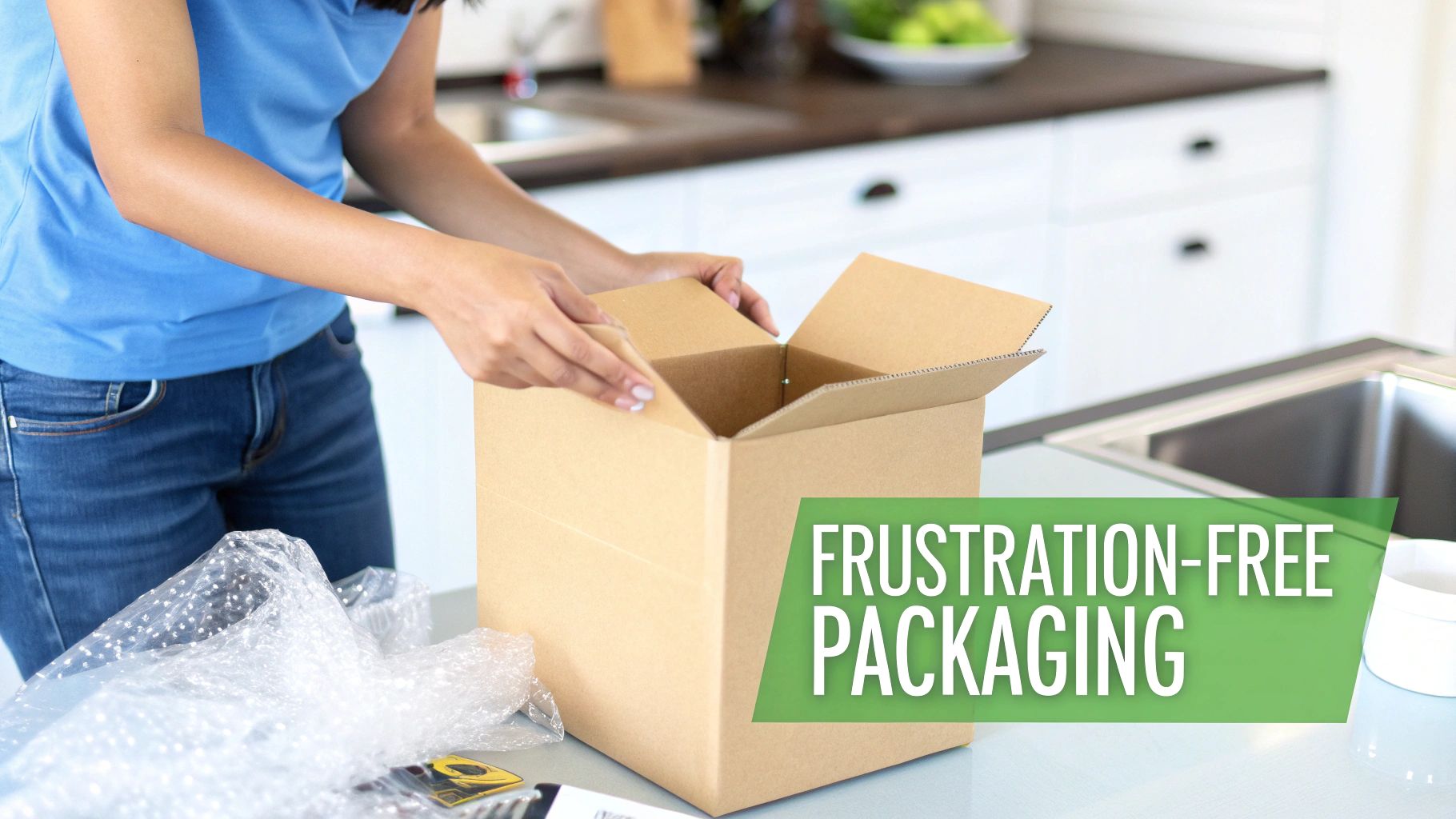
At its core, Frustration-Free Packaging is way more than just another green initiative. It's a smart, strategic move that completely changes how products get from the warehouse to the customer's front door.
Think of it as Amazon's direct answer to "wrap rage"—that all-too-familiar feeling of irritation when trying to break a new product out of its Fort Knox-like retail packaging.
Amazon kicked off the FFP program way back in November 2008 with just 19 products. The goal was simple: certify packaging that is 100% recyclable, can be opened in under 120 seconds (without tools!), and is tough enough to ship in its own box, ditching the need for those extra Amazon shipping boxes. If you're curious, you can read more about Amazon’s decade of packaging improvements to see just how far they've come.
The Three Tiers of Amazon Packaging
Amazon knows that one size doesn't fit all, so they broke the program down into three different tiers. Getting a handle on these levels is the first step to getting your own packaging strategy in line with Amazon's. Think of it like a pyramid, with each level serving a specific purpose.
- Frustration-Free Packaging (FFP) – Tier 1: This is the top dog, the gold standard. To get FFP certified, your packaging needs to be easy to open, made from recyclable stuff, and ready to ship as-is, with no extra Amazon overbox needed. It’s the whole package—sustainable, customer-friendly, and super efficient for fulfillment.
- Ships in Own Container (SIOC) – Tier 2: The main goal here is to get rid of that extra Amazon shipping box. Products with SIOC certification are durable enough to be slapped with a shipping label and sent directly to the customer in their own branded packaging. The material rules aren't as strict as FFP, but the big win is cutting out redundant packaging.
- Prep-Free Packaging (PFP) – Tier 3: This one’s for products that still need an Amazon overbox but are packaged so that Amazon doesn't have to do any extra prep work, like poly-bagging or adding bubble wrap. It makes things much smoother at the fulfillment center, saving time and materials.
To make it even clearer, here's a quick breakdown of how these programs stack up against each other.
Amazon Packaging Programs at a Glance
This table gives you a quick side-by-side comparison of Amazon's main sustainable packaging programs, helping you figure out where your product might fit.
| Program Tier | Primary Goal | Key Requirement | Best For |
|---|---|---|---|
| Tier 1: FFP | Best customer experience, sustainability, and efficiency. | 100% recyclable, easy to open, and ships in its own container (SIOC). | Brands wanting to offer a premium, eco-friendly unboxing experience and reduce costs. |
| Tier 2: SIOC | Reduce shipping waste by eliminating the Amazon overbox. | Durable enough to ship without an additional box; passes a transit test. | Sellers with durable products in sturdy packaging who want to cut down on shipping materials. |
| Tier 3: PFP | Streamline fulfillment by eliminating Amazon prep. | No prep needed (like bagging or bubble wrap) before being placed in an Amazon box. | Products that are too small or fragile for SIOC but can be packaged to save time at the warehouse. |
As you can see, there's a path for almost any type of product to become more efficient and customer-friendly.
Key Takeaway: Amazon's packaging programs aren't just about "going green." They're a powerful operational lever you can pull to cut costs, reduce waste, and make a fantastic first impression the moment your package lands on a customer's doorstep.
Why This Matters for Your Brand
Getting one of these packaging certifications is much more than just ticking an environmental box; it can become a key part of your brand's strategy on Amazon. Each tier gives you a way to tighten up your logistics and leave a better final impression on your customers.
Practical Example:
- A brand selling a blender in a large, glossy retail box would be a prime candidate for SIOC (Tier 2). Instead of putting that box inside another Amazon box, they can redesign it to be a sturdy, plain brown shipping box with internal supports. This saves on the overbox and lowers shipping fees.
- A company selling silver earrings would likely target PFP (Tier 3). The earrings are too small for SIOC, but by placing them in a small, sealed, and scannable box, they eliminate the need for Amazon to polybag them, streamlining the fulfillment process.
Choosing the right tier can transform your packaging from a simple line-item cost into a real strategic asset.
Why FFP Is a Powerful Growth Lever for Your Brand
Treating Frustration-Free Packaging as just another box to check is a huge missed opportunity. It’s so much more than a compliance headache—it’s a powerful, strategic lever that can genuinely strengthen your brand and boost your bottom line. When you make the switch, you’re not just changing cardboard; you're building a smarter, more profitable business model.
The real wins from FFP go way beyond that little certification badge on your product detail page. Let's break down how.
Driving Down Operational Costs
One of the first and most tangible benefits of moving to FFP is a serious drop in your operational costs. Think about traditional packaging for a moment. You often have the product's own box, a bunch of filler material, and then an outer shipping container. FFP, especially the SIOC tier, gets rid of all that redundancy.
Practical Example: A brand selling a 10lb kettlebell in a retail box must have it placed in an Amazon overbox. With SIOC certification, they can ship it in its own reinforced box. This not only saves the cost of the overbox but also reduces the package's overall dimensions and weight, potentially dropping it into a lower FBA fee tier and saving $1-2 per unit shipped.
And the savings aren't just from buying fewer materials. Lighter, smaller packages directly translate to lower FBA fulfillment fees, since Amazon’s storage and shipping rates are based heavily on size and weight. On top of that, brands that don't get with the program often get hit with non-compliance chargebacks, which can eat into your profit margins faster than you can say "over-boxed."
Elevating the Customer Experience
Let's be real: your product’s packaging is the very first physical handshake a customer has with your brand. If they have to wrestle with a tough box, deal with a messy pile of packing peanuts, or feel guilty about a mountain of waste, their opinion is already soured before they even see the product.
On the flip side, a smooth, easy, and satisfying unboxing can create a genuinely memorable moment. This positive first impression pays off in big ways:
- Improved Product Reviews: Happy customers love to talk about it. A 5-star review that says, "I loved how easy this was to open!" is pure gold.
- Reduced Product Returns: A key design principle of FFP is protecting the product better during its chaotic journey through the fulfillment network. This is especially critical when packing fragile items for safe shipping. Better protection means fewer damaged items, which means a lower return rate.
- Increased Brand Loyalty: A great experience builds trust and makes people want to come back. You’re not just getting a sale; you’re creating a loyal fan.
Gaining a Competitive Edge
In a marketplace as crowded as Amazon, you need every advantage you can get. Earning that FFP certification gives your brand a few clear leg-ups that help you stand out and win over more shoppers.
First off, certified products can get an FFP badge right on their Amazon listing. This little icon is a powerful visual signal to customers that your brand is high-quality and forward-thinking, which can directly influence their decision to buy.
Beyond that, sustainability isn't just a buzzword anymore—it’s a major factor for a huge and growing number of consumers. By using 100% recyclable materials, you’re aligning your brand with the values of eco-conscious shoppers. This is a direct appeal to people who actively look for brands that care about the environment, widening your potential customer base. And if you're looking to understand the bigger picture of selling on the platform, check out our guide on how to sell on Amazon FBA.
Your Step-by-Step Guide to FFP Certification
Making the switch to Frustration-Free Packaging can feel like a huge undertaking, but it's really just a logical sequence of steps. Once you break it down, the path to certification becomes surprisingly clear. Think of this as your roadmap—a practical, no-nonsense guide to getting your products FFP certified without the headaches.
This whole process is designed to create a positive growth loop for your brand. It starts with saving money, leads to happier customers, and burnishes your eco-friendly credentials.
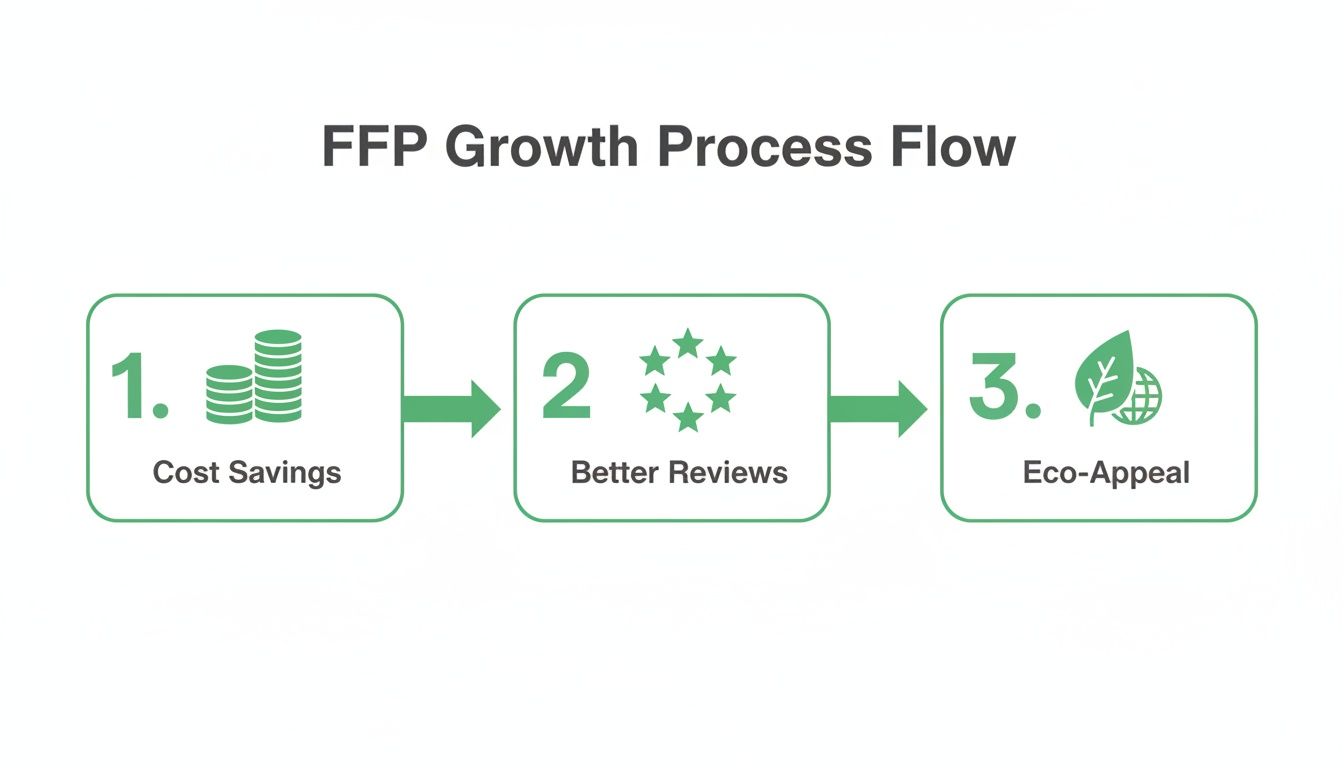
As you can see, it all feeds back into itself. Operational wins and glowing reviews work together to give your brand a serious edge in the marketplace.
Stage 1: Determine Product Eligibility
First things first: before you spend a dime on new boxes, you need to figure out if your product is even a good candidate for the program. Amazon has specific rules, and not every item is a fit for every certification tier.
Start by looking at your product’s size, weight, and category. As a rule of thumb, bigger, heavier items are the perfect candidates for Ships in Own Container (SIOC) certification. Why? Because you get to skip the Amazon overbox, which is where the biggest cost savings are. If your product is fragile or has a bunch of loose parts, you’ll need to be more strategic.
Actionable Workflow:
- Export Your ASIN Data: Pull a report from Seller Central with product dimensions, weight, and sales volume.
- Filter and Prioritize: Sort the list to find products with dimensions greater than 18" x 14" x 8" or weight over 20 lbs. These are prime SIOC candidates.
- Analyze Sales Velocity: From that filtered list, identify the top 5-10 ASINs with the highest sales volume. These will provide the quickest return on your certification investment.
Stage 2: Design and Test Your Packaging
Once you’ve picked your product, it’s time to design a package that can both meet Amazon’s strict standards and survive the chaos of modern shipping. This stage is part creative engineering, part hardcore science experiment.
Your best bet is to partner up with a packaging supplier who already knows the ropes. They can help you source 100% curbside recyclable materials and design a package that eliminates wasted space while still protecting what’s inside.
Next, you need to find a certified lab in the Amazon Packaging Support and Supplier Network (APASS). These are the only labs Amazon trusts to perform the official transit tests.
- ISTA-6 Amazon SIOC Test: This is the big one. The lab will basically beat up your package—dropping it, shaking it, and squishing it—to simulate what it will go through in Amazon’s fulfillment network.
- Documentation: Afterward, the lab gives you an official report card detailing whether your package passed or failed. You’ll need this document for the final step.
Passing this test is non-negotiable. If you fail, it's back to the drawing board to figure out what went wrong. Maybe you need stronger cardboard or better internal bracing. For sellers juggling all the moving parts, leaning on professional Amazon FBA prep services can be a lifesaver here.
Stage 3: Enroll Your ASIN
You've got the green light from the lab—now for the final lap. It's time to officially enroll your product in the program through your Amazon account. The process is a little different depending on whether you’re a 1P vendor or a 3P seller, but the core steps are the same.
- Log in to Vendor Central or Seller Central: Find your way to the packaging certification enrollment portal.
- Submit Your Product Details: You’ll need to enter the ASIN, your contact info, and basic details about the new packaging, like its dimensions and materials.
- Upload the Test Report: This is your golden ticket. Upload the full, official report from the APASS lab. Don't skimp on the details.
- Await Confirmation: Amazon will review your submission. You might get an initial automated response pretty quickly, but the full approval can take a few weeks. Once you’re in, your ASIN is officially certified, and you can start enjoying the benefits.
Common FFP Certification Mistakes and How to Avoid Them
Getting Frustration-Free Packaging certification is a huge win for any brand. But the road to getting there? It’s often paved with totally avoidable mistakes. Even though Amazon lays out the rules pretty clearly, brands constantly trip up on small details that lead to failed tests, expensive delays, and a lot of wasted effort.
Knowing what these common pitfalls are is the first step to sailing through the certification process.
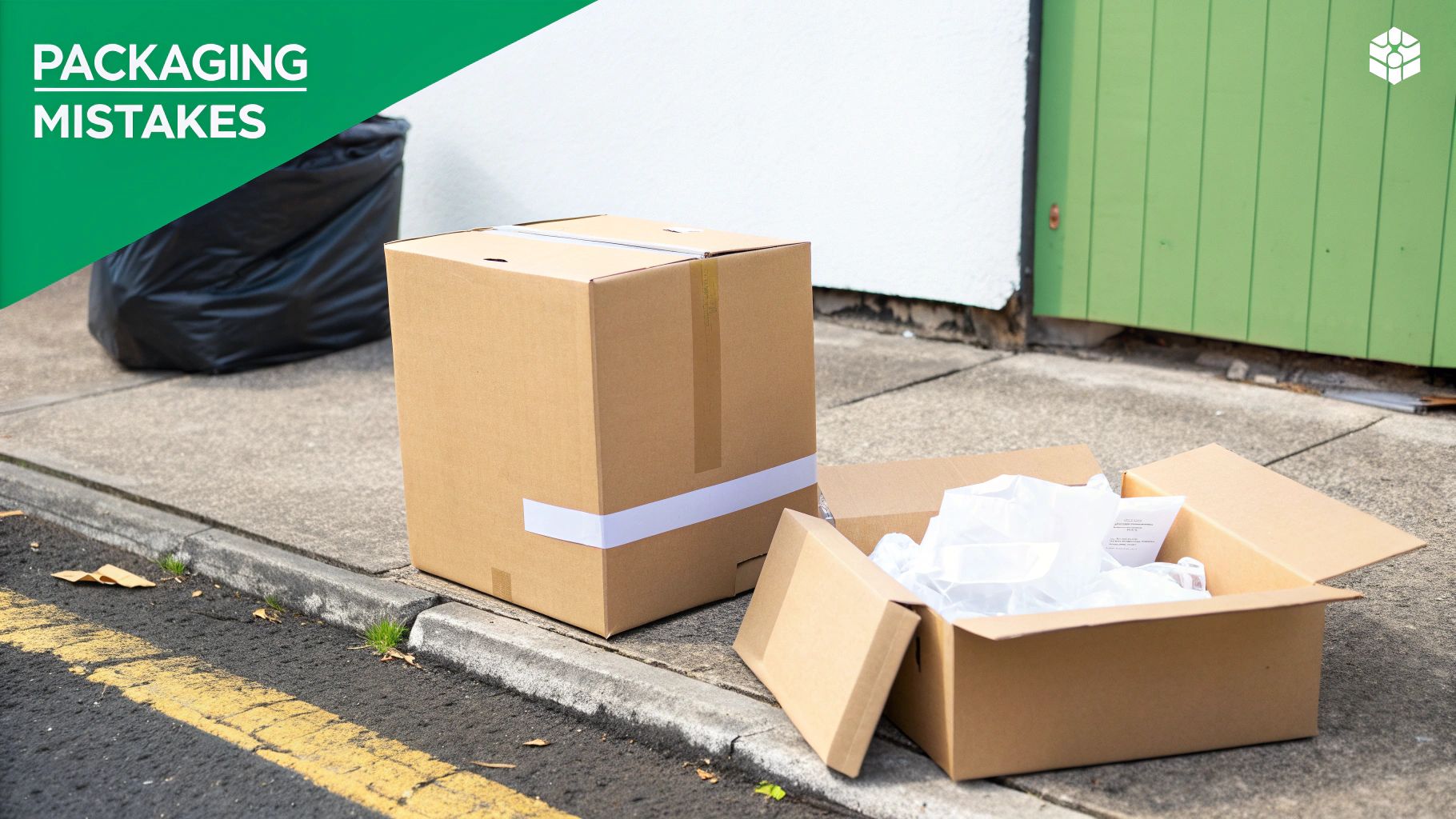
Honestly, most failures are locked in long before a package even sees a testing lab. The problems start back in the design phase, where choices that seem minor at the time end up having massive consequences. Nail these common problem areas, and you’ll save a ton of time, money, and headaches.
Ignoring the Material and Opening Rules
Two of the most basic FFP requirements are also the ones people mess up the most: the materials you use and how easy it is for the customer to open the box. These aren't just suggestions; they’re the entire point of the program.
A classic slip-up is using materials that aren't 100% curbside recyclable. You might think your cardboard box is good to go, but if it has a thin plastic laminate to make it look glossy, it’s an instant fail. The same goes for little things like plastic windows, nylon pull-tabs, or way too much non-recyclable tape. They'll all get your package rejected on the spot.
The other big one is the "120-second rule." A customer has to be able to open the package and get to the product in under two minutes, using zero tools. That means no annoying wire ties, no impossible-to-open plastic clamshells, and no complicated inserts that feel like a puzzle.
- Practical Example (Fail): A company designs a great corrugated box for their new kitchen gadget. But to keep it snug, they use dense foam inserts. The box itself is perfect, but because that foam isn't curbside recyclable, the whole package fails certification.
- Practical Example (Success): The company redesigns the interior using molded paper pulp trays (like an egg carton). These are 100% recyclable and hold the product securely, allowing the package to pass certification.
Underestimating the Transit Test
This is where the rubber meets the road. The ISTA-6 Amazon SIOC transit test is a brutal simulation of everything a package goes through in Amazon’s fulfillment network—drops, shakes, crushes, you name it. Just tossing your product in a box won’t cut it. Your packaging has to be truly engineered to protect what's inside.
A super common reason for failure is not having enough support inside the box. If your product can slide around, it's almost guaranteed to get wrecked during the drop tests. The packaging needs to hold the item firmly in place, but without using forbidden materials like plastic bubble wrap or packing peanuts.
The ISTA-6 test isn’t just about the box surviving. The product inside has to come out completely undamaged and working perfectly. A dented corner on the box is fine. A cracked screen on your product is an automatic fail.
Another frequent mistake is shipping air. Brands often use boxes that are way too big, and Amazon hates that. It drives up shipping costs and can get you penalized or fail your certification. You want minimal empty space—ideally less than two inches on any side of your product.
A Blueprint for Success
To help you get it right from the start, we put together a simple checklist covering the key technical rules and where people usually go wrong. Keep this handy during your design process to make sure you’re on the right track.
FFP Design and Testing Checklist
This table breaks down the core technical requirements your packaging must meet to pass FFP or SIOC certification.
| Requirement Category | Key Specification | Common Failure Point |
|---|---|---|
| Material Compliance | Must be 100% curbside recyclable. | Using plastic laminates, non-recyclable inks, or mixed materials like foam. |
| Easy Opening | Must be openable in under 120 seconds without tools. | Including complex inserts, wire ties, or hard plastic clamshells. |
| Product Protection | Must pass the ISTA-6 Amazon SIOC transit test without damage. | Insufficient internal support, causing the product to shift and break during drop tests. |
| Size Efficiency | Minimal empty space; no excess air shipped. | Using a generic box size that is too large for the product, leading to waste. |
By thinking about these issues from day one, you can tackle the FFP certification process with confidence. The secret is to design for compliance from the beginning, not try to force an old package design to meet the new rules. A little forethought here goes a long way.
Building Brand Loyalty Through Sustainable Packaging
In today's market, your packaging is so much more than a box. It's the first physical handshake between your brand and your customer, and it says a lot about who you are. Frustration-Free Packaging is where the smart operational wins we’ve talked about meet the deep emotional connection you want to build with your audience.
This isn't just about shaving off a few seconds of prep time. It's a massive victory for the environment, and the scale is staggering. In its first ten years, the FFP initiative cut out an incredible 250,000 tons of packaging materials. That prevented a mind-boggling 500 million extra shipping boxes from ever being made, according to Amazon.
Since 2015, Amazon's combined packaging programs, led by FFP, have avoided a total of 4.2 million metric tons of materials. You can explore more about these packaging milestones to really appreciate the scale. This commitment to sustainability is more than just a nice-to-have; it's a non-negotiable for a growing number of conscious consumers.
The Psychology of a Positive Unboxing
Think about the last time you received a package that was just… easy. No plastic clamshells, no impossible-to-tear tape, no mess. That simple feeling of satisfaction is a powerful psychological trigger. A great unboxing experience, free from the dreaded "wrap rage," directly shapes how a customer feels about your product and your brand.
When your packaging is clearly designed to be easy to open and eco-friendly, it sends a clear message: you respect your customer's time and their values. It's a small detail that can be the difference between a one-time purchase and a customer for life.
A customer leaving a 5-star review that specifically praises the "easy-to-open, eco-friendly box" isn't just reviewing a product—they're endorsing your brand's entire philosophy. Your packaging has officially become a high-performing marketing asset.
This positive feedback loop builds trust and a real sense of connection, making people far more likely to come back for more.
Turning Certification into a Marketing Superpower
Getting your FFP certification isn't the end of the road—it’s the starting line for a powerful new marketing angle. Smart brands are shouting about their sustainable packaging to attract and keep customers who care about the environment. Don't let this hard-earned advantage fly under the radar.
Here are a few simple ways to put your FFP status to work:
- Beef Up Your A+ Content: Add a dedicated module in your A+ Content to show off your FFP-certified packaging. Use clean images and simple text to highlight the benefits—easy opening, less waste, and fully recyclable materials.
- Weave It into Your Brand Story: Talk about your commitment to sustainability in your Amazon Storefront and on your own website. Explain why you chose FFP and how it ties into your core values.
- Show It Off on Social Media: Create quick unboxing videos or posts that show the FFP experience in action. A simple clip of someone opening your product in seconds can be surprisingly effective.
- Share It in Your Email Marketing: Let your email subscribers know about your new and improved packaging. It reinforces your brand's positive direction and gives loyal customers another reason to feel good about buying from you.
By actively promoting your FFP certification, you turn a logistical upgrade into a compelling story that builds real brand equity and drives more sales.
Your Action Plan for Profitable and Sustainable Packaging
Let's be clear: adopting Amazon's Frustration-Free Packaging isn't just a nice-to-have anymore. For any brand serious about winning on the platform long-term, it's a strategic must-do. The trick is to stop seeing packaging as just another line item expense and start treating it like the powerful asset it can be.
This plan will show you how to turn compliance into a real competitive advantage. It's all about converting those operational wins—less waste, lower fees, fewer damages—into a fatter bottom line, happier customers, and a stronger, more sustainable brand.
Here’s the roadmap to get you started.
Step 1: Audit Your Product Catalog
Before you can fix anything, you have to know what you’re working with. Your first move is to dive deep into your product catalog to find the low-hanging fruit. You’re hunting for the ASINs that will give you the biggest bang for your buck with an FFP certification.
Don't try to boil the ocean by certifying everything at once. Start by pinpointing your top 3-5 ASINs. Look at sales volume, current shipping costs, and existing packaging. Products that are bigger, heavier, or get a lot of returns because they show up busted are usually the most profitable places to start a packaging overhaul.
Step 2: Consult with a Packaging Expert
Once you have your shortlist, it's time to bring in the pros. Partnering with a packaging engineer or a consultant who actually gets the FFP program is a critical next step. They'll give you an honest look at what’s feasible and, more importantly, what the potential return on your investment will be.
An expert can cut through the noise and answer the tough questions:
- What materials do we need to be 100% curbside recyclable?
- How can we redesign the guts of the box to survive the ISTA-6 transit test?
- What are the real, hard-number cost savings we can expect from using less material and snagging lower FBA fees?
This conversation turns a guessing game into a smart, data-driven business decision. To really double down on your brand's commitment to sustainability, check out a comprehensive buyer's guide to eco-friendly packaging to explore all the modern options out there.
Step 3: Develop a Phased Rollout Plan
After you have a solid grip on the ROI, it's time to build a smart, phased rollout plan. Trying to switch everything overnight is a recipe for disaster. A gradual transition minimizes supply chain headaches and gives you room to learn and adjust on the fly.
Map out a clear timeline for certifying that first batch of ASINs. This methodical approach keeps your operations from getting swamped and ensures the whole process goes smoothly. For brands wanting to take logistics off their plate entirely, it's also a great time to explore how the best 3PL for Amazon sellers can manage your inventory and prep during the changeover.
By following this three-step action plan, you’re not just checking a box for Amazon. You’re methodically building a more profitable, resilient, and customer-focused business. This is how you win.
Got Questions About FFP? We’ve Got Answers.
Jumping into Amazon's packaging programs like FFP can feel like you're trying to solve a puzzle. Let's clear up some of the most common questions sellers have when they're thinking about making the switch.
Do I Really Have to Get FFP Certified?
Nope, it’s not a mandatory requirement for every single product you sell on Amazon. But—and this is a big but—Amazon has put some pretty hefty incentives in place to nudge sellers in that direction, especially for bigger items.
If your product is large enough to qualify for the Ships in Own Container (SIOC) program and you don't get it certified, you could be hit with some painful chargebacks on every unit sold. For many sellers, getting certified isn't just a good idea; it's essential for protecting your profit margins.
What’s This FFP Certification Going to Cost Me?
Good news first: Amazon doesn't charge you a dime to enroll your product or to look over your certification application. The real costs come from two other places:
- Package Redesign: You’ll likely have some costs tied to working with your supplier to create the new, compliant packaging. It’s an investment in a smarter design.
- Lab Testing: This is a non-negotiable step. You have to pay an APASS-certified lab to run the necessary ISTA-6 transit tests to prove your packaging can handle the journey.
While there are some upfront costs, think of it this way: the long-term savings from lower FBA fees, reduced material spending, and dodging those chargebacks often give you a fantastic return. Many brands find the whole program pays for itself over time.
How Long Does This Whole Certification Thing Take?
The timeline can be a bit of a moving target, but you should probably budget for a few weeks to a couple of months from start to finish.
The two parts that usually take the longest are getting your package redesigned and then waiting for the physical transit tests to be completed by the lab. Once you have that successful test report in hand and submit it to Amazon, the final green light usually comes through in a few business days, though it can occasionally take longer. The key takeaway? Plan ahead to keep your supply chain running smoothly.
Ready to turn your packaging from a necessary expense into a real strategic advantage? The team at ZonFlip lives and breathes this stuff. We offer end-to-end Amazon account management and help brands just like yours navigate tricky programs like FFP to boost profits and win over customers. Find out how we can help you grow at https://www.zonflip.com.